Liverpool football guide — Anfield, Goodison and the city's football culture
Liverpool: Official Liverpool FC Museum and Stadium Tour
Duration: 1.5 hours
What's the best way to experience Liverpool's football culture as a visitor?
Book a stadium tour at Anfield (Liverpool FC) or Hill Dickinson Stadium (Everton), then spend an hour in a football-themed pub near the city centre before or after — Liverpool's matchday atmosphere is as much about the pubs and the walk to the ground as the stadiums themselves. Both clubs run non-matchday tours costing roughly £30-35.
A city with two clubs and one shared history
Liverpool is unusual among English football cities in having two major clubs — Liverpool FC and Everton — whose grounds sit close enough together that a single walk through Stanley Park connects them, and whose supporters are often family members of each other rather than strict rivals in the way city derbies play out elsewhere.
Anfield was originally Everton’s ground before a rent dispute in 1892 sent Everton to Goodison Park and left Liverpool FC as Anfield’s new tenants; Everton have since moved again, opening the new Hill Dickinson Stadium at Bramley-Moore Dock on the Mersey waterfront. For visitors, that means Liverpool now offers two very different stadium experiences within the same city: one of English football’s most storied old grounds, and one of its newest.
| Anfield tour | ~90 minutes, roughly £30-35, easier transport links |
| Hill Dickinson tour | ~2 hours, roughly £30-35, waterfront setting |
| Getting there | 45 min train from Chester to Lime Street, then local transfer |
| Time needed | 2.5-3 hours round trip for the tour alone |
| Book ahead | Yes, especially weekends and school holidays |
Anfield: Liverpool FC’s home
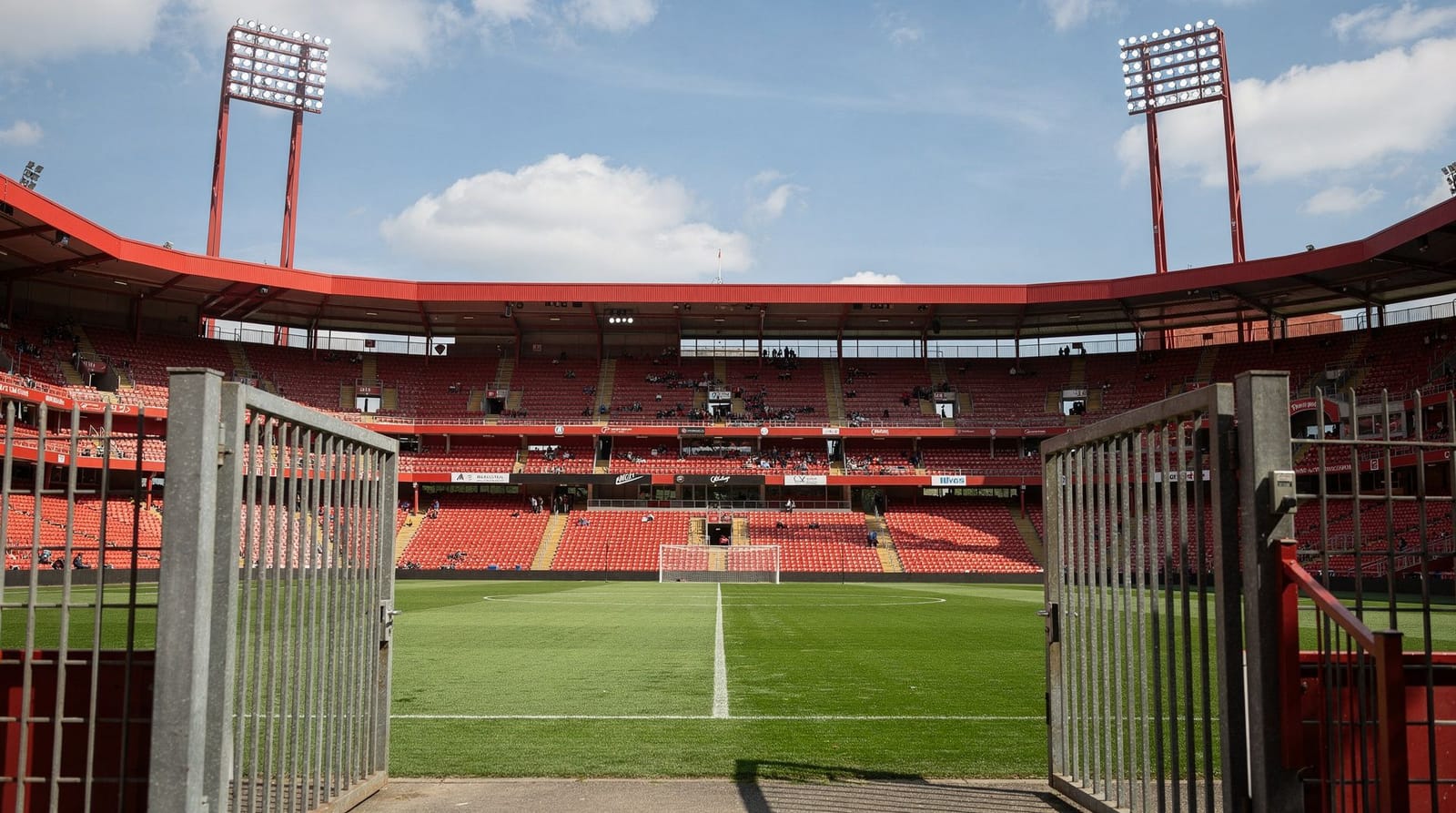
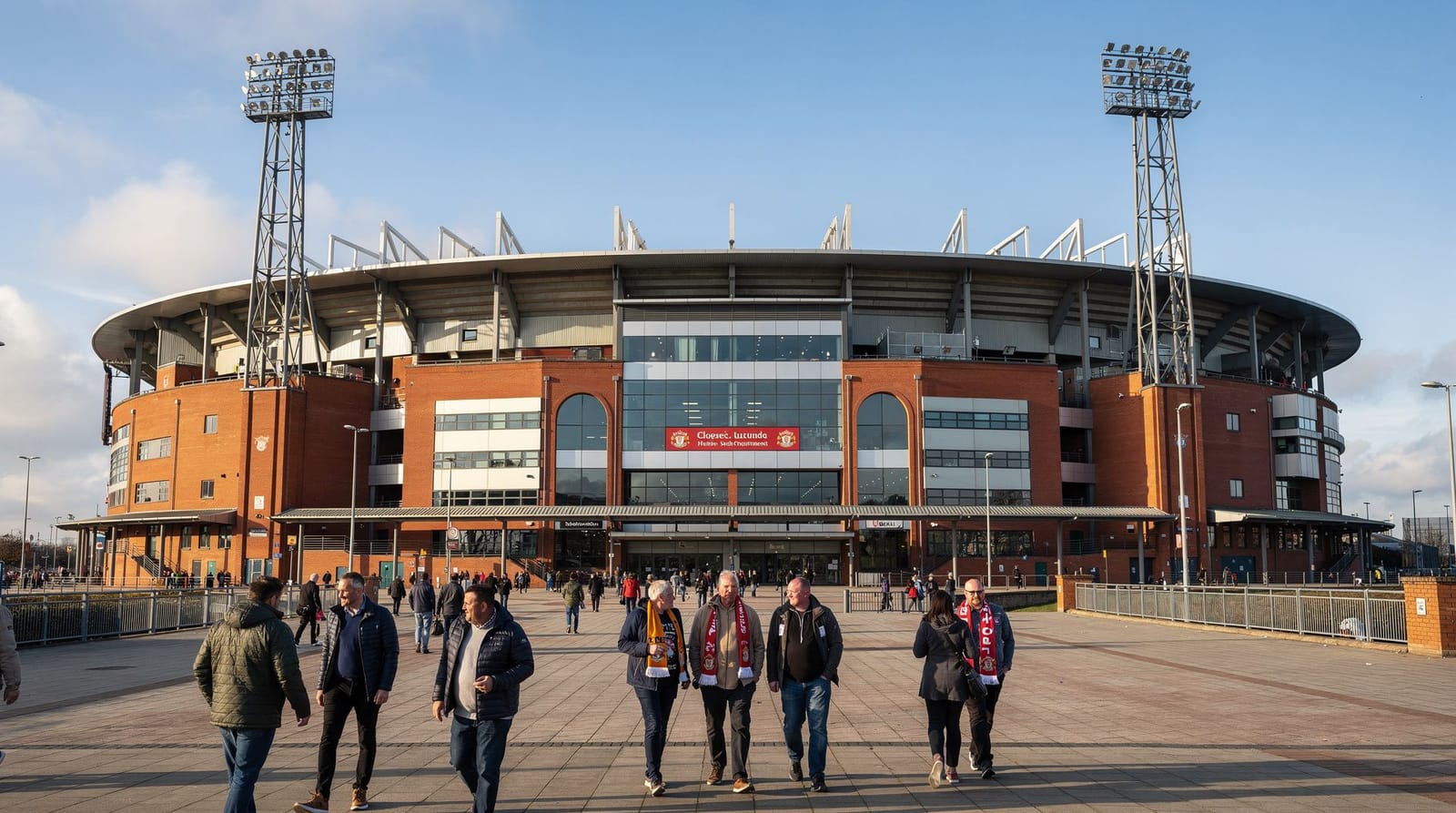
The Liverpool FC Museum and Stadium Tour is the standard way to see Anfield — a 90-minute guided walk through the dressing rooms, tunnel, pitchside and museum, costing roughly £30-35 for adults. The ground’s most recent change was the Anfield Road stand redevelopment, completed across the 2023-24 season, pushing capacity to just over 61,000. For the full detail on prices, matchday restrictions and getting there from Chester, see our dedicated Anfield stadium tour guide.
For a longer visit, the Anfield Experience with food and drinks extends the standard tour into a half-day with a meal included, aimed at visitors who want more than the walk-through — a reasonable upgrade for a genuine LFC fan, less necessary for a first-time casual visitor.
What separates one stadium tour from another is almost never the building; it is whether anyone present actually played there: a Liverpool FC legends Q&A and stadium tour puts a former player in the room.
Hill Dickinson Stadium: Everton’s new home
Everton’s move from Goodison Park — their home for over a century — to the new waterfront Hill Dickinson Stadium at Bramley-Moore Dock is one of the more significant changes in English football’s recent stadium landscape, and the Everton FC stadium tour gives visitors a look at a genuinely new build rather than the century-old grounds most Premier League tours cover. The waterfront setting is also simply a nicer place to spend an afternoon than most stadium surroundings, with views over the Mersey that the old Goodison site never had. The tour runs roughly two hours and is priced comparably to Anfield’s standard tour.
The Merseyside derby
The Liverpool-Everton fixture, contested since the 1890s, is one of England’s oldest derbies and historically one of its less openly hostile ones — a reflection of how many Liverpool families split allegiance between the two clubs across generations rather than dividing along strict geographic or class lines the way some other city derbies do. That said, it’s a fiercely competitive fixture on the pitch, and tickets for derby days are extremely hard to come by as a visitor without a season ticket or hospitality package. If your visit happens to coincide with a derby, watching in a city-centre pub — packed, loud, genuinely good atmosphere — is a realistic and enjoyable alternative to chasing a match ticket.
Museums beyond the stadiums
Beyond the two stadium tours, Liverpool’s football history is covered more broadly at the Liverpool Football Club Museum, a standalone ticket option for visitors who want the museum content without the full stadium walk-through — useful if you’re short on time or travelling with people who have moderate rather than deep interest in the club. There’s no equivalent standalone option for Everton at the time of writing; their museum content is bundled into the stadium tour itself.
Getting to Liverpool’s stadiums from Chester
Both Anfield and Hill Dickinson Stadium require a local transfer after the train — there’s no direct rail line to either ground. From Chester, trains to Liverpool Lime Street take around 45 minutes, usually with one change at Runcorn or Hooton. From Lime Street, Anfield is a 35-40 minute walk, a 10-15 minute taxi, or reachable by bus routes 26/27. Hill Dickinson Stadium, being on the waterfront north of the city centre, is best reached by taxi or the dedicated match-day/event bus services Everton run, since it’s slightly further from useful bus routes than Anfield.
Budget the whole round trip, including local transfers, at around 2.5-3 hours if a stadium tour is the sole purpose of your day. That leaves a reasonable window either side for lunch and a walk around the city centre or waterfront — see our Liverpool destination guide for the wider city beyond football, and Chester train day trips guide for the broader logistics of rail-based day trips from Chester.
Liverpool vs Manchester for a football day trip
If you’re choosing between a Liverpool or Manchester football day from Chester rather than doing both, the practical difference is less about the stadiums (both cities offer comparably priced, well-run tours) and more about what else the day includes. Liverpool pairs football naturally with the Beatles sites — see our Beatles Liverpool guide — making it easier to build a full day that satisfies mixed-interest groups. Manchester’s football scene pairs more with the National Football Museum and the city’s live music and shopping scene; our Manchester football guide covers that side directly, including the Old Trafford and Etihad options.
Matchday etiquette for visitors
If you do manage to get into a match as a neutral visitor (via hospitality packages, since walk-up tickets are rare), a few practical notes: away sections require away-club affiliation in most cases, so as a neutral you’ll typically be in a home end, where enthusiastic but respectful support of the home side (or simple neutrality) is the norm — loudly supporting the away team from the home end isn’t advisable. Both clubs’ megastores are the safest place for merchandise; unofficial sellers near the grounds on matchdays occasionally carry counterfeit kit.
Combining football with the rest of a Liverpool visit
A single day trip from Chester built around football works well as: morning train to Lime Street, stadium tour (Anfield or Hill Dickinson) late morning, lunch in the city centre, then an afternoon at the Beatles Story, Cavern Club, or a waterfront walk before the train back — see our Beatles Liverpool day trip itinerary for the reverse version of this day (music first, adaptable to swap in football instead). For a slower-paced visit with an overnight stay, the Chester-Liverpool weekend itinerary gives football its own half-day without the same time pressure as a single-day trip.
Families combining a football-curious member with others less interested can also look at our Liverpool food guide for lunch options near either stadium’s transfer routes, since both grounds sit some distance from the city centre’s best dining.
Tourist traps to avoid
As with any major football city, unofficial “stadium tour” touts and unlicensed merchandise sellers cluster near both grounds, particularly on non-tour days and around fixtures. Book only through the clubs’ own channels or verified partners, and buy shirts from official stores rather than street stalls. Taxi fares from Lime Street to either stadium are fairly standard, but agree a price or insist on the meter before setting off if using an unlicensed cab — licensed Liverpool taxis (black cabs and pre-booked private hire) are the safer, more reliably priced option.
A brief history of Liverpool’s football success
Liverpool FC’s honours list is dominated by two distinct golden eras: the Bill Shankly and Bob Paisley years of the 1960s-80s, when the club won the bulk of its league titles and multiple European Cups, and the more recent Jürgen Klopp era, which delivered a Premier League title, another Champions League and a full trophy sweep across a few remarkable seasons.
Everton’s own history includes several league titles earlier in the 20th century and an FA Cup-winning era in the 1980s under Howard Kendall, a period sometimes overshadowed in the wider football conversation by Liverpool’s dominance in the same decade but genuinely significant in its own right — Everton were briefly the best team in England at a time when Liverpool were also winning consistently, making 1980s Merseyside arguably the strongest two-club spell any English city has had. Both stadium tours reference these eras, though naturally each museum tells its own club’s story rather than the shared city history.
What to wear and bring
Neither stadium tour has a strict dress code, but comfortable walking shoes matter given the amount of standing and walking on concrete involved in both the Anfield and Hill Dickinson tours. Weather on Merseyside is unpredictable even in summer — a light waterproof is worth carrying regardless of season, particularly for the Hill Dickinson Stadium tour, which includes more outdoor waterfront walking than Anfield’s more enclosed route. Photography is permitted at both venues throughout the guided sections, and bags are checked at entry, with no left-luggage facility at either ground — keep bags small if arriving straight from a train with luggage.
Family visits and accessibility
Both clubs offer family and under-16 ticket pricing, with under-fives typically free, and both tours are largely step-free with lift access between levels. Audio-described and BSL-interpreted tour options exist at both grounds on request, best arranged a few days ahead of your visit rather than assumed on the day. Younger children on both tours tend to respond best to the pitchside walk and dressing rooms, with denser museum reading better suited to older children and adults — treat the museum sections as optional browsing rather than a fixed stop if travelling with under-8s, at either stadium.
Watching football without a stadium tour
Not every visitor wants or has time for a full stadium tour, and that’s a legitimate way to experience Liverpool’s football culture too — a city-centre pub on a matchday, packed and loud with genuine local supporters, gives a more atmospheric taste of what the fixture means to the city than a quiet weekday tour ever will, without needing to book anything in advance. This is particularly worth considering if your visit doesn’t line up with a stadium tour slot or if budget is tighter — a pub seat and a couple of drinks costs a fraction of the tour price and delivers a genuinely different, more social kind of football experience.
Football pubs worth knowing about
Liverpool’s football culture lives as much in its pubs as its stadiums. Near Anfield, The Sandon and The Albert on Walton Breck Road fill with home supporters before kickoff and are a good way to feel matchday atmosphere without a ticket. In the city centre, pubs around Victoria Street and the Cavern Quarter show matches on big screens and tend to draw a broader mix of fans from both clubs plus neutrals — a genuinely sociable option if you’re visiting without strong allegiance to either side and just want to experience Liverpool on a matchday. Arrive well before kickoff for a seat at any of these on a big-fixture day, since capacity fills quickly.
Booking timing and seasonal considerations
Summer, during the close season, is the most reliable window for booking either stadium tour, since there’s no competing fixture calendar and tours run at maximum frequency with fewer last-minute cancellations. Through the season itself, both clubs’ European commitments — Liverpool have a long recent history in the Champions League, and both grounds occasionally host rearranged domestic cup fixtures — can bump or cancel tour slots at short notice. If your Chester trip falls between September and May, it’s worth checking availability closer to your actual travel date rather than booking many months ahead, and building in a flexible backup day if the stadium tour is a must-see rather than a nice-to-have.
School holidays and weekends are the busiest booking windows for both tours regardless of season, so if your visit falls in half-term or over a bank holiday weekend, book as far ahead as the booking platform allows rather than assuming walk-up availability.
Comparing Anfield and Hill Dickinson Stadium directly
For visitors who can only fit in one stadium tour, the practical comparison: Anfield offers more history, a larger capacity (just over 61,000 following the Anfield Road redevelopment), and slightly easier transport links from the city centre via bus routes 26 and 27. Hill Dickinson Stadium offers a genuinely new build with waterfront views, a longer tour (roughly two hours versus Anfield’s 90 minutes), and a look at how a Premier League club builds a stadium from scratch in the current era rather than adapting a century-old ground.
Price is broadly comparable between the two. If you have any existing allegiance, that should decide it; if not, Anfield’s easier transport links make it the marginally more convenient choice for a single-purpose day trip from Chester, while Hill Dickinson rewards visitors with a bit more time and interest in modern stadium architecture.
What a stadium tour actually includes
Both the Anfield and Hill Dickinson Stadium tours follow a broadly similar structure: a guided walk through the away or home dressing room (varying by scheduling on the day), down the players’ tunnel onto the pitch perimeter, through the media and press facilities, and finishing in the club museum with historic kit, trophies and memorabilia.
Neither tour guarantees access to the actual pitch turf itself — you walk the perimeter and tunnel rather than stepping onto the grass — and neither includes meeting current players, a common misconception among first-time visitors. The Anfield and city highlights combined tour bundles the stadium visit with a broader look at the surrounding city centre, a useful option if you want the stadium experience without dedicating a full separate half-day purely to football.
Budgeting a football day from Chester
A single stadium tour runs roughly £30-35 per adult at either ground, with family and concession pricing typically available. Add the return train fare from Chester (roughly £15-25 depending on how far ahead you book), local transfer costs (a taxi or bus fare each way, typically £5-15 depending on distance and mode), and lunch in the city centre (£12-20 a head), and a realistic full-day football trip for one adult lands somewhere in the £70-100 range, more for families factoring in multiple tickets and transfers. Combining the tour with the Liverpool FC Museum standalone ticket instead of the full stadium walk-through is a cheaper option for a shorter, lower-budget visit.
Why Liverpool’s football scene works well from a Chester base
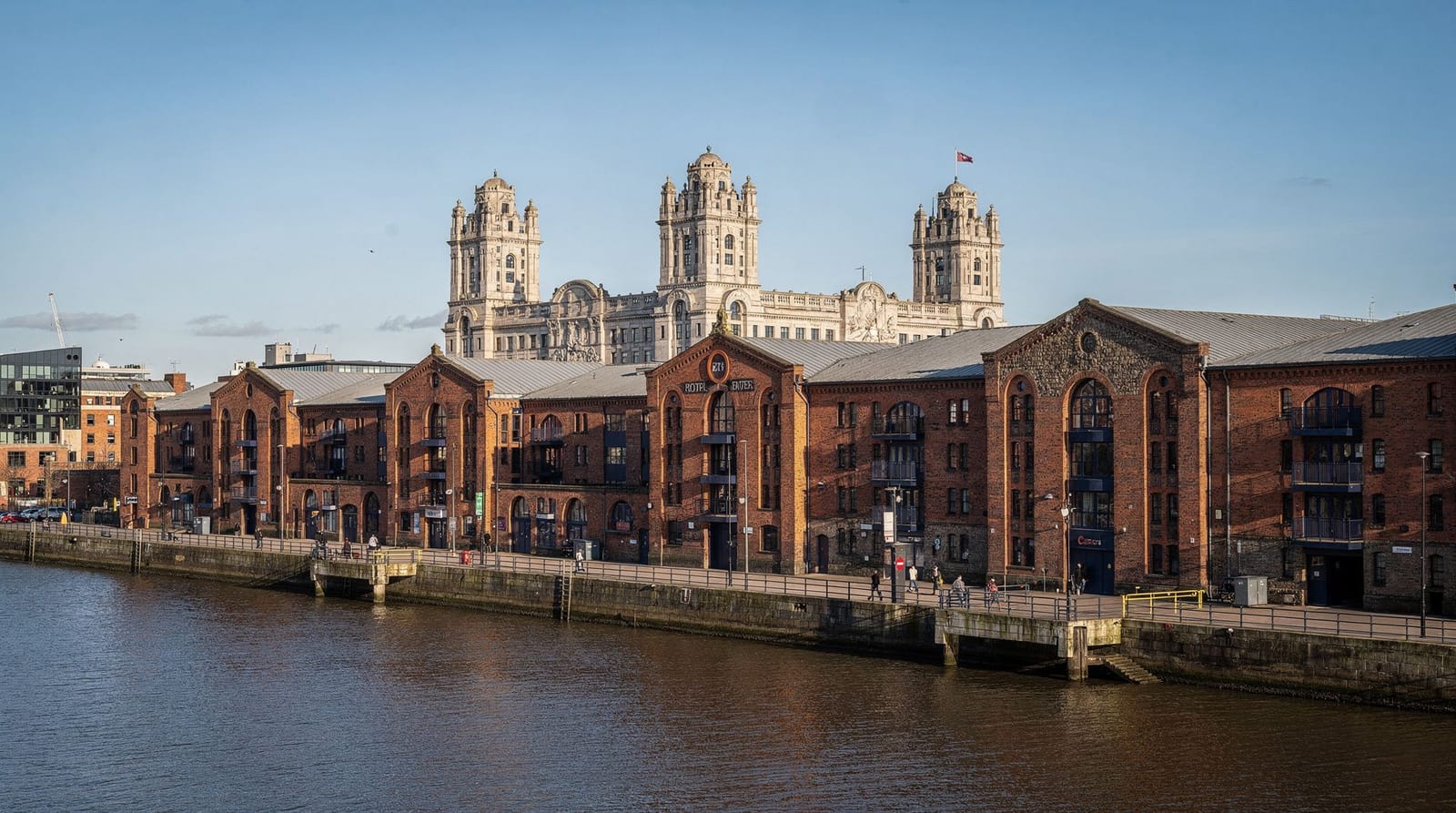
Chester’s rail links put Liverpool within easy single-day reach, and the city’s football culture — two clubs, a shared history, distinctive local pubs — gives visitors more depth than a single stadium visit alone would suggest. Combined with the Beatles sites, which sit within the same compact city centre, Liverpool offers one of the most efficient single-day trips from Chester for groups with mixed interests: football fans get a genuine stadium tour, music fans get the Cavern Quarter, and everyone gets a proper lunch and a walk along one of England’s most historic waterfronts, all within a day trip that starts and ends with a straightforward train journey.
Frequently asked questions about Liverpool football guide
Do I need to book a stadium tour in advance?
Yes, particularly for weekends, school holidays and the close season, when both Anfield and Hill Dickinson Stadium tours run at their busiest. Walk-up availability exists outside peak times but shouldn't be relied on if the tour is a must-do part of your day.Can I watch a Liverpool FC or Everton match as a visitor?
It's possible via hospitality packages, since walk-up match tickets are rare for either club, especially for the Merseyside derby. Most visitors instead do a non-matchday stadium tour and watch any match they happen to catch in a city-centre pub for the atmosphere without needing a ticket.Which is better for a first visit — Anfield or Hill Dickinson Stadium?
Anfield offers more history and slightly easier transport links; Hill Dickinson Stadium offers a longer tour and a genuinely new waterfront build. If you have no existing club allegiance, Anfield's convenience makes it the marginally easier choice for a single-purpose day trip from Chester.
Top experiences
Bookable activities with verified prices and instant confirmation on GetYourGuide.