Liverpool: Beatles, two football clubs and the Mersey waterfront
Liverpool from Chester: a 45-minute train guide to the Beatles sites, Anfield and Goodison, the Mersey waterfront and an honest day-trip plan.
Liverpool: The Beatles Story Entry Ticket
Quick facts
- Train from Chester
- ~45 minutes, direct or one change, roughly hourly
- County
- Merseyside, North West England
- Known for
- The Beatles, Liverpool FC and Everton FC, UNESCO-listed waterfront
- Football grounds
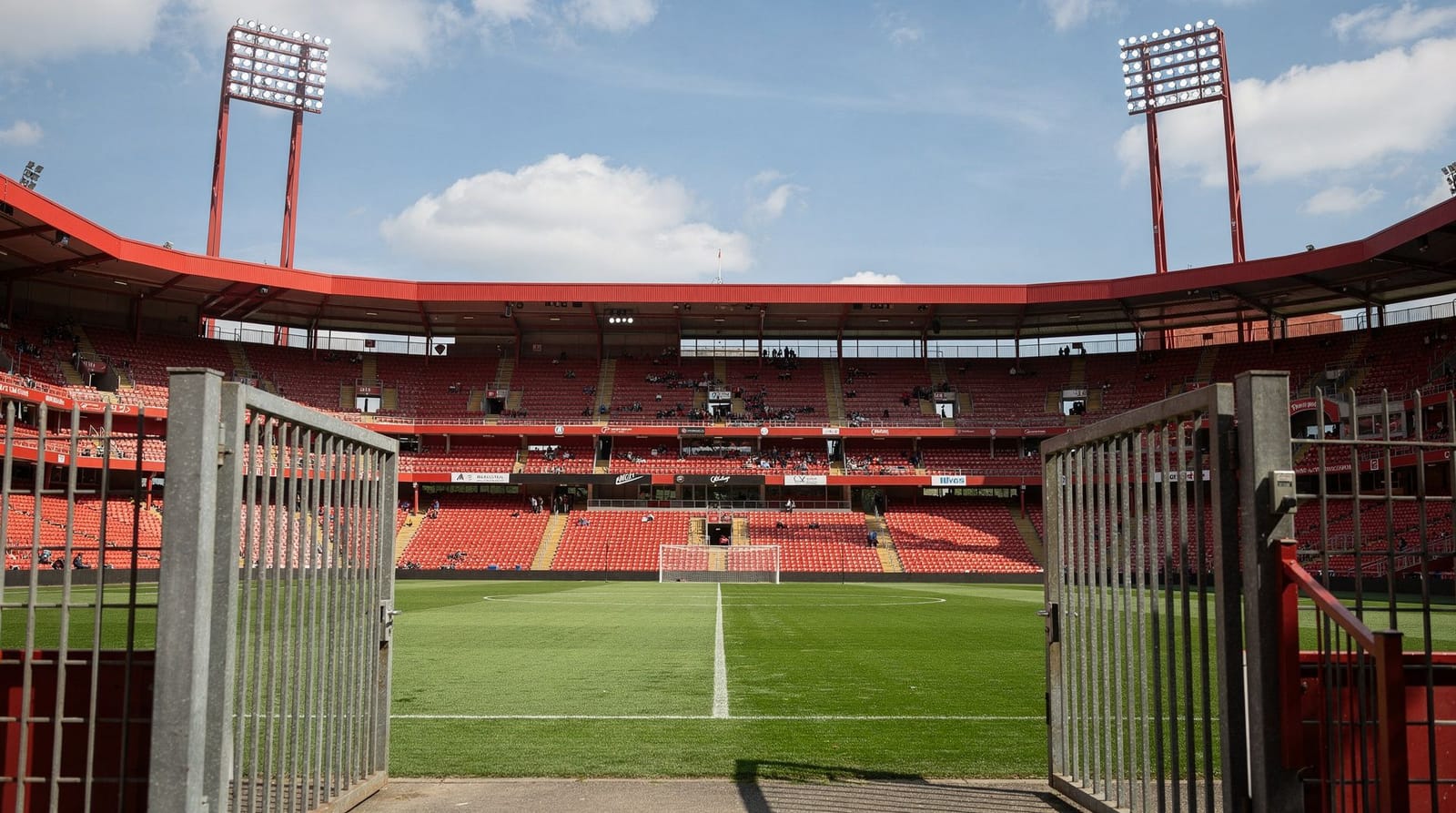
- Anfield (Liverpool FC) and Hill Dickinson Stadium (Everton FC, opened 2025)
- Currency
- GBP (£), many attraction listings also show USD ($) via GetYourGuide
Quick answer: Liverpool is a 45-minute direct or one-change train from Chester, making it the easiest big-city day trip in this guide. It’s built on three pillars — the Beatles’ childhood city, two Premier League football clubs (Liverpool FC at Anfield, Everton FC at the new Hill Dickinson Stadium), and a UNESCO-recognised waterfront of docks and museums — and a well-planned single day covers a reasonable slice of all three, though two days lets you actually relax.
| Where | Merseyside, ~45 minutes from Chester by train |
| Cost | Attraction tickets roughly £15-35 each; free museums available |
| Time needed | 1 full day, 2 days to do it properly |
| Getting there | Direct or one-change train to Liverpool Lime Street |
| Best time | Year-round; avoid matchday Saturdays for stadium tours |
Why Liverpool works so well as a Chester day trip
Trains from Chester to Liverpool Lime Street run roughly hourly, take about 45 minutes, and sometimes require one change depending on the operator and time of day — check Chester Trains Day Trips and Chester to Liverpool for current timetable patterns before you go, since off-peak and weekend schedules shift. Lime Street station drops you a short walk from the city centre, so unlike some day trips in this guide there’s no onward bus or taxi needed to start sightseeing.
The Beatles: still the city’s biggest draw
Liverpool’s Beatles heritage is dense enough that you have to choose a format rather than try to do all of it. The big three anchor sites are the Cavern Quarter on Mathew Street (the reconstructed Cavern Club sits on the site of the original, which was demolished in 1973 and later partially rebuilt using original bricks), the Beatles Story museum on Albert Dock, and the childhood homes of John Lennon (Mendips) and Paul McCartney (Forthlin Road), both National Trust properties reachable only by pre-booked minibus tour from the city centre.
The Beatles Story entry ticket is the straightforward option if you have half a day — a chronological walk-through museum at Albert Dock covering the band’s rise, Hamburg years and split.
If you’d rather cover ground with commentary, the Magical Mystery bus tour hits the exterior sites (childhood streets, Penny Lane, Strawberry Field) in about two hours, and taxi-tour variants let you go at a more flexible pace with a driver who’s usually a genuine local enthusiast rather than a scripted guide. Full comparison of every Beatles tour format at Beatles Liverpool Guide and Magical Mystery Tour, with the Cavern Club specifically covered at Cavern Club and the childhood homes at Beatles Childhood Homes.
Honest note: the current Cavern Club is a rebuild, not the original 1957 cellar (which was filled in and built over before being partly reconstructed nearby using salvaged bricks) — most visitors don’t mind once they know, but it’s worth knowing rather than assuming you’re standing in the exact spot the Beatles played in 1961.
Penny Lane and Strawberry Field, both immortalised in 1967 songs, sit a few miles south of the centre in the Woolton and Allerton suburbs — Strawberry Field (the former Salvation Army children’s home behind the famous red gates) now has a proper visitor centre run by the Salvation Army, a genuine improvement on the “just a gate for photos” experience of a decade ago, while Penny Lane itself is a real, functioning suburban shopping street rather than a preserved attraction — the barber shop and roundabout referenced in the lyrics are recognisable but it’s a working street, not a museum piece, and a taxi tour is the practical way to combine both with the wider Beatles childhood-homes route in one outing.
Liverpool’s wealth, its architecture and the reason for both come from the same two centuries of Atlantic trade, and a tour that starts anywhere else has to double back: a Walk Through Time full history walking tour takes the chronological route instead.
Football: two clubs, two very different traditions
Liverpool is one of the few English cities with two top-flight football clubs a mile apart, and both offer stadium tours on non-matchdays.
Liverpool FC stadium and museum tour takes you through Anfield’s away end approach, the pitch-side view, the dressing rooms and the club museum (around £34/~€39, roughly 1.5 hours) — book ahead, as tours sell out around fixture weeks and pause entirely on and around matchdays.
Everton FC moved into the new Hill Dickinson Stadium at Bramley-Moore Dock on the waterfront in 2025, replacing the old Goodison Park after well over a century there — it’s now a purpose-built modern ground with its own tour product, worth considering if you want the newer, less crowded alternative to Anfield.
The Liverpool-Everton rivalry, known as the Merseyside Derby, is unusual among English football rivalries for being genuinely intertwined at a family and community level — Anfield and Goodison Park sat barely half a mile apart across Stanley Park for over a century, and it’s common for the same family to split support between the two clubs, a contrast to the more geographically or class-divided rivalries elsewhere in English football. Full stadium-tour guide with both clubs compared at Anfield Stadium Tour and Liverpool Football Guide.
A city built on shipping — and its darker history
Liverpool’s wealth and layout were built almost entirely on its role as one of Britain’s busiest ports from the 18th century onward, and an honest visit shouldn’t skip past why: the city was a major hub of the transatlantic slave trade in the 1700s, and its more celebrated Georgian architecture and merchant fortunes are directly tied to that history.
The International Slavery Museum, on Albert Dock, addresses this directly rather than glossing over it, and is genuinely worth an hour or two alongside the more celebratory Beatles and football sites — a fuller picture of the city than the music-and-football version alone. The same shipping wealth later brought waves of immigration (Irish, Welsh, Chinese — Liverpool’s Chinatown is one of the oldest Chinese communities in Europe, dating to the 1830s) that shaped the city’s culture, accent and food scene in ways still visible today.
Two cathedrals, one street
Liverpool has two cathedrals within walking distance of each other on Hope Street, an unusual pairing worth knowing about even for visitors with no particular religious interest. Liverpool Cathedral (Anglican), completed in 1978 after a 74-year construction process, is the largest cathedral building in Britain and one of the largest in the world by floor area — its tower has a viewing platform with genuinely good city views, less crowded and cheaper than most comparable city viewpoints.
The Metropolitan Cathedral (Catholic), a strikingly modern 1967 circular building nicknamed locally “Paddy’s Wigwam,” replaced an abandoned earlier design that would have rivalled St Peter’s in Rome in scale before funding ran out. Walking Hope Street between the two — passing the Philharmonic Hall and the genuinely ornate Philharmonic Dining Rooms pub, whose Victorian gentlemen’s toilets are themselves a minor tourist attraction — is a good hour of architecture without needing tickets to anything.
Beyond the Beatles: Liverpool’s wider music scene
The Beatles understandably dominate Liverpool’s music branding, but the city’s musical output didn’t stop in 1970 — Liverpool has produced a disproportionate number of UK chart acts across the decades (Frankie Goes to Hollywood, Echo & the Bunnymen, The Zutons, Cast, and more recently a strong indie and dance-music scene), and it hosted the Eurovision Song Contest in 2023 on behalf of Ukraine, a significant moment that added a modern layer to the city’s music-city identity beyond heritage tourism. The Cavern Quarter and nearby Concert Square remain a genuine nightlife hub, distinct from — though sometimes mixed in with — the more heritage-focused Beatles tourism trail.
The waterfront: museums, cruises and the Three Graces
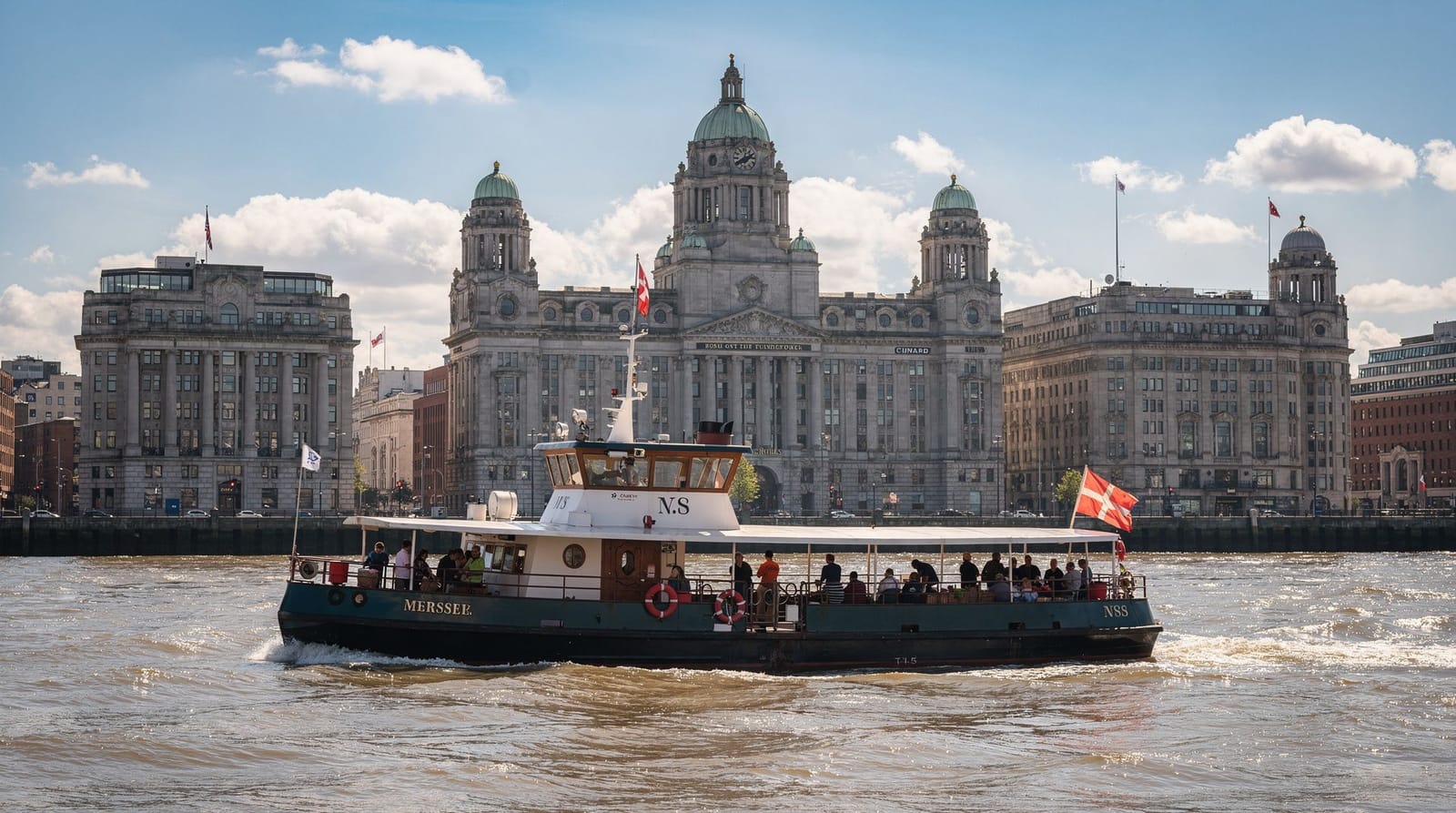
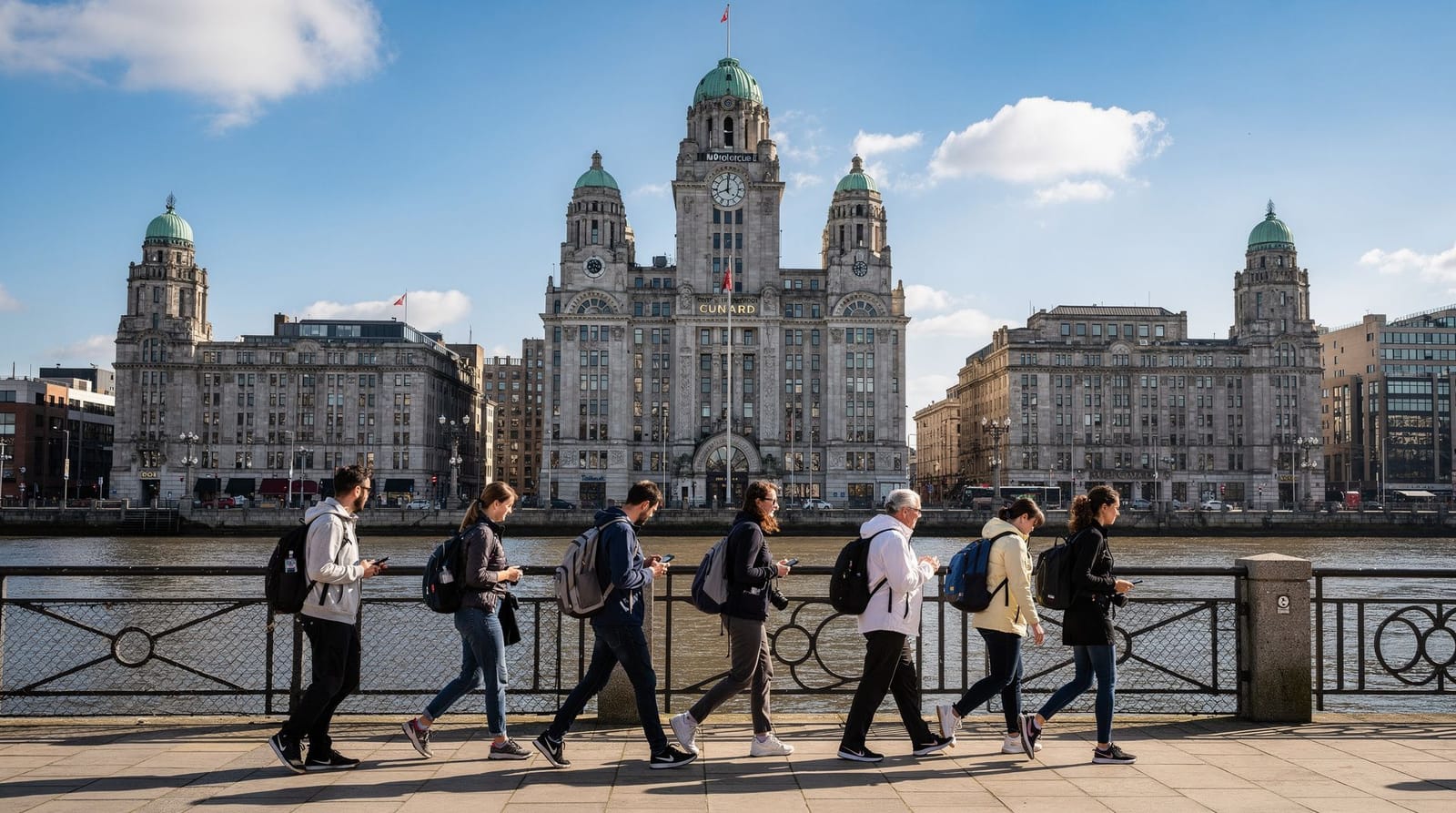
Albert Dock and the Pier Head waterfront (home to the “Three Graces” — the Royal Liver Building, Cunard Building and Port of Liverpool Building) form a UNESCO World Heritage-recognised historic dock complex, though it’s worth noting Liverpool was removed from the UNESCO World Heritage list in 2021 over waterfront development concerns — a genuinely unusual event and a useful honest-planner footnote for anyone assuming the “UNESCO” branding still applies unconditionally.
Sightseeing river cruise on the Mersey is a 50-minute loop past the docks and the Three Graces, a good way to see the waterfront from the water without committing a full afternoon. The Museum of Liverpool (free) and Merseyside Maritime Museum (free) both sit on the dock and cover the city’s shipping and social history, including the Titanic (registered in Liverpool) and the transatlantic slave trade, addressed directly in the International Slavery Museum on the same site.
Georgian Liverpool: a quieter architectural side
Beyond the docks and football grounds, Liverpool’s Georgian Quarter — centred on Rodney Street, Falkner Street and the surrounding grid — holds one of the largest concentrations of Georgian architecture outside London, a legacy of the merchant wealth generated by the city’s 18th and 19th-century shipping trade.
Rodney Street specifically earned its “Harley Street of the North” nickname from the historic density of doctors’ consulting rooms along the street, several still marked by original brass nameplates, and the poet and singer-songwriter William Ewart Gladstone (later a four-time British Prime Minister) was born on the street. It’s a genuinely pleasant area for an unhurried walk away from the busier tourist trail, and a useful contrast to the more heavily commercialised Albert Dock and Cavern Quarter areas most first-time visitors stick to.
Reaching Anfield and the Everton stadium
Anfield sits about 2 miles north of the city centre — walkable in 35-40 minutes, or a 10-15 minute bus ride (several routes run from the city centre) or taxi. The new Everton stadium at Bramley-Moore Dock is closer to the waterfront, roughly a 20-25 minute walk along the dock road from Albert Dock, or a short bus/taxi ride. Neither ground has its own dedicated rail station, so budget the extra travel time on top of whichever stadium tour you book, particularly if you’re trying to fit a tour around a tight train-return window back to Chester.
Getting around once you’re there
Open-top hop-on hop-off bus tour is a reasonable way to link the city centre, Beatles sites and waterfront if you’re short on time or don’t want to work out bus routes, though the city centre itself is compact enough to walk between most sights in 15-20 minutes.
Where to eat and shop
Liverpool’s food scene runs from Bold Street’s independent restaurants and cafés to the Baltic Triangle’s converted-warehouse bars and street-food halls (Camp and Furnace, Baltic Market), generally cheaper than equivalent options in Manchester or Chester’s tourist core. Maray on Bold Street (Middle Eastern small plates) and Duke Street’s food quarter are both reasonable options away from the Albert Dock tourist premium; the Philharmonic Dining Rooms on Hope Street doubles as a genuine architectural sight and a solid pub lunch.
Liverpool ONE, the large open-air shopping district linking the city centre to the waterfront, covers conventional retail, while Bold Street and the Georgian Quarter (centred on Rodney Street, sometimes called “the Harley Street of the North” for its concentration of historic doctors’ consulting rooms) offer a more independent, less chain-dominated shopping and wandering experience. Full breakdown at Liverpool Food Guide, and Liverpool ONE for shopping at Liverpool One.
A note on Scouse culture
Liverpudlians are known nationally as “Scousers,” a name derived from lobscouse, a cheap sailors’ stew historically eaten by the city’s dockworkers and still served in a handful of traditional cafés today. The accent and dry, self-deprecating humour associated with the city are genuinely distinct from the rest of North West England, shaped partly by the waves of Irish and Welsh immigration mentioned above — worth knowing as context for why Liverpool markets itself with a stronger sense of separate cultural identity than most other stops on this site.
Honest cautions
Stadium tours pause on and around matchdays and sell out in advance for both clubs — check fixture lists before building a day trip around a stadium tour specifically. Some Beatles walking tours cover ground that’s genuinely just a plaque or a street corner now (the original Cavern, the demolished Casbah Coffee Club sites) — manage expectations that this is heritage tourism built on absence as much as preserved buildings. And the Albert Dock area, while genuinely worth visiting, does carry a tourist-premium on food and drink prices compared to the Baltic Triangle a short walk away.
Liverpool or Manchester: which day trip suits you
Both cities are roughly similar travel time from Chester (Liverpool marginally quicker at ~45 minutes versus Manchester’s ~1 hour) and both offer football-plus-museums days out, so the choice usually comes down to specific interest: Liverpool for the Beatles, two rival clubs in closer proximity, and a stronger maritime-history angle; Manchester for a broader free-museum roster (Science and Industry Museum, John Rylands Library) and slightly easier onward access to the Peak District. See Chester to Liverpool and Chester to Manchester for a fuller side-by-side.
Liverpool with children
Liverpool works reasonably well as a family day trip, particularly the waterfront’s free museums (Museum of Liverpool has hands-on exhibits aimed at younger visitors) and the World Museum in the city centre, which covers natural history, ancient Egypt and an aquarium-style section — also free. The Beatles sites are a harder sell for younger children without an interest in 1960s music, and stadium tours, while generally family-friendly, involve a fair amount of walking and standing that can tire out under-eights. For a rainy-day fallback, the covered Liverpool ONE shopping district and the free indoor museums cover most of a wet afternoon without needing to book anything in advance.
Getting from Chester to Everton’s new stadium specifically
Because Hill Dickinson Stadium only opened in 2025, its transport links are still bedding in compared with the well-established routes to Anfield — currently the most reliable approach from the city centre is bus or taxi along the dock road, since the nearest rail options remain a short onward journey rather than a direct walk. If Everton is specifically your reason for visiting, build in slightly more buffer time than you would for Anfield until the newer ground’s transport patterns settle into the same predictability as its older Merseyside counterpart.
Sefton Park and the quieter southern suburbs
Beyond the city centre and waterfront, Sefton Park, a large Victorian park in the south of the city, holds the Palm House (a restored Victorian glasshouse) and gives a genuinely different, more residential view of Liverpool than the tourist trail around Albert Dock and the Cavern Quarter. It’s a reasonable half-hour add-on if you’re staying overnight and want a break from museums and stadiums, though it’s a longer trip out for a single-day visitor and not usually worth prioritising over the Beatles sites or waterfront on a first visit.
Liverpool’s comedy and theatre scene
Beyond music, Liverpool has a strong reputation for comedy and theatre, partly rooted in the same dry, self-deprecating Scouse humour mentioned above — the Liverpool Empire hosts major touring shows and comedy, while smaller venues around the Baltic Triangle and Ropewalks host stand-up and fringe theatre most weeks. It’s not usually the reason people plan a day trip, but worth knowing about if you’re staying overnight and want an evening beyond a pub crawl or restaurant meal.
Planning your day
For a single-day trip from Chester, Chester Liverpool Weekend builds in an overnight if you want to add a second day, and Beatles Liverpool Day Trip is a tighter, music-focused single-day plan. If you’re weighing Liverpool against basing yourself in Chester for the whole trip, the direct comparison is at Chester vs Liverpool Base.
Frequently asked questions about Liverpool
How long is the train from Chester to Liverpool?
About 45 minutes, running roughly hourly, sometimes direct and sometimes with one change depending on the specific service — check current timetables at Chester Trains Day Trips before travelling.
Can you see the Beatles sites and a football stadium in one day?
Yes, but it’s a full day and requires an early start: Beatles Story or a Beatles walking tour in the morning, lunch in the city centre, then an afternoon stadium tour (subject to matchday availability). Two days removes the rush.
Is the Cavern Club the original venue?
No — the original 1957 cellar club was filled in and built over in 1973. The current Cavern Club is a rebuild on essentially the same site, using some original bricks, but it is not the exact unaltered venue the Beatles played in.
Do I need to book Anfield or Everton stadium tours in advance?
Yes, strongly recommended — both sell out around fixture weeks and are unavailable on and around matchdays. Book at least a few days ahead in peak season.
Is Liverpool still a UNESCO World Heritage Site?
No — Liverpool’s waterfront was removed from the UNESCO World Heritage list in 2021 due to development concerns, an unusual delisting worth knowing if you’ve read older material calling it a current UNESCO site.
Which is better for a football fan with limited time: Liverpool FC or Everton?
Liverpool FC’s Anfield tour is the longer-established product with a bigger trophy history to walk through; Everton’s Hill Dickinson Stadium tour (from 2025) is newer and often less crowded. Neither is a wrong choice — it depends whether you’re a fan of one club specifically.
Is Liverpool walkable, or do you need public transport?
The city centre, Beatles sites and waterfront are all walkable within about 20-30 minutes of each other. Anfield and the new Everton stadium are further out and better reached by bus, taxi or the tour operator’s own transport.
Is a day trip enough, or should I stay overnight?
A well-planned single day covers a reasonable amount (one Beatles activity, the waterfront, maybe a stadium tour), but Liverpool has enough depth — nightlife, a wider food scene, Sefton Park, the Georgian Quarter — that an overnight stay lets you see it at a less rushed pace.
Is the International Slavery Museum worth visiting?
Yes — it addresses Liverpool’s role in the transatlantic slave trade directly rather than glossing over it, and gives a fuller picture of the city’s history than the Beatles and football sites alone.
Which is quicker from Chester: Liverpool or Manchester?
Liverpool, marginally — about 45 minutes direct or one change, versus roughly an hour to Manchester Piccadilly. Both are reasonable single-day trips from Chester.
Top experiences
Bookable activities with verified prices and instant confirmation on GetYourGuide.