Manchester: football, museums and a proper city day trip
Manchester from Chester: an hour by train for Old Trafford, the Etihad, free museums and the Northern Quarter, plus honest day-trip planning.
Old Trafford: Manchester United Museum and Stadium Tour
Quick facts
- Train from Chester
- ~1 hour direct to Manchester Piccadilly
- Football grounds
- Old Trafford (Manchester United), Etihad Stadium (Manchester City)
- Free museums
- National Football Museum, Science and Industry Museum, Manchester Art Gallery
- Also gateway to
- Peak District and Lake District day trips
- Currency
- GBP (£)
Quick answer: Manchester is about an hour by direct train from Chester to Piccadilly station, making it a straightforward full-day trip. The city’s main draws are two Premier League football clubs (Manchester United at Old Trafford, Manchester City at the Etihad), several genuinely good free museums, and — for travellers with a car or willing to book a tour — onward access to the Peak District and Lake District.
| Where | Manchester city centre, ~1 hour from Chester by train |
| Cost | Stadium tours roughly £25-35; several major museums free |
| Time needed | 1 day, 2 days with a Peak District or Lake District add-on |
| Getting there | Direct train to Manchester Piccadilly |
| Best time | Year-round; avoid matchday Saturdays for stadium tours |
Getting there and around
Direct trains from Chester to Manchester Piccadilly run frequently and take about an hour; see Chester to Manchester and Chester Trains Day Trips for timetable patterns. Manchester’s city centre is compact and walkable, but Old Trafford and the Etihad Stadium sit outside the core — Old Trafford is reachable by tram (Manchester Metrolink) from the city centre in about 15-20 minutes, and the Etihad similarly by tram toward east Manchester.
Old Trafford: Manchester United’s “Theatre of Dreams”
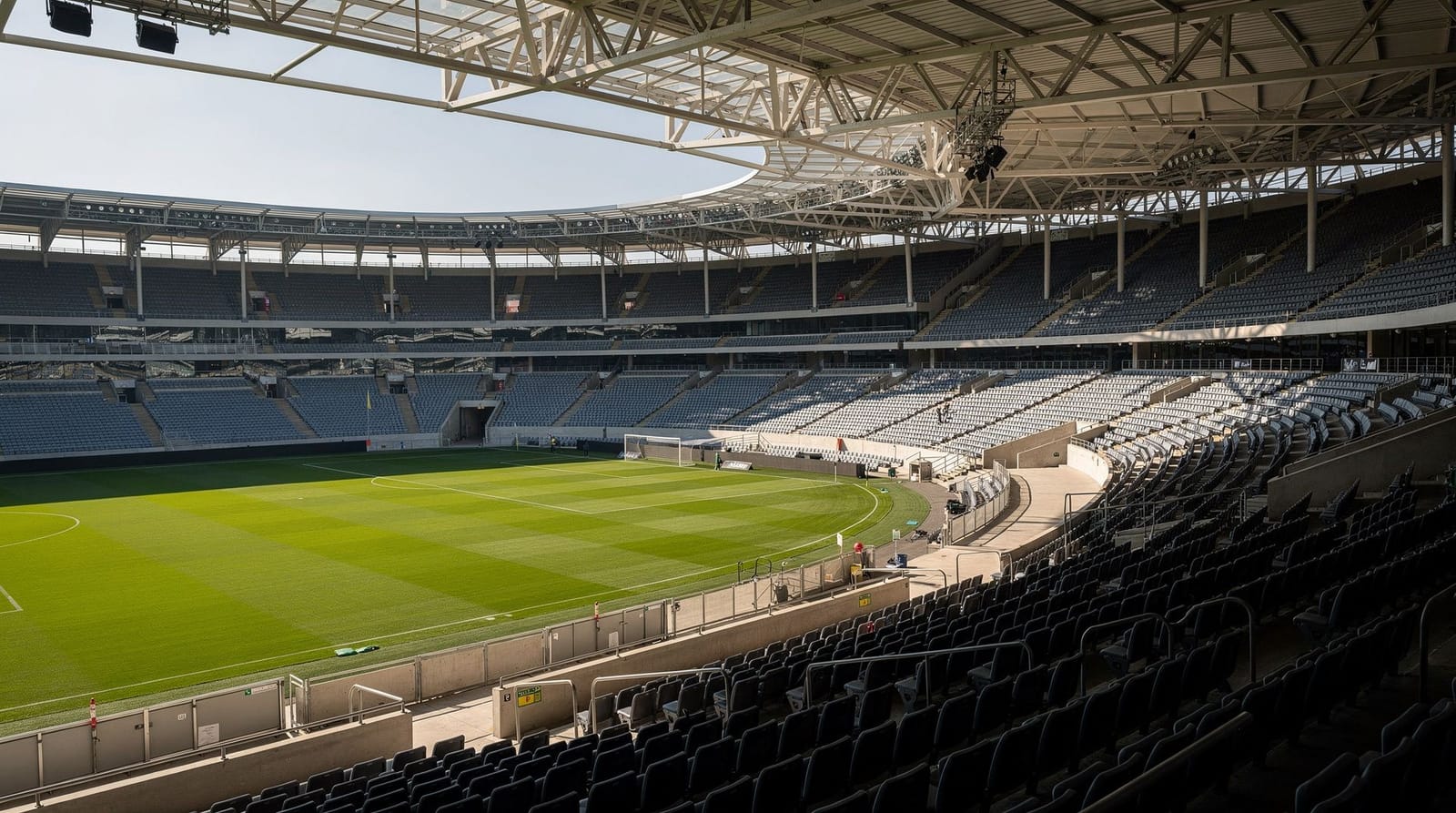
Old Trafford, Manchester United’s home since 1910 and the largest club football stadium in England outside Wembley, offers a museum-and-stadium tour covering the trophy room, dressing rooms and a pitch-side walk.
Old Trafford museum and stadium tour runs on non-matchdays and is worth booking ahead in peak season — full review at Old Trafford Tour, and the match-day-specific experience (a different, pricier product that includes attending an actual fixture as a hospitality guest) is covered separately since it’s a genuinely different product from the museum tour.
Manchester’s centre reads as Victorian commerce rather than a medieval core, and the warehouses that look interchangeable were built for specific trades with specific rules: a Fascinating Manchester private walking tour makes those distinctions visible.
The Etihad: Manchester City’s modern home
Manchester City’s Etihad Stadium, expanded significantly since the club’s 2008 takeover, runs its own stadium-and-academy tour.
Etihad Stadium tour covers the stadium in about 75 minutes and is generally less crowded than the Old Trafford equivalent, worth considering if you’d rather avoid the bigger tourist volume around United’s ground. See Etihad Stadium Tour for the full comparison with Old Trafford, and Manchester Football Guide for both clubs’ history and rivalry context (a genuinely one-sided rivalry for most of the 20th century, which changed dramatically after City’s ownership change).
The Manchester Derby’s modern intensity dates specifically to Manchester City’s 2008 takeover by Abu Dhabi United Group, which funded a rapid rise from a mid-table club to one of the dominant forces in English and European football within about a decade — a transformation that reshaped both the football rivalry and, less obviously, the physical landscape of east Manchester around the Etihad, where the club has funded substantial local redevelopment alongside the stadium expansion.
Manchester United’s history runs deeper and further back, including the 1958 Munich air disaster that killed eight players and remains a solemn, still-marked part of the club’s identity — a memorial plaque and clock at Old Trafford commemorate the crash, and it’s treated with genuine reverence by both the club and the city rather than as a footnote in the museum tour.
The National Football Museum, housed in the striking Urbis glass building in the city centre, is free to enter and covers the sport’s English history broadly rather than either club specifically — a good rainy-day option that doesn’t require choosing a side.
National Football Museum admission — note that basic entry is free at the door; paid tickets typically cover special exhibitions or skip-the-queue timing.
Free museums beyond football
Manchester has an unusually strong roster of free museums for a city its size. The Science and Industry Museum, on the site of the world’s oldest surviving passenger railway station (Liverpool Road, 1830), covers the city’s Industrial Revolution history including cotton mills and early computing (the Manchester Baby, the world’s first stored-program computer, was built here in 1948). Manchester Art Gallery holds a strong Pre-Raphaelite collection, also free.
John Rylands Library, a Victorian Gothic building on Deansgate, is free to enter and worth it for the reading room alone even if you have no interest in its rare-book collections — the building was completed in 1900 and funded by the widow of a textile magnate as a memorial to her husband, and its neo-Gothic vaulted ceilings and stained glass have led some visitors to describe it, not entirely jokingly, as looking more like a cathedral than a library. It holds a genuinely significant rare-book and manuscript collection, including one of the oldest known fragments of the New Testament, though most casual visitors come for the architecture rather than the archive itself.
A short history: from cotton to Madchester to the modern rebuild
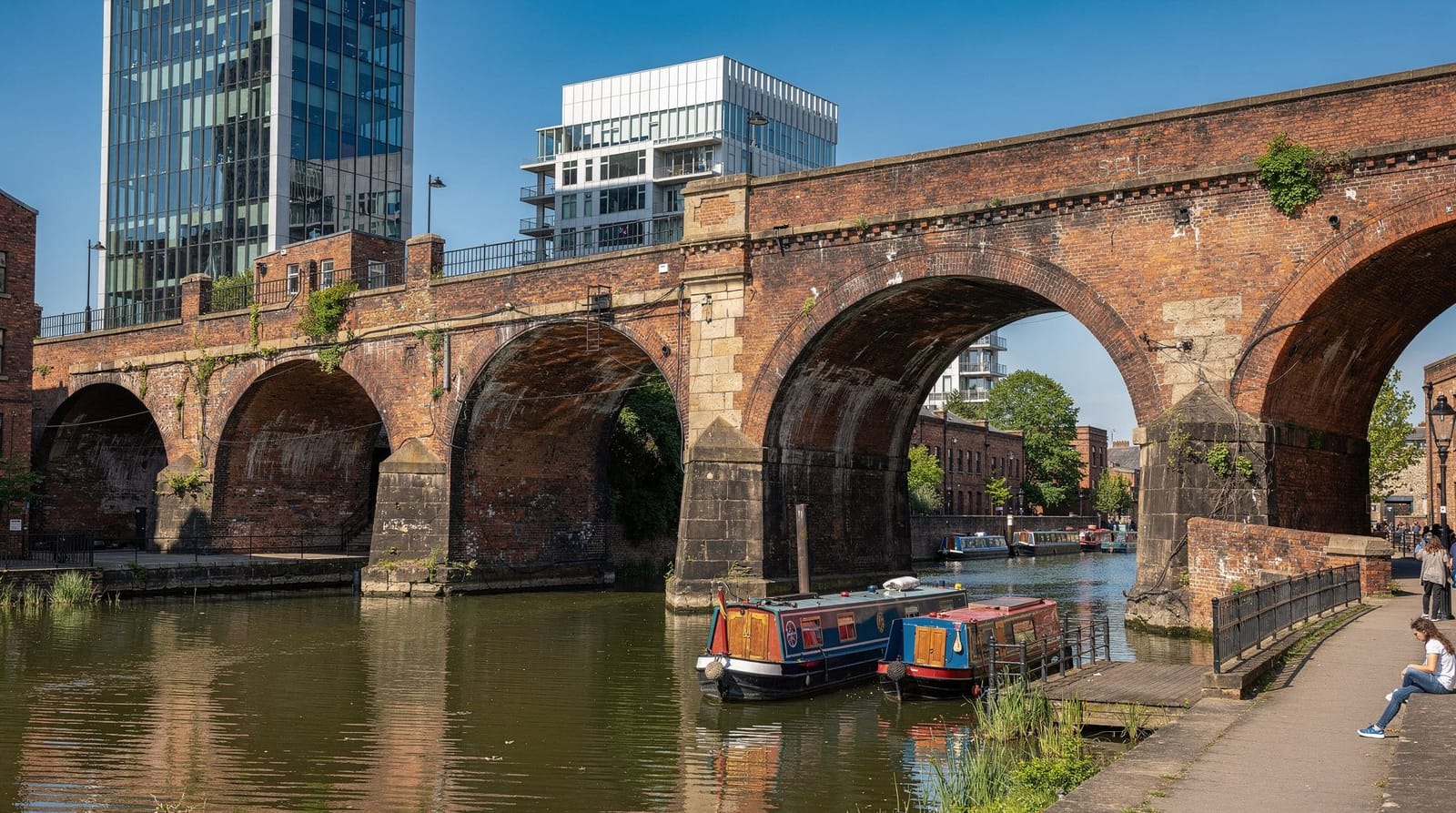
Manchester’s modern identity is built on layers that are worth knowing before you arrive. It was the world’s first industrialised city, earning the nickname “Cottonopolis” in the 19th century for its dominance of global cotton and textile manufacturing, and the canal and railway infrastructure built to move that trade (much of it still visible around Castlefield’s restored warehouses and viaducts) shaped the city’s physical layout. In the late 1980s and early 1990s, Manchester became the centre of the “Madchester” music and club scene (Happy Mondays, Stone Roses, the Hacienda nightclub), a cultural moment still referenced constantly in the city’s branding and pub names.
A 1996 IRA bombing in the city centre, while a genuinely traumatic event, indirectly accelerated a major redevelopment of the retail core (the Arndale Centre and surrounding streets were substantially rebuilt), and the 2002 Commonwealth Games prompted further regeneration around the Etihad Stadium’s original construction. Manchester today reads as a city that has rebuilt itself more deliberately and more recently than most comparable British cities, which is part of why its skyline (a growing cluster of tall residential towers) looks noticeably more contemporary than Chester’s or Liverpool’s.
The Northern Quarter and Curry Mile
The Northern Quarter, Manchester’s former textile-warehouse district, has become the city’s independent shopping, street-art and bar hub — a good few hours for anyone tired of chain-store centres. For food with a specific identity, the Curry Mile in Rusholme (a couple of miles south of the centre) is one of the highest concentrations of South Asian restaurants in the UK, a legacy of Manchester’s large British-Pakistani and British-Bangladeshi communities.
Manchester city highlights walking tour is a reasonable orientation option if you want a guide connecting the Northern Quarter, industrial heritage and city centre in one go — see Manchester Football Guide and Day Trips from Chester for how Manchester compares to Chester’s other day-trip options.
MediaCityUK and Salford Quays
MediaCityUK, at Salford Quays a short tram ride from the centre, is the relocated home of much of the BBC’s national operations (moved from London starting in 2011) alongside ITV Studios, built on redeveloped former docklands. It’s a genuinely different Manchester from the Victorian city centre — modern architecture, waterside walkways, and occasional public tours or filming-related events depending on what’s in production.
The Imperial War Museum North, designed by architect Daniel Libeskind with a deliberately fractured, disorienting building form intended to evoke conflict, sits on the same waterfront and is free to enter — a strong option if you’ve already covered the football and Beatles-adjacent Manchester music history and want something different.
Castlefield and the canal network
Castlefield, at the western edge of the city centre, is Manchester’s original Roman settlement site (Mamucium, founded around AD 79 — a genuine parallel to Chester’s own Roman origin story, though far less of it survives above ground) and later became the hub of the city’s canal-and-railway industrial infrastructure. Today it’s a pleasant, walkable district of restored warehouses, canal towpaths and the Museum of Science and Industry’s outdoor exhibits, worth 30-45 minutes if you’re moving between the city centre and the football stadiums, both of which are reachable via tram routes that pass close to or through the area.
Manchester as a gateway to the Peak District and Lake District
Less obviously, Manchester also functions as a jumping-off point for travellers who want to combine a city day with the Pennine countryside — the Peak District’s western edge is genuinely close to the city, and several Lake District day tours also depart from here as an alternative to Chester’s own routing.
For travellers extending north, Lake District covers the Windermere and Cumbria side of things in detail; a Manchester-based Lake District tour is a practical alternative if you’re staying in the city rather than Chester specifically.
The Christmas markets and Manchester’s events calendar
Manchester’s Christmas Markets, running from mid-November through the holiday season across several sites in the city centre (Albert Square, King Street and others), are among the largest and most established in the UK, drawing visitors specifically for the market season alongside the city’s usual attractions — worth knowing if your Chester-based trip falls in that window, since a Manchester day trip pairs naturally with Chester Christmas Market, Chester’s own smaller equivalent.
Outside the festive season, Manchester’s events calendar is dense with football fixtures (obviously), but also major touring concerts at the AO Arena (one of the largest indoor arenas in Europe) and a full theatre and gig circuit that gives the city a noticeably livelier evening scene than Chester’s more subdued after-dark offering.
Where to eat and shop
Manchester’s food scene is genuinely broader than Chester’s — beyond the Curry Mile, the Northern Quarter and Ancoats (a former industrial district turned restaurant strip, now home to some of the city’s most talked-about independent restaurants) both have strong options, and the city has developed a reputation over the past decade as one of the stronger food cities in the North of England, second only to Manchester’s own claim of rivalling London in variety if not always in Michelin recognition.
The Trafford Centre, a large indoor shopping and leisure complex a short drive or tram ride from the centre, and the more central Arndale Centre cover conventional retail if that’s the priority, while Afflecks in the Northern Quarter is a long-running indoor market of independent, alternative and vintage stalls — a genuine piece of the city’s countercultural history rather than a modern retail concept dressed up as heritage.
Practical planning notes
Manchester Piccadilly station sits at the eastern edge of the city centre, a 10-15 minute walk from the main shopping streets and Northern Quarter — closer to the centre than Chester’s own station is to its old town, which is a pleasant surprise for visitors expecting a longer transfer. The Manchester Metrolink tram network is the practical way to reach Old Trafford, the Etihad Stadium, MediaCityUK and the Trafford Centre, all of which sit outside comfortable walking distance from the centre; day tickets are better value than single fares if you’re moving between more than two of these in a day.
Manchester Airport, one of the UK’s largest outside London, sits about 15-20 minutes by direct train from Piccadilly, making the city a genuinely practical arrival or departure point for a wider UK trip that also includes Chester — see Getting to Chester for arrival planning from any of the region’s airports.
Honest cautions
Both stadium tours pause around fixture days and sell out in peak season — check match schedules before building a day trip around either one specifically. Manchester’s weather has a genuine reputation for rain, slightly wetter on average than Chester itself; pack accordingly. And the city centre can feel considerably busier and less walkable-in-one-go than Chester’s compact core — budget more time to move between sights than Chester’s distances would suggest.
Chinatown and the wider city centre food scene
Manchester’s Chinatown, centred on Faulkner Street a short walk from Piccadilly Gardens, is one of the largest in the UK and has its own dense concentration of restaurants beyond the Curry Mile and Ancoats mentioned elsewhere on this page — a genuinely different option if you want a quick, central meal without travelling further out. Combined with the Northern Quarter’s café and bar scene, it means the city centre itself covers a wider range of food than a single afternoon can realistically sample, worth knowing if you’re deciding where to base a short lunch stop between museums and a stadium tour.
Manchester with children
The free museums do most of the heavy lifting for a family day — the Science and Industry Museum has genuinely hands-on exhibits that work well for children, and the National Football Museum’s interactive zones (penalty shootout simulators and similar) are a reliable hit for football-mad kids regardless of which club they support. Stadium tours suit school-age children more than toddlers, given the amount of walking and standing involved, and the Trafford Centre’s indoor leisure facilities are a practical rainy-day fallback if the weather turns. See Family Days Out Cheshire for how a Manchester day compares to Cheshire-based family options closer to Chester.
Manchester’s live music heritage beyond Madchester
Beyond the Hacienda-era scene mentioned above, Manchester’s music identity runs deeper — the Free Trade Hall (now a hotel) hosted a famous, disputed 1966 Bob Dylan “Judas” heckling moment during his controversial switch to electric guitar, and the city’s live circuit today spans the AO Arena’s arena-scale touring shows down to small Northern Quarter venues that still book emerging bands most nights of the week. It’s a genuinely deeper music city than its 1990s branding alone suggests, worth knowing if evening entertainment factors into an overnight stay.
Planning your day
North West England 5 Days treats Manchester as one stop in a wider regional trip; for a single focused day, pair this guide with Chester to Manchester and Best Day Trips by Train to decide whether Manchester or Liverpool suits your interests better on a given day.
Frequently asked questions about Manchester
How long is the train from Chester to Manchester?
About an hour direct to Manchester Piccadilly, with frequent services throughout the day.
Can you visit both Old Trafford and the Etihad in one day?
It’s possible but tight — both require travel time from the city centre by tram and neither tour is especially short. Most visitors pick one club’s tour per day trip rather than both.
Do stadium tours run on matchdays?
No — both Old Trafford and the Etihad pause their standard museum-and-stadium tours on and immediately around fixture days. Always check the match schedule before booking.
Is the National Football Museum free?
Basic entry is free. Paid tickets generally cover special exhibitions or skip-the-queue access rather than standard admission.
What’s the best free thing to do in Manchester?
The Science and Industry Museum and John Rylands Library are both strong free options — the former for industrial and computing history, the latter for the Victorian Gothic reading room alone.
Is Manchester a good day trip if I’m not interested in football?
Yes — the museums (Science and Industry, Art Gallery, John Rylands Library), the Northern Quarter’s shops and street art, and the Curry Mile all stand on their own regardless of football interest.
Can I get to the Lake District from Manchester instead of Chester?
Yes — several Lake District day tours depart from Manchester as an alternative routing, useful if you’re staying in the city rather than using Chester as your base.
Is Manchester bigger than Chester?
Considerably — Manchester’s metropolitan area has a population in the millions compared to Chester’s roughly 80,000, and the city centre itself takes noticeably longer to cross on foot than Chester’s compact core.
Is Manchester Airport a good arrival point for a Chester-based trip?
Yes — it’s one of the UK’s largest airports outside London, roughly 15-20 minutes by direct train from Manchester Piccadilly and about 45 minutes to an hour onward to Chester, making it a genuinely practical alternative to flying into Liverpool John Lennon or a London airport if your trip is centred on this region.
What’s the best neighbourhood for a first-time visitor to explore?
The Northern Quarter, for its independent shops, street art and bar scene, gives the clearest sense of Manchester’s post-industrial reinvention in a single compact area — a good starting point before deciding whether football, museums or the wider waterfront redevelopment at Salford Quays suit the rest of your day.
Is Manchester good for families?
Yes — the free museums (Science and Industry, National Football Museum) offer genuinely hands-on exhibits, and the Trafford Centre’s indoor leisure facilities are a practical fallback if the weather turns.
Can I do Manchester and the Peak District in one day from Chester?
It’s tight but possible if you’re driving and keep the Peak District portion short — most visitors treat it as a two-day combination, one day in the city and a separate day for the Pennine countryside.
Top experiences
Bookable activities with verified prices and instant confirmation on GetYourGuide.