Etihad Stadium tour guide — Manchester City's ground from Chester
Etihad Stadium: The Manchester City Stadium Tour
Duration: 75 minutes
How much does the Etihad Stadium tour cost?
The Manchester City Stadium Tour costs around £30-37 for adults and runs about 75 minutes, covering the dressing rooms, tunnel, pitchside and trophy displays from the club's recent run of Premier League titles. Academy tour add-ons are available at extra cost.
| Where | Etihad Stadium, Manchester (City of Manchester Stadium complex) |
| Cost | around £30-37 adult, family/child pricing available |
| Time needed | ~75 minutes for the standard tour |
| Getting there | Train to Manchester (~1hr from Chester), then Metrolink tram to Etihad Campus |
| Best time | Summer for the most reliable availability outside the fixture calendar |
A newer story than Old Trafford, told well
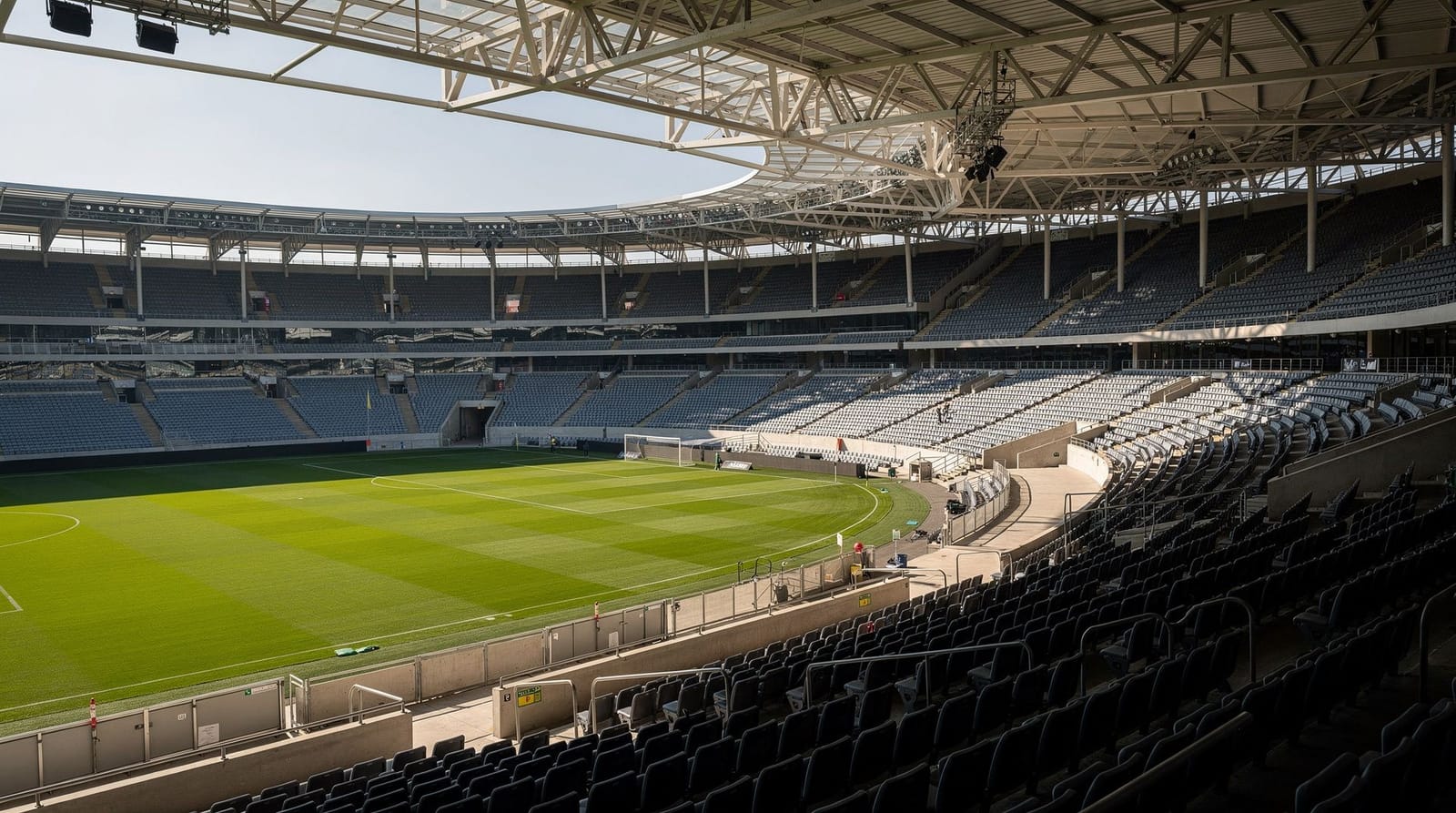
Manchester City’s Etihad Stadium doesn’t have the century of history that Old Trafford or Anfield can point to — it started life as the athletics stadium for the 2002 Commonwealth Games before being converted for football — but the tour tells a different, more recent story: how a club with a modest trophy cabinet through most of its history turned into one of the dominant forces in English and European football over roughly fifteen years. The trophy displays reflect that compressed timeline directly, and for visitors who find the older clubs’ museums a bit heavy on decades-old sepia photos, the Etihad’s version feels more immediate.
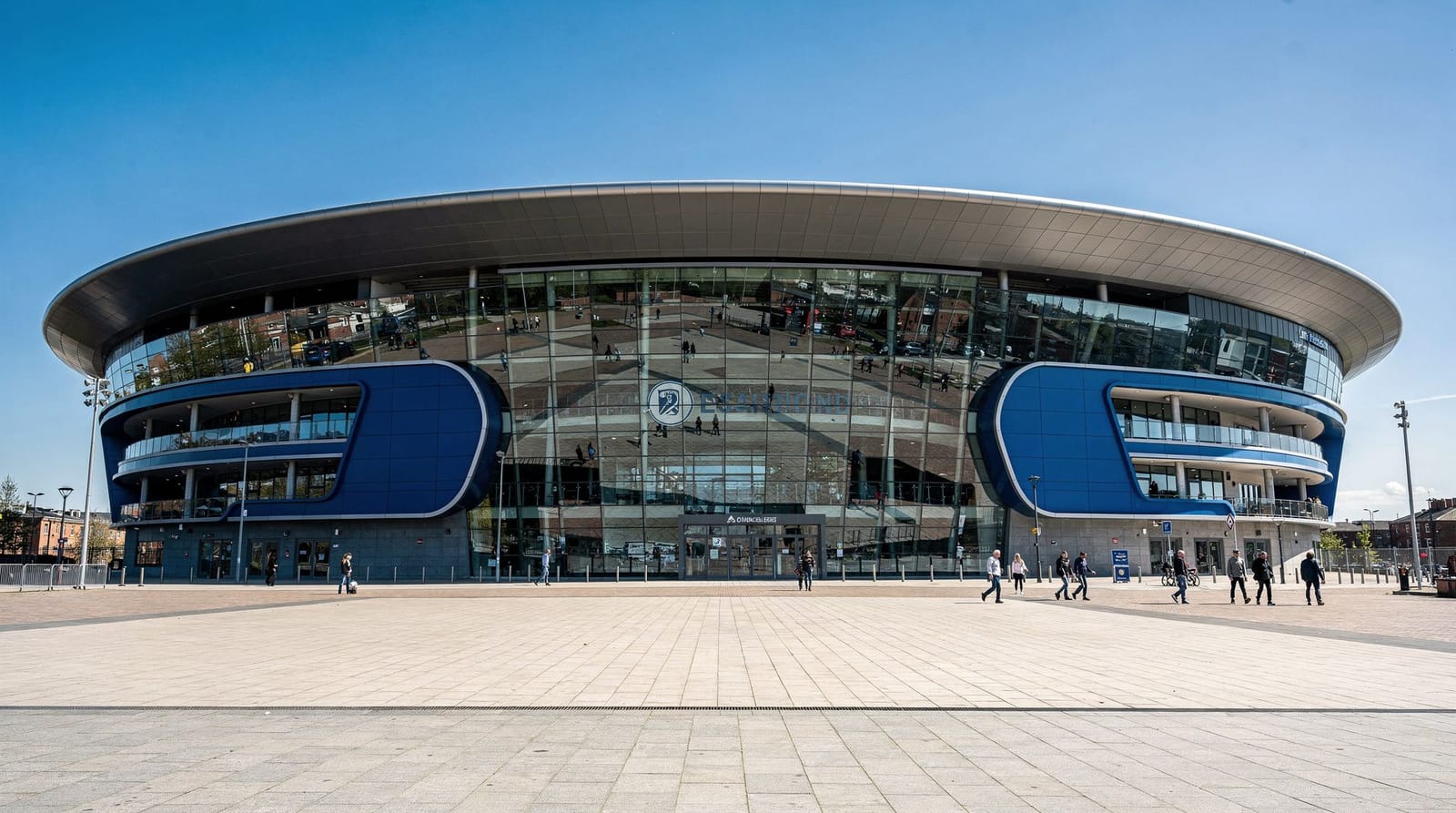
The stadium itself holds around 53,000 and sits in the City of Manchester Stadium complex alongside the club’s training and academy facilities, which is part of what the extended tour options let you see.
What the standard tour covers
Book the Etihad Stadium Tour and you get roughly 75 minutes covering the players’ tunnel, home and away dressing rooms, the manager’s technical area, a pitchside walk, and the trophy room housing the club’s Premier League and domestic cup silverware alongside earlier history. Adult tickets run around £30-37, with family and child pricing available, and the tour operates on a timed, guided-group basis similar to the city’s other stadium tours.
For a longer visit, the Etihad Stadium and City Football Academy Tour extends into the training complex where the first team and academy squads work day to day — a genuinely different offering from the standard stadium walk-through, aimed at visitors with a deeper interest in how a modern top-flight club actually operates rather than just its matchday history.
The Etihad sits in east Manchester, an area rebuilt around the Commonwealth Games and now unrecognisable from what stood there in the nineties: a Manchester private guided walking tour explains how the city moved east.
Matchday access
Like the other Premier League stadium tours, the standard tour doesn’t run on matchdays, and the day either side can be affected by pitch and dressing-room preparation. Check the current fixture list before booking if your Chester trip dates are fixed — if a home game falls during your stay and you don’t have a match ticket, plan the tour for a different day.
Getting to the Etihad from Chester
Train from Chester to Manchester takes about an hour, occasionally with a change depending on the specific service. From Manchester Piccadilly, the Etihad Stadium is reachable by Metrolink tram (Etihad Campus stop) in around 15-20 minutes, or a taxi covering similar ground in about the same time for roughly £15-18. There’s no direct rail line to the stadium itself, so the tram or taxi transfer is a fixed part of the journey either way.
Round trip travel time from Chester runs to about 2.5-3 hours if this is the sole purpose of the day, which pairs reasonably with a few hours in central Manchester before or after, but is a long day if you’re also trying to fit in Old Trafford — the two grounds sit around 4 miles apart. See our Manchester football guide for how to sequence a full day covering both clubs, or scale back to one and spend the rest of the day at the Manchester destination itself.
Etihad vs Old Trafford
The honest comparison for visitors deciding between Manchester’s two stadium tours: Old Trafford offers more history and a larger stadium (roughly 74,000 vs the Etihad’s 53,000), while the Etihad tells a tighter, more recent success story and — with the academy add-on — gives a look at how a modern club trains rather than just its matchday history. Price and tour length are broadly comparable between the two. Choose based on which club you follow; there’s no clear “better” answer for a neutral visitor.
If you’re deciding between a Manchester stadium tour and Liverpool’s Anfield tour instead, that choice is more about which city fits your itinerary — see our Liverpool football guide for the comparison from that side.
| Etihad Stadium | Old Trafford | |
|---|---|---|
| Capacity | ~53,000 | ~74,000 |
| Tour price | ~£30-37 | Broadly comparable |
| Tour length | ~75 minutes | Broadly comparable |
| Story told | Recent success (post-2008) | Over a century of history |
| Extra option | Academy and training complex add-on | — |
For the full Old Trafford tour review covering what that experience adds, see our tours section, or compare travel logistics for both against a trip from Liverpool if you’re combining more than one city.
Combining with the rest of Manchester
A single day from Chester works as: morning train to Manchester, Etihad tour late morning, lunch in the city centre or near the stadium’s own retail park, then an afternoon exploring the Northern Quarter, the Science and Industry Museum, or — if football is the theme of the day — a tram over to Old Trafford for the National Football Museum, which sits centrally near Printworks rather than at either stadium. Our 5-day North West England itinerary routes Manchester alongside Chester and Liverpool without backtracking on trains, and works well if you want to build a football-heavy day into a longer trip.
Tourist traps to avoid
Unofficial resellers around match dates mark up both tickets and merchandise; book through the club’s own channel or a verified operator, and buy shirts from the official club store rather than street vendors near the stadium, where counterfeit kit circulates on matchdays. Parking at the stadium itself is limited and pricier on event days — the tram from central Manchester is the more reliable option for a tour-only visit.
Practical booking notes
Book a few days ahead for weekends and school holidays, when slots for the standard tour and especially the academy add-on sell out. Bring ID matching the booking name, and allow time for bag checks at the entrance, which have become standard practice across major English football grounds. Comfortable shoes are worth it — the pitchside walk and trophy room both involve sustained standing and walking on concrete and turf edges.
A short history worth knowing before you go
The stadium began life as the City of Manchester Stadium, built for the 2002 Commonwealth Games, and was converted into a football ground for Manchester City afterwards — the athletics track was removed and the lower tier brought closer to the pitch, a redevelopment the tour touches on since it explains why the stadium bowl has a slightly different shape from grounds built purely for football.
City moved in for the 2003-04 season, and the club’s transformation from a mid-table side with a modest history into one of the dominant forces in English football happened almost entirely within this stadium, concentrated in the years following a change of ownership in 2008. That compressed timeline is part of what makes the Etihad’s museum feel different from Old Trafford’s or Anfield’s century-plus histories — most of what’s on display happened within the memory of anyone in their 30s or older.
Inside the museum and trophy displays
The trophy displays are dense with recent silverware — multiple Premier League titles, domestic cups and the club’s first Champions League win, all won within a relatively short span. Interactive sections cover the club’s academy pipeline and the training complex visible from the stadium, tying into the extended academy tour option for anyone who wants to see more than the trophy room. Because the collection is more recent, younger visitors sometimes engage with it more readily than with the older, denser historical panels at Old Trafford or Anfield — there’s less “reading a textbook” and more recognisable modern footage and shirts.
Accessibility and visiting with family
The tour route is step-free with lift access, and accessibility-adjusted options (audio description, BSL) can be arranged on request ahead of the visit. Family and under-16 pricing applies, with under-fives typically going free. As with the city’s other stadium tours, younger children often respond best to the pitchside walk and dressing rooms, with the trophy room and academy sections working better for older kids and adults with a deeper interest in the club.
Food and drink near the stadium
The Etihad Campus has more on-site retail and food options than either Old Trafford or Anfield, since it was built more recently as an integrated complex rather than a stadium that grew organically within a residential area — there’s a retail park within walking distance with chain restaurants and cafés. For a wider range of independent options, the short tram ride into central Manchester (Northern Quarter or Ancoats) is still the better choice if you have time before or after the tour.
Best time of year to visit
Summer (June-August) offers the most reliable tour availability with no fixture calendar to navigate. During the season, cup replays and European fixtures (City’s continental football adds another layer of scheduling complexity beyond domestic games) can disrupt the tour calendar at short notice, so check availability close to your travel date rather than booking many months in advance if your visit falls between September and May.
Watching a match without a ticket
If a home fixture falls during your stay and you don’t have a ticket, the area around the Etihad Campus has fewer traditional pubs than the older stadiums since it’s a purpose-built complex rather than a stadium embedded in residential streets — central Manchester’s pubs are a more reliable bet for watching on a big screen with atmosphere, and it keeps your options open for combining the day with the city centre either side of kickoff.
The academy tour in more depth
The Etihad Stadium and City Football Academy Tour extends beyond the stadium bowl into the training complex across the road, where the first team and academy age groups train day to day — a genuinely different sight from the standard stadium tour, since it shows the working side of a modern top-flight club rather than just its matchday history. It runs less frequently than the standard tour and costs more, so it’s worth booking further ahead if this is the version you want, particularly in school holidays when family interest in academy-style content tends to spike.
Etihad Campus practicalities
The wider Etihad Campus includes retail units, a hotel, and open plaza space that gets used for fan events on matchdays — outside of matchdays it’s quieter, and the tour itself is the main reason to visit rather than the surrounding retail, which is fairly standard chain fare. Signage across the campus is clear and the walk from the Etihad Campus tram stop to the tour entrance is short and well-marked, so there’s little risk of getting lost even on a first visit.
Comparing the Etihad to other Manchester stadium tours
For visitors trying to decide how to spend a single football-focused day in Manchester, the practical comparison is straightforward: Old Trafford offers more history and a bigger stadium, while the Etihad offers a tighter, more recent story and the option to see a working training complex via the academy add-on. Price and tour length are broadly similar between the two, so the choice comes down to allegiance or curiosity rather than value — see our Manchester football guide for a side-by-side comparison covering both clubs, transport logistics between the two grounds, and how to build a full day around either or both.
Combining with a wider Manchester visit
If football isn’t the only reason for your Manchester day, the Etihad tour pairs well with an afternoon in the Northern Quarter or a visit to the Science and Industry Museum, both a short tram ride back into the city centre. Families splitting interests — some wanting football, others not — will find the standard 75-minute tour short enough that non-football members of the group can easily explore nearby retail or grab a coffee rather than needing the whole day accounted for by the stadium visit alone.
Manchester City before 2008 — context the tour skips lightly
It’s worth knowing, going in, that City spent long stretches of the 20th century as very much the second club in Manchester, including a spell in the third tier of English football as recently as the late 1990s — a fact the museum doesn’t dwell on for obvious reasons, but one that makes the scale of the subsequent transformation more striking once you know it. The tour’s framing leans heavily on the post-2008 era, which is understandable given that’s where almost all the trophies came from, but visitors with an interest in football history more broadly might want to read up on the club’s earlier decades separately, since the museum treats them as a brief prologue rather than a chapter in their own right.
The Manchester derby, briefly
City’s rivalry with Manchester United has sharpened considerably since the ownership change, turning what was historically a lopsided local derby into one of the most closely watched fixtures in English football. The two stadiums sit close enough — about 4 miles, 25-30 minutes by tram — that visitors sometimes ask about doing both tours in one day; it’s possible but makes for a long, football-only day, and most people are better served picking one based on allegiance and spending the rest of the day on the city itself. Our Old Trafford tour guide covers the United side of the same rivalry if you want the comparison from that angle.
Budgeting the day from Chester
Between the return train, tram or taxi transfer, tour ticket and lunch, a single-person Etihad day from Chester typically runs £70-90 depending on how far ahead you book train tickets. Our Chester travel budget guide covers how a day like this weighs against the rest of a Chester-based trip, and day trips from Chester compares it against other single-day options if football isn’t the only draw.
Gift shop and merchandise, honestly assessed
The official club store within the Etihad Campus stocks the full range of current kit, training wear and gifts, priced in line with other Premier League club shops rather than noticeably cheaper or more expensive. It’s worth buying kit here or through the club’s official website rather than from unofficial vendors, both for authenticity and because counterfeit merchandise sold near stadiums on matchdays rarely holds up to genuine wear. If souvenir shopping isn’t the priority, the tour ticket itself is the better value spend, and browsing the shop afterwards costs nothing beyond the time.
Staying over rather than a same-day return
Some visitors prefer to combine the tour with a night in Manchester rather than a long same-day round trip from Chester, particularly if pairing it with a match, a concert, or a fuller exploration of the city. If that’s the plan, our where to stay in Chester guide is still worth reading first for comparison, since basing the whole trip in Chester and day-tripping into Manchester is often simpler logistically than splitting accommodation across two cities for a single stadium tour.
Getting the most from a single visit
For a visitor with time for only one Manchester football stop, the Etihad’s advantage is breadth within a shorter, denser story — recent trophies, a working academy visible via the add-on tour, and a stadium campus built as a single coherent complex rather than one that grew organically over a century. Pair the standard tour with lunch at the Etihad Campus retail park or a tram ride into the Northern Quarter, and a half-day visit comfortably fills a satisfying afternoon without requiring extra time for a second stadium on the same trip.
Frequently asked questions about Etihad Stadium tour guide
Does the Etihad Stadium tour run on matchdays?
No. Like the other Premier League stadium tours, the standard Etihad tour doesn't operate on matchdays, and the day either side can be affected by pitch and dressing-room preparation. Check the current fixture list before booking if your Chester trip dates are fixed.Can you do the Etihad and Old Trafford tours in the same day?
It's possible but makes for a long, football-only day. The two stadiums sit around 4 miles apart, roughly 25-30 minutes by tram, so doing both is realistic with an early start, but most visitors are better served picking one based on allegiance and spending the rest of the day exploring Manchester itself.
Top experiences
Bookable activities with verified prices and instant confirmation on GetYourGuide.