Chester vs York for a city break, an honest comparison
Quick answer: Chester is smaller, quieter and cheaper, with a stronger day-trip base (Liverpool, Snowdonia, Manchester all within roughly an hour). York is bigger, has more headline attractions in the city itself (the Minster, the National Railway Museum, the Shambles), and gets considerably more visitors and coach traffic as a result.
| Chester | York | |
|---|---|---|
| Wall circuit | Complete, roughly 2-mile loop | Longer overall, not a single unbroken loop |
| Headline sight | The Rows (two-tier medieval shopping galleries) | York Minster |
| Crowds | Calmer, even in peak summer | Busier, more coach traffic |
| Cost | Generally slightly cheaper | Generally slightly pricier |
| Day-trip radius | Liverpool, Manchester, Snowdonia, North Wales coast, all within roughly an hour | Thinner — Leeds is close but similar in character |
| Best for | A calmer base with varied day trips | The single biggest historic-city sight list |
Two walled Roman cities, different scale
Both cities trade on the same basic pitch — Roman foundations, largely intact medieval walls, a compact historic core you can walk in an afternoon. Chester’s walls form a genuinely complete circuit of about two miles; York’s walls are longer overall but not a single unbroken loop in the same way, with sections integrated into the modern street layout. In practice, walking Chester’s full circuit feels like one clean, self-contained activity in a way that York’s walls, good as they are, don’t quite replicate.
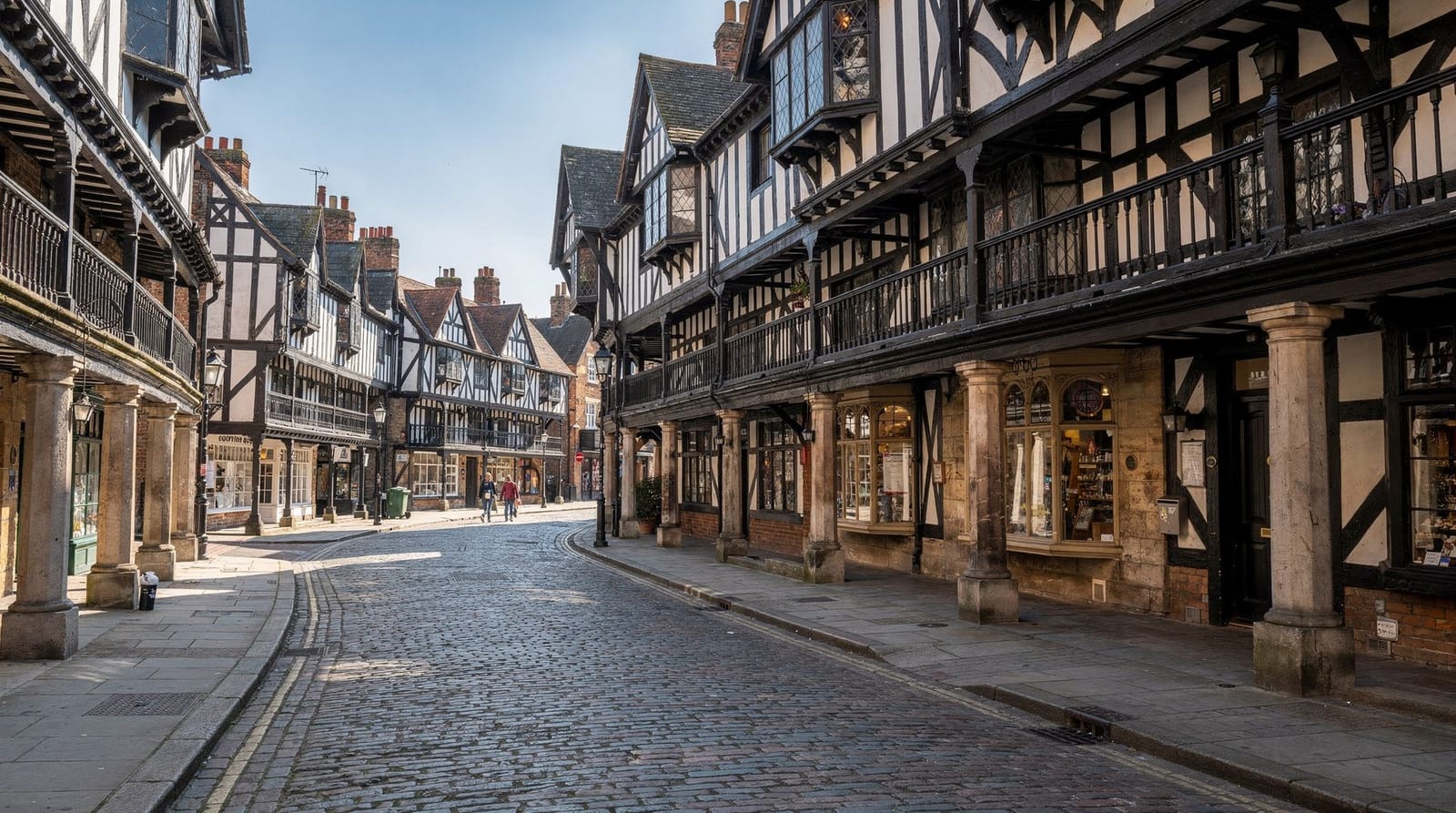
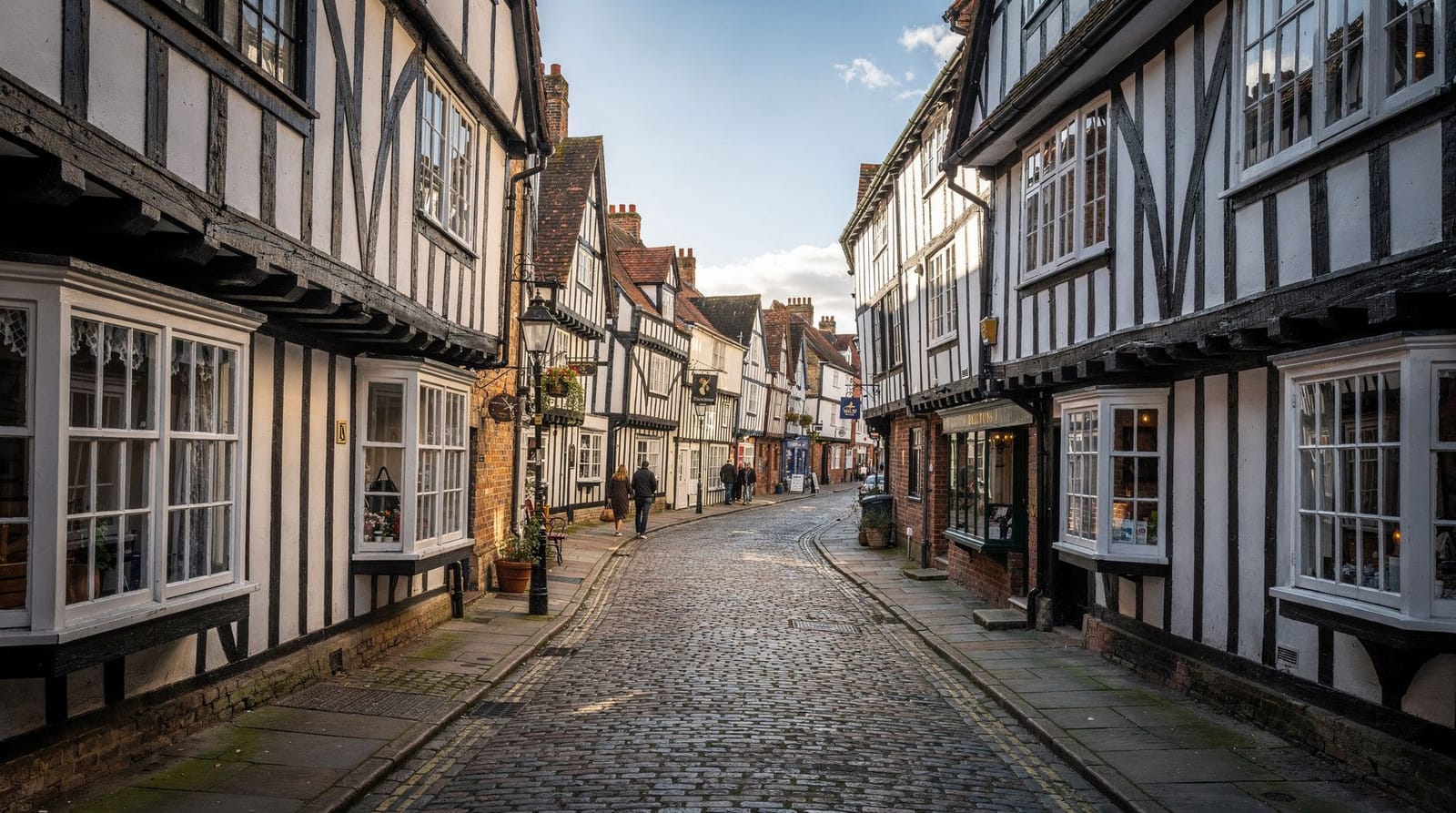
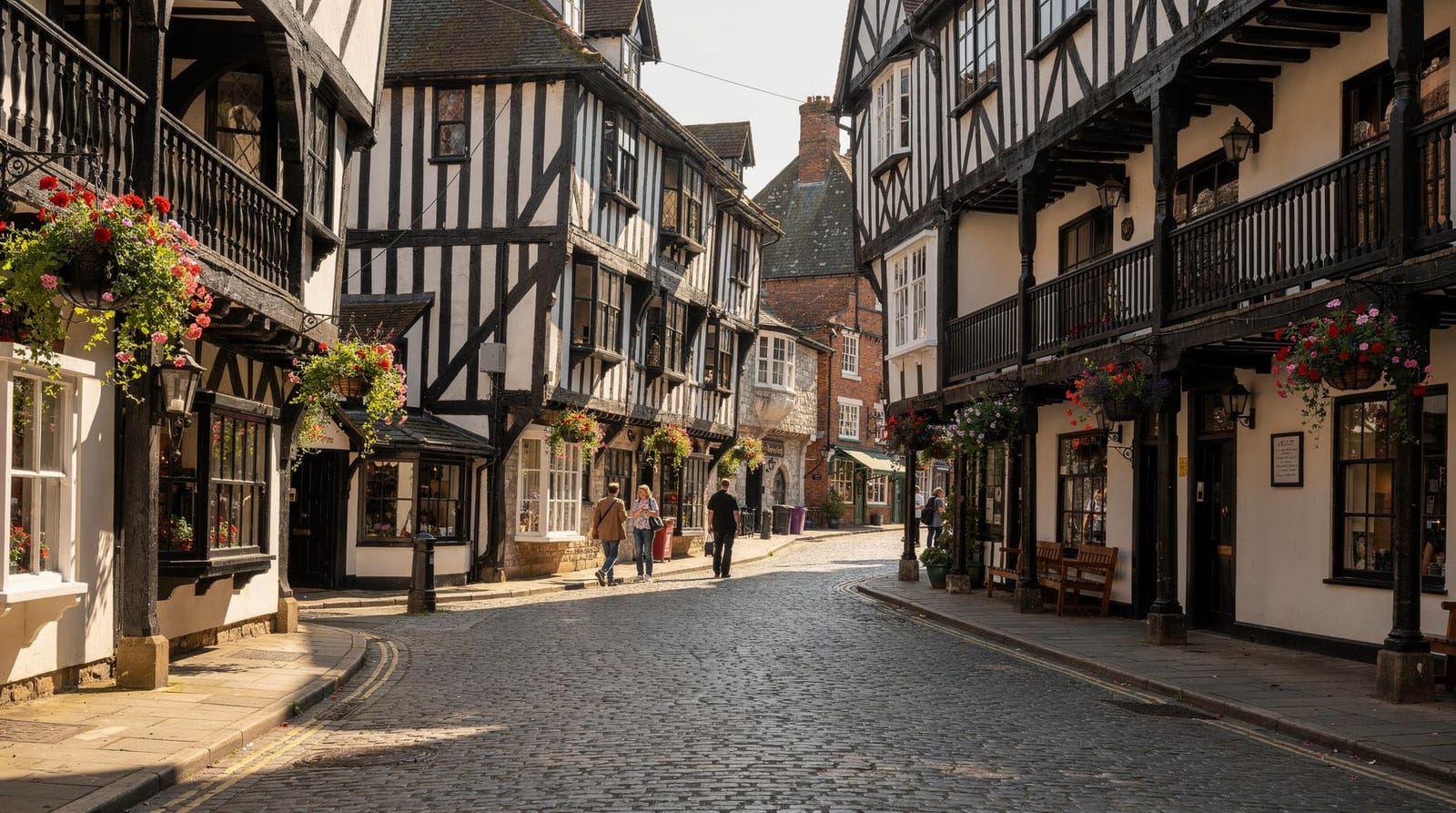
Where York pulls ahead is scale of attractions within the city itself. York Minster is a genuinely major cathedral, several notches above Chester Cathedral in scale and grandeur, and the National Railway Museum is a serious, free, world-class collection that Chester has nothing to match. The Shambles, York’s famous overhanging medieval street, is a close cousin to Chester’s Rows but photographs even better and draws correspondingly bigger crowds.
Crowds and cost
This is where the comparison gets genuinely practical. York attracts noticeably more tourism than Chester — more coach parties, more cruise-adjacent day-trippers from wider afield, and correspondingly busier streets and pricier central accommodation, particularly around the Minster and the Shambles. Chester feels calmer even in peak summer, and central hotel prices tend to sit somewhat below York’s equivalent for a comparable standard of room.
Neither city is genuinely cheap — both trade on historic charm and both price accordingly in the centre — but if budget is a factor between the two, Chester generally comes out slightly ahead, and it’s markedly less crowded on an average summer Saturday.
Getting between them (and why you probably won’t day-trip)
There’s no direct fast rail link between Chester and York — the realistic journey is around 2-2.5 hours with a change, usually via Manchester or Leeds, which makes “do both in one trip” a genuine multi-day commitment rather than a quick add-on. If you’re choosing between the two as a single city-break destination rather than trying to combine them, that logistics reality is worth knowing upfront: pick one as your base rather than planning to see both from a single hotel.
The day-trip radius, Chester’s real advantage
This is arguably Chester’s strongest card against York. From Chester, Liverpool is about 45 minutes by train (often one change), Manchester about an hour, Llandudno on the North Wales coast just over an hour, and Snowdonia reachable within roughly 90 minutes to two hours depending on route. That’s an unusually dense cluster of genuinely different day trips — a major music and football city, a national park, a mountain railway, medieval Welsh castles — all within a short hop.
York’s day-trip radius is thinner by comparison. Leeds is close but similar in character to York itself rather than offering real variety, and the more distinctive nearby options (the Yorkshire Dales, Whitby) take longer to reach and require more planning. If your city-break priority is “one great base city plus a lot of varied day trips,” Chester wins that comparison fairly clearly.
The Heart of Chester walking tour is a good way to get oriented quickly if you’ve chosen Chester and want the historic core explained rather than self-navigated on your first afternoon.
Football and music, a genuine point of difference
If football or music matters to your trip, Chester’s surrounding area has a case York simply can’t make: Anfield and Old Trafford are both within an hour, Liverpool’s Beatles heritage (the Cavern Club, the Beatles Story, Penny Lane) is a 45-minute train ride away, and Wrexham — now internationally known via Wrexham AFC’s ownership and Ryan Reynolds’ involvement — is a short trip into North Wales. York has none of this; its identity is squarely historical and ecclesiastical rather than sporting or musical.
Families
Chester Zoo is a genuine draw for families and one of the larger, better-regarded zoos in the UK — a full day out in its own right. York’s family offering leans more toward museums (the Railway Museum, the Jorvik Viking Centre) than outdoor animal attractions. Neither city is a bad choice for families, but they suit slightly different kinds of family days out — active and outdoor around Chester, more indoor and museum-based around York.
Shopping, an underrated difference
York’s shopping runs from the Shambles’ small independent gift shops up to a fuller high-street offering elsewhere in the city centre. Chester’s equivalent — the Rows themselves, plus the modern Grosvenor Shopping Centre attached to the historic core — leans a bit more upmarket in its independent boutiques, a side effect of the affluent Cheshire catchment area the city serves.
Neither city is a dedicated shopping destination the way, say, Manchester or Liverpool are, but if boutique browsing within a historic setting matters to your trip, Chester’s Rows offer a genuinely unusual format that York’s Shambles, despite the surface similarity, doesn’t quite replicate — the two-tier construction means you get a second, elevated shopping level most visitors don’t expect.
Accommodation and parking, the unglamorous comparison
Both cities are more pleasant without a car in the historic centre, but the practical parking situation differs: Chester’s Park & Ride network is well-established and inexpensive, while York’s equivalent system serves a larger, more spread-out city with correspondingly more traffic to navigate before you reach a park-and-ride site. If you’re driving to either city, factor in leaving the car outside the centre entirely rather than hunting for city-centre parking, which is expensive and limited in both. For accommodation, Chester’s smaller stock of central hotels means booking further ahead matters more than in York, which has a larger overall supply even if prices run higher on average.
Matching the city to your trip style
A few practical scenarios help make the choice concrete. If you’re travelling with young children and want a big, reliable family day out built in, Chester’s Zoo gives it an edge York doesn’t match. If railway history or ecclesiastical architecture is a genuine personal interest rather than a passing curiosity, York’s Minster and National Railway Museum are worth the extra crowd tolerance. If your trip is really about using one base to see several very different places — a historic city, a national park, a major coastal town, a football city — Chester’s geography does more of that work for you than York’s does.
History and atmosphere: a closer look
Both cities are unmistakably Roman in origin — Chester was Deva Victrix, a legionary fortress, while York was Eboracum, at times the northern capital of Roman Britain and later the base from which Constantine the Great was proclaimed emperor.
York’s Roman and Viking layers run deeper and are more visibly interpreted (the Jorvik Viking Centre in particular leans hard into the city’s Norse history in a way Chester has no real equivalent for), while Chester’s Roman identity centres more narrowly on the amphitheatre, the surviving wall sections and the street plan itself, which still roughly follows the original fortress grid. Neither city’s Roman heritage is more “authentic” than the other’s, but York arguably does more to make that history tangible for a casual visitor, largely down to the scale of investment in sites like Jorvik and the Yorkshire Museum.
Timing your visit: events and seasonal quirks
Chester Races, held at the Roodee racecourse in May, brings a genuine surge of visitors and a livelier, more occasion-driven atmosphere to the city for race days — worth building a visit around if horse racing interests you, or avoiding if you’d rather have a quieter city. York doesn’t have an equivalent single event of the same scale, though its Christmas market period, like Chester’s, draws large late-November and December crowds. Both cities’ Christmas markets are genuinely well-regarded, and choosing between them for a festive visit comes down more to which city’s general character you prefer than any real quality gap between the two markets.
Pubs, food and an evening out
Both cities have a genuine, non-touristy pub scene once you step a street or two back from the main sightseeing routes. Chester’s best pubs cluster around the Rows and along the Groves by the river, with several genuinely historic buildings among them rather than themed reproductions, and Chester’s restaurant scene leans toward solid, mid-range dining rather than a large number of destination-worthy tasting menus.
York’s equivalent is broader simply by virtue of the city’s larger size, with more options clustered around the Shambles and Micklegate, though the average price for a comparable meal tends to run a little higher given the heavier tourist footfall. Neither city is a food-tourism destination the way somewhere like Manchester or Liverpool increasingly is, but both deliver a genuinely pleasant evening without much hunting.
A first-timer’s honest itinerary for each
If you pick Chester, a realistic first visit is a morning walking the city walls, an early afternoon in the Rows and Chester Cathedral, and an evening meal along the Groves — see our 2-day Chester itinerary for the fuller version with a day trip built in. If you pick York, a comparable first day covers the Minster in the morning, the Shambles and city-centre shopping after lunch, and the National Railway Museum as a half-day add-on if trains interest anyone in your group — both cities compress reasonably well into a single full day if you’re tight on time, though both genuinely reward a second day more than a rushed first one.
So which one, honestly
If you want the single biggest historic city with the most headline sights in one place, York edges it — the Minster and the Railway Museum are genuinely hard to match. If you want a calmer, cheaper base with a wider and more varied radius of day trips, including Wales, Liverpool and Manchester, Chester is the stronger pick. Neither is the “wrong” choice; they suit different trip shapes more than one being objectively better.
For more on what Chester itself offers, see our is Chester worth visiting breakdown and the main Chester destination guide. If you’re weighing Chester against a different regional base, Chester vs Liverpool as a base covers a comparison closer to home, and our 2-day Chester itinerary shows what a short break built around Chester actually looks like day by day. For the wider day-trip case made above, best day trips by train from Chester lays out the full radius in one place.