Chester Races
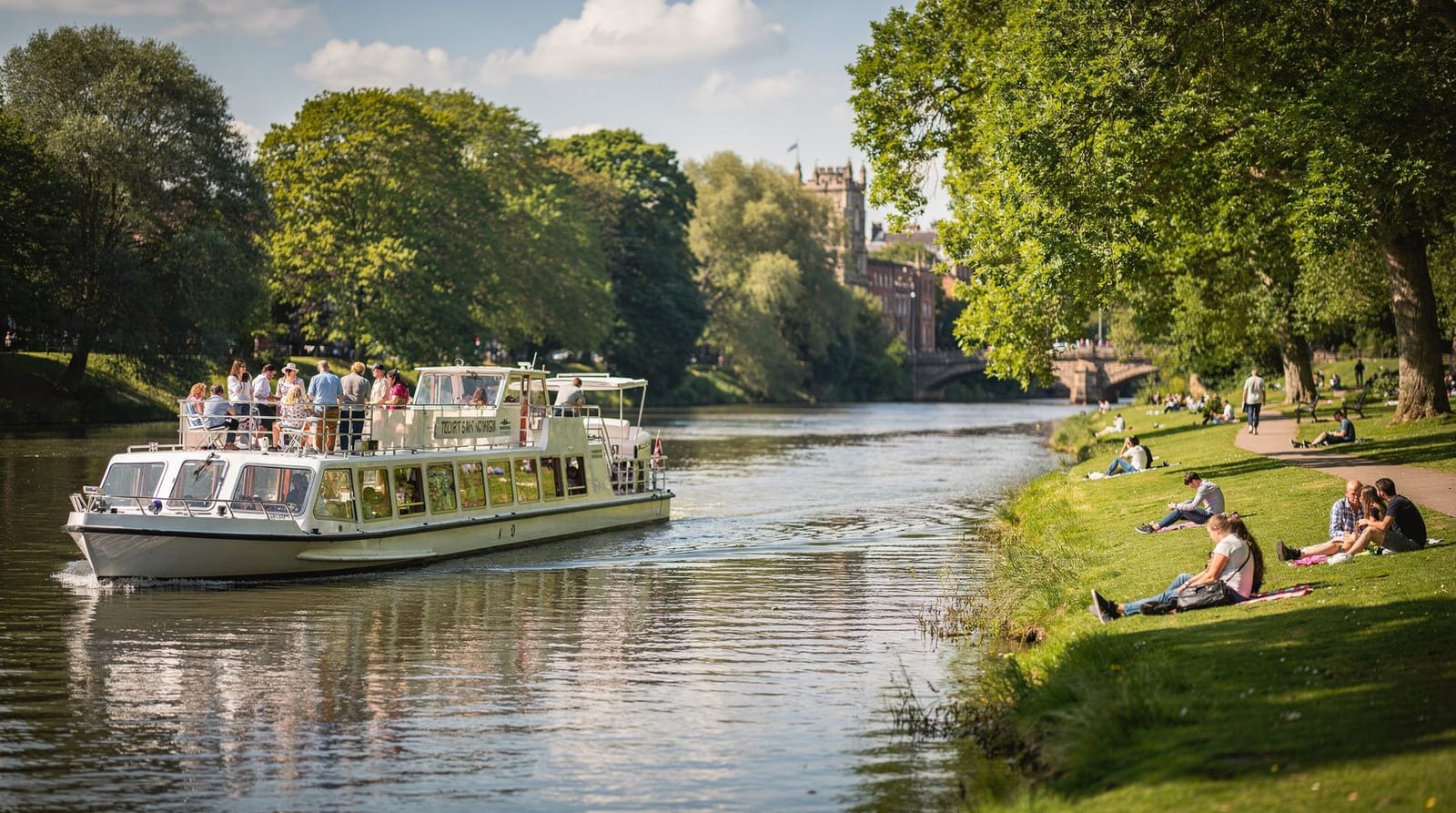
Chester: Half-Hour City Cruise on the River Dee
Duration: 30 minutes
When are Chester Races held?
Chester Races runs meetings at the Roodee across May, June, July and September, with the May Festival — including the Chester Cup — the biggest meeting of the year. Race days bring heavier traffic, tighter parking and busier pubs across the city centre.
The Roodee, right beneath Chester’s city walls on a bend of the River Dee, is widely claimed to be the oldest racecourse still in operation anywhere in the world, and race days here feel genuinely different from a typical UK meeting — the crowd spills out of the course and into the city’s pubs and streets in a way that smaller, out-of-town racecourses can’t replicate. If your visit coincides with a meeting, it’s worth planning around it rather than being caught off guard by the crowds, traffic and dressed-up energy that take over the city centre for the day.
| Where | The Roodee, beneath Chester’s city walls |
| Season | May, June, July, September |
| Biggest meeting | May Festival (incl. Chester Cup) |
| Parking | Little Roodee reduced on race days — use Park & Ride |
| Dress | Smart-casual general admission, formal in premium enclosures |
The racing calendar
Chester Races runs meetings across May, June, July and September, with the May Festival — a multi-day meeting in the first half of May that includes the historic Chester Cup — the standout event of the year and the busiest few days on the city’s calendar outside the Christmas market season. The other meetings through the summer and into September are smaller in scale but still bring a noticeable shift in the city’s atmosphere and traffic on the day. Exact fixture dates change year to year, so check the current racing calendar before building a visit around a specific meeting.
The May Festival specifically
The May Festival is worth treating as a distinct event from Chester’s other meetings rather than just a bigger version of the same day. Spread across several consecutive days in the first half of May, it draws visitors from well beyond Cheshire, fills the city’s hotels furthest in advance of any race meeting, and includes the Chester Cup, one of the most historic handicap races in the British flat racing calendar.
If seeing Chester Races at its biggest and most atmospheric is the goal, the May Festival is the meeting to target; if you’d simply like a taste of race-day atmosphere without the scale and crowd of the Festival, one of the smaller June, July or September fixtures delivers a similar flavour with noticeably less pressure on parking, pubs and hotel rates.
Why the Roodee’s setting is unusual
Most UK racecourses sit on the edge of town or well outside it; the Roodee sits directly against Chester’s city walls, meaning race-day crowds walk straight from the course into the historic centre rather than dispersing into car parks and suburban roads the way they would elsewhere. That proximity is part of the appeal — a day at the races here naturally extends into an evening in the city’s pubs and restaurants — but it’s also why race days put real pressure on parking, pavements and pub capacity right in the heart of Chester, not on some out-of-town ring road.
Dress code and what people actually wear
Chester Races follows the same general dress-code conventions as most UK race meetings: smarter enclosures typically expect tailored, formal wear, while general admission areas are more relaxed, though still generally smart-casual rather than anything approaching leisurewear. The May Festival in particular sees a lot of dressed-up racegoers in the city centre before and after racing, which is worth knowing if you’re visiting Chester on those dates without any interest in the racing itself — expect a livelier, more dressed-up city than a normal weekend, especially in the pubs and restaurants near the course and the Groves.
Getting there and the parking reality
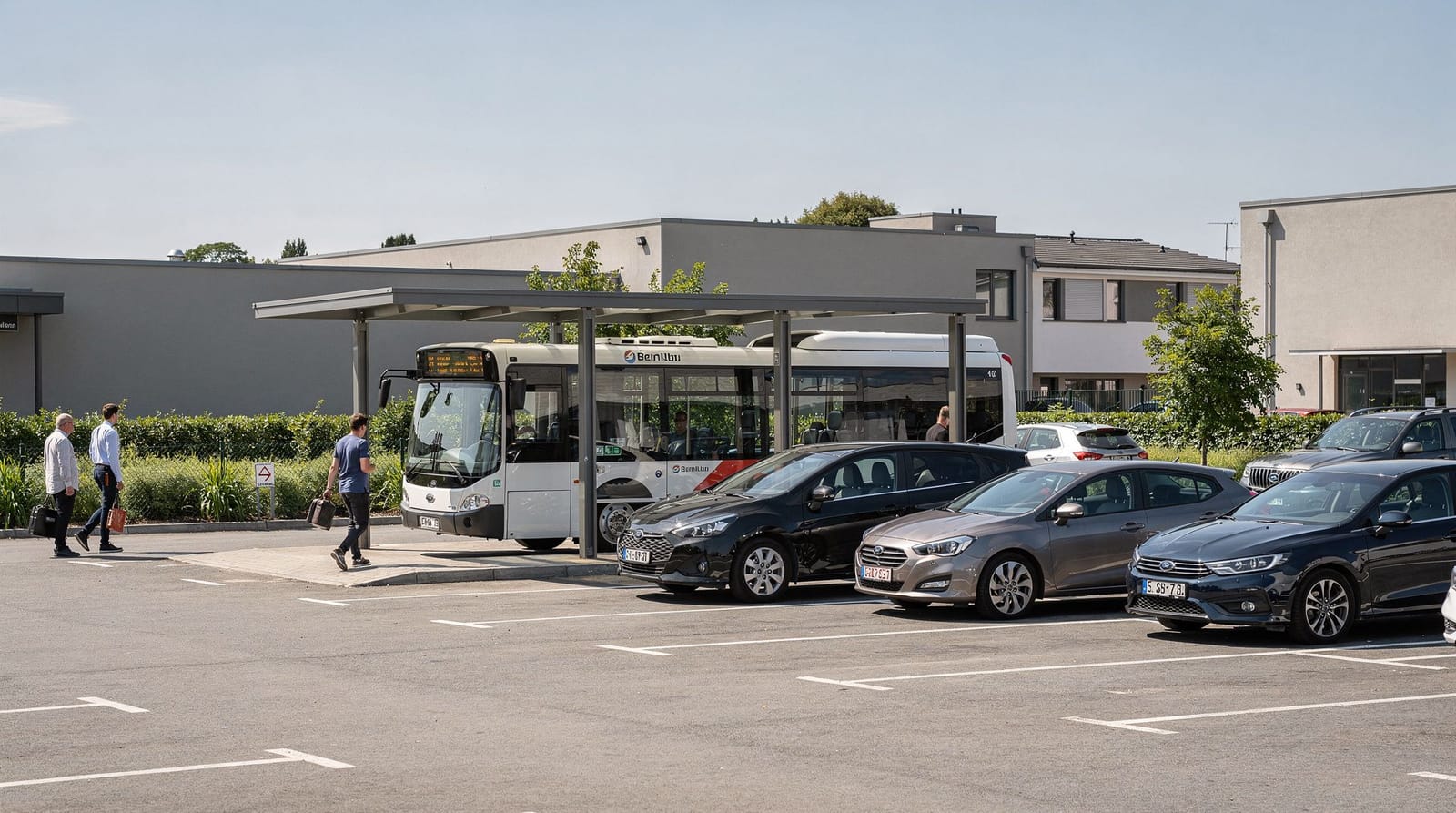
This is where Chester Races most directly affects anyone visiting the city for other reasons. Traffic on the approach roads builds significantly before and after racing, and central and near-central parking — including Little Roodee, the surface car park that sits close to the course itself — is sometimes reduced in capacity or repurposed entirely for racecourse parking on meeting days. Park & Ride in Chester is the more reliable option on race days, since the peripheral sites are further from the immediate congestion around the course. See Parking in Chester for the fuller comparison of what’s realistically available on a race day versus a normal visit.
If you’re not going to the races but you’re in Chester anyway
Visitors with no interest in racing sometimes find themselves in Chester on a meeting day by coincidence, and it’s worth knowing what changes: pubs and restaurants near the centre get busier and, in some cases, operate on a booking-only or limited-walk-in basis for the evening; the Groves riverside sees heavier footfall as racegoers spill out post-racing; and the city walls near the course itself offer a genuinely good, free vantage point over parts of the track for anyone curious about the atmosphere without buying a ticket.
If you’d rather avoid the crowds entirely, a day trip elsewhere — Liverpool or Manchester by train — is a reasonable way to sidestep a meeting day altogether and return to a calmer Chester in the evening once the crowds have thinned. See Chester trains and day trips.
Booking accommodation around a meeting
Central hotel rates rise and availability tightens noticeably around the May Festival specifically, less so around the smaller summer and September meetings, but still worth checking early if your dates overlap. If seeing the races is the point of your visit, book both tickets and accommodation well ahead of the May Festival dates in particular; if you’re visiting for other reasons and would rather avoid the crowd, cross-check your travel dates against the current fixture list before finalising a booking, since a quiet city-break weekend can turn into a genuinely busy one if it happens to land on a meeting day.
See Where to stay in Chester for neighbourhood options, keeping in mind that anywhere very close to the Roodee will feel the atmosphere most directly, for better or worse depending on your preference.
A pre- or post-race walk along the walls and river
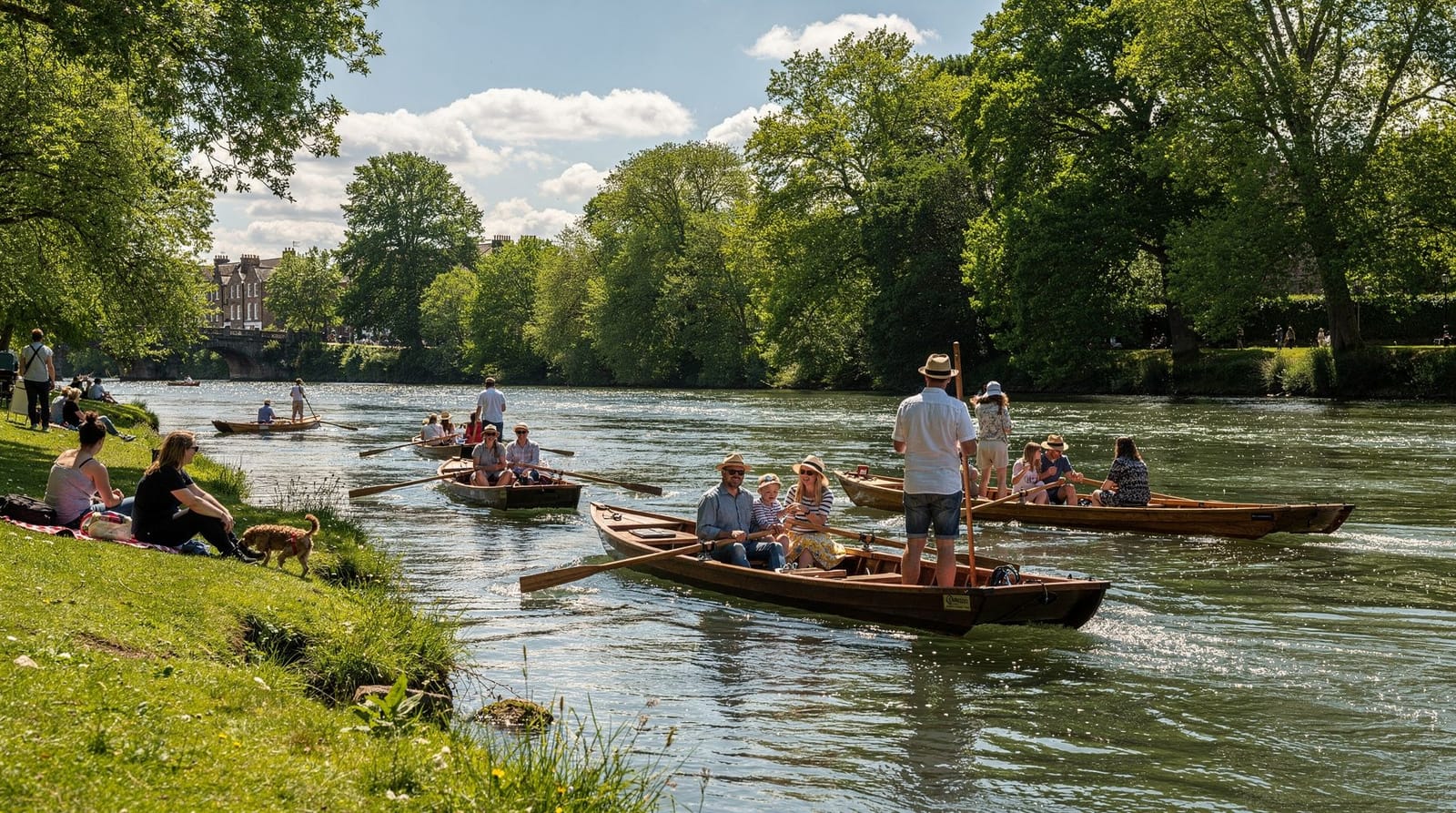
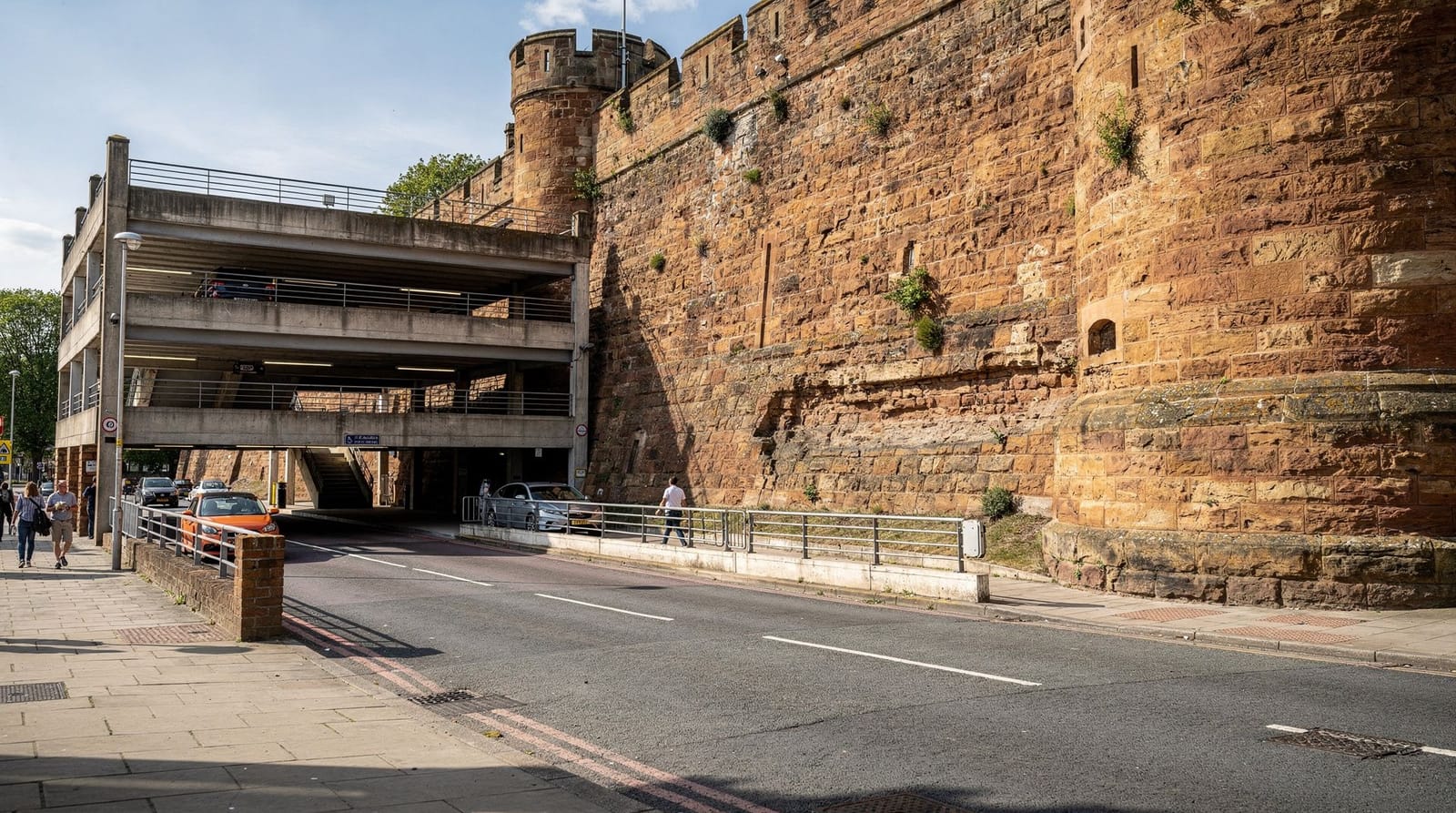
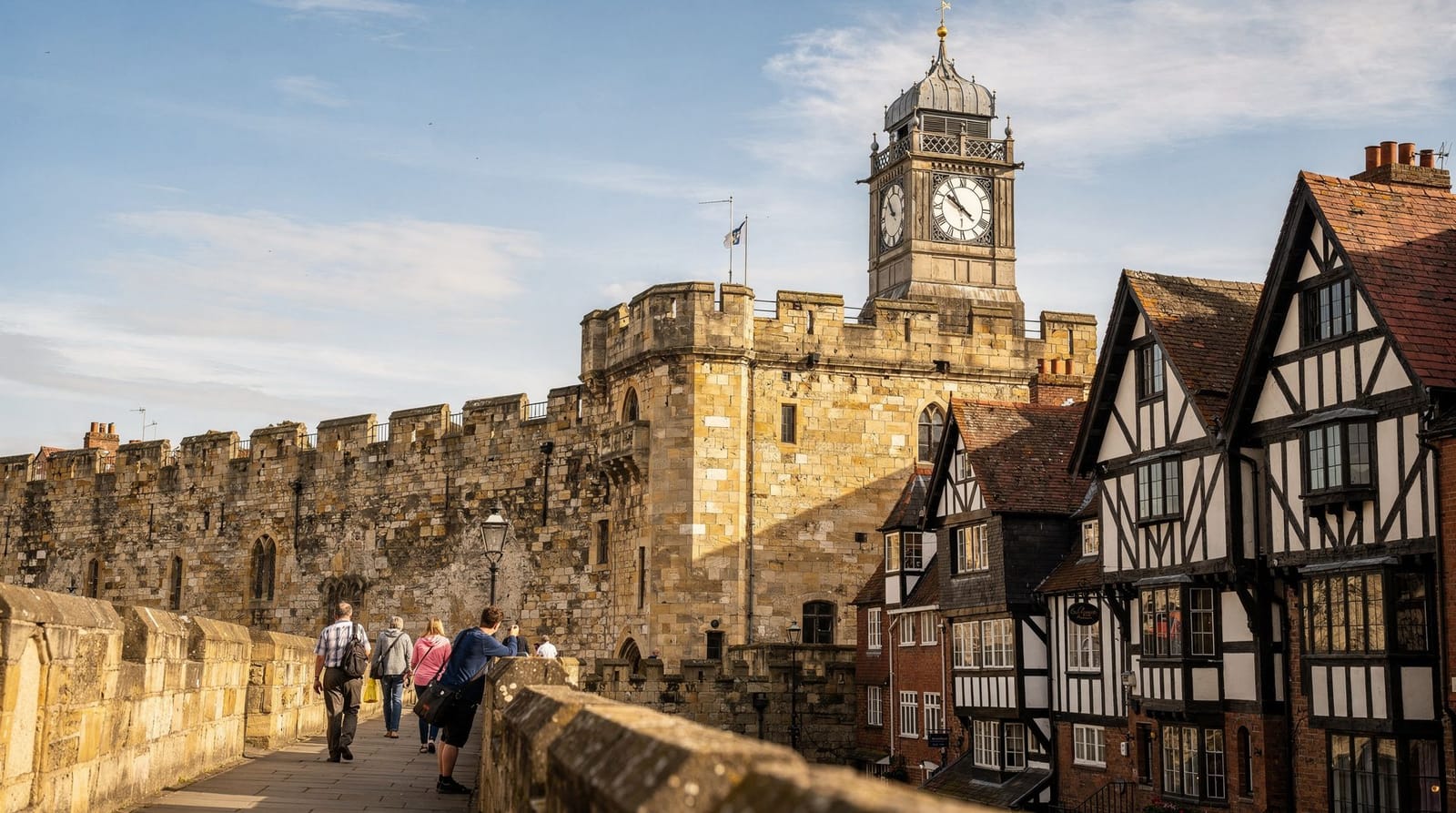
Whether or not you’re attending the racing itself, the stretch of city wall overlooking the Roodee, and the riverside path along the Groves just beyond it, make a natural pre- or post-race walk — you get a genuine sense of the course’s setting against the river and the walls without needing a ticket, and it’s a good way to fill an hour either side of a race meeting if you’re travelling with someone not attending the racing. A short River Dee cruise works well in the same slot, offering a water-level view of the course from the river itself; see River Dee cruises for timing.
Food, drink and the day-long nature of a meeting
Race days at Chester tend to run as full-day affairs rather than a quick couple of hours — gates open well before the first race, and the crowd typically lingers in the city well after the last one finishes. If you’re attending, plan for a long day rather than a tight window, and book any restaurant plans for the evening well ahead, since race-day evening covers at popular central spots fill fast on Festival days in particular. See Chester restaurants for options that take bookings around race-day timing.
Public transport on race days
Chester station sees a genuine spike in passenger numbers on meeting days, particularly the May Festival, as racegoers arrive from Liverpool, Manchester and further afield specifically for the racing. If you’re travelling in by train on a race day, expect busier platforms and fuller services than a normal day, and build in extra time for the walk from the station into town, since pavements on the main route in also carry more foot traffic than usual. See Chester trains and day trips for the wider rail picture if you’re combining a race day with travel from elsewhere in the region.
Ticket types and where to sit or stand
Enclosures at Chester generally range from general admission standing and lawn areas through to more premium stands with seating and better sightlines over the finishing straight, priced accordingly. For a first visit, general admission gives a genuine sense of the meeting’s atmosphere at the lowest cost, while a premium enclosure suits anyone prioritising comfort, a guaranteed seat, or a clearer view of the whole course rather than a single section of rail. Prices and exact enclosure names shift between meetings and seasons, so check the current fixture’s ticket options directly rather than assuming last year’s categories still apply unchanged.
Combining race day with the rest of your visit
Because a full race-day meeting can easily fill an entire afternoon and evening, it rarely leaves much room for other sightseeing on the same day — treat it as the day’s main event rather than trying to also fit in the Cathedral, a full wall walk or a day trip elsewhere. A sensible pattern for a longer stay is to build a race day into the middle of a visit, with quieter, more typical sightseeing days either side of it, rather than trying to combine racing with an already packed itinerary on the same date.
First-timers at the Roodee
If you’ve never been to a UK race meeting before, Chester is a genuinely good introduction: the course is compact enough that you’re rarely far from the action even in general admission areas, the setting against the walls and river gives it a character most racecourses lack, and the whole event spills naturally into the city afterwards rather than requiring a drive home immediately after the last race. Buy tickets ahead rather than assuming walk-up availability, particularly for the May Festival, and check which enclosure suits your budget and dress-code comfort before arriving.
A brief history worth knowing
Racing on the Roodee dates back centuries, and its claim to being the world’s oldest racecourse still in use rests on that long, largely unbroken history rather than any dramatic single event. The course’s tight, roughly oval shape — a product of the confined space between the city walls and the river rather than deliberate design for a specific type of racing — gives Chester meetings a distinctive character, with tighter bends and closer viewing than the long, straight courses found elsewhere in the UK. Knowing this bit of context helps explain why the course feels the way it does even if you’re not particularly interested in racing as a sport: it’s a genuinely old piece of the city’s fabric, not a modern addition.
Betting basics for first-timers
On-course bookmakers and betting facilities are a normal part of any UK race meeting, and Chester is no exception — if you’ve never placed a bet at a racecourse before, on-course staff and bookmakers are generally used to explaining the basics to newcomers, and small stakes are entirely normal for a first visit. There’s no obligation to bet at all to enjoy a day at the Roodee; plenty of racegoers attend purely for the atmosphere, the setting and the day out rather than the wagering itself.
Families at the races
Chester Races meetings are generally family-friendly in general admission areas, with some meetings offering specific family-oriented activities or reduced-rate entry for children, though this varies by fixture — check the specific meeting’s family provisions before assuming they apply across the board. The May Festival, being the busiest and most dressed-up meeting, is less naturally suited to young children than some of the calmer summer fixtures, where crowds are thinner and the pace more relaxed.
Weather on race day
Racing continues in most weather short of genuinely severe conditions, and Cheshire’s changeable climate means a race day can shift from sunshine to rain within a single afternoon — pack for both regardless of the forecast, particularly for outdoor general admission areas that offer less shelter than the covered stands. Underfoot conditions on the course itself can also turn heavier after rain, which is worth bearing in mind for footwear choices if heels are part of your race-day outfit.
Comparing Chester to other UK racecourses
Chester is smaller and more compact than the UK’s biggest courses like Aintree (home of the Grand National, and reachable as part of a Liverpool day trip) or Ascot, and its city-centre setting is genuinely unusual — few other major UK courses put you a five-minute walk from a historic centre’s pubs and restaurants once racing finishes. If you’re comparing race days across a wider UK trip, Chester offers atmosphere and history in a compact package, while somewhere like Aintree offers scale and marquee events; see Chester to Liverpool if a combined racing-and-city itinerary across both is of interest.
Crowd flow after the last race
The walk from the Roodee back into the city centre is short, but it’s also the single most congested pedestrian and vehicle movement Chester sees all year on a big meeting day — thousands of racegoers, many stopping at the same handful of pubs and restaurants along the route, moving in the same direction within a short window after the last race. If you want to avoid the thickest of this crowd, either leave a little before the final race or plan to linger at the course itself for 20–30 minutes after racing finishes, letting the immediate rush clear before you head back into town.
The honest summary
Chester Races is one of the clearest examples on this site of an event that reshapes the whole city for a day, not just the racecourse itself — traffic, parking, pub crowds and hotel rates all shift around a meeting, most dramatically during the May Festival. Whether that’s a reason to build your visit around it or to plan your Chester trip for a different week entirely depends on what you’re after: a lively, dressed-up city with genuine racing history on your doorstep, or a calmer visit without the crowds and parking pressure a meeting day brings.
Pairing race day with a river view
A short River Dee cruise before or after racing gives a water-level view of the Roodee that most racegoers never see, and it’s an easy way to fill the hour either side of a meeting without needing a ticket:
Chester: River Dee Sightseeing CruiseFor visitors combining race day with a broader tour of the city’s history, a guided walk that takes in the walls overlooking the course adds context you wouldn’t get standing at the rail alone:
Chester: Heart of the City Walking TourWhat a race-day evening actually feels like
By early evening on a meeting day, the crowd that spilled out of the Roodee has mostly settled into the city’s pubs and restaurants, and the atmosphere in the centre — particularly on the streets nearest the course, like Lower Bridge Street and around the Groves — shifts from a normal evening’s mix of tourists and locals to a distinctly race-day one: dressed-up groups, fuller-than-usual outdoor seating, and pubs running at or near capacity well past the point they’d usually quiet down on a weeknight.
If you’re not part of the race-day crowd but happen to be in the city, a booking rather than a walk-in plan for dinner is the safer choice on a meeting evening, and a pub slightly further from the course — away from Lower Bridge Street and the immediate riverside — is more likely to have space.
Comparing a May Festival day to a quieter fixture
Choosing which meeting to attend, if you have the flexibility, comes down to what you actually want from the day. The May Festival delivers Chester Races at its biggest: several consecutive days, the Chester Cup, the fullest hotels and pubs, and the most dressed-up crowd of the year. A single June, July or September fixture delivers a recognisably similar Roodee atmosphere — the same course, the same city-centre spillover — at meaningfully lower intensity: easier parking, more available accommodation, and a calmer evening in the pubs afterwards. Neither choice is wrong; it depends on whether the scale and energy of the Festival is the draw, or whether a taste of race-day Chester without the peak crowd better suits your trip.
Frequently asked questions about Chester
Do I need a ticket just to see Chester Races from the city walls?
No — the stretch of city wall overlooking the Roodee gives a free view over parts of the course, a good option if you’re curious about the atmosphere without buying an enclosure ticket.
Which Chester Races meeting is best for a first-time visit?
The May Festival is the biggest and most atmospheric, including the historic Chester Cup, but a smaller June, July or September fixture gives a similar flavour of race-day Chester with far less pressure on parking, pubs and hotel rates — a gentler introduction if you’d rather avoid peak crowds.
Top experiences
Bookable activities with verified prices and instant confirmation on GetYourGuide.