Chester to the Lake District, worth the longer journey
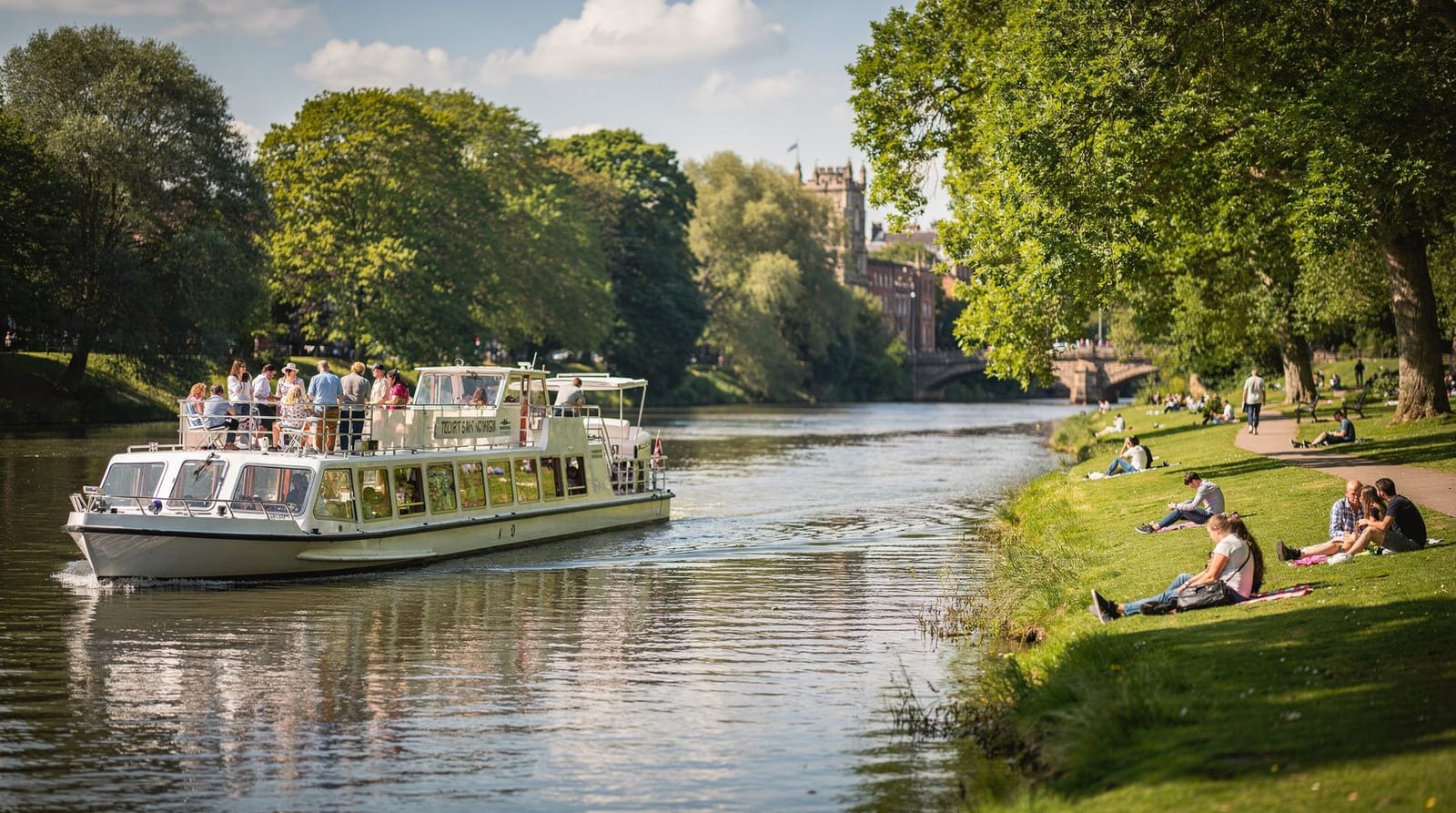
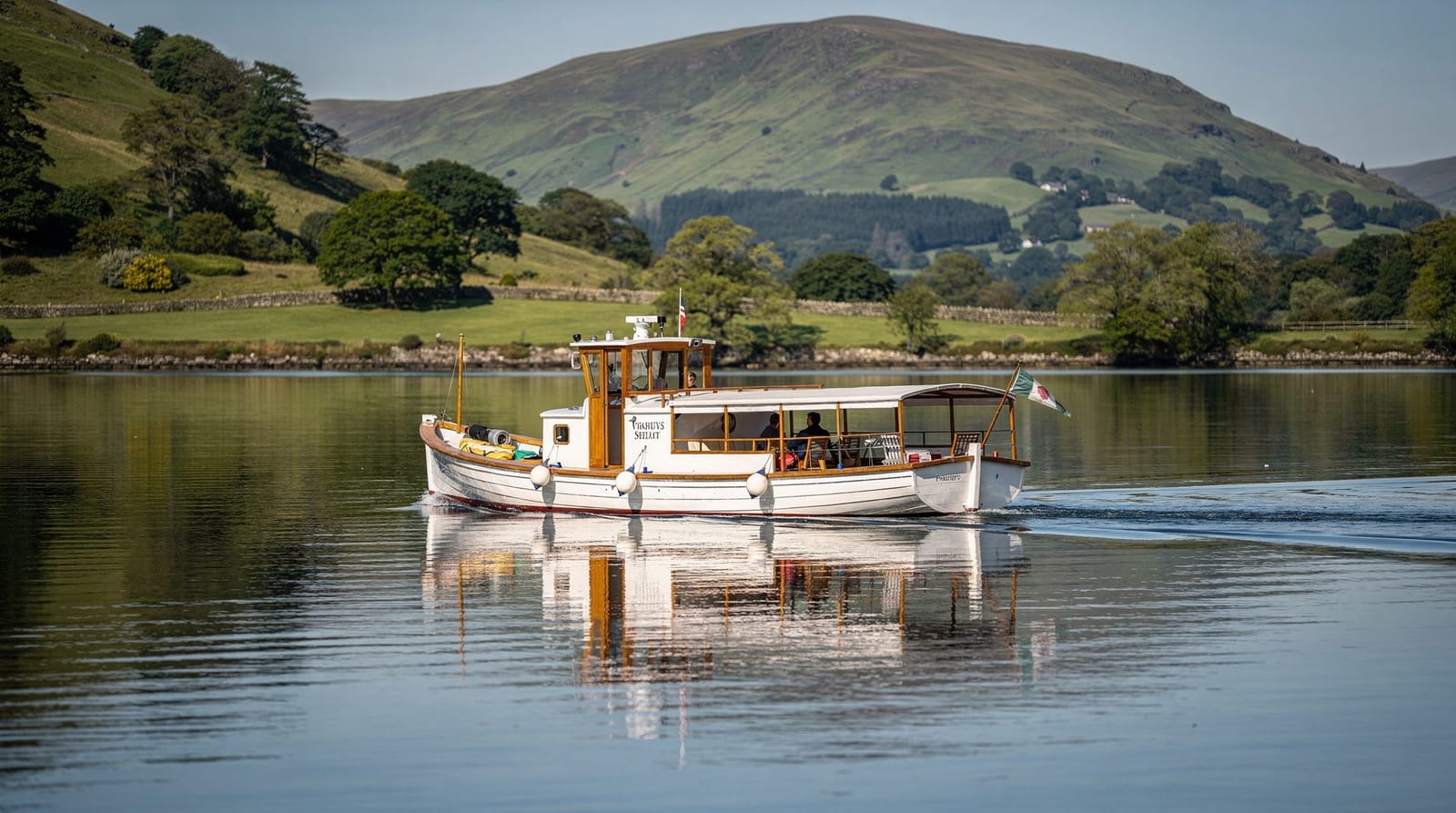
Windermere Yellow Cruise: Sail Between Bowness and Lakeside
Duration: 1.5 hours
Can you day trip to the Lake District from Chester?
Yes, but it's a longer commitment than Liverpool or North Wales — the train takes roughly 2.5-3 hours each way (usually changing at Manchester and Oxenholme), so a day trip means an early start and a late return. By car it's around 2-2.5 hours via the M6, which is more flexible but adds parking to the equation.
| Where | Windermere / Bowness, via Manchester & Oxenholme |
| Cost | Train £35-50 return off-peak; cruise £15-27 |
| Time needed | Full day (5-6hrs travel + 4-5hrs on the ground) |
| Getting there | Train (2.5-3hrs each way) or car via M6 (2-2.5hrs) |
| Best for | A 2-3 day stay rather than a rushed single day |
What makes the Lake District worth the effort in the first place
England’s largest national park earned UNESCO World Heritage status in 2017, recognised for the way its farmed landscape, literary heritage (Wordsworth, Coleridge, and later Beatrix Potter all lived and worked here) and dramatic glacial scenery combine into something genuinely distinct from anywhere else covered on this site. Windermere itself, at over 10 miles long, is England’s largest natural lake, and the fells rising directly from its shores give a sense of scale that neither the North Wales coast nor Chester’s own flat river valley can match. This is why, despite the travel time, the Lake District keeps earning a place on Chester-based itineraries rather than being dropped in favour of closer options.
Why the Lake District is a different kind of day trip
Unlike Liverpool, Manchester or the North Wales coast — all around an hour from Chester — the Lake District sits at the edge of what’s reasonable for a single day. It’s genuinely worth visiting, but the honest answer is that it rewards two or three days far more than one rushed day, and this guide is upfront about that trade-off rather than selling you a tight itinerary that leaves you exhausted. For the wider comparison of all day-trip options from Chester, see day trips from Chester and best day trips by train. Full destination detail: Lake District.
A closing thought on whether to attempt this as a single day at all
If, after reading this guide, the travel-time trade-off still gives you pause, that hesitation is worth trusting — the Lake District rewards patience more than almost anywhere else covered on this site, and a rushed single day is genuinely the version of this trip most likely to leave you wishing you’d done it differently.
A brief comparison against Snowdonia as an alternative mountain day
If the appeal of the Lake District is mountain and lake scenery specifically, rather than the Lake District’s particular literary and cultural heritage, it’s worth weighing it against Chester to Snowdonia directly — Snowdonia is considerably closer to Chester and, for many visitors, delivers a comparable sense of dramatic landscape without the Lake District’s punishing round-trip travel time.
Setting the right expectations before you book
Because this is the longest and most logistically demanding day trip covered on this site, it’s worth being unusually explicit about what a realistic day actually looks like before committing: roughly 5-6 hours of combined outbound and return travel against perhaps 4-5 hours of genuine time in the Lake District itself, once you allow for the walk from Windermere station to the lakeside and back. If that ratio doesn’t sit well with you, the honest recommendation — repeated throughout this guide — is to add at least one overnight rather than forcing it into a single day.
Getting there
By train: there’s no direct line from Chester into the Lake District. The typical routing changes at Manchester (roughly an hour from Chester) and then again at Oxenholme Lake District, the mainline station, before a short branch-line hop into Windermere itself. Total journey time runs approximately 2.5-3 hours each way depending on connections, meaning a same-day round trip consumes 5-6 hours purely in transit. Off-peak day return fares typically run £35-50, and advance tickets can bring the Manchester-Oxenholme leg down meaningfully if booked ahead.
By car: roughly 2-2.5 hours via the M56 and M6, arriving at Windermere or Bowness-on-Windermere. A car gives you the flexibility to explore beyond the immediate lakeside — Ambleside, Grasmere, or the fells — that the train-and-bus combination makes harder to reach in a single day.
Given the travel time either way, treat a Lake District day trip as a genuinely full day: an early departure (ideally before 8am) and acceptance that you’ll be back in Chester late in the evening.
The literary heritage that shaped how the Lake District is seen today
William Wordsworth’s poetry, written largely from his home at Dove Cottage in Grasmere, did more than almost any single body of work to shape how the British public came to see mountain and lake scenery as something to be cherished and protected rather than simply farmed or ignored — a cultural shift with a direct line to the eventual creation of the national park itself.
Beatrix Potter, working a century later, bought and preserved farmland around Near Sawrey (a short distance from Windermere) specifically to protect it from development, later gifting much of it to the National Trust. Both legacies are still visible everywhere in the area’s protected character, and knowing this backdrop adds real depth to what might otherwise read as simply “a very scenic lake.”
What to do if you commit to the day
Windermere and Bowness
England’s largest lake is the obvious centrepiece. A cruise is the easiest way to see it properly without a car: Windermere Yellow Cruise: Sail Between Bowness and Lakeside runs about 1.5 hours between Bowness and Lakeside, or for more flexibility across the whole lake, Windermere: 24-Hour Hop-On Hop-Off Cruise lets you stop at Ambleside, Bowness and Lakeside piers at your own pace. Bowness itself has a walkable waterfront with cafes, boat hire and the small World of Beatrix Potter attraction, useful if you’re travelling with children.
Beyond the lake, if time allows
Ambleside (a short cruise or bus from Bowness) has a more concentrated village centre and access to fell walks if you want a taste of the wider national park. Grasmere, Wordsworth’s home village, is further still and genuinely difficult to fit into a same-day round trip from Chester without a car — it belongs on a longer stay rather than a day trip.
The guided-tour shortcut
If train connections feel too fiddly, a coach tour that departs from Manchester rather than Chester packages the whole day, though it adds an extra Chester-to-Manchester leg first: From Manchester: Lake District Bus Tour & Windermere Cruise runs about 11 hours including the cruise, which effectively means leaving Chester before 7am to make the connection.
A realistic day-trip itinerary
Very early train from Chester (aim to be at Oxenholme by 10:30-11am) → short branch line to Windermere → Bowness waterfront and a lake cruise (2-2.5 hours) → lunch in Bowness or Ambleside → return via Oxenholme and Manchester, arriving back in Chester by 8-9pm. This is a long day with roughly 5-6 hours of net travel time against 4-5 hours of actual sightseeing — a ratio worth being honest with yourself about before booking.
Beyond Windermere: what a longer stay opens up
If you do extend beyond a single day, the wider national park offers considerably more than the Windermere shoreline alone. Ambleside sits at the head of the lake and serves as a good base for shorter fell walks without committing to a full mountain day. Grasmere, Wordsworth’s village, has a genuinely excellent traditional gingerbread shop (Sarah Nelson’s, trading since the 1850s) alongside Dove Cottage itself.
Keswick, further north around Derwentwater, offers a different, arguably quieter lake experience than the sometimes-crowded Windermere shoreline in peak season. None of these are realistically reachable alongside Windermere in a single day trip from Chester, which is precisely the argument for treating this as a multi-day extension rather than a single rushed visit.
Why an overnight stay is the better answer
Because the Lake District absorbs so much travel time, splitting it across two days (one for arrival and Windermere, one for Ambleside, Grasmere or a fell walk) turns a punishing single day into a genuinely relaxed trip. The Chester Lake District trip itinerary builds exactly this — a 3-day version that treats the Lakes as a proper mini-break rather than a day trip bolted onto a Chester stay.
What locals and repeat visitors do differently
Visitors who’ve done this trip more than once tend to stop trying to see “the Lake District” as a single unit and instead pick one specific corner to explore properly — Windermere and Bowness on a first visit, then Ambleside or Grasmere on a return trip with more time. This mirrors advice given elsewhere on this site about North Wales: depth over breadth produces a far better day than an ambitious itinerary that tries to tick off every well-known name in one go.
Costs to expect
Train: £35-50 return off-peak, more without advance booking. A lake cruise runs roughly £15-27 depending on route and duration. Food around Bowness and Ambleside runs slightly higher than Chester given the tourist concentration — a pub lunch is £15-22, a sit-down dinner £25-35 per person. If driving, factor parking (£8-12 for a day in Bowness or Ambleside) on top of fuel.
Making the most of the travel time itself
If you accept the journey length rather than fighting it, the Manchester-to-Oxenholme leg is genuinely scenic in its own right, running along the edge of the Pennines before opening out towards the fells near Kendal. Bringing something to read or work on for the outbound and return legs makes the transit time feel less like dead time, and a window seat on the left-hand side heading north gives the better views as the train approaches the Lakes.
Alternatives to a Windermere-only day
Kendal, the market town just before Oxenholme on the mainline, is sometimes overlooked entirely by day-trippers rushing straight to Windermere, but it has a genuinely good castle ruin, a well-regarded art gallery (Abbot Hall), and considerably fewer tourists than the lakeside towns. If you want a lighter, less crowded alternative to Bowness for part of your day, a short stop in Kendal before continuing to Windermere is worth considering, especially outside peak summer.
Combining with Manchester
Because the rail route passes directly through Manchester, some visitors split the very long single day into a more comfortable two-part trip: a night in Manchester (see Chester to Manchester) followed by a shorter, less exhausting hop into the Lakes the next morning. This adds a hotel night to the cost but removes the worst of the single-day transit burden, and lets you see Manchester properly rather than just passing through its station twice.
What a car changes about the day
Driving removes the two-change train journey entirely and cuts total travel time to around 2-2.5 hours each way, but it introduces its own frictions: Bowness and Ambleside both have limited and often full car parks in peak season, and the roads within the national park itself — particularly around Ambleside and further into the fells — are narrow and slow going even when the mileage looks short on a map. A car is the better choice if you want to reach Ambleside or Grasmere in addition to Windermere within a single day; the train is the better choice if Windermere itself, with a cruise, is enough.
Tourist traps to skip
Bowness’s immediate waterfront in peak summer (July-August) gets crowded with tour groups and overpriced ice-cream stalls; a five-minute walk into the village proper finds better value cafes and pubs. Some “Lake District in a day” coach tours advertised from further afield (Liverpool, Manchester) promise Windermere, Ambleside and Grasmere all in one day — in practice this means 20-30 minutes at each stop, which barely does justice to any of them.
A word on the Lake District’s ongoing balance between tourism and conservation
The Lake District’s National Park status and UNESCO listing come with real tension between welcoming millions of annual visitors and protecting the farmed, largely privately-owned landscape that gives the area its character. Visitors can support this balance in small, practical ways — sticking to marked paths, respecting seasonal access restrictions on some fell routes, and using official car parks rather than verges — all of which matter more here than in a purely urban day trip like Liverpool or Manchester, given how much of the area’s appeal rests on landscape that’s actively farmed rather than simply preserved as parkland.
Practical extras worth knowing
Mobile signal in parts of the Lake District, particularly away from Bowness and Ambleside’s immediate centres, is patchier than in Chester or the North Wales coast towns — download offline maps or key timetable screenshots before you leave rather than relying on real-time lookups once you’re there. Cash still gets more use in some smaller Lake District cafes and on certain boat services than in thoroughly card-first Chester, so carrying a small amount is sensible. And because the round trip is so long, checking your specific return train’s last realistic departure from Oxenholme the night before, rather than assuming you can simply “catch the next one,” avoids a genuinely awkward late-night scramble.
What a Lake District day trip teaches about pacing the rest of your Chester stay
This is the one destination on this site’s day-trip roster where the honest travel-time maths actively argues against squeezing it into a single day, and it’s worth letting that lesson inform the rest of your planning too — better to do fewer day trips well (North Wales coast, Liverpool) than to chase every possible destination and end up spending more hours on trains than in the places you travelled to see.
The honest verdict
The Lake District is worth visiting from a Chester base, but it’s the one destination on this site’s day-trip list where the honest advice is: don’t do it as a single day unless you have no other option. The travel time from Chester eats too much of the day, and Windermere’s real charm — quiet mornings on the water, a proper walk up into the fells, an evening in Ambleside — needs more than the 4-5 hours you’ll actually have on the ground. If you can spare two or three days instead, take them.
Booking the train in advance versus turning up
Advance single or return tickets for the Manchester-Oxenholme leg can meaningfully undercut the walk-up off-peak fare, particularly if booked a couple of weeks ahead rather than the night before — worth doing if your travel dates are fixed, since the savings on a £35-50 return are real. The trade-off is flexibility: an advance ticket locks you to specific services, which matters on a day this dependent on tight connections at Manchester and Oxenholme. If your schedule genuinely isn’t fixed, an off-peak day return without advance booking is the safer choice despite the higher price, since a missed connection with an advance-only ticket can mean an unplanned extra cost to board a later train.
Weather and what it does to the day
The fells generate their own weather, often noticeably wetter and cloudier than a sunny morning back in Chester or even Manchester on the same day — pack a proper waterproof regardless of the forecast at your starting point, and treat any promised fell or lakeside views as a bonus rather than a guarantee. Low cloud can genuinely obscure the higher fells for days at a time, which is one more reason a single rushed day carries more weather risk than a longer stay where you can simply wait out a poor morning.
Frequently asked questions about Chester
Is it better to visit the Lake District from Chester by train or car?
Car is faster (2-2.5 hours versus 2.5-3 by train) and gives access to Ambleside or Grasmere alongside Windermere, but parking in peak season is genuinely limited. Train removes the driving and parking hassle but locks you closer to Windermere and Bowness alone within a single day.
Can I see the Lake District from Chester without an overnight stay?
Yes, but treat it as this guide does — a long single day (5-6 hours of travel against 4-5 hours on the ground) focused on Windermere and Bowness only, rather than an attempt to see the wider national park in one go.
Is the Lake District suitable for a day trip with young children?
It’s genuinely tougher than Liverpool or North Wales with young children, given the sheer transit time — a lake cruise from Bowness is a manageable, low-effort highlight if you do go, but a full day of trains each way is a lot to ask of a small child. A car-based visit, cutting travel to 2-2.5 hours each way, is the more forgiving option for families than the train-and-two-changes route.
Top experiences
Bookable activities with verified prices and instant confirmation on GetYourGuide.