Mersey Ferry from Liverpool — routes, prices and the "Ferry Cross the Mersey" trip
Liverpool: Sightseeing River Cruise on the Mersey River
Duration: 50 minutes
What is the Mersey Ferry and how much does it cost?
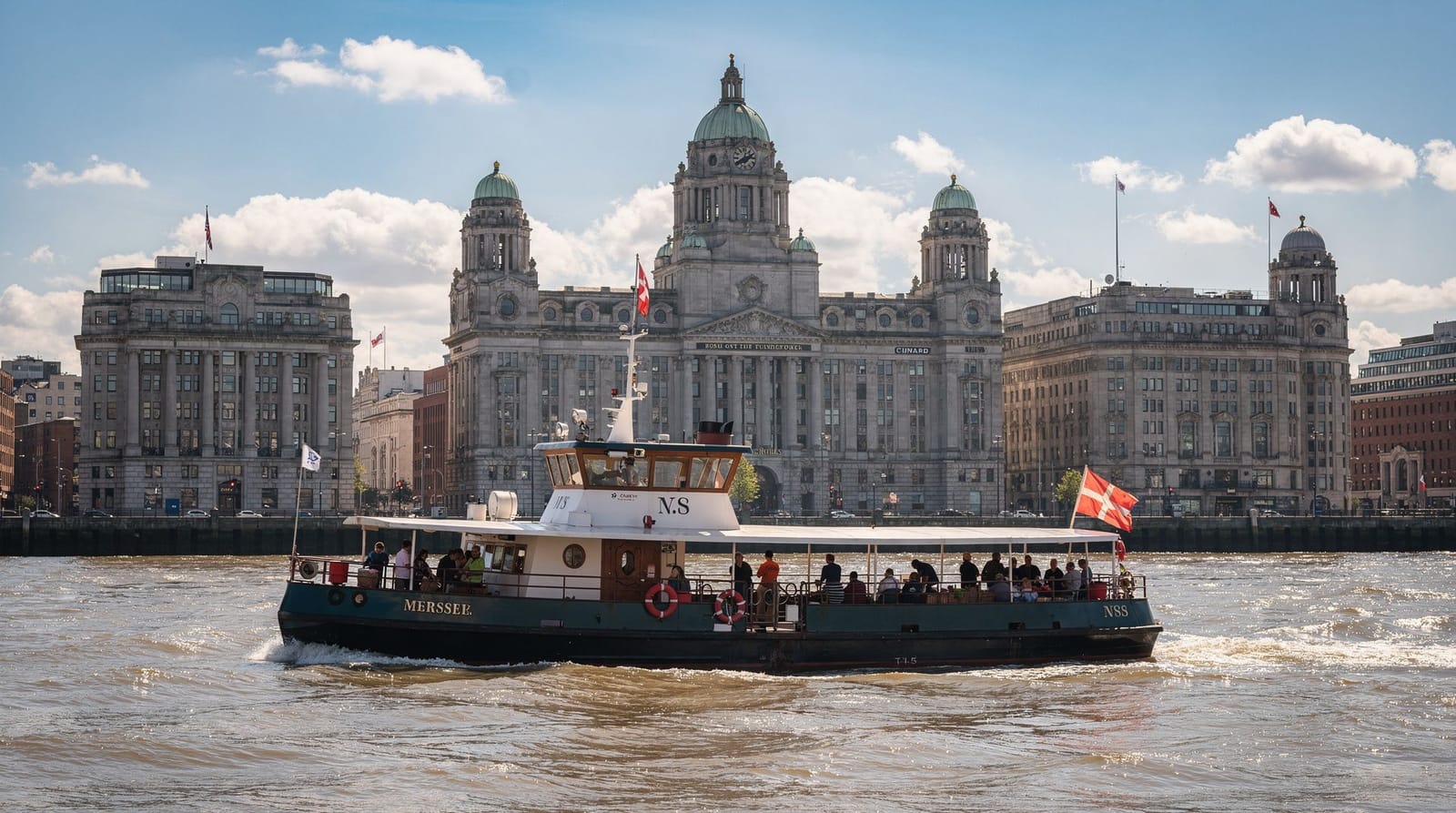
The Mersey Ferry is a passenger boat service across the River Mersey, running from Liverpool's Pier Head to Seacombe and Woodside on the Wirral side. The 50-minute River Explorer sightseeing cruise, with recorded commentary, costs around £12-14 for adults; simple point-to-point commuter crossings are cheaper but skip the commentary and full loop.
More than a river crossing
The Mersey Ferry earned its fame the ordinary way — as daily transport for Liverpool and Wirral commuters — and then had a pop song written about it in 1964 that turned a utilitarian boat trip into a piece of Liverpool identity. “Ferry Cross the Mersey” by Gerry and the Pacemakers is still played during the sightseeing cruise, and the ferry company has built a genuinely enjoyable tourist product around what used to be a plain commute.
Today there are two ways to use it: as a quick, cheap crossing between Liverpool and the Wirral, or as the River Explorer sightseeing cruise, a 50-minute loop with commentary that’s designed for visitors rather than commuters. Almost everyone reading this wants the second one. If you’ve already tried Chester’s own River Dee cruise, this is the bigger, estuary-scale version of the same idea.
| Where | Pier Head terminal, Liverpool waterfront |
| Cost | Around £12-14 for the River Explorer cruise |
| Time needed | 50 minutes for the full loop |
| Getting there | 45min train from Chester to Lime Street, then a 10-15min walk |
| Best time | May-September for frequency and visibility |
A ferry with genuine maritime history
Mersey Ferries has operated some form of crossing between Liverpool and the Wirral peninsula since medieval times, when monks from Birkenhead Priory ran a ferry service for travellers and pilgrims. The modern passenger service dates to the Victorian era, when the Mersey was one of the busiest shipping estuaries in the world and Liverpool’s docks handled a substantial share of the British Empire’s trade — cotton, sugar and, in a history the city has worked to confront rather than obscure, enslaved people, via the transatlantic slave trade that built much of the port’s early wealth.
The ferry crossing itself predates almost every other tourist attraction on this stretch of waterfront, and its continued operation as both a commuter service and a sightseeing cruise reflects a working river rather than a museum piece.
The current fleet includes vessels named Snowdrop and Royal Daffodil, alongside other boats rotated through the schedule — look out for the name on the hull as you board, since spotting a specific named ferry is a small point of interest for anyone who’s read up on the fleet’s history beforehand.
The River Explorer cruise
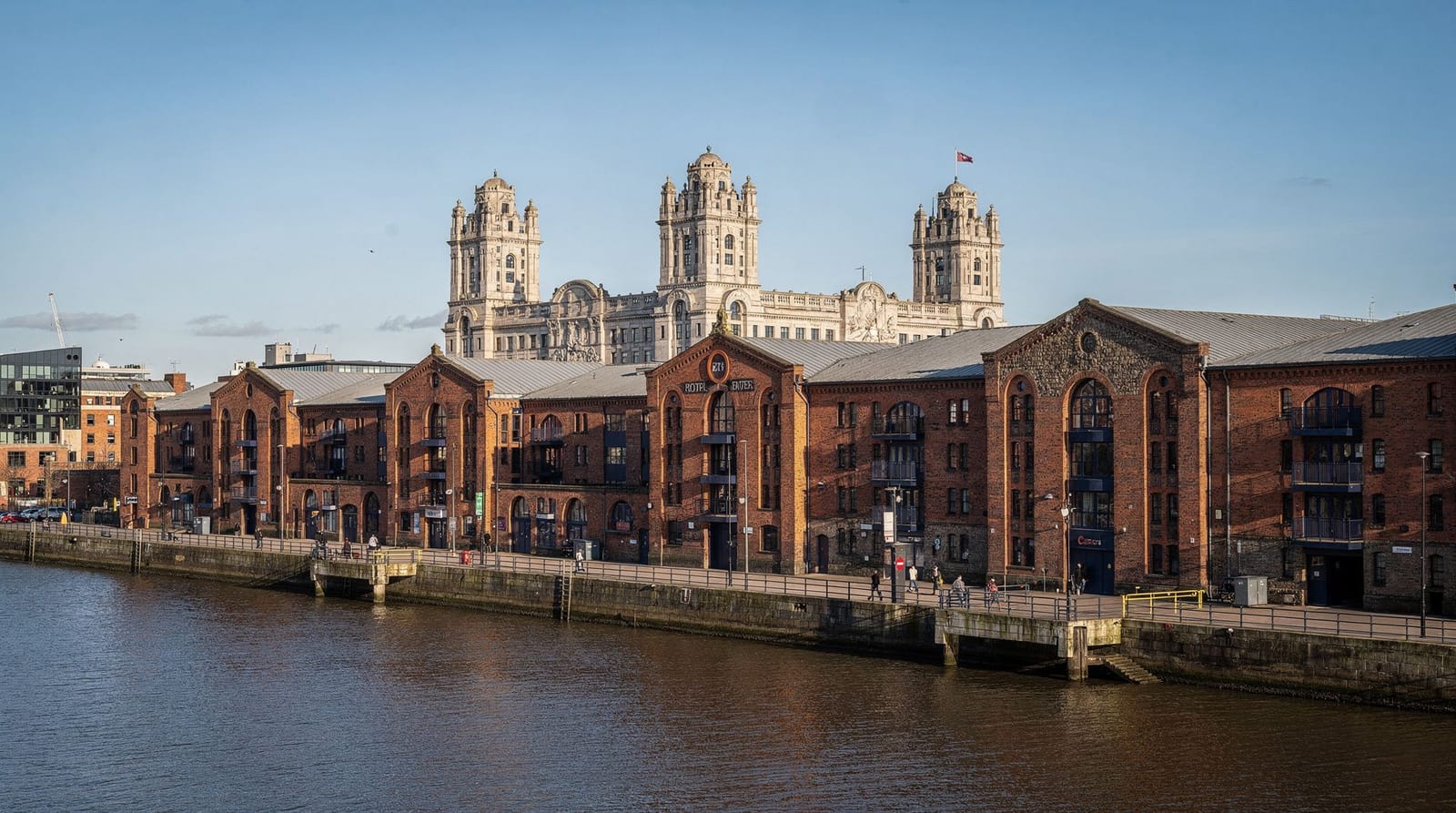
Liverpool: Sightseeing River Cruise on the Mersey RiverThe cruise departs from the Pier Head terminal, crosses to Seacombe on the Wirral side, continues to Woodside, then returns to Pier Head — around 50 minutes total. Recorded commentary covers the history of the docks, the Blitz, the Cunard and White Star Line heritage, and the skyline itself, including the Royal Liver Building’s two Liver Bird statues (Bella and Bertie, facing the city and the sea respectively — local legend says if they ever fly away or mate, Liverpool will cease to exist).
Adult tickets run roughly £12-14, with family and concession pricing available. Sailings run multiple times a day in season, dropping to a reduced timetable in winter months. Boats are covered but have open-deck sections, which is where most people stand for photos of the Liverpool waterfront receding and the Wirral shore approaching.
Other Mersey cruise options
Liverpool: River Cruise and Hop-On Hop-Off Bus TourFor visitors who want to combine the ferry with a land-based sightseeing loop, this combined ticket pairs the River Explorer cruise with a hop-on hop-off bus route around the city’s main attractions, a reasonable option if you want maximum sightseeing coverage in a single purchase without separately booking a walking tour.
Liverpool: 3-Hour Bay CruiseA longer alternative that extends further out into Liverpool Bay rather than the standard Seacombe-Woodside loop, this is a better fit for visitors specifically interested in the wider estuary and coastal scenery rather than the compact waterfront view the standard River Explorer delivers. At three hours, it’s a bigger time commitment and suits a full afternoon rather than a quick add-on to a day trip.
Point-to-point crossings
If you actually need to get to Seacombe or Woodside — for the U-boat Story exhibition at Woodside’s Spaceport building, or simply to walk the Wirral prom — you can buy a straightforward one-way or return crossing without the full commentary loop. These are cheaper and quicker, in the 10-12 minute range per leg, and run on a more frequent commuter-style timetable through the day.
This point-to-point option is worth knowing about even if sightseeing is your main goal, since it lets you build a slightly different itinerary: cross to Woodside on a simple ticket, explore the Wirral side (the U-boat Story, in particular, is a genuinely interesting stop covering a Second World War German submarine, U-534, raised from the Kattegat and now displayed in sections), then return to Pier Head on a later sailing rather than staying on the same boat for the full round trip. This approach costs a little more in total fare but gives you actual time on the Wirral side rather than just viewing it from the water.
Is the ferry worth it, or should you skip it
The Mersey Ferry earns its £12-14 for the view alone: the Liverpool waterfront, with its UNESCO-recognised (heritage-listed prior to 2021 delisting, still architecturally significant) group of Edwardian buildings, genuinely looks better from mid-river than from the dock. If you enjoy waterfront cities from the water — as you would in a similar boat trip in Sydney or Hong Kong — this delivers.
Where it’s a weaker choice: if you’re short on time in Liverpool and have to pick between the ferry and, say, the Beatles Story or an Anfield stadium tour, prioritise the land-based attraction first. The ferry is an hour well spent, not an unmissable one. It’s also less interesting on an overcast day when the skyline photographs flatten out — if you have flexibility, save it for clearer weather.
Families and accessibility
The River Explorer cruise is a comfortable, low-effort activity for families — the boats are stable, the estuary crossing is gentle rather than choppy in typical conditions, and the fixed 50-minute length gives a clear end point that’s easy to plan a day around. Buggies can be brought aboard, and there’s usually space near the boarding ramp to park one during the sailing. Toilets are on board the larger vessels used for the commentary cruise, which matters more here than on Chester’s shorter River Dee loop given the longer duration.
Wheelchair users and anyone with mobility considerations should be aware that boarding ramps at Pier Head shift with the tide, meaning the gradient onto the boat varies through the day — terminal staff assist with this routinely, but it’s worth allowing extra time and, if in doubt, calling ahead to confirm the current arrangement for your visit date.
Pushchairs and wheelchairs can usually be positioned in a designated space near the boarding ramp rather than needing to be folded, though this space is limited on busier sailings, so ask crew when boarding rather than assuming there’s room. Assistance dogs are welcome on board. If you’re visiting with very young children, the fixed 50-minute duration and enclosed lower cabin option (for anyone who finds the open deck too windy or exposed) make this one of the more manageable boat trips for a family with a toddler, compared with a longer open-water cruise.
Mersey Ferry versus Chester’s River Dee cruise
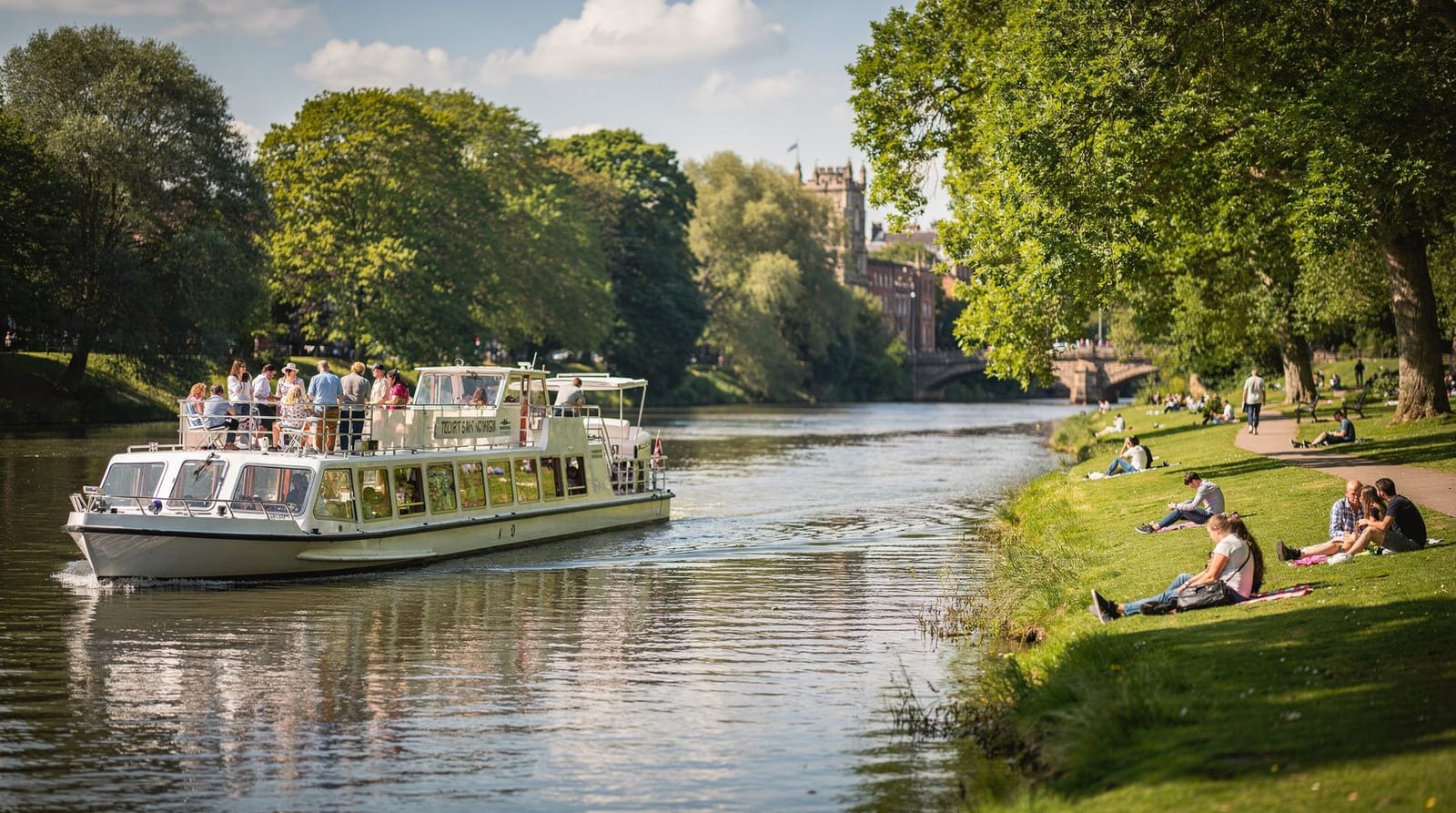
If you’re doing both Chester and Liverpool on the same trip, it’s worth understanding how differently these two river cruises feel, despite both being covered in this guide’s boat-cruises category. Chester’s River Dee loop is a sheltered, intimate stretch of inland river with almost no commercial shipping traffic and a gentle, park-like backdrop the whole way round.
The Mersey Ferry crosses a genuine tidal estuary that still carries commercial and leisure shipping, with a skyline of significant scale — the Three Graces read as proper big-city architecture in a way nothing on the Dee attempts to match. Neither cruise replaces the other; they’re different scales of the same basic idea, and doing both across a longer Chester-and-Liverpool trip gives a useful sense of how the two rivers, and the two cities, actually differ.
| Mersey Ferry (Liverpool) | River Dee cruise (Chester) | |
|---|---|---|
| Setting | Tidal estuary, commercial shipping | Sheltered inland river |
| Duration | ~50 minutes | ~30 minutes |
| Cost | Around £12-14 adult | Around £8-9 adult |
| Scale | Big-city skyline, the Three Graces | Intimate, park-like backdrop |
For the full breakdown of Chester’s own cruise, see our River Dee cruises guide.
Getting to Pier Head
Pier Head sits directly on Liverpool’s waterfront, a 10-15 minute walk from Liverpool Lime Street station through the city centre, or a shorter walk from James Street station if you’re arriving by Merseyrail. It’s immediately adjacent to the Museum of Liverpool and a five-minute walk from the Royal Albert Dock, so it slots easily into a waterfront-focused day without extra transport. Clear signage points the way from both stations, and on a first visit the Royal Liver Building’s twin clock towers are visible from much of the surrounding city centre, making Pier Head one of the easier Liverpool landmarks to navigate toward without a map.
From Chester, the journey is straightforward: train to Liverpool Lime Street (around 45 minutes, typically with one change at Runcorn or Hooton — full timetable in our Chester to Liverpool day trip guide), then walk or take a short bus/taxi down to the Pier Head. It’s an easy half-day addition to a Liverpool day trip from Chester, and it’s one of the stops built into our Chester-Liverpool weekend itinerary.
When to go
May through September gives the most frequent sailings and the best odds of clear visibility across the Mersey estuary, which can otherwise be hazy or grey for much of the year. Weekday mornings tend to be quieter than weekend afternoons, when the cruise attracts more families and larger groups. If you want the waterfront lit by low sun, a late-afternoon sailing in summer catches the Three Graces at their best.
Winter sailings still run, though on a reduced timetable and with a real chance of a cold, blustery crossing — bring proper waterproofs rather than a light jacket if you’re doing the cruise between November and February. The estuary is also notably busier with commercial shipping traffic on weekdays than weekends, which some visitors find adds interest (container ships and other vessels using the same navigable channel) and others find simply makes for a more crowded stretch of water to photograph cleanly.
Combining the ferry with the rest of Liverpool
The Pier Head location makes the ferry easy to bookend a Liverpool day trip. A sensible sequence: start at the Royal Albert Dock (Beatles Story, Tate Liverpool, or just the dockside cafés), walk to Pier Head for the ferry cruise, then head into the city centre for the afternoon — Bold Street, the Cathedral quarter, or a football stadium tour if that’s on your list.
If you’re staying in Chester and doing Liverpool as a day trip, the ferry pairs naturally with a Liverpool walking tour earlier in the day: cover the streets on foot first, then finish with the water view as a change of pace before heading back to Lime Street for the return train to Chester. For a fuller North West trip, see our 5-day North West England itinerary, which includes both Chester and Liverpool.
A workable single-day plan from Chester: catch an early train to arrive in Liverpool by mid-morning, spend the first couple of hours on a walking tour or independent wander through the city centre and Georgian Quarter, have lunch around Bold Street or the Royal Albert Dock, then take the mid-afternoon River Explorer cruise once the light has softened. That leaves the early evening free either for a stadium tour (on a non-matchday) or simply more time at the waterfront before the return train to Chester, which typically has services running into the evening.
What the commentary actually covers
The recorded narration on the River Explorer cruise runs through several distinct threads rather than a single continuous history lecture: the shipping and trading history of the docks, including Liverpool’s rise as the British Empire’s second port through the 18th and 19th centuries; the city’s role during the Second World War, when the Mersey was a critical Atlantic convoy hub and suffered heavy Blitz damage as a result; the architectural story of the Three Graces, built in the early 20th century as a statement of civic and commercial confidence; and, inevitably, the Gerry and the Pacemakers connection, with the song itself played at the point in the route it was written to evoke.
If you want more depth than a fixed recording can offer on any of these threads, pair the cruise with a visit to the Merseyside Maritime Museum at the Royal Albert Dock, which covers the same history in considerably more detail through physical exhibits.
Tourist-trap check
The Mersey Ferry is not a tourist trap in the way some river cruises in bigger cities are — the price is reasonable for the length and quality of the experience, and it’s still a real working ferry service, not a purpose-built gimmick. The one thing to watch for is buying a ticket at an inflated walk-up price from a tout or third-party kiosk away from the official terminal; buy directly at Pier Head or through a recognised booking platform. For a deeper comparison of routes and boats, our Mersey Ferry cruise review breaks down the options tour-by-tour, and pairs well with the Beatles Magical Mystery Tour if music history is also on your list.
A related scam to watch for, more relevant in peak summer, is unofficial “photo package” upsells offered by people not affiliated with Mersey Ferries near the terminal — stick to the official ticket office or app for anything beyond your basic fare, and treat unsolicited offers on the approach to Pier Head with the same scepticism you’d apply near any major tourist landmark.
Practical tips
- Arrive 15-20 minutes before departure in peak season to secure a spot on the open deck rather than the enclosed lower cabin.
- Bring a jacket even in summer — the estuary wind is noticeably stronger than the sheltered city streets.
- The commentary is fixed and looped, so there’s no live guide to ask questions of; read up on the Three Graces beforehand if you want more depth than the recording gives.
- Toilets are on board; the terminal building also has facilities and a small café.
- If travelling with a pushchair or wheelchair, the terminal and boats are step-accessible, but check current arrangements at busy times, as boarding ramps shift with tide levels.
- Buy tickets online or at the official Pier Head terminal rather than from unaffiliated sellers approaching you near the waterfront.
- If you’re prone to feeling cold on open water, the estuary crossing is windier than it looks from the dock — dress a notch warmer than you would for a walk around the city centre.
- Check the fleet name painted on the hull as you board; spotting Snowdrop or Royal Daffodil is a small point of interest if you’ve read into the ferry’s history.
A note on the wider estuary crossing
Beyond the tourist cruise, the Mersey itself remains a genuinely significant waterway — the Kingsway and Queensway road tunnels beneath the river carry tens of thousands of vehicles daily between Liverpool and the Wirral, and the ferry’s continued existence as passenger transport, not just a heritage attraction, is part of what gives it credibility as a sightseeing choice. Unlike a cruise built purely for tourists on a static loop, the Mersey Ferry is still doing a real job moving people across a working river, and the sightseeing commentary is, in a sense, a bonus layered onto genuine infrastructure rather than the whole point of the service.
The Mersey Ferry is a modest, well-priced way to see Liverpool’s famous waterfront from the water, and its cultural pedigree — the song, the Liver Birds, the docks’ shipping history — gives it more substance than a generic sightseeing cruise. Treat it as a strong half-day add-on to a Liverpool trip from Chester, not the centrepiece.
Booking and ticket options in more detail
The River Explorer cruise can be booked online ahead of your visit, which is worth doing in peak summer weekends when the most popular sailing times can fill. Walk-up tickets at the Pier Head terminal are usually available outside the busiest periods, and booking online rarely costs more than paying on the day, so there’s little downside to securing your slot in advance if your Chester day-trip schedule is fixed around a specific train time. Family tickets and group rates are worth asking about at the ticket window rather than assuming individual adult fares are the only option, particularly if you’re travelling with several children.
A quieter alternative: early morning and off-peak sailings
If crowds are a concern, the earliest sailings of the day — before the bulk of day-trippers and school groups arrive — offer a noticeably quieter boat and a calmer view of the waterfront, with the added benefit of softer morning light on the Three Graces. Weekday sailings outside school holidays are consistently less busy than weekend afternoons, worth factoring in if your Chester trip has any flexibility over which day you visit Liverpool.
The fleet in more detail
Mersey Ferries currently rotates a handful of named vessels through the schedule, with Snowdrop and Royal Daffodil the two most commonly seen on the River Explorer route. Both are modern, purpose-refitted passenger vessels rather than historic boats, with covered lower decks and open upper sections — the open deck is where most photographers head for unobstructed shots of the skyline, weather permitting. The names themselves carry some local sentiment: Royal Daffodil references an earlier Mersey Ferries vessel honoured for wartime service, a detail the on-board commentary occasionally touches on for visitors interested in the fleet’s history rather than just the current crossing.
Special and themed sailings
Beyond the standard River Explorer cruise, Mersey Ferries periodically runs themed sailings — river-based fireworks viewings, seasonal events around Christmas, and occasional evening cruises timed for sunset over the estuary. These aren’t part of the regular daytime timetable and typically need booking well ahead, since capacity is fixed and demand for a genuinely scenic themed sailing is high. If a themed cruise is the specific reason for your visit, check the current schedule directly with Mersey Ferries rather than assuming one will be running on your travel dates, since these vary year to year.
Frequently asked questions about Mersey Ferry from Liverpool
Is the Mersey Ferry the same as the one from the Gerry and the Pacemakers song?
Yes — "Ferry Cross the Mersey" refers to this exact service, and it's leaned into the association since, with themed announcements and the song playing at points during the River Explorer cruise. The ferries themselves have been modernised since the 1960s, but the Pier Head-to-Wirral crossing is the same route.Where does the Mersey Ferry leave from in Liverpool?
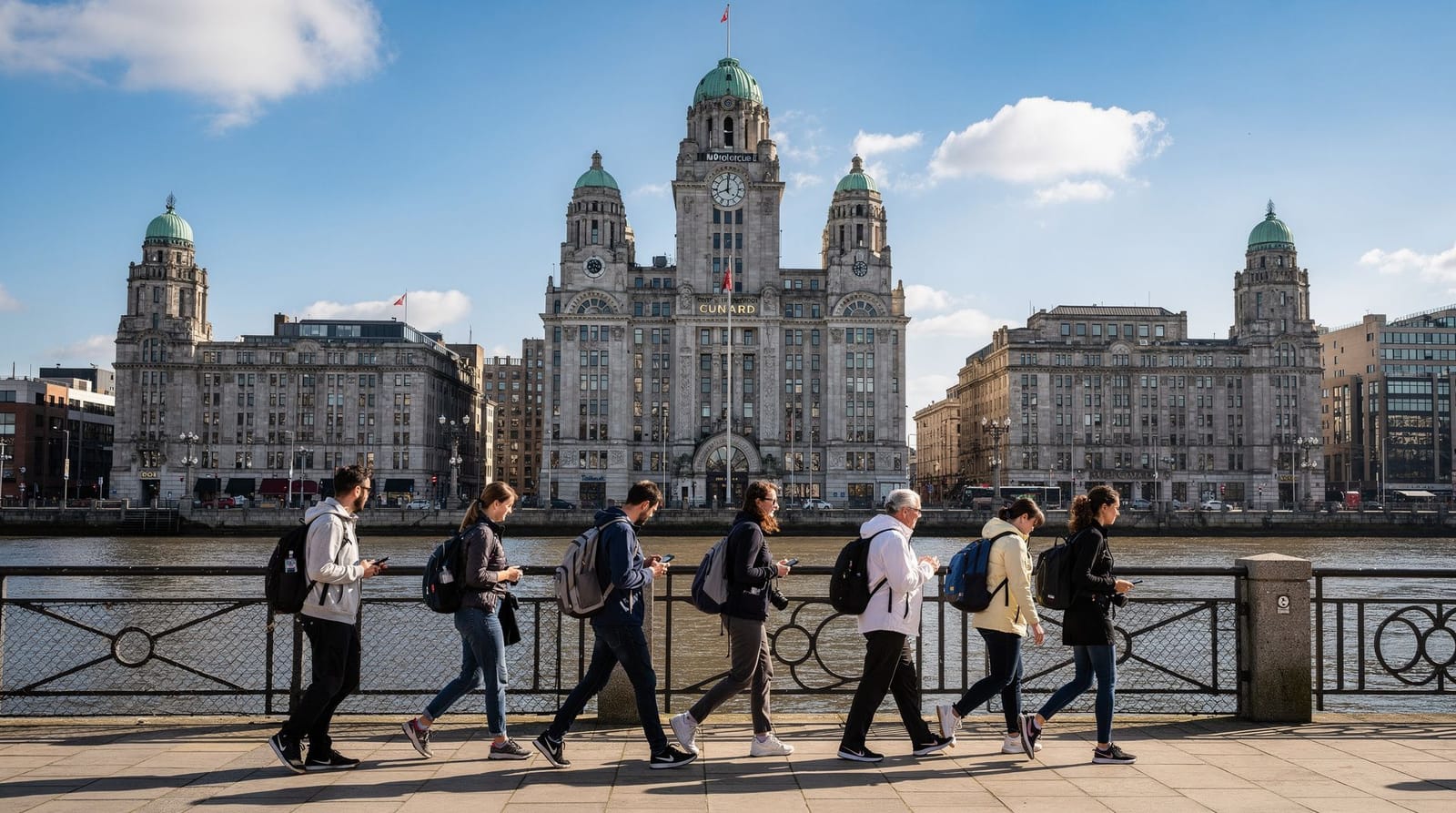
From the Pier Head terminal, right on Liverpool's waterfront next to the Museum of Liverpool and a short walk from the Royal Albert Dock and the Three Graces (the Royal Liver Building, Cunard Building and Port of Liverpool Building). It's easy to find and well signposted from the waterfront.How long is the Mersey Ferry River Explorer cruise?
The full sightseeing loop, calling at Seacombe and Woodside before returning to Pier Head, takes around 50 minutes with commentary covering the docks, the Liverpool skyline and Wirral side history. Simple one-way crossings between terminals take closer to 10-12 minutes.Is the Mersey Ferry worth doing if I've already done a Liverpool walking tour?
Yes, because it shows Liverpool from the water rather than the street — the Three Graces and the wider waterfront read very differently from mid-river than from the dock itself. It's a good complement to, not a replacement for, a walking tour of the city centre.Can you take a car on the Mersey Ferry?
No — the passenger ferry does not carry vehicles. If you need to cross the Mersey by road, use the Kingsway or Queensway tunnels; the ferry is strictly a foot-passenger sightseeing and commuter service.Does the Mersey Ferry run all year?
Yes, the ferry operates year-round, though the frequency and the exact commentary cruise schedule are reduced in winter. Summer (May-September) has the most frequent sailings and the best weather odds for enjoying the open-deck sections.
Top experiences
Bookable activities with verified prices and instant confirmation on GetYourGuide.