Harry Potter and North Wales — what's actually true
Quick answer: no, Harry Potter was not filmed in North Wales — that claim circulates online but doesn’t hold up. The Hogwarts Express platform scenes were shot on the Glenfinnan Viaduct in Scotland, and most of the castle, cathedral and school interiors used locations like Alnwick Castle, Gloucester Cathedral, Christ Church Oxford and Lacock Abbey, all in England. What North Wales genuinely has is a different, equally interesting film and TV history — Portmeirion, Doctor Who’s alien quarry landscapes, and more recently a chunk of House of the Dragon.
This is a piece worth reading before you plan a trip specifically chasing wizarding-world nostalgia in North Wales — the region has plenty to offer film and TV fans, just not the franchise most people assume.
| Claim | True or false | What’s actually there |
|---|---|---|
| Harry Potter filmed in North Wales | False | Glenfinnan Viaduct (Scotland), Alnwick Castle and others (England) |
| Portmeirion is a genuine film location | True | The Prisoner (1966-67), Doctor Who, Brideshead Revisited |
| Snowdonia doubled for alien worlds | True | Doctor Who quarry scenes, Clash of the Titans |
| House of the Dragon filmed here | True | Significant location work in North Wales for season two |
Correcting the myth first
It’s worth being direct about this, since the claim is common enough to need debunking rather than quietly ignoring: no scenes from any Harry Potter film were shot in North Wales. The confusion likely comes from the region’s genuine castle-and-mountain aesthetic being close enough to the “wizarding Britain” mental image that people assume a connection exists. If you’re specifically hunting Harry Potter filming locations, Caernarfon Castle and Snowdonia are not on that list — the honest planner’s version of this article has to say so plainly before getting to what actually is true.
Portmeirion: real, but not Harry Potter
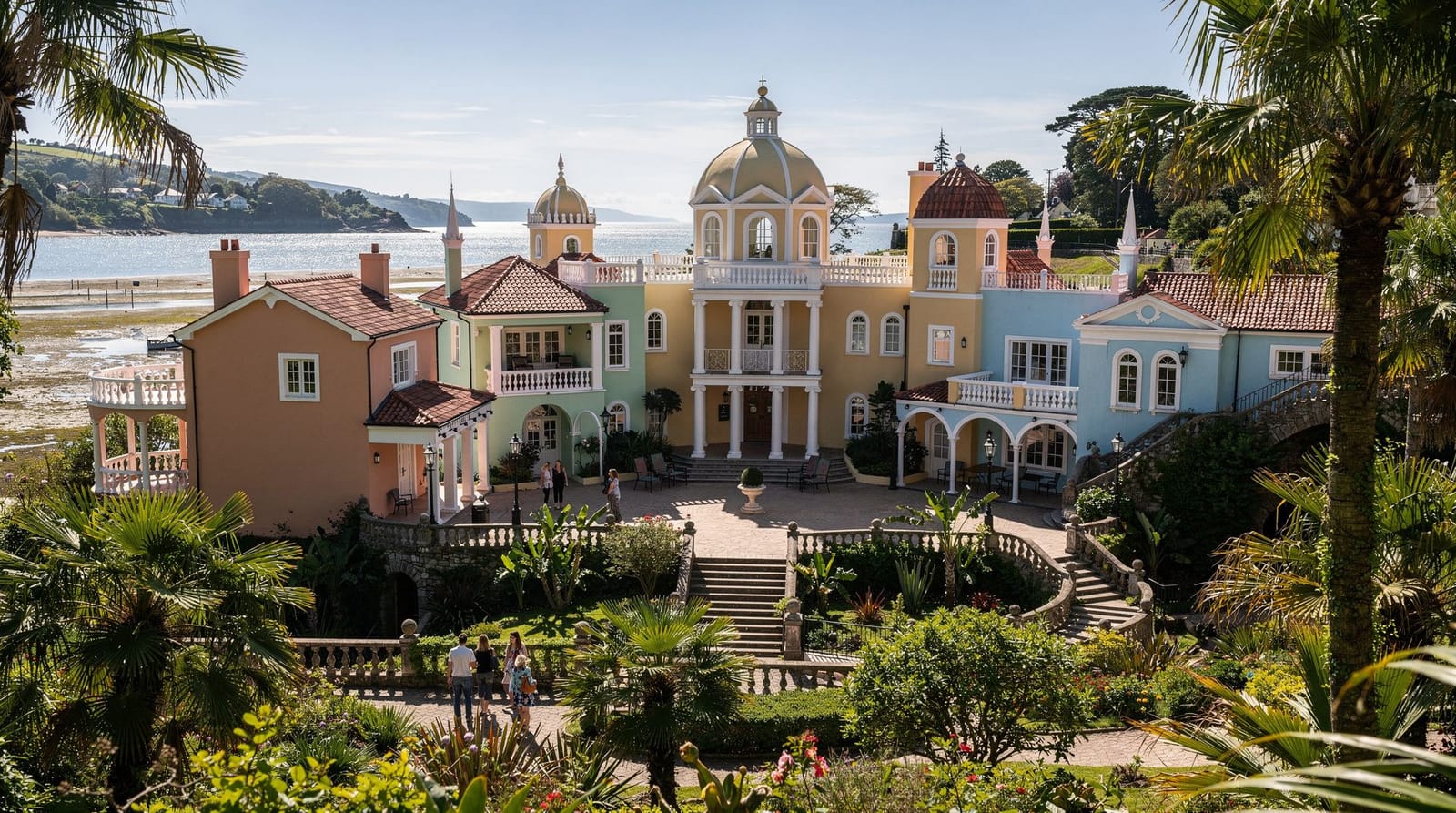
Portmeirion, the Italianate village built by architect Clough Williams-Ellis between 1925 and 1975, has a genuinely well-documented film and TV history of its own — it just predates Harry Potter by decades. Its most famous screen role is as the setting for The Prisoner, the cult 1960s British television series, filmed there in 1966 and 1967 and still the reason a meaningful share of visitors make the trip.
Beyond that, Portmeirion has hosted shoots for productions including Doctor Who (1976), Brideshead Revisited (1981) and Cold Feet (2003), among others. Visiting today, the village itself — not a film set replica but a real, walkable coastal village — is worth it on its own architectural merits, Harry Potter or not.
Doctor Who’s alien planets were Welsh quarries
Long-running BBC series Doctor Who has used Welsh locations extensively since it’s produced in Cardiff, and North Wales specifically has stood in for alien worlds more than once — the slate quarries around Blaenau Ffestiniog, with their stark grey terraces, have doubled for otherworldly landscapes that would be expensive to build as sets. It’s a good reminder that North Wales’s film career isn’t about looking like itself on screen — it’s regularly cast as somewhere else entirely, from alien planets to, more recently, fictional continents.
Clash of the Titans, Tomb Raider, and a genuine James Bond connection
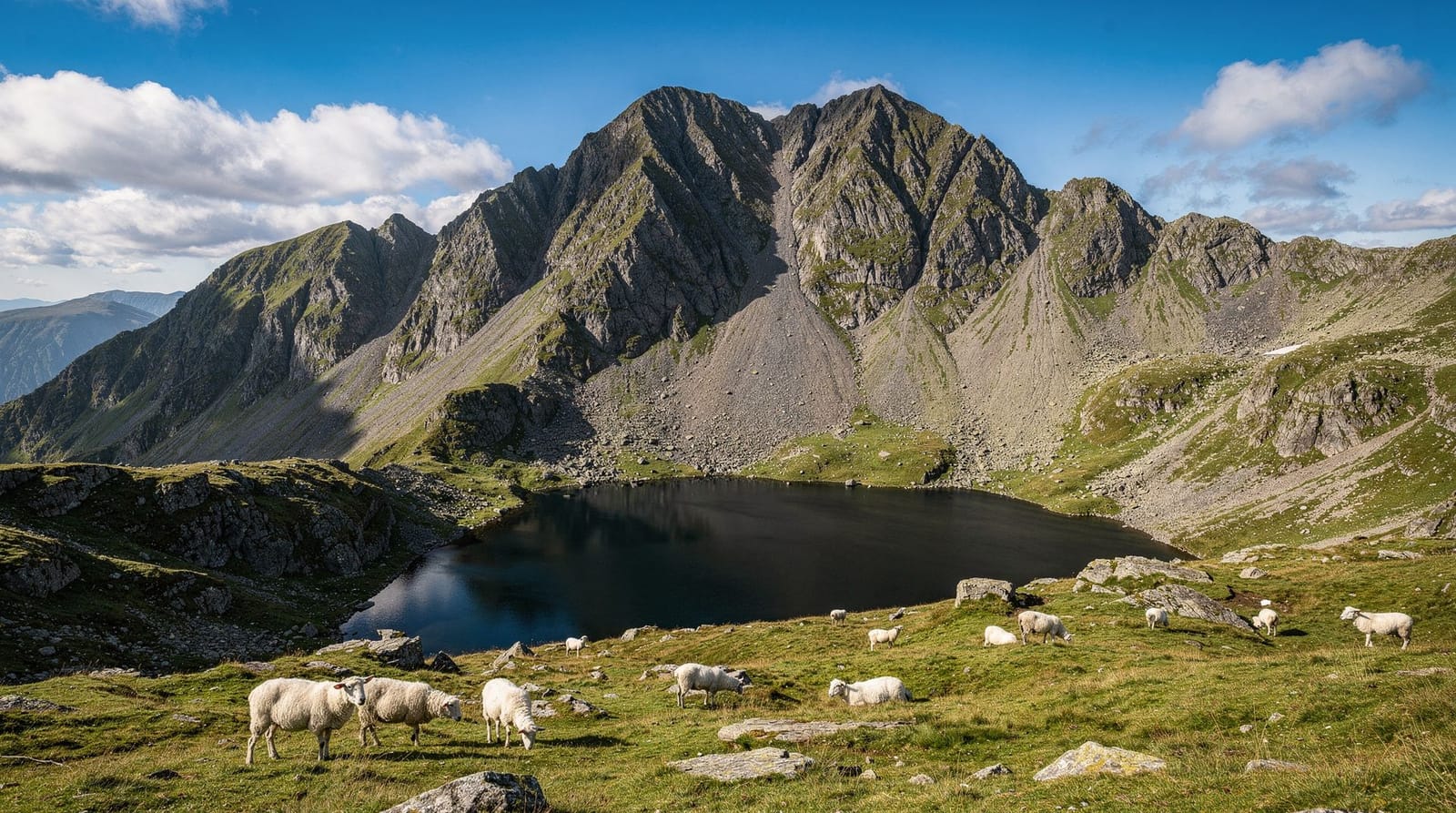
Snowdonia’s mountains have done more screen work than most visitors realise. Dinorwig Quarry near Llanberis was used for Clash of the Titans (2010), and Llyn Gwynant stood in for a Chinese landscape — complete with a built replica section of the Great Wall — in Lara Croft: Tomb Raider – The Cradle of Life. Snowdonia’s peaks also appear in the 1999 Bond film The World Is Not Enough, alongside earlier appearances in The Inn of the Sixth Happiness (1958) and Tomb Raider (2003). None of this is Harry Potter, but collectively it’s a more varied filming history than the myth gives the region credit for.
House of the Dragon and Willow — the recent additions
More recently, a significant portion of House of the Dragon’s second season was filmed on location in North Wales, standing in for several of the show’s fictional regions. And in a rare case of a production returning decades later, Lucasfilm brought its Willow sequel series back to Eryri (Snowdonia) roughly 35 years after the original 1988 film shot scenes in the same landscape — a genuine, verifiable return rather than a one-off.
Why the myth persists anyway
It’s worth asking why the Harry Potter claim sticks around despite being false. Part of it is simply aesthetic: North Wales has genuine castles, dramatic mountains, and a coastline that fits the general “magical Britain” image the films cultivated, even though none of the actual filming happened here.
Part of it is confusion with genuinely castle-heavy filming regions elsewhere in Britain — Alnwick Castle in Northumberland, used for several Hogwarts exterior shots, is a real castle in a similar romantic mould to Conwy or Caernarfon, and it’s an easy mix-up for anyone who hasn’t checked the specifics. None of this makes the claim true, but it explains why it keeps circulating on social media and in casual conversation despite being straightforward to fact-check.
Clough Williams-Ellis and the vision behind Portmeirion
Portmeirion’s screen history is really a footnote to its more interesting core story: architect Clough Williams-Ellis spent half a century, from 1925 to 1975, building it as a demonstration that a naturally beautiful site could be developed without ruining it — an explicitly Italianate design dropped onto a Welsh coastal headland, using a mix of purpose-built structures and salvaged architectural pieces from buildings demolished elsewhere in Britain. That combination of genuine architectural ambition and slightly eccentric execution is arguably why it photographs so well on screen in the first place, from The Prisoner onward — it was designed, from the outset, to look unlike anywhere else in Wales or England.
Visiting the real sites
If Portmeirion is the priority, it sits close enough to Snowdonia and the North Wales coast to combine with a wider day out — the Portmeirion, Snowdonia and castles tour from Llandudno covers it alongside Conwy and Caernarfon, or the Conwy, Snowdonia and Portmeirion day tour runs a similar combined route from elsewhere in the region.
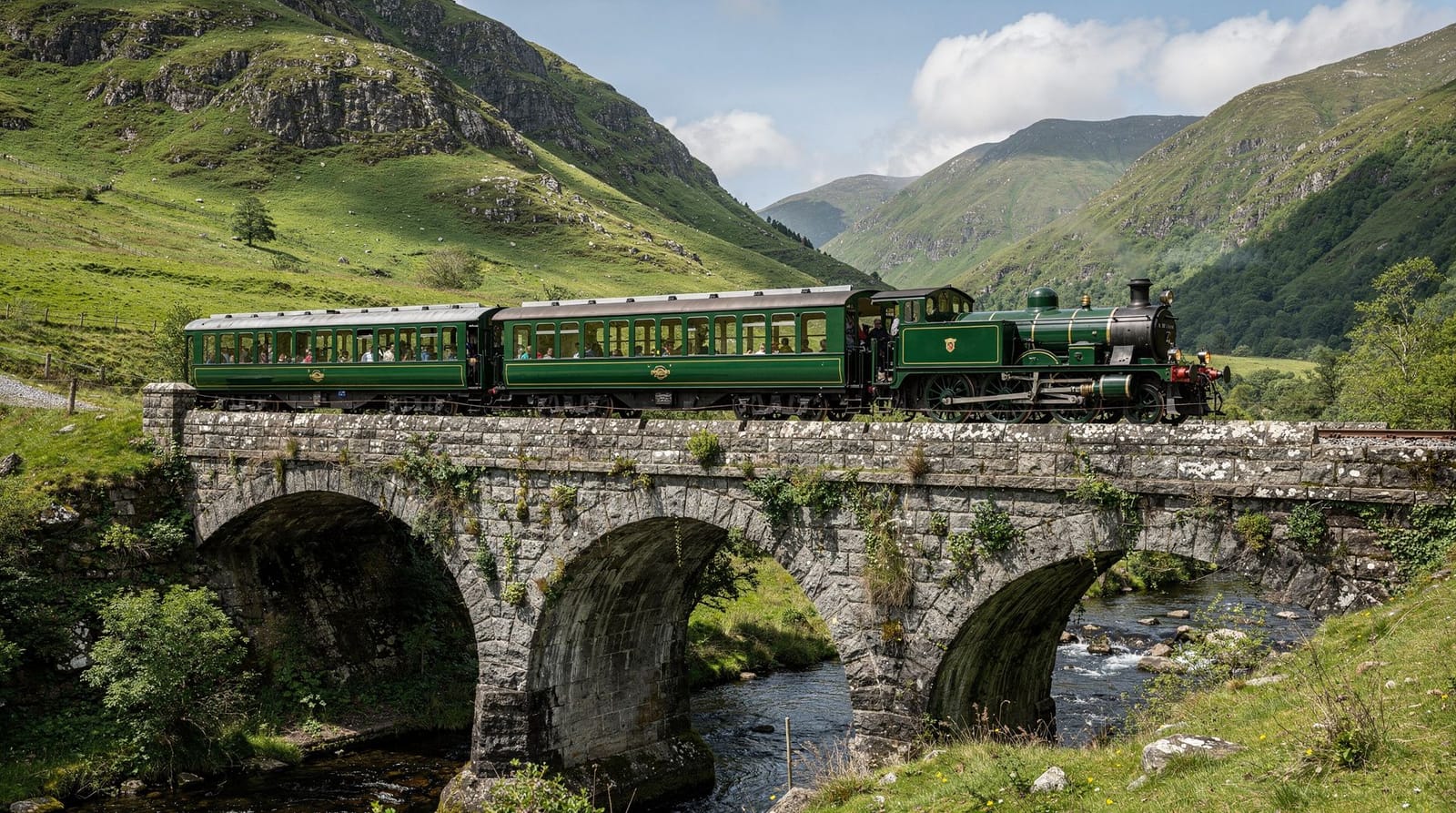
The Blaenau Ffestiniog quarries and wider Snowdonia scenery are also reachable via North Wales’s heritage railways, which happen to pass through some of the same dramatic terrain that’s ended up standing in for other worlds on screen.
A practical note on visiting for the film history specifically
If genuine filming locations are the goal rather than general sightseeing, plan around confirmed sites rather than local rumour — Portmeirion’s Prisoner connection is well documented and the village itself provides context on-site, while the Blaenau Ffestiniog quarries and Snowdonia viewpoints used in various productions are usually unmarked and require some independent research or a specialist guide to identify precisely. A general Snowdonia and castles day tour will get you to the right general areas; dedicated film-location tourism beyond Portmeirion is more of a self-directed pursuit than an established circuit with signposted stops.
The bigger picture
North Wales doesn’t need a Harry Potter connection to justify a visit — the real film and TV history here, Portmeirion’s cult status, the quarries-as-alien-planets trick, and a recent run of major productions choosing the region on its own merits, is a more interesting story than the myth it keeps getting mistaken for.
What genuinely Harry Potter-esque sights North Wales does have
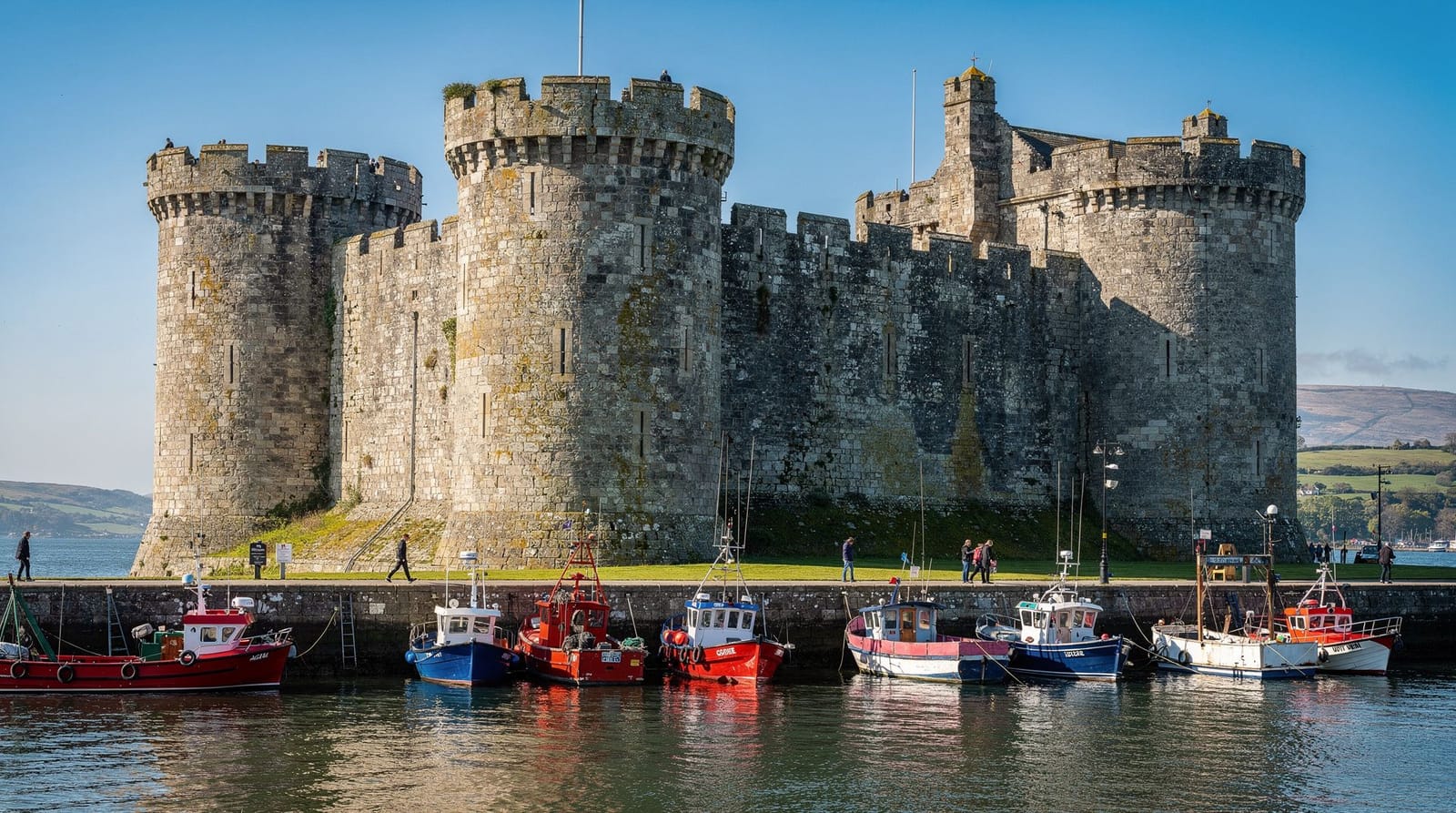
If the castle-and-mountain aesthetic is really what you’re after rather than the specific franchise, North Wales delivers that in spades on its own terms. Caernarfon Castle and Conwy Castle, both genuine medieval fortresses rather than film sets, give a far more authentic “ancient magical Britain” feel than any studio backlot, and Snowdonia’s mountains provide the kind of dramatic, brooding backdrop that fantasy productions are drawn to precisely because it looks the part without needing much set dressing.
Treat a North Wales trip as its own thing — castles, mountains, and a genuinely eccentric filming history — rather than a substitute Harry Potter pilgrimage, and it holds up on its own merits.
Where the actual UK Harry Potter locations are, for context
For anyone still keen on a genuine Harry Potter location trip, the honest answer is that most sites cluster well outside North Wales: the Glenfinnan Viaduct in the Scottish Highlands, Alnwick Castle in Northumberland (used for early flying-lesson and Quidditch-adjacent scenes), Gloucester Cathedral’s cloisters, Christ Church Oxford’s dining hall and staircase, and the Warner Bros. Studio Tour near Watford, which houses the actual sets and props rather than a location at all. None of these are a day trip from Chester, which is precisely why this piece exists — to redirect expectations toward what North Wales genuinely offers rather than a franchise connection that doesn’t exist here.
Frequently asked questions about Harry Potter and North Wales
Was Harry Potter filmed in North Wales?
No. None of the Harry Potter films used North Wales locations. The Hogwarts Express platform scenes were filmed at the Glenfinnan Viaduct in Scotland, and most castle and school scenes used English locations including Alnwick Castle, Gloucester Cathedral, Christ Church Oxford and Lacock Abbey.
What TV show was actually filmed at Portmeirion?
The Prisoner, a cult British TV series from the 1960s, is Portmeirion’s most famous screen credit, filmed there in 1966-67. The village has also appeared in Doctor Who, Brideshead Revisited and other productions since.
Has House of the Dragon filmed in North Wales?
Yes — a significant portion of the show’s second season was filmed on location in North Wales, used to represent several of the fictional regions in the story.
What’s the single best film-related site to visit in North Wales?
Portmeirion, without much competition — it’s the only site on this list built specifically with its screen appeal in mind, it’s independently worth visiting for its architecture, and its Prisoner connection is well documented on-site rather than relying on visitor guesswork.
Are there any Harry Potter-themed attractions in North Wales?
No official ones — there’s no licensed Harry Potter attraction or filming-location trail in North Wales, since none of the films were actually shot there. Any such claim you encounter locally or online should be treated with the same scepticism as the broader myth this article addresses.
Can you visit Portmeirion without a tour?
Yes, it’s open to independent visitors year-round with its own entry ticket, though a guided day tour combining it with Snowdonia or the castles is a convenient option if you don’t want to arrange transport yourself.