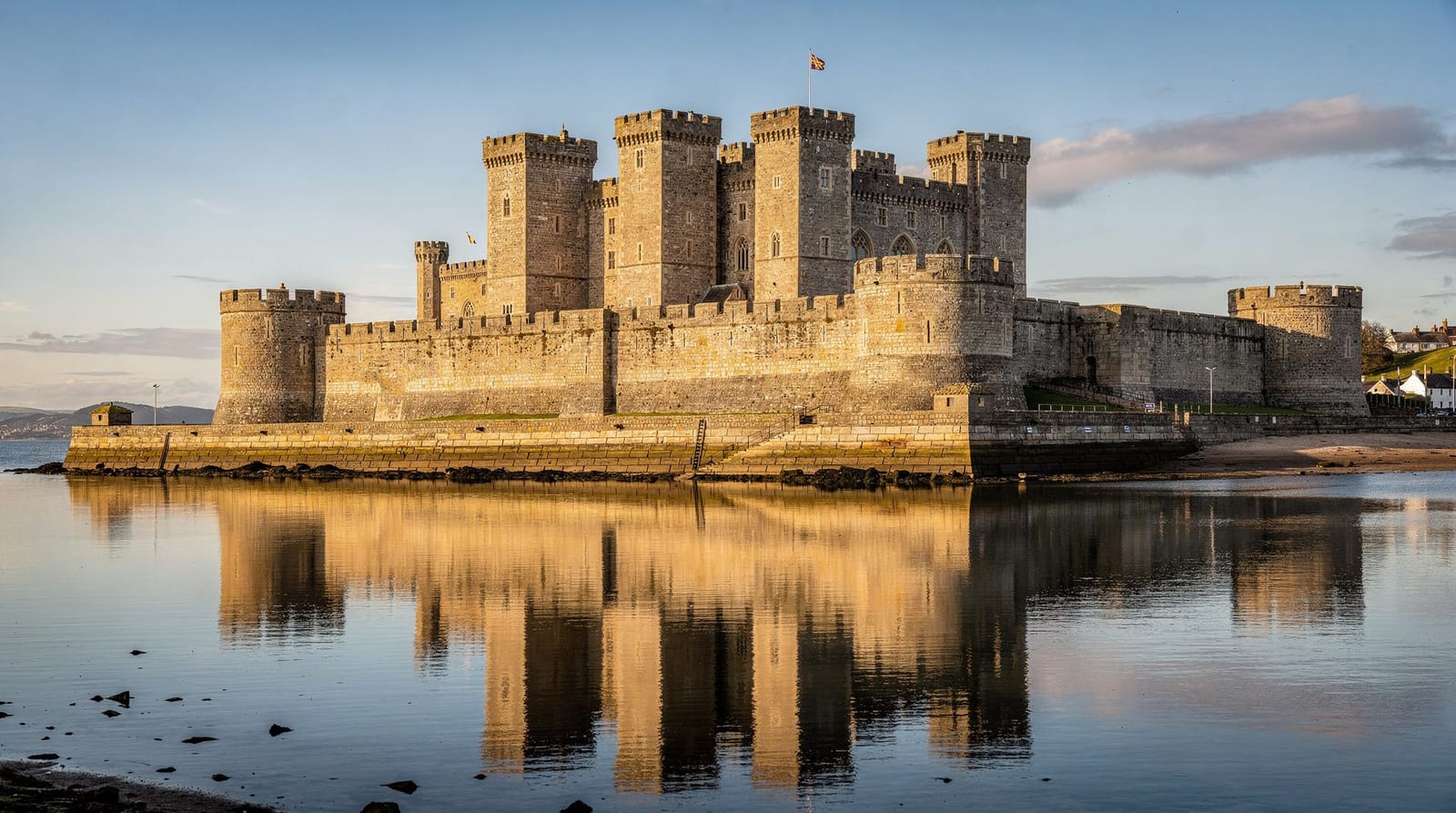
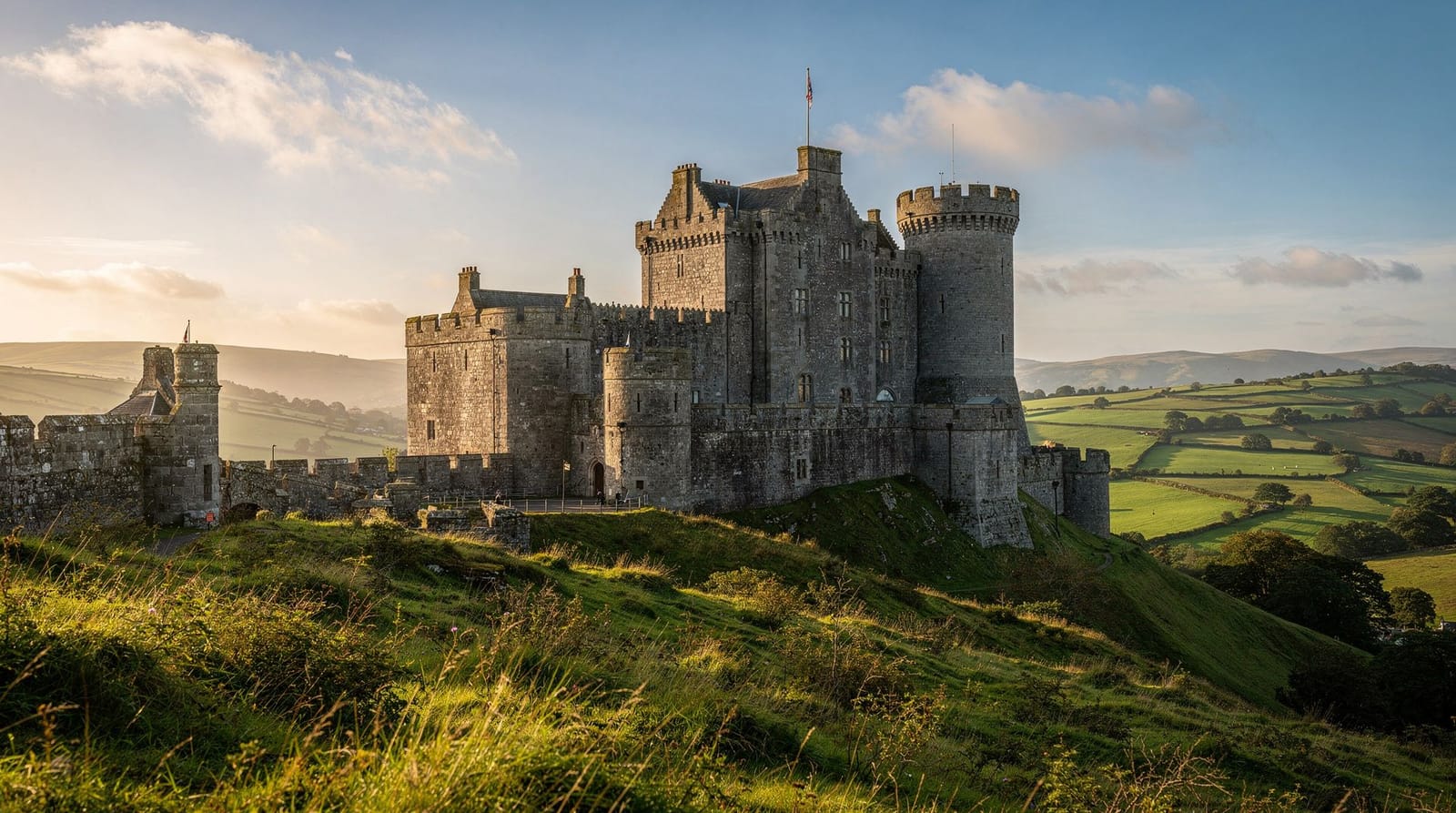
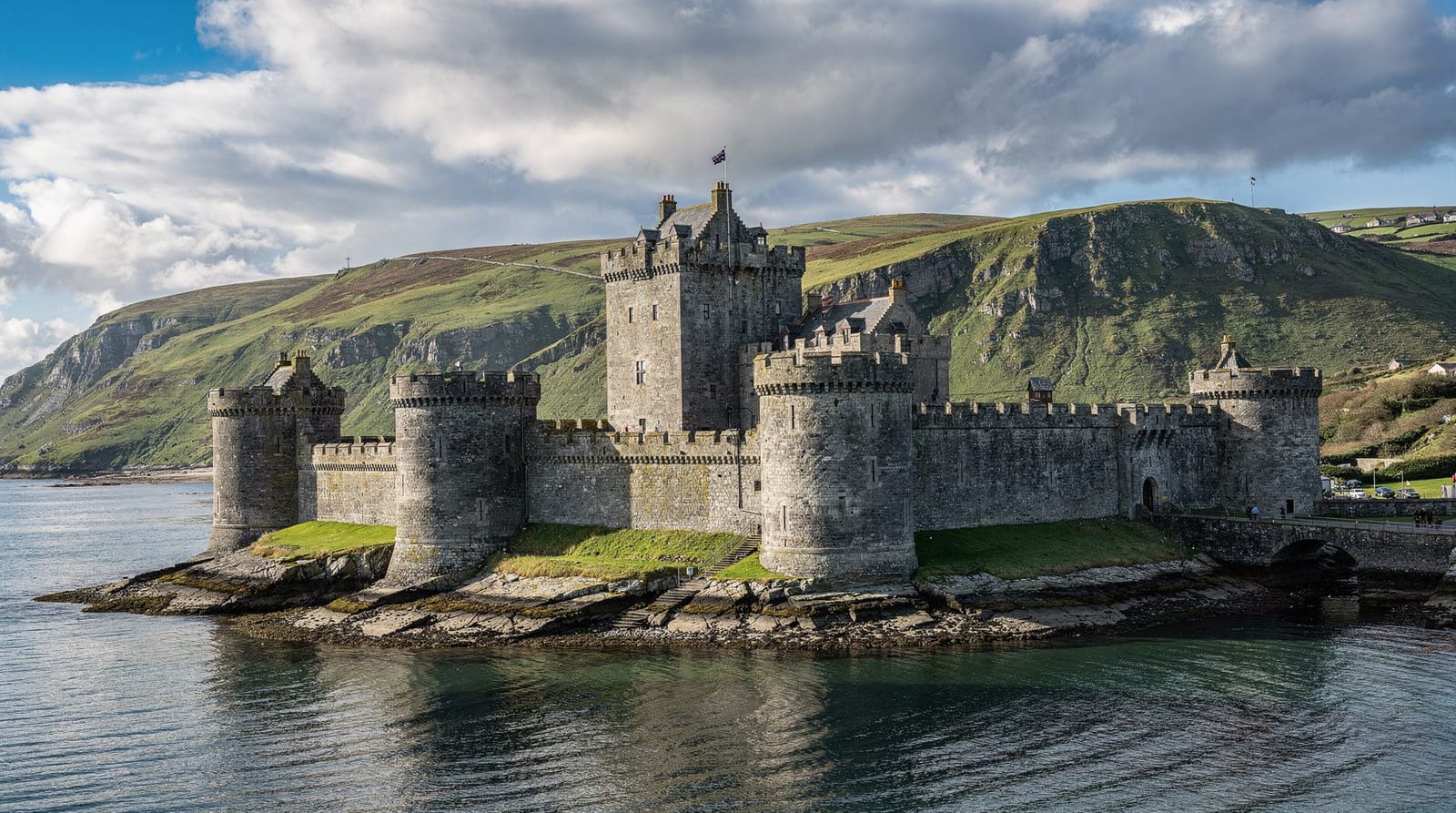
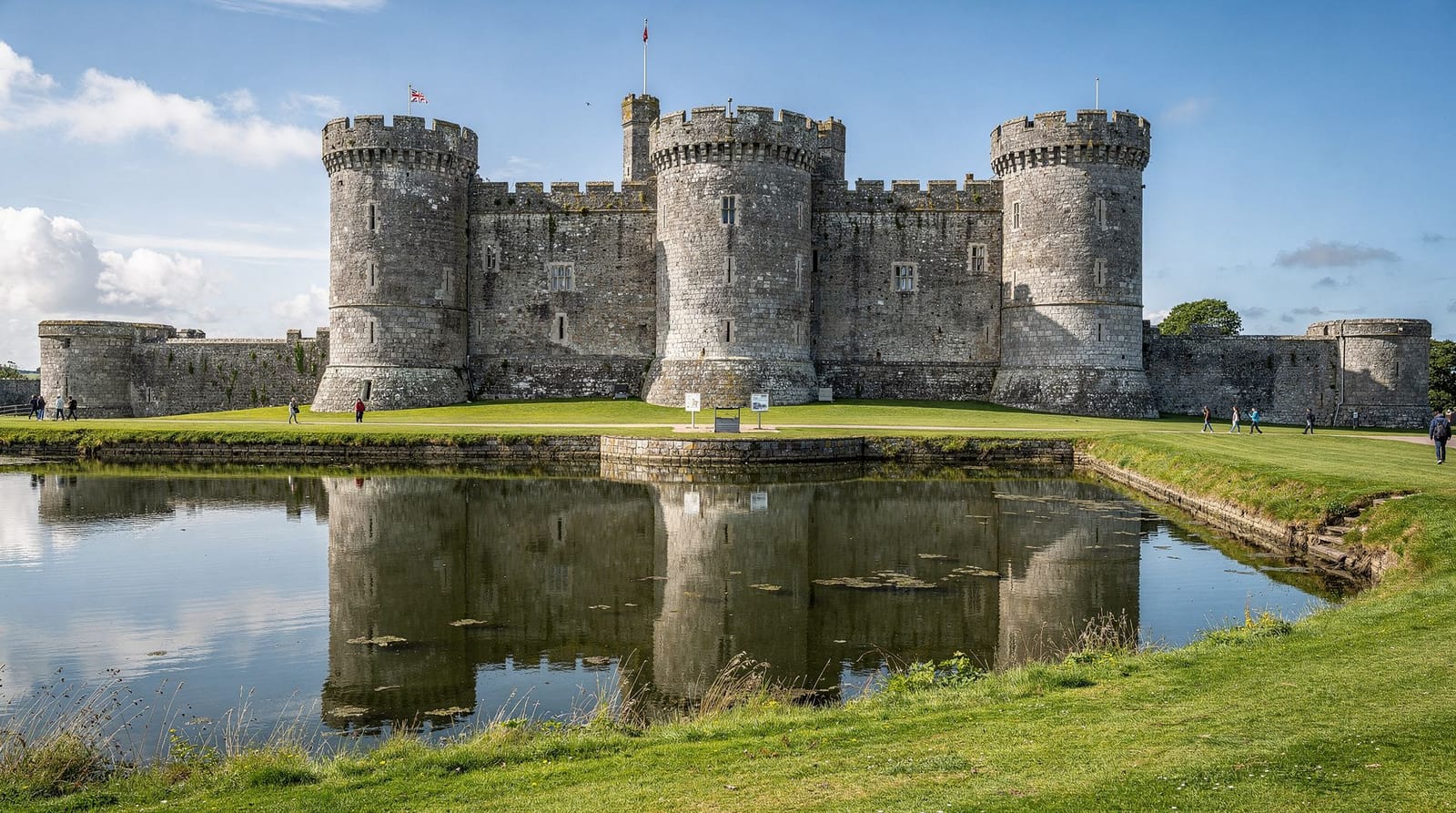
Conwy Castle — Edward I's fortress and the medieval walled town
Conwy's Medieval Walls: A Private Historical Walking Tour
How much does it cost to visit Conwy Castle and how do you get there from Chester?
Adult admission runs around £9.80-£11 (Cadw sets prices annually, so check current rates before visiting), with combined tickets available covering the town walls. From Chester, direct trains run to Conwy on the North Wales Coast line in around 55-75 minutes depending on the service, making it one of the easier Edward I castles to reach without a car.
The best-preserved of Edward I’s Welsh castles
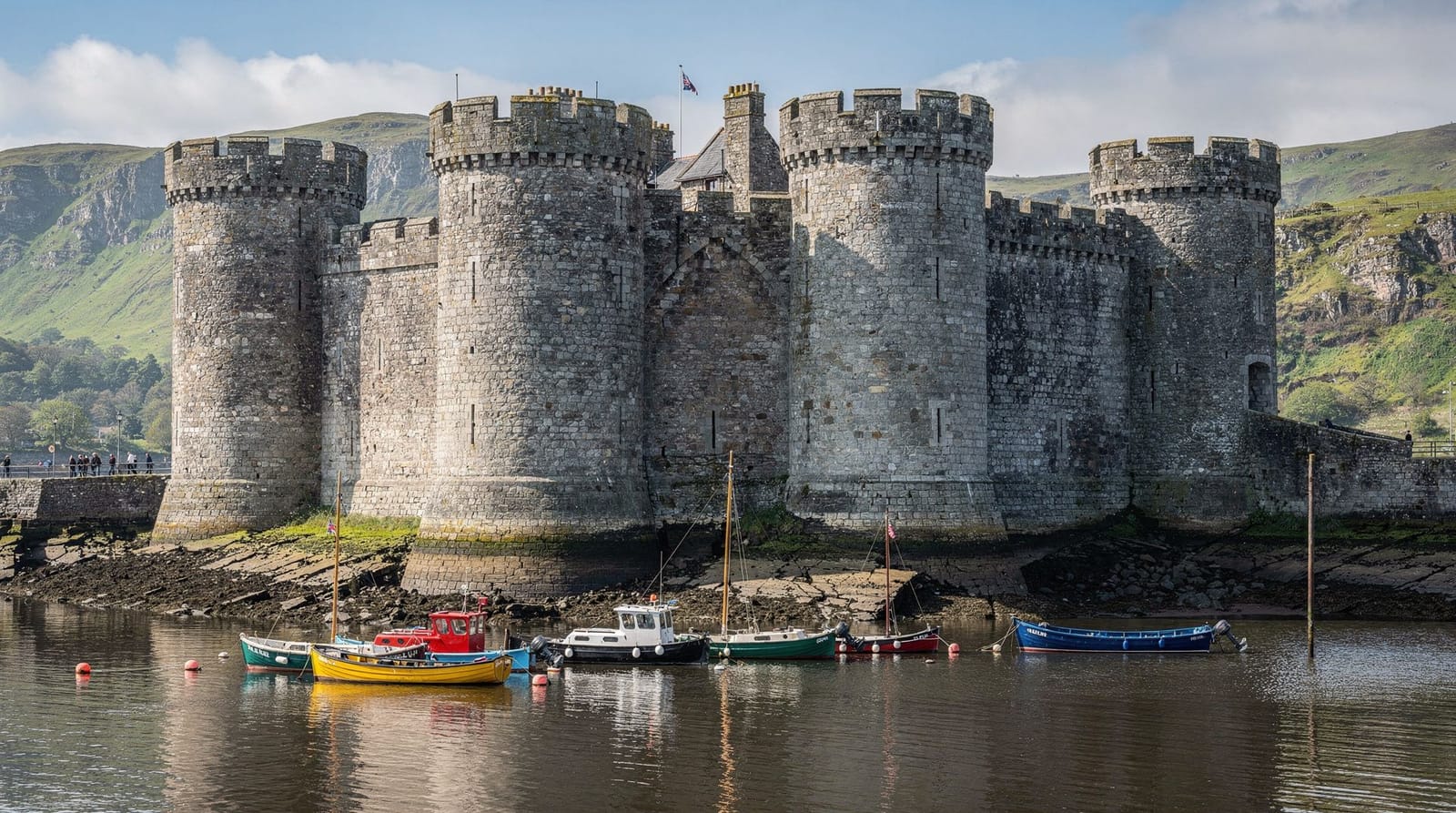
Conwy Castle, rising directly from a rock outcrop above the Conwy estuary, is widely considered the most complete and best-preserved of the eight major castles Edward I built or rebuilt during his conquest of Wales in the late 13th century. Its eight massive round towers still stand close to their original height, and unlike several of the king’s other Welsh castles, Conwy retains a genuinely continuous curtain wall linking directly into the town walls that still encircle almost the entire medieval town below — a combination of castle and complete walled town that survives nowhere else in Britain in quite this state of preservation.
| Where | Conwy, North Wales coast |
| Cost | around £9.80-£11 adult (Cadw sets prices annually) |
| Time needed | 1-1.5 hours, plus 30-45 min for the town walls |
| Getting there | direct train from Chester, ~55-75 minutes |
| Best time | weekday mornings outside summer school holidays |
Built between 1283 and 1287 under the direction of James of St George, the Savoyard master mason who designed most of Edward’s Welsh castles, Conwy was constructed at extraordinary speed for the period — the whole castle and town wall circuit went up in roughly four years, using a workforce of thousands of labourers, quarrymen and craftsmen drafted from across England, a scale of forced mobilisation that itself says a great deal about how seriously Edward took the military and political necessity of subduing Wales after the death of the last native Welsh prince, Llywelyn ap Gruffudd, in 1282.
Why Conwy is a UNESCO World Heritage Site
Conwy is one of four castles — alongside Caernarfon, Beaumaris and Harlech — jointly inscribed by UNESCO as “Castles and Town Walls of King Edward in Gwynedd,” recognised as the finest surviving example of late-medieval military architecture in Europe.
What distinguishes Conwy within that group is the survival of its town wall circuit essentially intact — roughly three-quarters of a mile of walls, studded with 21 towers, still enclosing the historic town almost exactly as built. Few medieval towns anywhere in Europe retain their complete defensive circuit at this scale, and it’s arguably as significant to Conwy’s UNESCO status as the castle itself. Our Edward I castles guide covers the full political and military context behind why this whole ring of fortresses was built in the first place.
Inside the castle
The castle divides into an outer ward, housing the great hall and lodgings for lesser officials and the garrison, and an inner ward, reserved for the king and his household, including a private chapel with surviving decorative stonework that gives a sense of how comfortable, rather than purely functional, royal quarters within these fortresses were designed to be.
Climbing the towers — accessible via the original spiral staircases, narrow and steep by modern standards — rewards the effort with sweeping views over the Conwy estuary, the Conwy suspension bridge (an early 19th-century addition by Thomas Telford, deliberately designed to complement the castle’s medieval silhouette rather than clash with it), and on clear days, out toward Snowdonia’s mountains inland.
The Chapel Tower and King’s Tower both offer particularly good vantage points, and information panels throughout the castle explain the building’s construction phases, its role in several later sieges — including a dramatic 1401 seizure by Welsh rebels loyal to Owain Glyndŵr, taken by a small group who gained entry disguised as workmen during a lull in tensions, one of the more audacious episodes in the castle’s history — and its eventual slide into ruin after the Civil War, when Parliamentarian forces deliberately slighted (partially demolished) sections to prevent future military use, a fate shared by many English and Welsh castles in the aftermath of that conflict.
James of St George and the speed of construction
The scale and speed of Conwy’s construction is worth dwelling on, since it’s easy to look at a finished medieval castle and forget how logistically extraordinary building one actually was. James of St George, brought over from Savoy in what’s now eastern France and southwestern Switzerland, where he’d already built fortifications for regional counts, became Edward I’s master of works for the Welsh castle-building programme and is generally credited as the guiding architectural mind behind Conwy, Caernarfon, Harlech and Beaumaris alike, even though local master masons and thousands of labourers did the actual physical work.
At Conwy specifically, records survive (an unusually rich set of financial and administrative documents for a medieval building project) showing a workforce that peaked at well over a thousand people during the busiest construction seasons — masons, quarrymen, carpenters, smiths and general labourers, many conscripted from across England and transported to Wales specifically for this purpose, at a financial cost that placed enormous strain on the English crown’s finances for years afterward.
That speed and scale reflected genuine military urgency. Edward needed working fortresses in place quickly to secure his gains after the 1282-83 conquest and to deter the kind of renewed Welsh uprising that had already forced a costly second campaign once before, in 1282-83, after an earlier 1277 campaign had seemed to settle matters. The castles weren’t built as leisurely architectural showpieces — they were built as fast as medieval logistics allowed, under direct royal pressure, which is part of why their design is so relentlessly practical and defensively sound rather than ornamental.
Beyond the castle — Conwy’s old town
Conwy’s historic centre, protected within the same town walls as the castle, holds several attractions worth combining with a castle visit if you have half a day rather than just an hour or two. Plas Mawr, a remarkably well-preserved Elizabethan townhouse dating from the 1570s-80s, is often described as one of the best-preserved buildings of its type in Britain, with elaborate original plasterwork ceilings that give a vivid sense of wealthy merchant life in the centuries after the castle’s military importance had already begun to fade.
Aberconwy House, a 14th-century merchant’s house near the quay, offers a rare glimpse of a genuinely medieval (rather than later Tudor or Stuart) domestic building, furnished to show several different periods of its long occupied history.
The quayside itself, just outside the castle walls, is a pleasant spot for a walk with views across the estuary, and holds the aforementioned smallest house in Britain — worth the brief stop and small admission fee if it’s on your route regardless, though it’s a minor curiosity rather than a serious historical attraction in its own right.
Walking the town walls
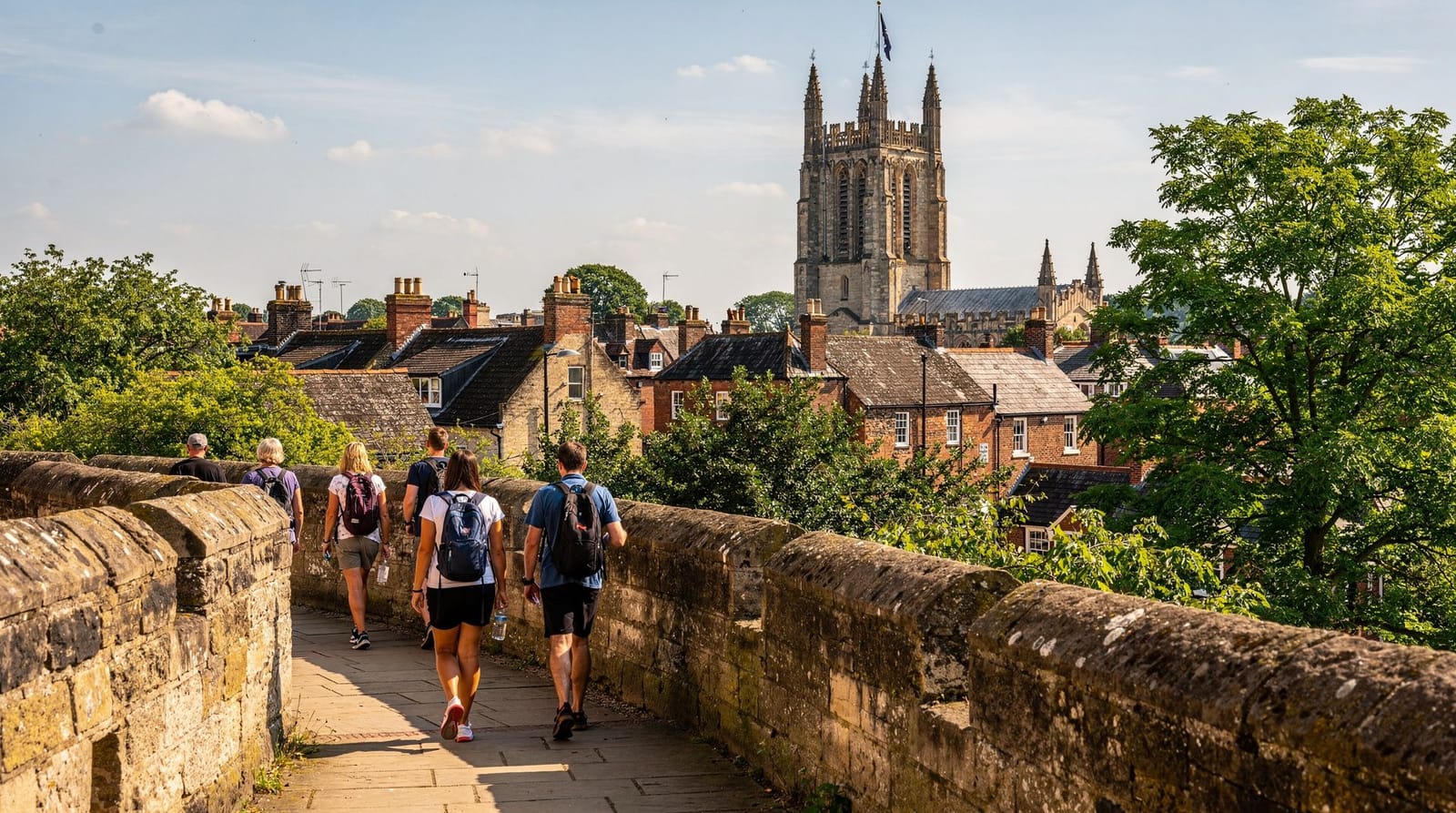
A ticket that includes the town walls — check current Cadw combined pricing, since options change — lets you walk three of the four main wall sections around Conwy, giving elevated views back toward the castle that are arguably more photogenic than views from within the castle itself. The fourth section has been closed to public access in recent years for structural conservation reasons; check current Cadw guidance before planning a full circuit. Walking even a single section is worth the modest extra time, since it’s one of relatively few places in Britain where you can walk on top of a complete medieval town wall rather than viewing it from ground level.
A private guided walking tour of Conwy’s medieval walls adds historical context to the walk that the on-site panels alone don’t fully cover, useful if you want the full story of the town’s medieval development alongside the castle’s military history rather than treating the two as separate attractions.
Getting to Conwy from Chester
Conwy is one of the more straightforward North Wales castles to reach from Chester without a car. Direct trains run on the North Wales Coast line, taking roughly 55-75 minutes depending on the specific service, with Conwy’s own small station a short walk from the castle and town centre — a genuinely pleasant, scenic route that runs along the coast for much of the journey. This makes Conwy one of the easiest “no car needed” day trips covered on this site, in contrast to Caernarfon and Beaumaris, neither of which has a direct rail connection.
By car, the drive from Chester takes around an hour via the A55 expressway, which runs along the North Wales coast and provides fast, largely dual-carriageway access — useful if you’re planning to combine Conwy with other nearby stops like Llandudno or Snowdonia in a single day, since public transport connections between these smaller North Wales towns are considerably less frequent than the direct Chester-Conwy train.
Combining Conwy with a wider North Wales day
Because Conwy sits directly on the coast railway line and close to Llandudno, it combines naturally with several other North Wales stops in a single day. The full-day guided North Wales sightseeing tour from Chester typically includes Conwy alongside other regional highlights, a straightforward option if you’d rather not manage train connections and timing yourself. The Snowdonia National Park and Three Castles tour from Llandudno is a useful alternative if you’re already staying in Llandudno rather than Chester, covering Conwy alongside other regional castle sites in a single guided day.
Our Welsh castles 2-day itinerary pairs Conwy with Caernarfon and Beaumaris across a weekend, the most efficient way to see the region’s UNESCO castle cluster without excessive backtracking, while the Chester and North Wales 3-day itinerary gives more room to add Snowdonia hiking or Portmeirion alongside the castles. If you’re planning a single-day trip focused purely on Conwy and the immediate coast, our Chester to North Wales day-trip guide covers the logistics in more detail.
Three bridges across one estuary
One of Conwy’s more distinctive views is the sight of three separate crossings of the estuary lined up almost side by side: Thomas Telford’s 1826 suspension bridge, built with castellated towers deliberately styled to echo the castle rather than clash with it and now a pedestrian crossing and heritage attraction in its own right; a Victorian tubular railway bridge built shortly after by Robert Stephenson, functionally plain by comparison but engineeringly significant in its own right for its box-girder design; and the modern road bridge carrying the A55 expressway, built in the 20th century to handle traffic volumes neither earlier crossing could accommodate.
Seeing all three in a single view from the castle towers is one of the more quietly satisfying details of a Conwy visit, a compact lesson in how transport engineering evolved across two centuries at exactly the same geographic pinch-point the castle itself was built to control seven hundred years earlier.
Best photography spots and timing
The classic photograph of Conwy Castle — its full silhouette reflected in the estuary with Telford’s suspension bridge in the foreground — is best taken from the quayside or the small park just across the road from the castle entrance, ideally in the low light of early morning or the couple of hours before sunset, when the castle’s warm stone colour is at its most vivid.
From within the castle, the King’s Tower and Chapel Tower both offer elevated views back over the town’s rooftops and the walls, useful for photographs that convey scale in a way ground-level shots of individual towers can’t. Weekday mornings outside the summer school holidays are consistently the quietest time to photograph the castle without crowds of visitors in frame, an important practical consideration given how popular Conwy has become as a stop on organised North Wales day tours.
Visiting with children
Conwy’s compact scale, dramatic towers and genuinely climbable staircases make it a strong castle choice for families, arguably more manageable for younger children than the larger, more sprawling Caernarfon.
Cadw provides family-oriented activity materials and trails at busier periods, and the castle’s smaller scale means a family visit rarely drags on longer than children’s attention spans comfortably allow — generally an hour to ninety minutes is enough to see the highlights without over-extending a young child’s patience. Combined with the quayside, the smallest house and an ice cream stop, Conwy makes a genuinely satisfying half-day family outing without requiring a car if you’re travelling by train from Chester.
Tourist traps and practical notes
Parking directly in Conwy’s small historic centre is limited and can fill quickly in summer; the town’s main visitor car park, a short walk from the castle, is the most reliable option rather than circling for on-street parking within the walls. Food and drink prices immediately around the castle entrance run somewhat higher than a few streets into the town itself, where genuine local cafés and pubs offer better value — worth the extra few minutes’ walk if lunch is part of your plan.
Conwy also holds the title of Britain’s smallest house, a genuinely tiny fisherman’s cottage on the quay charging a small separate admission — a minor, low-cost curiosity rather than a must-see, but an easy add-on if you’re already walking the harbourfront after the castle.
Conwy in the wider story of Edward’s conquest
Conwy’s site wasn’t chosen arbitrarily. Edward I deliberately built the castle on the site of Aberconwy Abbey, a Cistercian monastery closely associated with the native Welsh princes of Gwynedd — the monastery was relocated further up the valley to make way for the new fortress, a symbolically loaded decision that asserted English royal authority directly over a site with deep significance to Welsh political and religious identity.
Llywelyn the Great, the most powerful of the native Welsh princes of the earlier 13th century, was buried at the original Aberconwy Abbey site, making Edward’s decision to build his fortress here a pointed statement rather than a purely practical siting choice, even though the location’s genuine strategic value — controlling the Conwy estuary crossing — was real enough on its own military merits.
This kind of layered symbolism runs through Edward’s whole Welsh castle-building programme, and it’s worth keeping in mind at each site covered in our Welsh castles guide and Edward I castles guide — these were never purely functional military structures, but deliberate assertions of conquest built, in several cases, on or near sites of specific significance to the Welsh political and religious identity they were designed to permanently subdue.
Conwy versus the other three UNESCO castles
| Castle | Character | Rail access from Chester |
|---|---|---|
| Conwy | Compact, vertical, complete town walls | Direct, ~55-75 min |
| Caernarfon | Larger, flatter, imperial Roman styling | Via Bangor plus bus/taxi |
| Beaumaris | Symmetrical “perfect” concentric design | No direct rail link |
| Harlech | Dramatic clifftop setting | No direct rail link |
Planning your visit
Conwy Castle is open year-round with seasonal variation in opening hours, generally longer in summer and reduced in winter — check current Cadw opening times before travelling, since these are reviewed seasonally. Winter visits, while colder and shorter in daylight, do have a genuine advantage: far fewer visitors, meaning the towers and wall-walks that can feel congested on a busy August afternoon are often close to empty, giving a quieter, more atmospheric sense of the fortress than the peak summer crowds allow.
Combined with the direct rail link from Chester, a relatively short visit duration and its position on the coast route toward Llandudno and Snowdonia, Conwy works equally well as a standalone half-day trip or as the first stop on a longer North Wales castle-focused itinerary. For the full comparison of Conwy against the other three UNESCO castles in Edward I’s ring, see our Welsh castles guide, and for the broader political story behind why this whole chain of fortresses was built in the first place, our Edward I castles guide covers the full campaign from its earliest phase at Flint through to Conwy and Caernarfon’s construction.
Frequently asked questions about Conwy Castle
Why is Conwy Castle a UNESCO World Heritage Site?
Conwy is one of four fortresses — alongside Caernarfon, Beaumaris and Harlech — inscribed together as "Castles and Town Walls of King Edward in Gwynedd," recognised for representing the finest and most complete surviving example of late-13th-century military architecture in Europe. Conwy's near-total wall circuit around the whole town, still standing at its original height, is part of why it was included alongside the other three castles.How long does it take to visit Conwy Castle?
Budget 1-1.5 hours for the castle itself, including climbing the towers for the views, and add 30-45 minutes if you want to walk a stretch of the surrounding town walls, which are included on some combined tickets and offer some of the best photograph angles of the castle from outside.Is Conwy Castle accessible for visitors with mobility restrictions?
Only partially. The lower ward and much of the outer curtain are on relatively level ground, but the towers are accessed via original spiral stone staircases with no lift alternative, meaning full access to the upper levels and best viewpoints isn't possible for wheelchair users or anyone unable to manage stairs. Cadw provides an access guide with specific details on request.Can you walk the full town walls at Conwy?
Most of the roughly three-quarter-mile circuit is walkable, with three sections accessible to visitors (the fourth section remains closed for conservation reasons in recent years) via signed entry points near the castle and around the town. It's a genuinely worthwhile addition to a castle visit and gives some of the best exterior views of the castle itself.Is Conwy Castle worth visiting if you've already seen Caernarfon?
Yes — the two castles, despite being built by the same king within a few years of each other, feel quite different. Conwy is more compact and vertical, built directly onto a rock outcrop with dramatic tower-top views over the estuary, while Caernarfon is larger, flatter and more explicitly designed around imperial Roman symbolism. Seeing both gives a much fuller sense of Edward I's building programme than either alone.How do you get to Conwy Castle from Chester without a car?
Direct trains on the North Wales Coast line run from Chester to Conwy in around 55-75 minutes depending on the specific service and any connections required, making it one of the more straightforward Edward I castles to visit by train — Caernarfon and Beaumaris, by contrast, have no direct rail link at all.
Top experiences
Bookable activities with verified prices and instant confirmation on GetYourGuide.