North Wales: castles, coast and Snowdonia from Chester
North Wales region guide from Chester: the Edward I castles, Snowdonia, the coast towns and Portmeirion, plus honest advice on train vs car access.
From Chester: Full-Day Guided North Wales Sightseeing Tour
Quick facts
- Covers
- Conwy, Caernarfon, Llandudno, Snowdonia/Eryri, Anglesey, Llangollen, Wrexham
- From Chester
- North Wales coast line direct to Llandudno (~1h07); A55 by car in ~50 min-1h15
- UNESCO sites
- Edward I's castles at Conwy, Caernarfon, Beaumaris and Harlech; Pontcysyllte Aqueduct
- Languages
- Welsh and English both official; Welsh is the majority home language in parts of Gwynedd
- Currency
- GBP (£)
Quick answer: North Wales is the region immediately west of Chester covering the coast (Llandudno, Conwy), the mountains (Snowdonia/Eryri), the Edward I “Iron Ring” castles (Conwy, Caernarfon, Beaumaris, Harlech), Anglesey, and border towns like Wrexham and Llangollen. It’s reachable from Chester by direct train to Llandudno (about 1h07) or by car via the A55 coast road (roughly 50 minutes to an hour to the coast, more inland). A single guided day tour gives a genuine taster; 3-5 days lets you actually explore.
| Where | Immediately west of Chester: coast, mountains, castles |
| Cost | Guided day tours roughly £50-90; individual sites extra |
| Time needed | 1 day for a taster, 3-5 days to cover it properly |
| Getting there | Direct train to Llandudno (~1h07), or A55 by car |
| Best time | May to September for weather and full opening hours |
Why North Wales pairs naturally with a Chester trip
Chester sits right on North Wales’s doorstep — the A55 expressway and the North Wales coast railway both start their run west from just outside the city, meaning the region’s biggest sights (castles, the coast, Snowdonia’s fringes) are closer to Chester than several destinations within England itself covered in this guide. It’s also the site’s strongest angle for two specific interests: castle-and-medieval-history travellers, and the Harry Potter/film-location crowd drawn by Portmeirion’s use as the setting for the cult 1960s TV series The Prisoner and the region’s broader use as a filming backdrop.
The castles: a UNESCO World Heritage “Iron Ring”
Edward I built a chain of castles across North Wales in the late 13th century to control the recently conquered Welsh principality, and four of them — Conwy, Caernarfon, Beaumaris and Harlech — are jointly inscribed as a UNESCO World Heritage Site, recognised as some of the finest surviving examples of European medieval military architecture. Caernarfon Castle, with its polygonal towers modelled deliberately on the walls of Constantinople, is arguably the most architecturally ambitious; Conwy’s is the most complete and dramatically sited, rising directly above the town walls and estuary.
North Wales and Caernarfon Castle tour from Chester is a straightforward single-day option covering the coast road and Caernarfon; see Welsh Castles Guide for a full comparison of all four Iron Ring castles plus Beeston Castle back on the Cheshire side, and Edward I Castles North Wales for the historical context of why they were built where they were.
Beaumaris Castle on Anglesey, though never fully completed, is often praised by military historians as the most technically perfect example of concentric castle design in Britain — its symmetrical “walls within walls” layout represents the peak of Edward’s military engineers’ thinking, even though it lacks the dramatic height or scale of Conwy or Caernarfon.
Harlech Castle, perched on a rocky outcrop that would originally have had the sea lapping at its base before the coastline receded, withstood a famous seven-year siege during the Wars of the Roses that inspired the song “Men of Harlech.” Each castle rewards a slightly different kind of visitor: Conwy for atmosphere and completeness, Caernarfon for scale and royal history, Beaumaris for pure architectural interest, and Harlech for its dramatic siting and siege history.
Individual castle guides: Conwy Castle, Caernarfon Castle, Beaumaris Castle, Harlech Castle. Flint Castle, the first and least visited of Edward’s Welsh castles, is covered honestly (including why it’s the one most people should skip unless completionist) at Flint Castle.
North Wales has no single centre and its best stretches are the roads between places rather than the places themselves, which is precisely what a fixed coach itinerary handles worst: a North Wales day trip with a driver-guide lets the route follow the weather.
The coast: Llandudno and Conwy
Llandudno is North Wales’s best-preserved Victorian seaside resort, with the Great Orme headland (reachable by cable car or Britain’s only cable-hauled street tramway) offering coastal views without a strenuous hike — see Llandudno and Great Orme Llandudno. A few minutes further along the coast, Conwy packs a UNESCO castle, three-quarter-mile intact town walls and the “Smallest House in Britain” into one small walled town — see Conwy.
Snowdonia: the mountains at the region’s heart
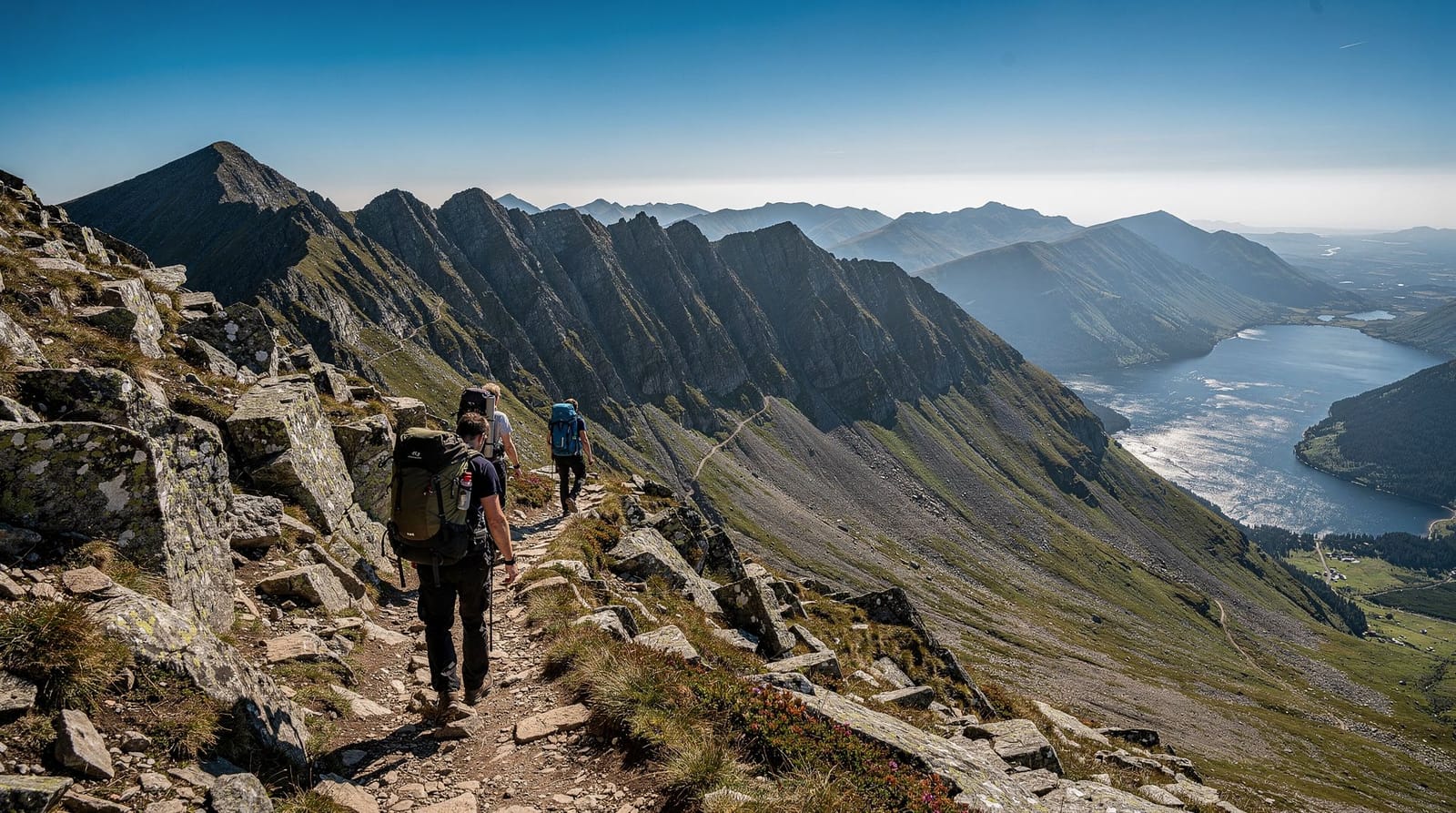
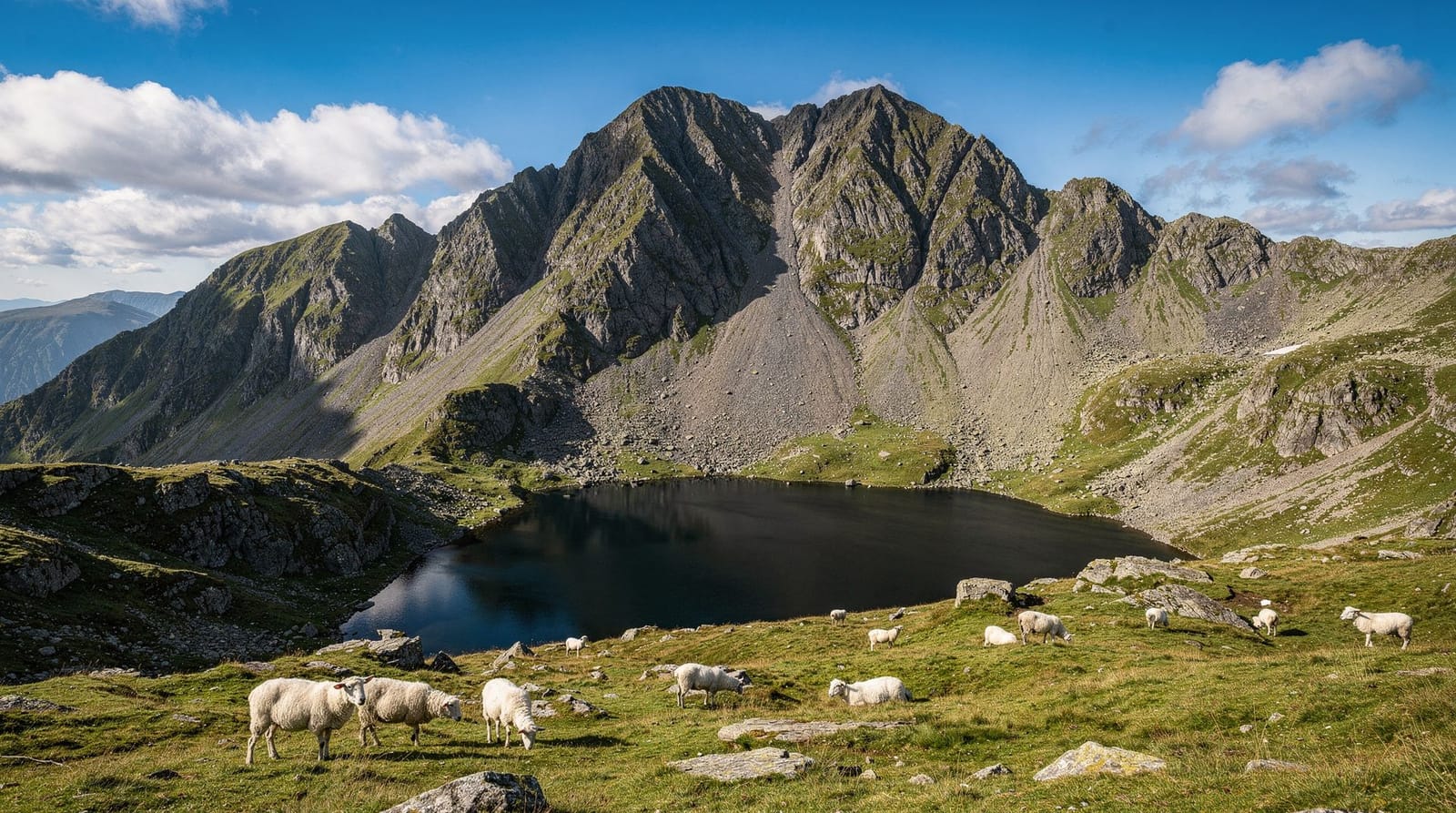
Eryri National Park (Snowdonia) occupies the mountainous interior, built around Snowdon/Yr Wyddfa, Wales’s highest peak. It deserves its own dedicated planning — see the full guide at Snowdonia — but as part of a broader North Wales trip it’s usually the one full day you commit to hiking or the heritage railways rather than castle-hopping.
Anglesey and Llangollen: the quieter corners
Anglesey (Ynys Môn), across the Menai Strait from Bangor, is North Wales’s largest island and holds Beaumaris Castle plus South Stack lighthouse and quieter beaches than the mainland coast — see Anglesey.
Full-day Anglesey tour with lunch from Llandudno and Conwy is the practical way to see the island without your own transport.
Llangollen, in the Dee Valley near the English border, is home to the Pontcysyllte Aqueduct — a UNESCO World Heritage Site in its own right, an 1805 Thomas Telford cast-iron canal aqueduct carrying narrowboats 38 metres above the River Dee — plus the Llangollen Railway heritage steam line. See Llangollen, Pontcysyllte Aqueduct and Llangollen Railway.
Great Orme and the coastal headlands
Beyond Llandudno’s town centre, the Great Orme headland is one of the region’s best low-effort viewpoints — reachable by cable car (Britain’s longest passenger cabin cable car) or Victorian tramway rather than requiring a serious hike, with Bronze Age copper mines at the summit dating back roughly 4,000 years, among the largest prehistoric mine workings discovered anywhere. See Great Orme and Great Orme Llandudno for walking routes and access details.
Welsh identity and language across the region
North Wales is, on the whole, considerably more Welsh-speaking than South Wales’s anglicised coastal cities — parts of Gwynedd (the county covering Snowdonia, Caernarfon and the Llŷn Peninsula) have Welsh as the majority first language, and it’s genuinely common to hear Welsh spoken as the default language of daily life in shops, on buses and between locals, rather than encountered only on bilingual road signs. This is worth knowing as a cultural note distinct from the more anglicised, holiday-resort character of Llandudno and the immediate coast — the deeper into Snowdonia and the Llŷn you go, the stronger the Welsh-language presence becomes.
Slate, quarries and a UNESCO industrial landscape
Alongside the castles, North Wales holds a second, less-marketed UNESCO World Heritage Site: the slate landscape of North West Wales, inscribed in 2021, covering the historic quarrying areas around Blaenau Ffestiniog, Llanberis and Bethesda that supplied roofing slate to much of the industrialising world in the 19th century. The National Slate Museum at Llanberis (free) is the best single introduction to this history, and it pairs naturally with a Snowdon Mountain Railway visit since both are based in the same village.
Wrexham: the football story that put a small Welsh city on the map
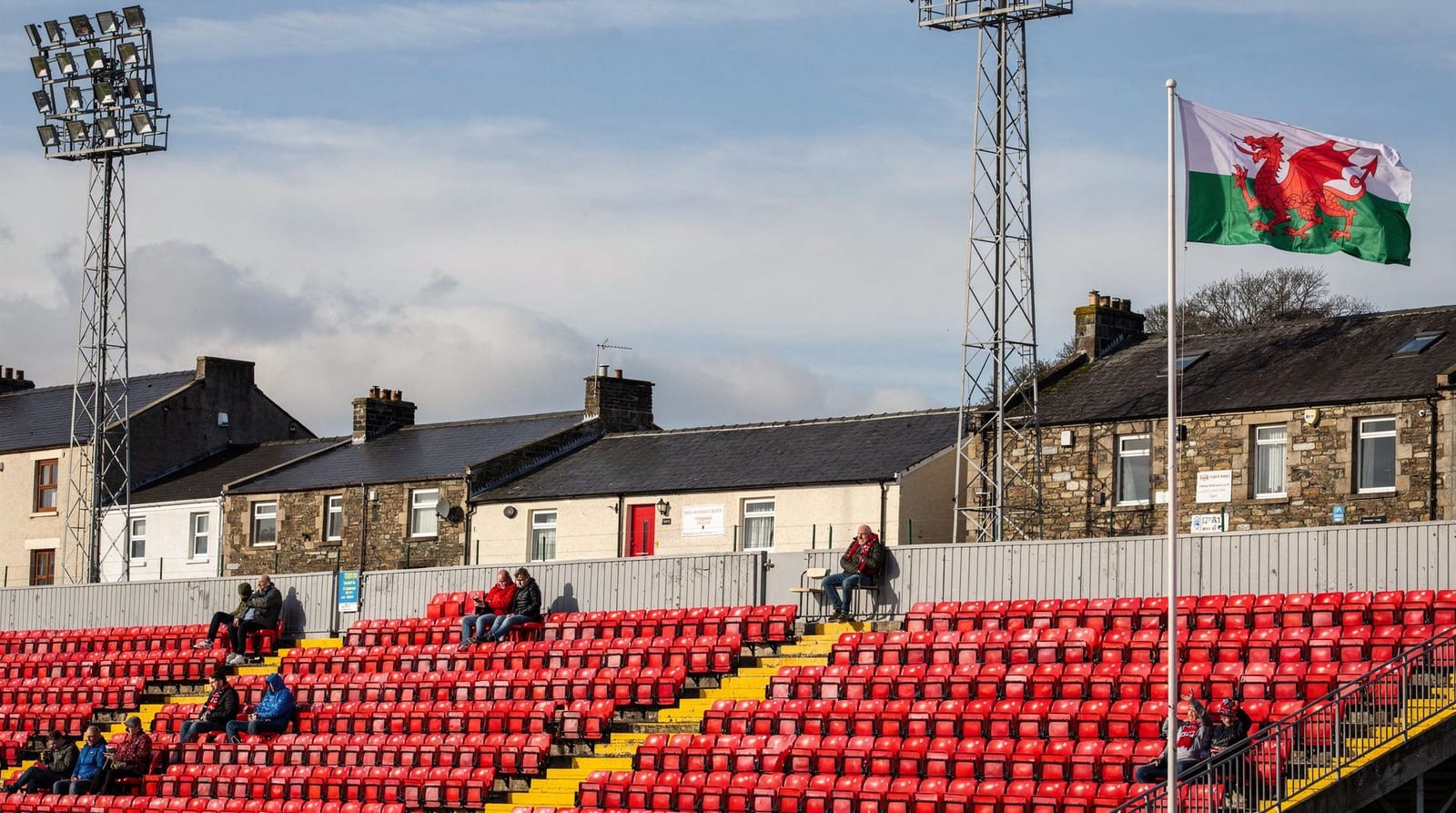
Wrexham, just a 15-20 minute direct train from Chester, became an unlikely global talking point after Hollywood actors Ryan Reynolds and Rob McElhenney bought Wrexham AFC in 2020 — a club playing at the Racecourse Ground, recognised as the oldest international football stadium still in use anywhere in the world. The subsequent docuseries and the club’s rise back up the English football league pyramid turned a modest border town into a genuine day-trip draw. See Wrexham, Wrexham Afc and Wrexham Ryan Reynolds Effect (blog).
Welcome to Wrexham half-day tour covers the ground and town in about three hours — realistic as a half-day add-on to a longer North Wales trip, or a standalone trip given the short train ride from Chester.
Portmeirion: an Italianate fantasy village
Portmeirion, near Porthmadog on the edge of Snowdonia, is an eccentric Italianate village built by architect Clough Williams-Ellis between 1925 and 1975 — famous chiefly as the filming location for the 1967-68 cult TV series The Prisoner, and worth knowing about even outside cult-TV fandom as one of the more photogenic, unusual stops in the region. See Portmeirion.
Where to eat across the region
North Wales food leans heavily on Welsh lamb, seafood from the coastal towns (Conwy Mussel being the standout local speciality) and hearty hiker-friendly café fare inland around Snowdonia. It’s a region visited primarily for scenery and history rather than a food-tourism destination in its own right, though the coastal towns (particularly Conwy and Llandudno) offer a reasonable range of seafood restaurants, and Llanberis’s cafés cater specifically to the hiking crowd with large, practical portions rather than refined plating.
How much time to actually budget
A single day trip from Chester gives you a genuine taster — typically the coast road plus one castle stop, or a Snowdonia scenic drive — but North Wales rewards more time than most single-day itineraries admit. Three days lets you properly split time between the coast (Llandudno, Conwy), the castles (adding Caernarfon or Beaumaris) and one full Snowdonia day; five days or more allows Anglesey, Llangollen and Portmeirion without constant rushing. If you’re deciding how much time to allocate against Chester’s other regional day trips (Liverpool, Manchester, the Lake District), North Wales is generally the destination that rewards the most extra time invested, given its geographic spread.
Why North Wales over other UK castle-and-coast regions
Travellers weighing North Wales against, say, the Cotswolds or the Scottish Highlands for a UK trip extension should know what makes this region specifically distinctive: it packs castles, coast and mountains into a genuinely compact area — you can realistically drive from a Snowdon trailhead to a UNESCO castle to a seaside pier in a single day, something few other UK regions manage at this density. It’s also considerably less visited by international tourists than the Cotswolds or the Scottish Highlands, meaning castle courtyards and coastal viewpoints here are frequently much quieter than equivalent-tier attractions elsewhere in Britain, at least outside the peak summer weeks.
Weather and seasonality across the region
North Wales’s weather varies more by micro-location than its compact size might suggest — the coast (Llandudno, Conwy) tends to be noticeably milder and drier than the Snowdonia interior, where cloud and rain gather against the mountains and can persist for days even when the coast enjoys sunshine.
This matters for trip planning: a coastal itinerary is more weather-resilient than a Snowdonia-heavy one, and travellers with flexible dates should watch the forecast and be willing to swap a planned hiking day for a castle-and-coast day if the mountains are socked in. Spring (April-May) brings bluebell woods and lambing season to the farmland; fine autumn days (September-October) often deliver some of the year’s clearest mountain visibility, after the summer crowds have thinned but before winter closures set in.
Getting around North Wales: car vs train, honestly
A car genuinely opens up more of North Wales in a single day — the region’s public transport is coast-line-strong (the North Wales coast railway reaches Llandudno, Conwy, Bangor and Holyhead directly) but interior and inland connections rely on infrequent buses. Without a car, a guided day tour from Chester, Liverpool, Manchester or the coast towns is the realistic way to combine multiple sites in one day:
Snowdonia, castles and Portmeirion day tour combines several of this page’s highlights (Snowdonia scenery, a castle stop and Portmeirion) in one day, a good option if you’re trying to sample the region’s range rather than go deep on one theme.
Honest cautions
North Wales weather is genuinely more changeable than the English side of the border — pack for rain regardless of season, particularly around Snowdonia and the coast. Some “North Wales day tour” itineraries only allow 20-30 minutes at each castle stop, enough for photos but not a proper visit — read the itinerary carefully if castles are your main interest and consider a dedicated castle day instead of a multi-stop taster tour. And several coastal car parks (particularly around Llandudno and Conwy in summer) fill by mid-morning; arriving early or using park-and-ride where available avoids a wasted hour circling.
North Wales with children
Family-friendly stops cluster around the coast and the more accessible castle sites — Conwy’s compact walls and the “Smallest House in Britain” work well for younger children, and the Great Orme’s tramway or cable car adds a novel ride rather than a demanding hike. Snowdonia’s adventure attractions (Zip World, Bounce Below) suit older children and teenagers more than toddlers, given age and height restrictions on some rides, while Portmeirion’s model village and shoreline appeal across most age ranges. See Family Days Out Cheshire and Chester with Kids for how a North Wales day compares to Cheshire-based family options.
Building a first-timer’s priority list
With limited time, most first-time visitors get the best return by prioritising, in rough order: one Iron Ring castle (Conwy for atmosphere, Caernarfon for scale), a stretch of the coast around Llandudno or Conwy, and a Snowdonia scenic drive or short walk rather than a full Snowdon hike. Portmeirion, Anglesey and Llangollen reward a second or third visit more than a rushed first day, given their distance from the main coast-and-castle corridor — see Portmeirion, Anglesey and Llangollen individually once you’re planning beyond a single taster day.
Regional food specialities worth seeking out
Beyond the general Welsh lamb and seafood mentioned above, a few specific North Wales foods are worth actively seeking out rather than settling for generic pub fare: Conwy mussels, harvested from the estuary and served simply with cider or white wine sauce in several Conwy restaurants; Welsh cakes, a griddle-cooked spiced fruit cake sold fresh from bakeries and market stalls throughout the region; and bara brith, a dense tea loaf studded with dried fruit, traditionally served sliced and buttered. None of these require a special trip, but they’re worth ordering over a generic “British” menu item if you spot them on a café or pub menu during your visit.
Suggested itineraries
Chester North Wales 3 Days and North Wales Castles Road Trip both build multi-day North Wales trips around Chester as a base; Welsh Castles 2 Days focuses specifically on the Iron Ring castles, and Snowdonia Adventure from Chester leans into hiking and Zip World over castles.
Frequently asked questions about North Wales
Do you need a car for North Wales?
It helps considerably for reaching Snowdonia’s interior and inland sites like Llangollen at your own pace. The coast (Llandudno, Conwy, Bangor, Holyhead) is well served by direct train from Chester, and guided day tours cover multi-stop routes without your own transport.
What are the four UNESCO castles in North Wales?
Conwy, Caernarfon, Beaumaris and Harlech, jointly inscribed as a UNESCO World Heritage Site as outstanding examples of late-13th-century European military architecture built for Edward I.
Is Snowdonia the same as Eryri?
Yes — Eryri is the Welsh name formally adopted by the national park authority in 2023. Both names are used interchangeably in signage, transport and tourism material.
How far is North Wales from Chester?
The coast (Llandudno) is about 1h07 by direct train or roughly 50 minutes to an hour by car via the A55. Inland Snowdonia adds another 30-60 minutes depending on the specific destination and mode of transport.
Is Portmeirion worth visiting if I don’t know The Prisoner TV series?
Yes — its Italianate architecture and gardens are unusual and photogenic in their own right, though fans of the 1967-68 series get an extra layer of interest recognising specific filming locations.
Can I see North Wales as a single day trip from Chester?
Yes, in taster form — a guided day tour typically covers the coast road plus one or two stops (a castle, Snowdonia scenery, occasionally Portmeirion). A single day won’t cover the region in depth; 3-5 days does that properly.
What’s the best single castle to visit if I only have time for one?
Conwy for the most complete and dramatically sited example directly above the town walls and estuary, or Caernarfon for the most architecturally ambitious design and closer proximity to Snowdonia.
Is Wrexham part of “North Wales” tourism-wise?
Yes, geographically and administratively, though it’s often treated separately from the coast-and-mountains itinerary — its main current draw is Wrexham AFC and the Racecourse Ground rather than castles or coastal scenery.
What’s the single best first-time itinerary if I only have one day?
A coast road drive or train to Llandudno or Conwy, one Iron Ring castle, and a short Snowdonia scenic stretch if time allows — trying to add Portmeirion or Anglesey on top of that in one day usually means rushing everything.
Is North Wales more or less crowded than the Cotswolds or Scottish Highlands?
Generally less visited by international tourists, meaning castle courtyards and coastal viewpoints here are often noticeably quieter than equivalent-tier UK attractions elsewhere, outside the peak summer weeks.
Top experiences
Bookable activities with verified prices and instant confirmation on GetYourGuide.