Wrexham
Wrexham is North Wales's largest town, home to Wrexham AFC's Ryan Reynolds-and-Rob McElhenney era, a UNESCO church tower and Britain's oldest lager.
Welcome to Wrexham: Half-Day Tour of Wrexham
Duration: 3 hours
Quick facts
- County status
- County borough, North Wales's largest town
- From Chester
- ~25-30 minutes by direct train; ~30 minutes by car
- Football club
- Wrexham AFC, owned by Ryan Reynolds and Rob McElhenney since November 2020
- UNESCO feature
- St Giles' Church tower, part of Wales's 'Seven Wonders'
- Notable brewery
- Wrexham Lager, Britain's oldest lager brewery (founded 1882)
Is Wrexham worth visiting from Chester? Yes, and it’s one of the easiest day trips in this guide — a direct train takes around 25-30 minutes, and the town now has a genuinely higher profile than it did before 2020, thanks to Wrexham AFC’s ownership by Ryan Reynolds and Rob McElhenney and the “Welcome to Wrexham” documentary series that followed. Beyond the football story, there’s real industrial and religious heritage here too, making this more than a one-note football pilgrimage.
| Where | North Wales, about 12 miles / 25-30 minutes from Chester |
| Cost | Free to walk the town; guided tours around £25-45; stadium tours around £10-15 |
| Time needed | Half a day to a full day |
| Getting there | Direct train, around 25-30 minutes; or by car via the A483 |
| Best time | Year-round for the town; match days for the atmosphere (book ahead) |
From overlooked market town to global football story
Before November 2020, Wrexham was known, if at all outside Wales, as North Wales’s largest town and the home of a lower-league football club with a proud but faded history — Wrexham AFC, founded in 1864, is the third-oldest professional football club in the world and the oldest in Wales, but had spent over a decade outside the English Football League, playing in the fifth-tier National League. That changed when Hollywood actor Ryan Reynolds and Rob McElhenney (It’s Always Sunny in Philadelphia) completed a takeover of the club, an initially unlikely-sounding move that turned into a genuine, sustained transformation both on and off the pitch.
The FX and Disney+ documentary series Welcome to Wrexham, following the takeover and the club’s subsequent fortunes, brought the town international attention on a scale it had never previously experienced, and the football results backed up the story: Wrexham won the National League title in 2023 (their first promotion in 15 years), followed it with the League Two title in 2024, and then the League One title in 2025 — three consecutive promotions, an extremely rare achievement in English football, taking the club from the fifth tier to the Championship in three seasons.
As of the current season, Wrexham AFC play Championship football, a genuinely remarkable turnaround for a club that was fighting for its survival less than a decade earlier.
The Racecourse Ground: the oldest international football stadium still in use
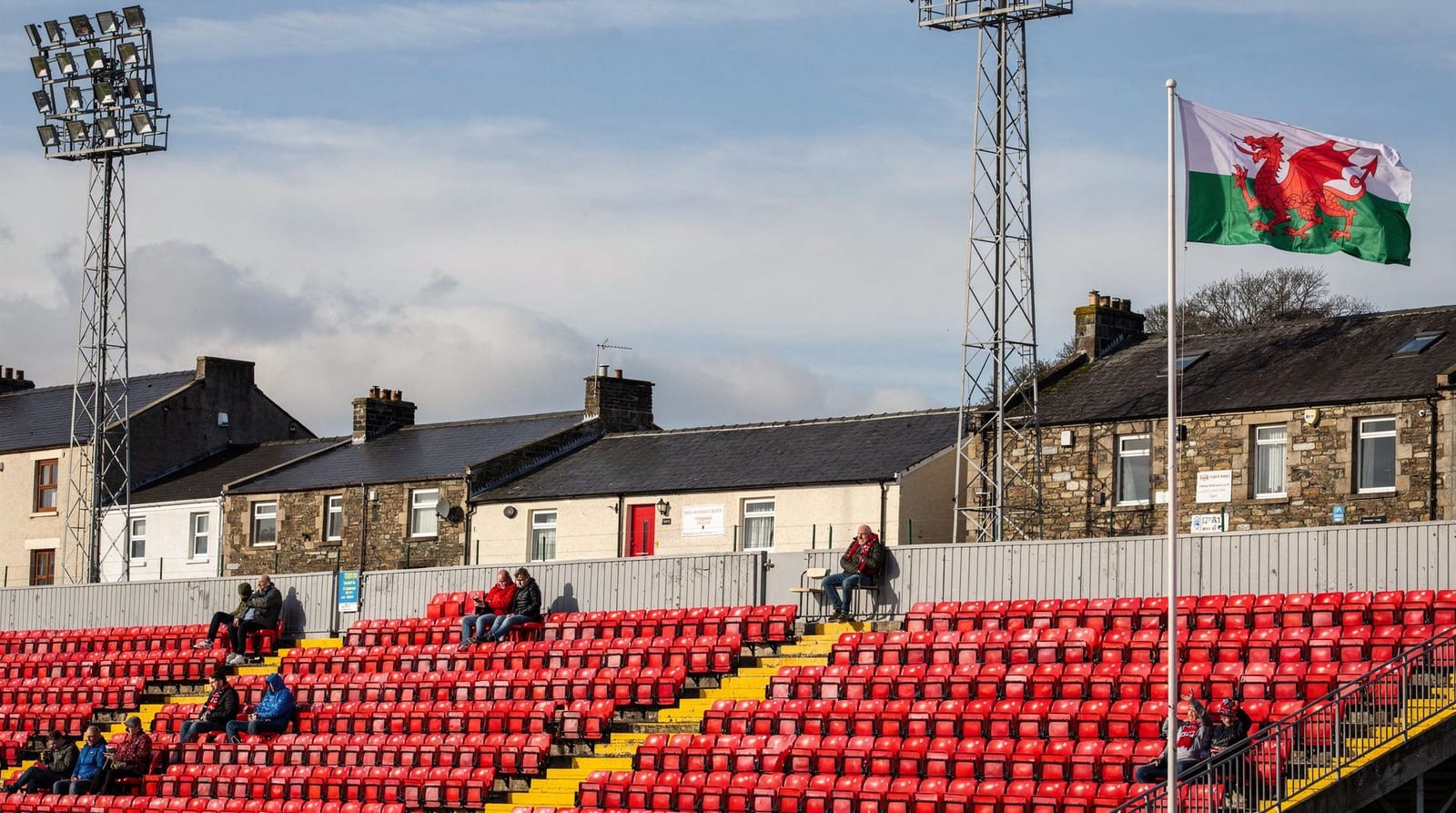
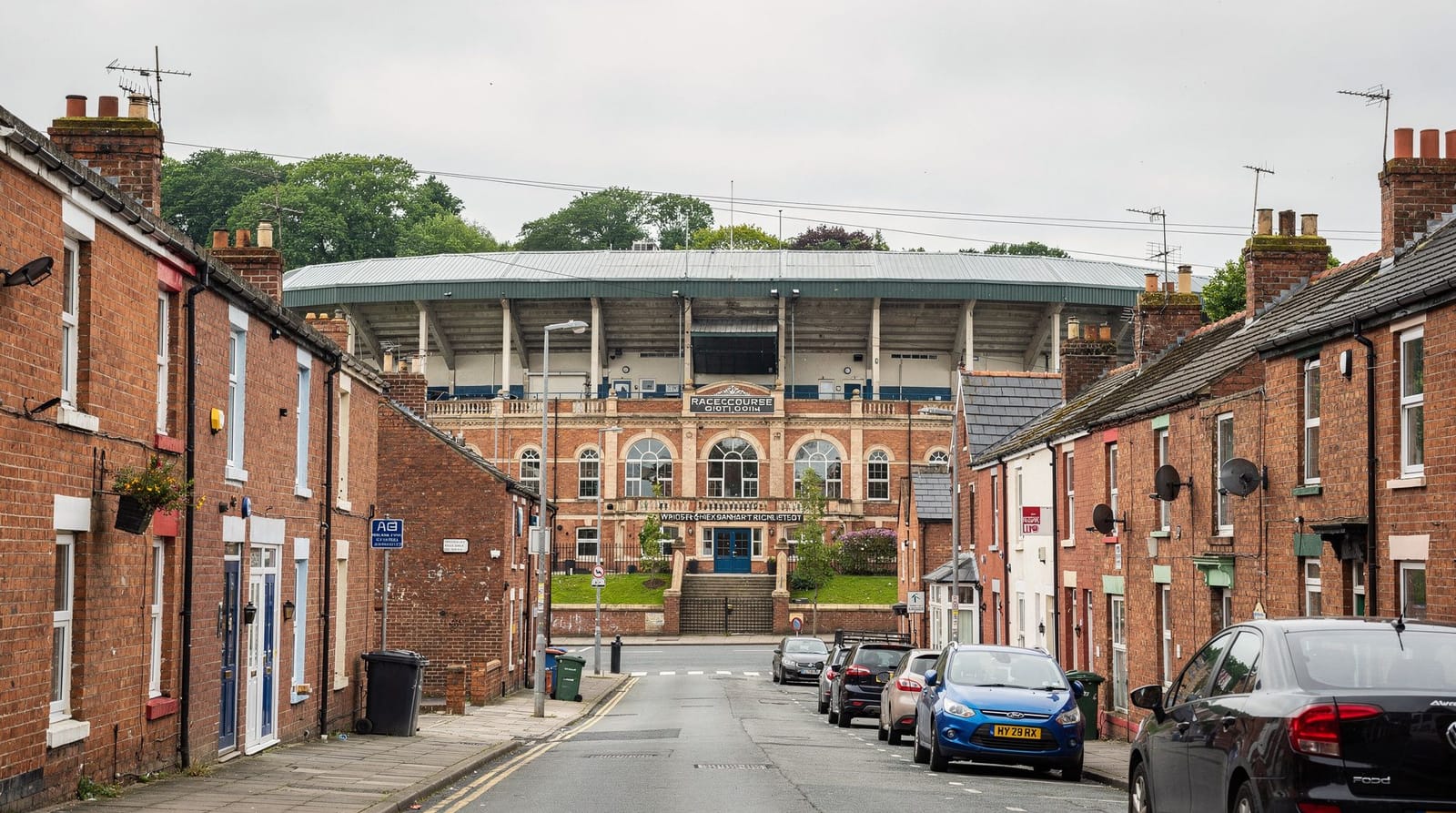
Wrexham AFC plays at the Racecourse Ground (Y Cae Ras), which holds the distinction of being the oldest international football stadium in the world still hosting football today — it staged its first international match in 1877 and has been used continuously since, a claim few other grounds anywhere can make. The Turf, the pub immediately adjoining the stadium, is similarly historic and is widely cited as one of the oldest football pubs in Britain, with a direct connection to the ground going back to the club’s earliest years — it featured prominently in the Welcome to Wrexham series and has become something of a pilgrimage stop in its own right for visiting fans, not just a convenient pre-match pint.
Stadium tours and match tickets have both become considerably harder to get hold of since 2020 — book well in advance for any fixture, and expect a genuinely different atmosphere on match days now compared with the club’s lower-profile recent history, with visiting fans and international media attention part of the regular matchday scene rather than an occasional novelty.
Guided tours of the Wrexham story
For visitors who want the full context of the town’s transformation rather than just walking past the stadium, several organised tours now cover this specifically:
Welcome to Wrexham: half-day tour of Wrexhamtakes in the Racecourse Ground, The Turf and the town’s other football and historic landmarks with a guide who can put the Reynolds-McElhenney era into context alongside the club’s much longer history. A shorter option:
Wrexham: Welcome to Wrexham walking tourcovers similar ground on foot in around two hours, a good option if you’re on a tighter schedule or arriving by train without a car. For a broader taste of the town beyond football specifically:
Wrexham: the Wrexham Taster — half-day tourmixes in the town’s other heritage, useful if you’re travelling with people who aren’t primarily here for the football story.
St Giles’ Church: one of Wales’s Seven Wonders
Away from football, Wrexham’s most significant historic landmark is St Giles’ Church, the largest parish church in Wales, whose 16th-century tower is celebrated as one of the traditional “Seven Wonders of Wales,” a list compiled in an old rhyme covering the country’s most notable natural and man-made features. The tower’s elaborate Perpendicular Gothic stonework and pinnacled design make it a genuine architectural landmark in its own right, regardless of the football connection, and it’s worth the short walk from the town centre even if you’re primarily here for the Racecourse Ground.
Wrexham Lager: Britain’s oldest lager brewery
Wrexham Lager was founded in 1882 by German immigrants who recognised that the town’s water supply was well suited to lager brewing, making it, by most accounts, the first lager brewed in Britain at a time when the country’s beer culture was dominated almost entirely by ales. The original brewery closed in the 1970s, but the Wrexham Lager brand and recipe were revived in the 2010s, and the beer is once again brewed and available across the town’s pubs — a genuinely interesting footnote in British brewing history, and a reasonable thing to specifically seek out over an evening pint if beer history interests you.
Erddig Hall and the wider heritage beyond the town centre
On the edge of Wrexham, Erddig Hall is a National Trust property notable for an unusually well-preserved set of servants’ quarters and outbuildings — the Yorke family who owned Erddig had an unusual tradition of commissioning portraits of their servants alongside the family’s own, giving the house one of the most complete pictures of below-stairs life at any historic English or Welsh estate open to the public. It’s a worthwhile addition if you have a full day in Wrexham rather than a football-focused half day, though it requires a short taxi or drive from the town centre rather than being walkable.
The football history that predates the Hollywood ownership
It’s worth remembering that Wrexham AFC’s story didn’t begin in 2020 — the club’s status as the third-oldest professional football club in the world and the oldest in Wales gives it a genuine claim to football history entirely independent of its current owners.
The club has a long-running, fierce rivalry with Chester FC, just across the border (the “border derby” has been a fixture of North West Wales and Cheshire football culture for well over a century, predating both clubs’ recent fortunes), and Wrexham has produced or hosted numerous notable figures across its 160-year history, including a period as one of the strongest sides in Wales through much of the 20th century before a long decline set in during the 1990s and 2000s that eventually led to the financial troubles the Reynolds-McElhenney takeover resolved.
Understanding this longer history adds useful context to a visit — the current global attention is a remarkable third act in a much longer story, not the club’s entire history compressed into a five-year Hollywood narrative, and long-time Wrexham supporters are often keen to make this distinction clear to new, documentary-drawn visitors.
Wrexham’s wider industrial heritage
Beyond football and brewing, Wrexham grew historically on coal mining, steel and leather industries that shaped the wider Wrexham and Denbighshire coalfield through the 19th and early 20th centuries — much of this industrial base has since disappeared, but its legacy is visible in the town’s Victorian civic architecture and in place names across the surrounding area. The Wrexham County Borough Museum, in the town centre, covers this industrial history alongside the football and religious heritage covered elsewhere on this page, and is a useful, low-cost stop (typically free or low-cost entry) if you want a fuller picture of the town beyond its current headline story.
Shopping and everyday Wrexham
Away from the football and heritage sites, Wrexham has a fairly standard, functional town centre with a covered market (one of the larger indoor markets in North Wales, worth a browse for local produce and a genuine sense of everyday town life rather than a curated tourist experience) and a mix of high street and independent shops. This is a working town first and a tourist destination second, which is part of its appeal to visitors seeking something more grounded than a purpose-built attraction — but it also means don’t expect a highly polished, retail-focused day out on the scale of somewhere like Chester’s own Rows or Liverpool ONE.
Getting to Wrexham from Chester
By train, this is one of the most straightforward connections in this entire guide — direct services run regularly between Chester and Wrexham General, taking around 25-30 minutes, with fares typically £8-12 return depending on time of booking and ticket type. There’s no need to change trains, and the frequency is good enough that you don’t need to plan your day tightly around a specific departure.
By car, it’s about 12 miles via the A483, typically 25-30 minutes depending on traffic, with several car parks in the town centre.
Practical costs for a day in Wrexham
A realistic day budget per adult, on top of transport: free to walk the town centre and view St Giles’ Church exterior (interior visits sometimes have restricted hours, worth checking); stadium tours, where available, typically run £10-15; guided walking tours as above run roughly £25-45 depending on length and inclusions; a pub lunch with a Wrexham Lager costs around £12-18. Match tickets vary enormously depending on the fixture and how far in advance you book, from modest prices for less prominent games to considerably higher prices for high-demand fixtures, so check current pricing rather than assuming historic lower-league prices still apply.
Wrexham vs other North Wales day trips from Chester
Wrexham is one of several North Wales options within easy reach of Chester, but it’s a genuinely different kind of day out from most of the others on this site — less castle-and-scenery, more football-and-heritage. If you’re deciding between them, here’s how the three most comparable trips stack up:
| Destination | Time from Chester | Best for | Typical cost |
|---|---|---|---|
| Wrexham | ~25-30 min (train) | Football pilgrims, industrial and brewing heritage | Free town; tours £25-45 |
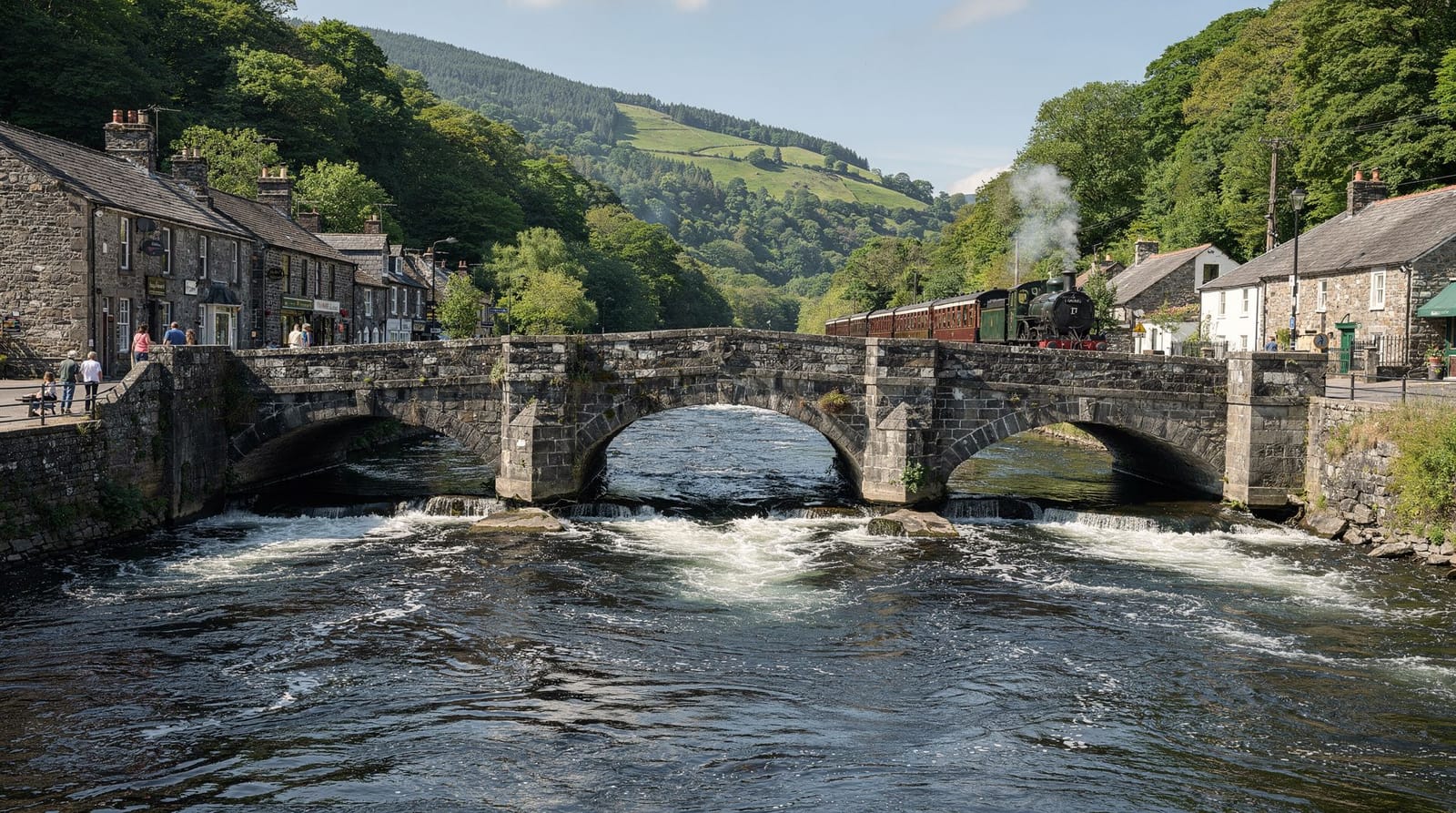
| Llangollen | ~25 min (car) | Canal boats, the Pontcysyllte Aqueduct, scenery | Moderate; canal/train tickets extra |
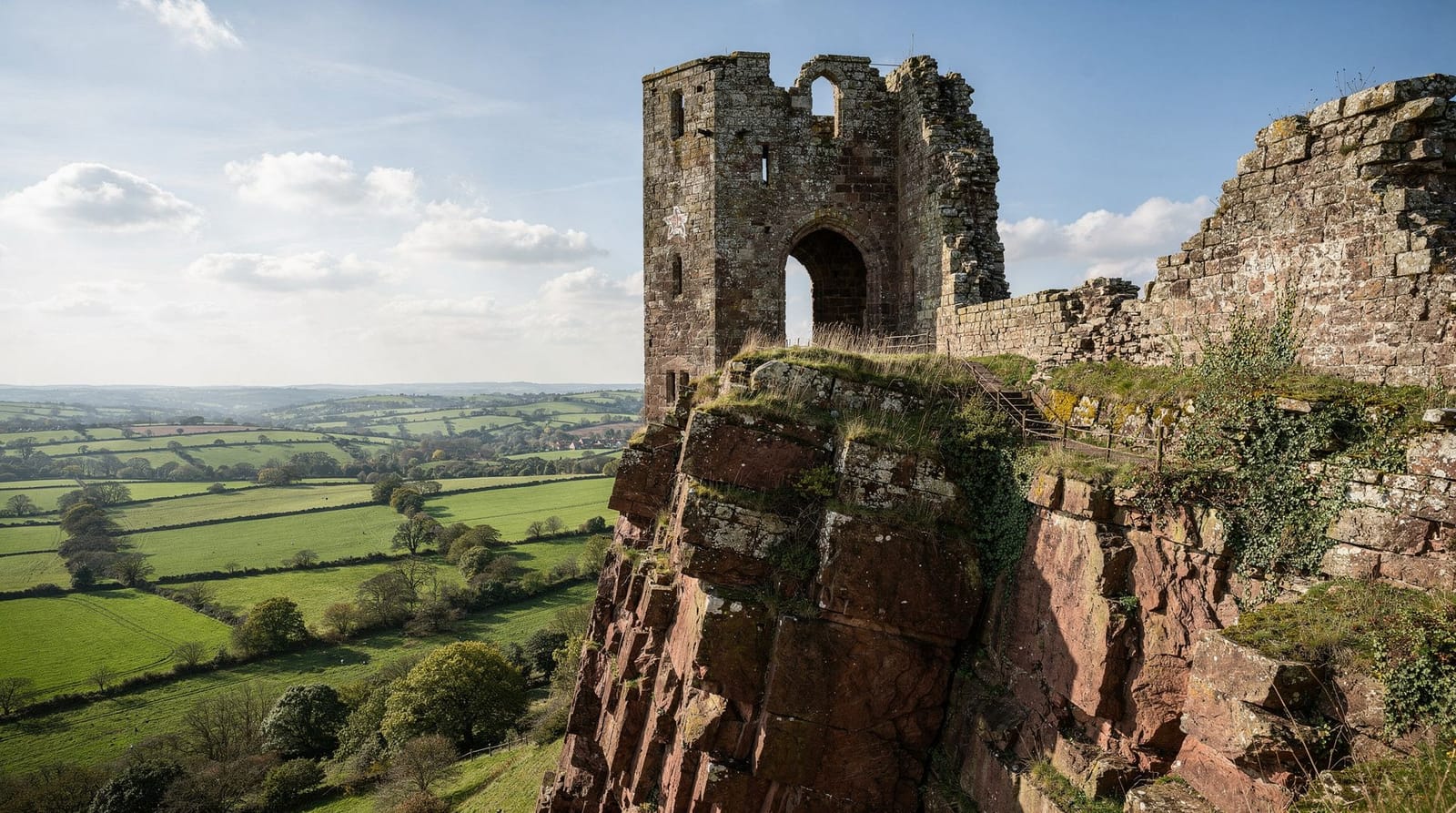
| Beeston Castle | ~30-35 min (car) | Hilltop ruins, Cheshire Plain views | Low; site entry only |
If you only have one day and football isn’t the draw, Llangollen or Beeston Castle arguably deliver more conventional “day trip” scenery. But for anyone with even a passing interest in the Wrexham AFC story, or in brewing and industrial history, Wrexham offers something the other two simply don’t — and it’s hard to beat for how little planning the direct train connection requires.
Getting around Wrexham beyond the direct Chester line
Wrexham General station isn’t just a straightforward stop on the Chester line — it also sits on routes towards Shrewsbury to the south and, via the Wrexham-Bidston line, towards Liverpool and the Wirral to the north, which makes it a reasonable interchange if you’re combining a Wrexham visit with a wider North West trip rather than a simple there-and-back from Chester. Local buses connect the town centre with surrounding villages and with Llangollen, though the train or a direct drive remains the more reliable option for a single-day visit focused on the football and heritage sights covered above.
Within the town itself, the Racecourse Ground, St Giles’ Church and the town centre shops and market are all comfortably walkable from the station, generally within 10-15 minutes on foot, so a car isn’t necessary if you’re sticking to the core sights — Erddig Hall is the one significant exception, sitting far enough out that a taxi or a short drive is the practical option.
Where to stay if you’re making a night of it
Most visitors treat Wrexham as a half-day or full-day trip from Chester rather than an overnight stop, and Chester’s much larger hotel stock means it usually makes sense to base yourself there and day-trip in. That said, Wrexham does have its own hotels, guesthouses and B&Bs in and around the town centre, and staying over can be worth considering around a headline fixture if you want to avoid a late train back or simply want more time for the town beyond a single afternoon.
As noted above, book well ahead of any high-profile match — Wrexham’s accommodation stock is considerably smaller than Chester’s, and a big fixture weekend can sell out what’s available months in advance. For most other visits, though, Chester remains the more practical base, with Wrexham as a straightforward add-on; see the where to stay in Chester guide for options.
How the “Welcome to Wrexham” effect compares to other football tourism
Wrexham now sits alongside a small number of other North West clubs on this site’s football tourism map — Liverpool and Everton in Liverpool, Manchester United and Manchester City in Manchester — but it occupies a genuinely different niche. Those are Premier League and European giants with decades of established stadium tour infrastructure, museums and merchandise operations built for high visitor volumes.
Wrexham’s football tourism infrastructure is newer and smaller in scale, a club and town still adjusting to a level of international interest that didn’t exist before 2020, which means tours, ticket systems and visitor facilities can feel less polished or less predictable than the long-established Premier League club experiences. That’s not necessarily a downside if what you want is a more grounded, less commercialised football visit than the bigger clubs offer — but it’s worth setting expectations accordingly rather than assuming Wrexham operates at the same visitor-infrastructure scale as Anfield or Old Trafford.
The honest take: manage football-tourism expectations
Wrexham’s transformation is a genuine, well-documented story, not media hype — the promotions are real, the ownership change is real, and the town’s profile has measurably changed since 2020. That said, manage expectations if you’re expecting a wholly transformed, glossy tourist town: Wrexham remains, at its core, a working North Wales market town, and the football story sits alongside, rather than replacing, its more ordinary daily life. Visitors expecting a purpose-built tourist experience on the scale of a major city attraction may find the reality more low-key and authentic than the documentary series’ framing suggests — which, depending on your taste, is either a slight disappointment or exactly the appeal.
Frequently asked questions about visiting Wrexham
Can you tour the Racecourse Ground?
Yes, stadium tours run at various times depending on the football calendar, though availability has become more limited and demand higher since the 2020 ownership change — book ahead rather than turning up expecting a same-day tour slot, especially around match weeks.
Do Ryan Reynolds or Rob McElhenney live in Wrexham?
No, both owners are based primarily in North America and visit the town periodically rather than living there full-time, though they have been closely and visibly involved in the club’s affairs, including regular visits documented in the Welcome to Wrexham series.
Is it easy to get match tickets?
It’s become considerably harder since the club’s rise through the leagues and the documentary’s success — season tickets and many individual match tickets now sell out well in advance, a significant change from the club’s lower-profile National League years. Check the official club channels for ticket releases rather than assuming availability on short notice.
What is The Turf pub known for?
The Turf, adjoining the Racecourse Ground, is one of the oldest football pubs in Britain and featured prominently in the Welcome to Wrexham documentary series — it’s a genuine, longstanding matchday institution rather than a recently created “tourist” pub, and remains popular with home fans regardless of the club’s new profile.
Is Wrexham worth visiting if you don’t follow football?
Yes — St Giles’ Church, Wrexham Lager’s brewing history and Erddig Hall on the town’s edge all offer genuine, non-football-related reasons to visit, and the town itself is an easy, direct 25-30 minute train ride from Chester regardless of your interest in the club.
How has Wrexham changed since 2020?
The most visible changes are increased visitor numbers, greater international media attention, and the club’s rapid rise from the fifth tier of English football to the Championship in three consecutive promoted seasons — the town’s physical fabric and everyday character remain recognisably the same working North Wales market town it was before, rather than being transformed into a purpose-built tourist destination.
Is Wrexham worth an overnight stay, or is a day trip enough?
For most visitors, a day trip from Chester is enough — the core sights (the Racecourse Ground, St Giles’ Church, the town centre) are comfortably covered in half a day to a full day, and Chester’s larger hotel stock makes it the more practical base. An overnight stay is only really worth considering around a headline match weekend, and even then, book well ahead given Wrexham’s smaller accommodation supply.
How does Wrexham compare to Llangollen or Beeston Castle as a day trip?
They’re different kinds of trips rather than direct competitors — Llangollen and Beeston Castle lean towards scenery, canals and castle ruins, while Wrexham is built around football and industrial heritage. If you want a conventional scenic North Wales day out, Llangollen or Beeston Castle probably edge it; if the Wrexham AFC story or brewing history interests you, Wrexham is the clearer choice.
Practical tips for a match-day visit
If you’re timing your trip around a fixture, a few practical points make a genuine difference. Arrive well before kick-off, since the town centre and the streets around the Racecourse Ground get considerably busier on match days than the quiet weekday town described elsewhere on this page, and pub queues at The Turf and nearby venues build quickly in the hour or two before kick-off. Train services back to Chester after an evening match can be busier and, depending on the day, less frequent than during the day, so check the return timetable in advance rather than assuming a train will be waiting whenever the final whistle blows.
Away fans should check the away-end ticketing arrangements specifically, since these are often handled separately from home-end sales and can sell out faster given current demand levels. And regardless of which end you’re in, book any accommodation in Wrexham itself well ahead of a high-profile fixture — rooms in the town centre are limited compared with Chester’s much larger hotel stock, and a headline match weekend can sell out what’s available months in advance.
Combining Wrexham with the rest of North Wales
Wrexham sits close to Llangollen (25 minutes) and within reach of Beeston Castle back across the Cheshire border (30-35 minutes), making it a natural stop on a wider North Wales loop rather than an isolated day trip. See the Llangollen, Beeston Castle and North Wales overview destination pages, and the North Wales castles road trip for a structured multi-stop plan.
For related reading, see the Wrexham AFC guide, day trips from Chester, best day trips by train from Chester and Chester’s trains and day-trip logistics. For the full background on the club’s takeover and rise, read the Wrexham and the Ryan Reynolds effect blog feature.
Top experiences
Bookable activities with verified prices and instant confirmation on GetYourGuide.