The Ryan Reynolds effect — why everyone's suddenly visiting Wrexham
Quick answer: in 2020, Hollywood actors Ryan Reynolds and Rob McElhenney bought Wrexham AFC, a fifth-tier Welsh club with a long history and a shrinking fanbase. The Disney+ documentary series Welcome to Wrexham that followed turned the club — and the city — into an unlikely tourism draw, and Wrexham is now a genuinely easy half-day or full-day trip from Chester, roughly 20 minutes away by train.
| Where | Racecourse Ground and Wrexham city centre, North Wales |
| Cost | Half-day tours from around £25-45pp; matchday tickets vary by fixture |
| Time needed | Half a day for a non-matchday visit, a full day around a fixture |
| Getting there | Direct train from Chester, around 20 minutes |
| Best time | Any day for the city and stadium exterior; check fixtures for matchdays |
What actually happened
Wrexham AFC is the third-oldest professional football club in the world, but by 2020 it was playing in the National League, English football’s fifth tier, well outside the divisions most casual fans follow. Reynolds and McElhenney’s takeover that year could easily have been treated as a celebrity vanity purchase.
Instead, the docuseries Welcome to Wrexham — which followed the takeover, the club, and the city itself with real affection rather than irony — found an audience well beyond football fans, and the club’s on-pitch results backed up the story: Wrexham won the National League title in 2022-23 to reach League Two, then won promotion again in 2023-24 to League One, and again in 2024-25 to the Championship — three successive promotions, a first in English football history for a club moving through those tiers back to back. In their first Championship season, 2025-26, Wrexham finished 7th, the club’s highest finish in its history, narrowly missing the play-offs.
The tourism numbers are real, not just a good story
This isn’t just a nice narrative — it shows up in the visitor figures. Tourism spending in Wrexham rose sharply following the takeover and the documentary’s release, and the wider area saw a marked jump in visitor numbers, with local reporting describing some of the strongest tourism growth anywhere in Wales over the period. Hospitality businesses in the city have publicly credited the “Ryan and Rob effect” for footfall that a fifth-tier football club would never have generated on its own. Growth has cooled somewhat in the years since the initial surge, as documentary-driven interest naturally does, but Wrexham’s visitor numbers remain well above their pre-2020 baseline.
The Racecourse Ground itself
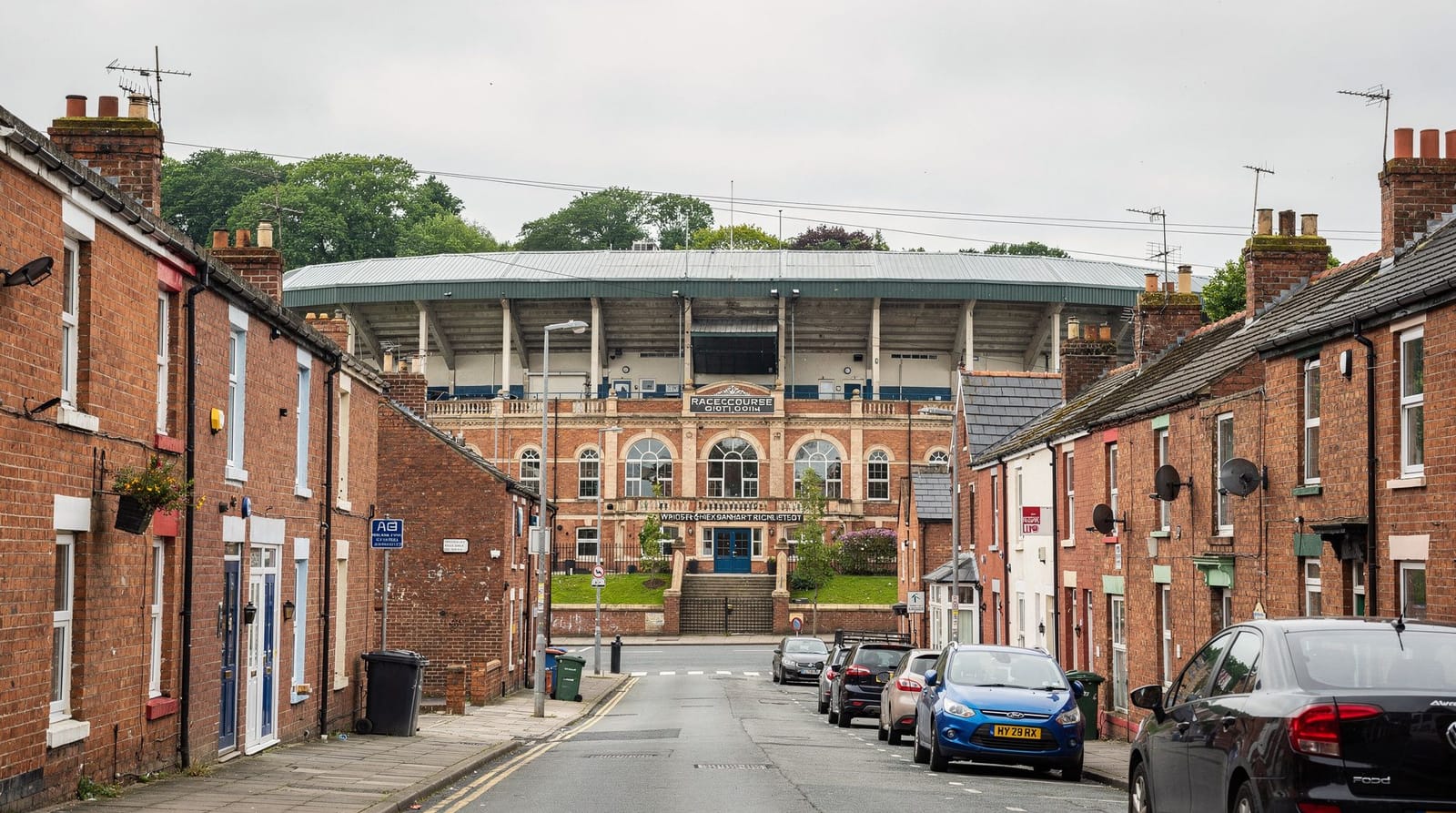
Wrexham AFC plays at the Racecourse Ground, which holds a genuine, non-manufactured claim to fame: it’s recognised as the oldest international football stadium still in use anywhere in the world, having hosted its first international fixture in 1877. That history predates the Reynolds-McElhenney era by well over a century, and it’s worth knowing before you assume the ground’s appeal is purely a Hollywood invention — Wrexham was a real football city with a real stadium long before Welcome to Wrexham existed.
Matchday tickets sell out quickly given the club’s new profile, so if attending a fixture is the goal, check availability well ahead rather than assuming you can buy on the day. On non-matchdays, guided looks at the club and the city are available, including the Welcome to Wrexham half-day tour, which covers the Racecourse Ground and the city sites that feature in the show, and the shorter Wrexham walking tour for a more focused city-centre option.
The club’s history didn’t start in 2020
It’s worth stating plainly, because the documentary-driven fame can obscure it: Wrexham AFC was founded in 1864, making it the third-oldest professional football club in the world, and it has a long, occasionally turbulent history entirely independent of its current owners — including financial near-collapses in the 2000s that had supporters fearing for the club’s survival long before any Hollywood involvement. That context matters for understanding why long-time Wrexham fans have a more complicated relationship with the “Ryan and Rob” era than the uniformly upbeat tone of the show suggests; for many, this is a beloved local institution finally getting resources it deserved decades ago, not a story that begins with a celebrity purchase.
Beyond the football: what else Wrexham offers
Wrexham’s city centre has its own, non-football history worth a look if you’re making the trip anyway. The city has a genuine brewing heritage — Wrexham Lager, established in 1882, is credited as the first lager brewed in Britain, a detail that predates the football club’s current fame by well over a century and gives the city a claim to fame entirely separate from Reynolds and McElhenney. St Giles’ Church, with its elaborately carved 16th-century tower, is one of the “Seven Wonders of Wales” listed in a traditional Welsh rhyme, and is worth a short visit if you’re in the city centre between football-related stops.
How to visit from Chester
Wrexham is one of the simplest add-ons to a Chester trip precisely because of the distance — trains run regularly and the journey takes around 20 minutes, making it realistic as a half-day trip rather than a full day-out commitment. It slots naturally alongside other day trips from Chester if you’re building a longer North West itinerary, and pairs reasonably well with a wider look at North Wales if you’re continuing further west afterward. For a fuller breakdown of train-based day options from the city, see our guide to Chester’s best day trips by train.
What the documentary got right, according to locals
One consistent theme in local reporting on Welcome to Wrexham is that residents largely feel it portrayed the city with genuine affection rather than mockery or condescension — a common risk when a big-budget American production parachutes into a struggling post-industrial town. The show spends real time on the city’s wider economic and social context, not just the football, which is part of why it found an audience beyond typical football documentary viewers and why Wrexham’s tourism bump has extended somewhat beyond just matchday visitors to include general city-centre footfall.
Managing expectations
Be realistic about what a Wrexham visit actually offers beyond the football connection: it’s a working Welsh market city, not a purpose-built tourist attraction, and the “effect” is genuinely most visible around matchdays and at the club shop and stadium tours rather than throughout the wider city centre. If football and the show aren’t of interest to you, Wrexham is a pleasant but modest half-day stop rather than a must-see destination — the appeal here is specific, not universal.
Planning a Wrexham half-day around a match, if you can get tickets
If you manage to secure a matchday ticket, build the rest of the day around the fixture’s kick-off time rather than treating football as one stop among several — matchday crowds and road closures around the Racecourse Ground change the practical logistics of getting in and out compared to a quiet non-matchday visit. Arrive with plenty of buffer time before kick-off, since the surge of fans from the station to the ground on a big match day takes longer to clear than the 20-minute train journey from Chester might suggest. If tickets aren’t available — which is increasingly likely given the club’s new profile — a non-matchday stadium tour still delivers most of the historical and behind-the-scenes content without the ticket scramble.
Matchday vs non-matchday: which visit fits you
The two ways of experiencing Wrexham from Chester deliver quite different days, and it’s worth being clear on which one you’re planning for before you book:
| Matchday visit | Non-matchday visit | |
|---|---|---|
| Atmosphere | Full stadium noise, genuine crowd energy | Quiet city streets, relaxed tour pace |
| Access | Stand and pitch view from your seat only | Guided tour often includes pitch-side, tunnel, dressing rooms |
| Cost | Ticket price varies by fixture, can sell out | Fixed tour price, bookable well ahead |
| Best for | Football fans wanting the real matchday feel | Sightseers, families, or fans who missed out on tickets |
| Logistics | Crowds and road closures around kick-off | Easy in and out, no crowd surge to plan around |
The club shop and matchday extras
Even without a match or tour ticket, the Wrexham AFC club shop near the Racecourse Ground is open to browse, and it’s become something of a destination in its own right since the takeover — merchandise referencing the Reynolds-McElhenney ownership sells alongside traditional kit, and it’s a normal stop for visitors doing a self-guided look at the ground from outside. If you are attending a match, arrive with enough time before kick-off to see the shop and grab food nearby, since queues build fast in the hour before a fixture and thin out again once play starts.
Combining Wrexham with a wider North Wales day
Because the train journey from Chester is so short, Wrexham slots easily into a longer day rather than requiring its own dedicated trip. Pairing a morning stadium tour with an afternoon further into North Wales — Llangollen’s canal and railway, or the castles further west — is realistic if you start early, though check onward transport timings carefully since Wrexham isn’t directly on every North Wales rail route. For visitors building a full itinerary around the region rather than a single city, our 3-day North Wales itinerary gives a sense of how Wrexham can fit alongside castles, railways and coastal stops without feeling rushed.
Frequently asked questions about the Ryan Reynolds effect in Wrexham
Does visiting Wrexham require a full day?
Not necessarily. Given the short train journey from Chester, a half-day trip covering the Racecourse Ground area and a walk through the city centre is entirely workable, especially on a non-matchday when a stadium tour rather than a full fixture is the plan. A full day makes more sense if you’re attending a match, given the extended time around kick-off, or if you want to properly explore the wider city centre, including St Giles’ Church and the Wrexham Lager heritage sites, at a relaxed pace.
Do you need a ticket to see the Racecourse Ground at all?
No — the stadium is visible from the surrounding streets and the club shop is open to visitors without a match or tour ticket, so a casual look at the ground from outside is possible even without booking anything in advance. A proper tour or matchday visit is required to see the interior, the pitch and the dressing rooms.
How far is Wrexham from Chester?
About 20 minutes by train, with frequent services throughout the day, making it one of the easiest half-day trips from Chester.
Can you tour the Racecourse Ground without a match ticket?
Yes — non-matchday tours covering the stadium and city sites featured in Welcome to Wrexham run regularly, separate from matchday admission.
Is the Wrexham tourism boom just because of the TV show?
The documentary and the ownership change are clearly the trigger, but the club’s stadium already held a genuine historical claim — the oldest international football ground still in use — well before Reynolds and McElhenney’s involvement.
What league does Wrexham AFC play in now?
As of the 2025-26 season, Wrexham plays in the Championship, England’s second tier, following three consecutive promotions from the National League.