Anglesey
Anglesey is a tidal island off North Wales with a UNESCO-listed castle at Beaumaris, a South Stack lighthouse and long sandy beaches.
Anglesey: Full-Day Tour with Lunch from Llandudno and Conwy
Duration: 8 hours
Quick facts
- Welsh name
- Ynys Mon
- Connected by
- Menai Suspension Bridge (1826) and Britannia Bridge
- UNESCO site
- Beaumaris Castle, part of Edward I's "iron ring"
- From Chester
- ~1h by car via the A55; ~1h20 direct train to Bangor or Holyhead
- Famous village
- Llanfairpwllgwyngyllgogerychwyrndrobwllllantysiliogogogoch
Is Anglesey worth visiting from Chester? Yes, if you have a full day or more — it’s a genuinely different kind of North Wales day out, trading castles-and-mountains scenery for a flatter, coastal island landscape with one of Edward I’s finest castles, real beaches, and a working ferry port. As a rushed half-day add-on to a Conwy or Caernarfon trip it works less well, since the bridge crossing alone puts you a further 20-30 minutes beyond those towns.
| Where | Menai Strait, North Wales — reached via two bridges from Bangor |
| Cost | Around £30-45/person for a full day (Beaumaris + Sea Zoo + lunch) |
| Time needed | A full day; 2-3 days to cover the coastline properly |
| Getting there | ~1h by car via the A55, or ~1h05-1h30 by direct train |
| Best time | May-September for beaches; April-July for South Stack’s seabirds |
An island joined to the mainland by two historic bridges
Anglesey (Ynys Mon in Welsh) is separated from the North Wales mainland by the Menai Strait, a tidal channel with strong currents that has shaped the island’s history as much as its geography. Thomas Telford’s Menai Suspension Bridge, completed in 1826, was the longest suspension bridge in the world at the time and remains a genuinely elegant piece of engineering, still carrying road traffic today. A short distance away, the Britannia Bridge (originally an 1850 Robert Stephenson tubular rail bridge, rebuilt after a 1970 fire to carry both road and rail) is the faster crossing most drivers use on the A55.
The island itself is largely flat and agricultural, a contrast to the mountainous mainland visible across the strait, with a coastline that alternates between sandy beaches, low cliffs and the dramatic exception of Holy Island’s western tip at South Stack.
Beaumaris Castle: the unfinished masterpiece
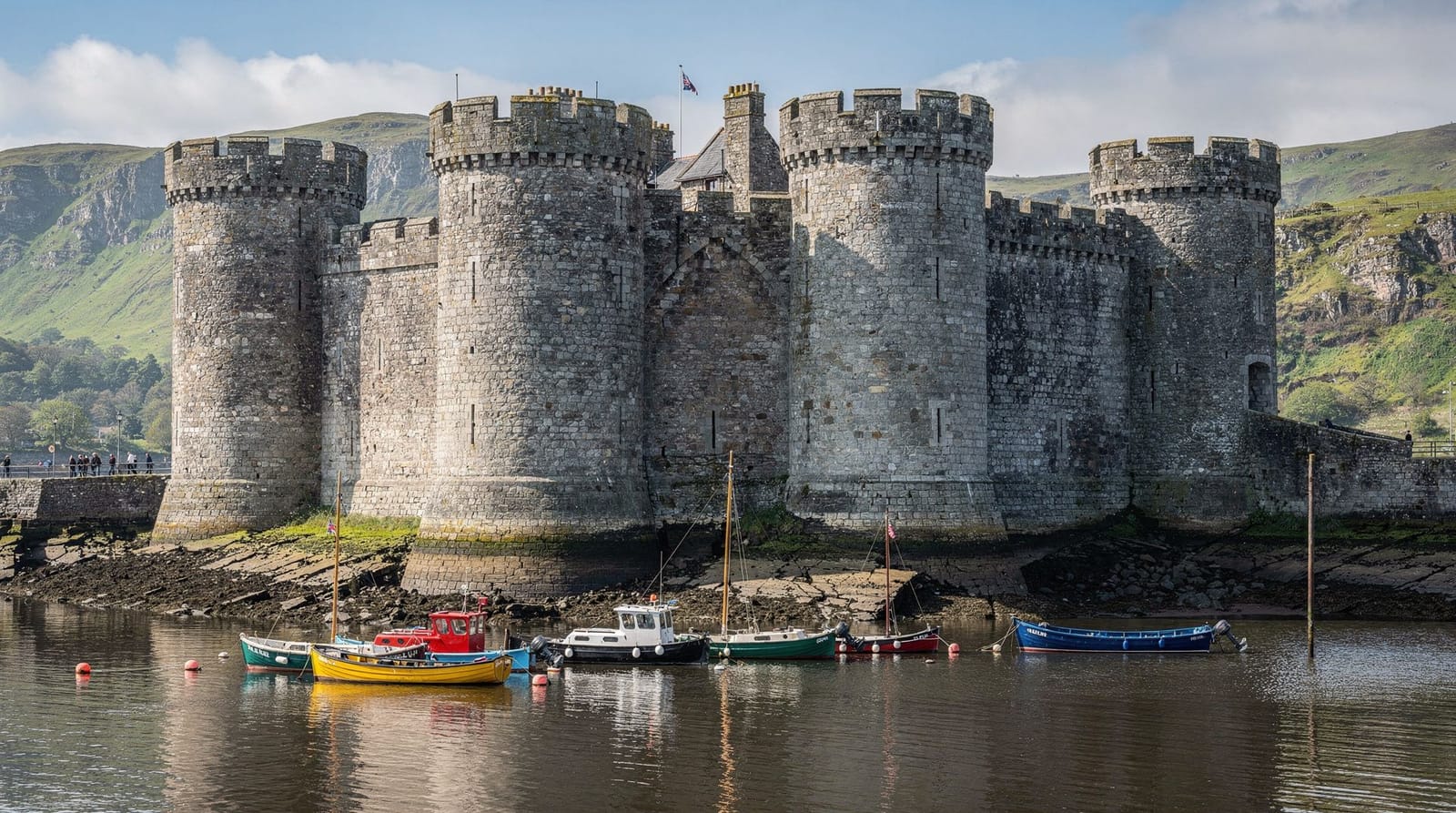
Beaumaris Castle, on the island’s eastern coast, is the last and, by most historians’ assessment, the most technically accomplished of Edward I’s Welsh castles — part of the “iron ring” built to control North Wales after the conquest of 1282-83, alongside Conwy, Caernarfon and Harlech. Unlike those three, Beaumaris was never finished (funding ran out as Edward’s attention turned to Scotland), which means it never had to compromise its design to fit an existing town or awkward terrain.
Built on flat ground with a concentric “walls within walls” layout and a moat still filled with water, it’s often cited by castle historians as the most perfectly symmetrical example of medieval military architecture in Britain, even in its incomplete state. It’s part of the same UNESCO World Heritage inscription as Conwy and Caernarfon castles.
Entry costs around £11-13 for adults (Cadw membership covers it if you’re visiting multiple Welsh castles on the same trip, which is worth calculating if Conwy and Caernarfon are also on your itinerary).
South Stack and the wild western coast
At the island’s western tip, near Holyhead, South Stack Lighthouse sits on a small islet connected by a footbridge, reached via 400 steps down a dramatic cliff path. The RSPB reserve here hosts one of Wales’s largest seabird colonies — guillemots, razorbills and puffins nest on the cliffs from April to July, and the visitor centre has telescopes trained on the ledges during breeding season. It’s a proper walk (the steps back up are the honest downside), but the cliff scenery and bird colonies are a legitimately different experience from anything on the mainland coast.
The Menai Strait’s tidal power and Anglesey’s other castles
Beyond Beaumaris, Anglesey has a scattering of smaller historic sites that rarely make the headline itineraries: the remains of a Neolithic burial chamber at Bryn Celli Ddu, one of the best-preserved passage tombs in Wales, predates Beaumaris Castle by roughly 4,000 years and is free to visit, reached via a short walk from a small car park near Llanddaniel Fab. It’s a genuinely different kind of history from the medieval castles elsewhere in this guide — a reminder that Anglesey was settled and significant long before Edward I’s conquest.
The strait itself has also long been eyed for its tidal energy potential, with various proposed tidal power schemes over the decades reflecting just how strong and consistent the currents through the Swellies are — a detail that says something about why crossing this water safely required Telford’s engineering rather than a simple ferry in the first place.
Beaches and the famous long place name
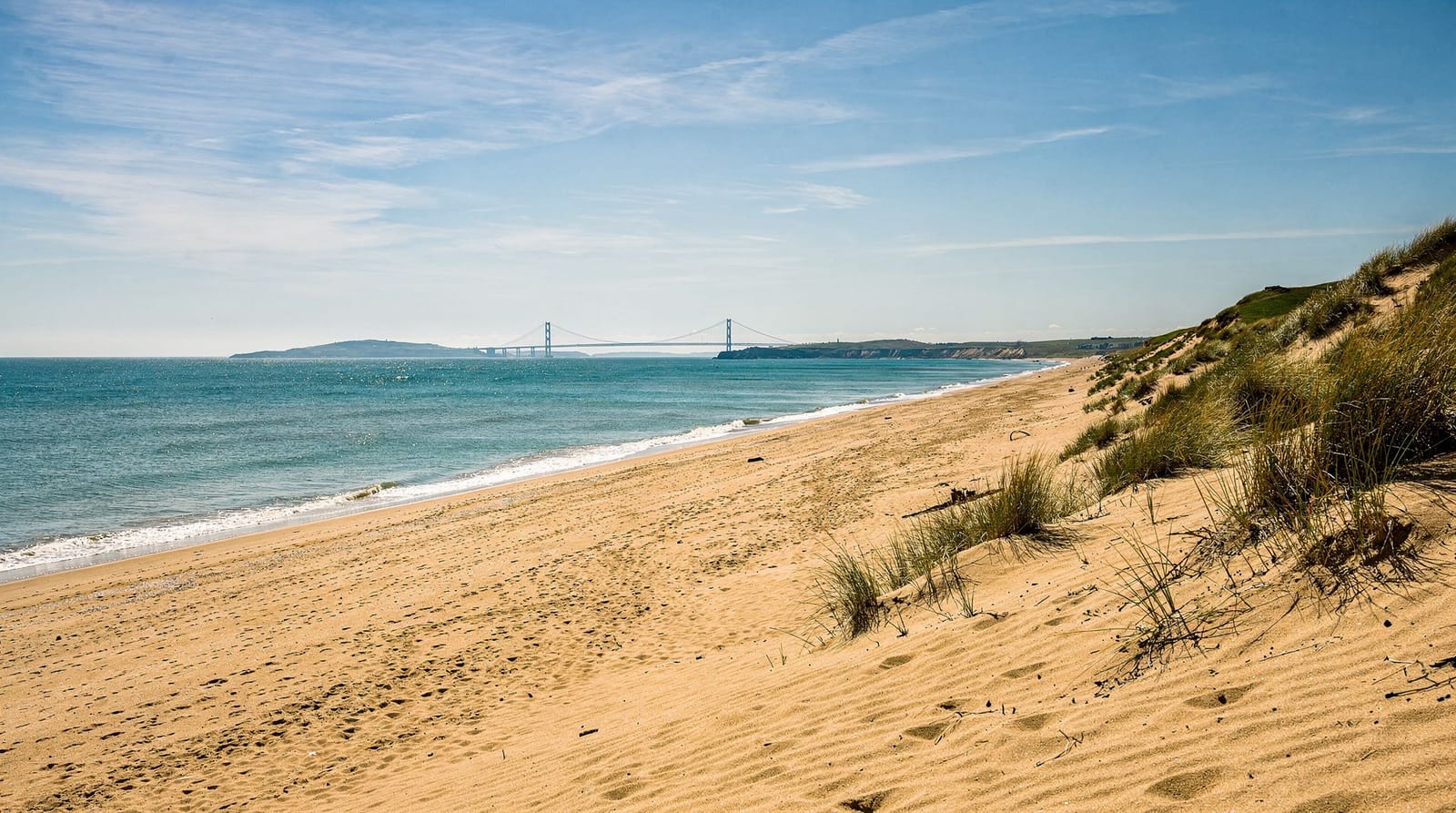
Anglesey’s beaches are one of its main draws for anyone based in North Wales for more than a day trip: Rhosneigr on the west coast has a genuine watersports scene (kitesurfing, paddleboarding) alongside a sandy family beach; Newborough Beach, backed by Newborough Forest and looking across to Ynys Llanddwyn (a tidal islet with a ruined chapel to the patron saint of Welsh lovers, St Dwynwen), is one of the most photographed beaches in North Wales; Benllech on the east coast is a more traditional, gently sloping family beach with good facilities.
The village of Llanfairpwllgwyngyllgogerychwyrndrobwllllantysiliogogogoch — 58 letters, and genuinely the longest place name in the UK, though it was extended in the 19th century specifically as a tourist gimmick rather than being organically that long — has a well-known railway station sign that most visitors stop to photograph, plus a small selection of tourist shops selling the name printed on everything imaginable.
Menai Bridge town and the strait itself
The small town of Menai Bridge (Porthaethwy), right at the island end of Telford’s suspension bridge, is worth a stop in its own right — a pleasant waterfront promenade looks directly onto the strait, with its notoriously strong tidal currents (the Swellies, a stretch of turbulent water between the two bridges, has claimed ships over the centuries and is still treated with respect by local sailors). A small maritime museum and a handful of decent cafes make this a good short stop before or after Beaumaris, rather than a full destination in itself.
Anglesey Sea Zoo, near Brynsiencyn on the strait’s southern shore, is a family-oriented aquarium focused specifically on Welsh marine life — lobster hatchery, shipwreck displays, native species rather than the more exotic tropical focus of Blue Planet Aquarium back near Chester. Entry runs around £13-16 for adults and it’s a reasonable wet-weather option if the beaches and cliffs aren’t practical that day.
Holyhead: more than just a ferry port
Holyhead, on Holy Island at Anglesey’s western edge (itself connected to the main island by a short causeway), is primarily known as the ferry terminal for Dublin sailings, but it has some genuine interest beyond the port — St Cybi’s Church sits within the walls of a Roman fort, one of relatively few Roman remains this far into North Wales, and the town’s breakwater, built in the 19th century, is one of the longest in Britain. Most visitors pass through rather than stopping deliberately, but if you’re already here for South Stack or a ferry connection, an hour in the town itself is a reasonable use of time.
A practical day budget
A realistic day budget per adult, on top of transport: Beaumaris Castle entry around £11-13; Anglesey Sea Zoo around £13-16; South Stack RSPB car park and site are free (donations welcome); a pub lunch around £12-18. A full day covering Beaumaris and South Stack with lunch in between runs roughly £30-45 per person before transport costs, though many visitors will reasonably choose one castle-and-town stop or one coastal walk rather than attempting both extremes of the island in a single day trip from Chester.
Getting to Anglesey from Chester
By car, it’s around 55-60 miles via the A55, typically taking about an hour to reach Menai Bridge or Bangor, slightly longer to Holyhead (1h20) or the western beaches.
By train, Chester sits on the direct Wales-Ireland mainline: services run to Bangor (around 1h05-1h15) and on to Llanfairpwll, then across the Britannia Bridge to Holyhead (around 1h20-1h30), the terminus for ferries to Dublin. This is one of the more straightforward rail connections in this guide — no changes needed for most direct services, and fares run around £18-25 each way depending on time of booking.
Guided options save the logistics of bridge crossings and beach-hopping by car:
Anglesey full-day tour with lunch from Llandudno and Conwycovers the island’s highlights including Beaumaris and the Menai Strait in one organised day with lunch included, departing from the coastal towns rather than Chester directly. For the western coast:
Holyhead: Isle of Anglesey sightseeing boat tourtakes you along the dramatic cliff coastline near South Stack from the water, a genuinely different vantage point on the sea stacks and seabird colonies than the clifftop path offers.
Weather, tides and what catches first-timers out
Anglesey’s coastline is genuinely exposed compared with the sheltered Menai Strait side, and conditions can differ noticeably between the island’s east and west coasts on the same day — Benllech might be calm while Rhosneigr, facing the prevailing westerly wind, is considerably rougher, which is exactly why the west coast beaches suit watersports and the east coast suits families wanting calmer water. Check a beach-specific forecast rather than a general “Anglesey” one if a particular activity depends on conditions.
Tides matter more here than at most North Wales stops covered in this guide: Newborough Beach’s crossing to Ynys Llanddwyn is only accessible at low to mid tide, and the Menai Strait’s currents are strong enough that swimming directly in the strait itself (as opposed to the open beaches) isn’t recommended for casual visitors. None of this should put you off — it just rewards a few minutes checking tide tables before building a beach or islet visit into your plans.
The honest take: pace this properly
Anglesey rewards a full day minimum, and ideally an overnight stay if beaches and South Stack are both on your list — the island is larger than it looks on a map (roughly 25 miles from Menai Bridge to Holyhead), and trying to combine Beaumaris Castle, South Stack and a beach in one rushed day from Chester means a lot of driving and not much time actually anywhere. If you only have half a day, pick Beaumaris Castle and the Menai Strait bridges rather than trying to also reach the western coast.
How Anglesey compares to the mainland coast
If you’ve already visited Conwy or Llandudno, Anglesey feels like a genuinely different landscape rather than more of the same — flatter, more agricultural, with a coastline defined by beaches and low cliffs rather than the dramatic mountain backdrop you get looking inland from the mainland coast towns. That’s a point in its favour if you want variety on a longer North Wales trip, but it means Anglesey isn’t the right choice if mountain scenery specifically is what you’re after — for that, Snowdonia and the villages around it (Betws-y-Coed, Caernarfon) deliver more directly. Anglesey’s strength is coastal walking, beaches and Beaumaris Castle rather than peaks and waterfalls.
Accessibility notes
Beaumaris Castle has largely level ground-floor access around much of the site, though the wall-walks and towers involve steps and are not wheelchair accessible. South Stack’s lighthouse path involves several hundred steps down a cliff face and back up, genuinely demanding and not suitable for limited mobility, though the RSPB visitor centre and initial viewing points near the car park are more accessible. Newborough Beach and the Menai Strait promenade at Menai Bridge town are both relatively flat and manageable for pushchairs and most mobility needs.
Anglesey month by month
| Months | Weather & sea | What’s good |
|---|---|---|
| Apr-Jul | Cool to mild, sea still cold | South Stack seabird colonies at their busiest |
| Jul-Aug | Warmest, busiest | Beaches at their best; book Beaumaris parking early |
| Sep | Mild, quieter | Good compromise — fewer crowds, sea still swimmable |
| Oct-Mar | Cold, wetter, short days | Beaumaris and the Sea Zoo work as wet-weather stops; beaches often empty |
Combining Anglesey with the rest of North Wales
Anglesey pairs naturally with Conwy, Caernarfon and Llandudno as a coastal loop, or as an extension for anyone travelling on to or from the Holyhead ferry. See the North Wales overview, Conwy, Caernarfon and Llandudno destination pages, and the North Wales castles road trip and 2-day Welsh castles itinerary for structured multi-stop plans.
For related reading, see the Welsh castles guide, Edward I’s castles in North Wales and day trips from Chester. If you’re heading onward to Ireland, the getting to Chester guide covers the reverse journey logistics from Holyhead.
Should you base yourself on Anglesey or visit as a day trip?
Most Chester-based visitors treat Anglesey as a day trip, and for a single castle-and-coast visit that’s the right call — accommodation options on the island itself are limited compared with Llandudno or Conwy, and you lose an hour each way relocating rather than staying put.
The case for an overnight stay is the western coast: South Stack, Rhosneigr and Holyhead’s ferry connections are far enough from Beaumaris that doing all of them properly in one day from Chester means more driving than sightseeing. If a longer North Wales trip is on the cards, see the North Wales castles road trip for a multi-day structure that gives Anglesey its own dedicated stop rather than squeezing it into a single rushed day.
Top experiences
Bookable activities with verified prices and instant confirmation on GetYourGuide.