Great Orme
The Great Orme is a limestone headland above Llandudno with a Victorian cable tramway, Bronze Age copper mines and wild Kashmiri goats.
Llandudno: City Sightseeing Hop-On Hop-Off Bus Tour
Quick facts
- Location
- Headland above Llandudno, Conwy county
- From Chester
- ~1h07 direct train to Llandudno, then tram, cable car, bus or a steep walk
- Great Orme Tramway
- Britain's only cable-hauled street tramway, operating since 1902
- Great Orme Mines
- The largest prehistoric copper mine complex found anywhere in the world
- Wild residents
- A resident herd of Kashmiri goats
Is the Great Orme worth visiting from Chester? Yes, and it pairs naturally with a Llandudno day trip rather than needing to be planned as a separate journey — a limestone headland reachable by a genuinely unusual Victorian tramway, with a working summit visitor centre, 4,000-year-old copper mines and a herd of wild goats that occasionally wander into town. Combined with Llandudno itself, it makes for a full and varied day less than an hour and a quarter from Chester by direct train.
| Where | Headland above Llandudno, North Wales coast |
| Cost | Around £30-40/adult for tramway or cable car, mines and lunch |
| Time needed | Half a day; pairs naturally with a full Llandudno day |
| Getting there | ~1h07 direct train from Chester to Llandudno, then tram, cable car, bus or a steep walk |
| Best time | April to September for full tramway and cable car service |
A limestone headland with a working Victorian tramway
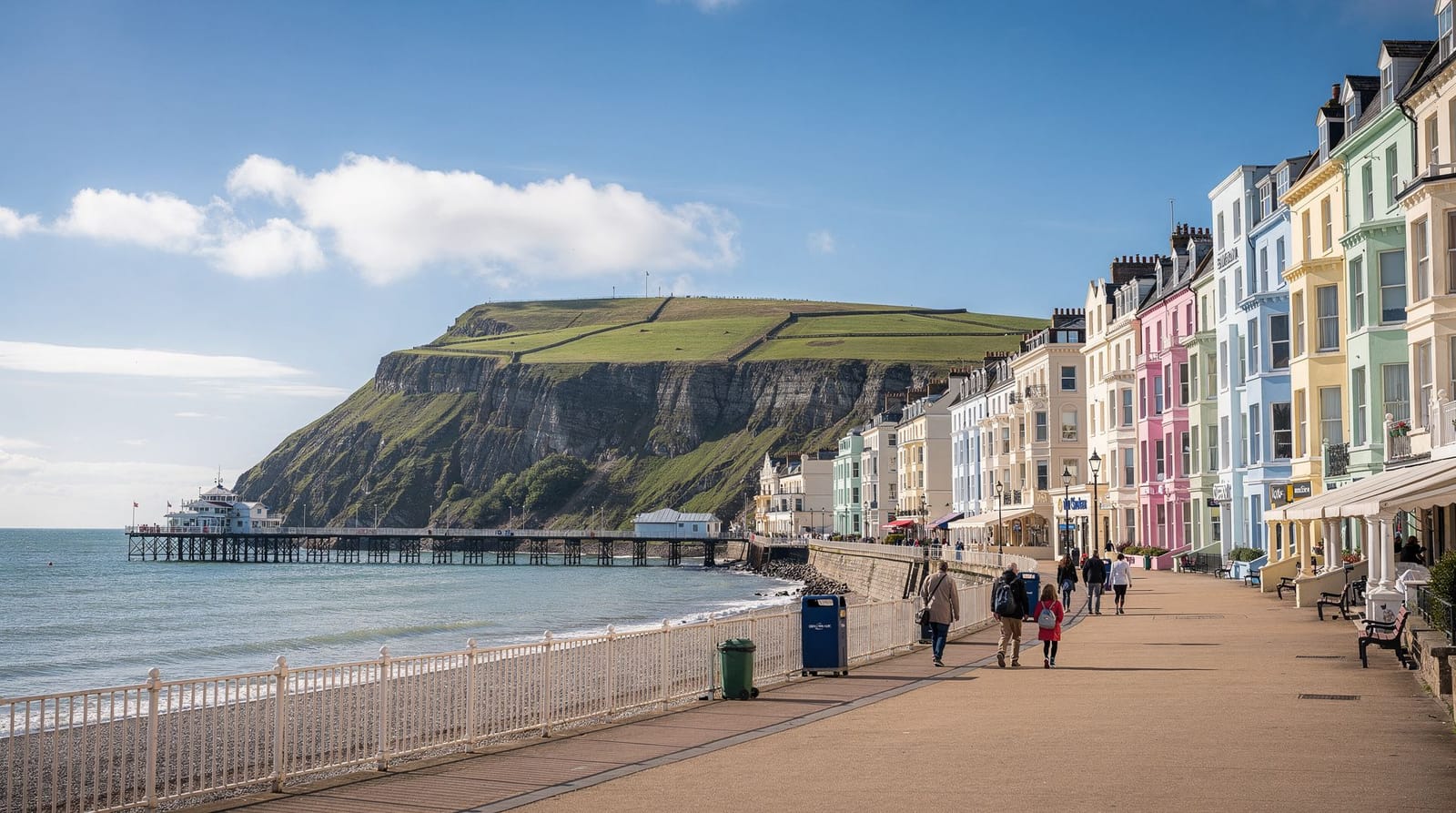
The Great Orme (Y Gogarth in Welsh) is a large limestone headland rising over 200 metres above Llandudno on the North Wales coast, its name most likely derived from an Old Norse word for “sea serpent,” reflecting the headland’s dramatic profile as seen from passing Viking ships centuries ago. Getting to the summit is as much a part of the experience as what’s up there: the Great Orme Tramway, opened in 1902, is Britain’s only remaining cable-hauled street tramway, hauling original Victorian tram cars up a roughly one-mile route in two distinct sections, with passengers required to change trams partway up at Halfway Station — a genuine piece of working transport heritage rather than a themed recreation.
An alternative, and for many visitors an even more dramatic option, is the Great Orme Cable Car, Britain’s longest cable car system, running open-air chairs over almost a mile of hillside from Llandudno’s Happy Valley up to the summit complex — not enclosed, so a genuinely exposed and, for some, exhilarating ride with sweeping views over the town and coastline the whole way up. Both the tramway and cable car operate seasonally, broadly April to September or October depending on the year, so check current operating dates if either is central to your visit, since neither runs through the depths of winter.
The Bronze Age copper mines
Beneath the Great Orme’s surface lies the largest known prehistoric copper mine complex found anywhere in the world, worked continuously from around 4,000 years ago through the Bronze Age, using tools no more sophisticated than stone hammers and animal bone picks to extract copper ore from a network of tunnels that, cumulatively, extends for miles underground. The scale of the mining — and the fact that it was carried out entirely without metal tools, since copper itself was the metal being sought — makes this one of the more genuinely remarkable archaeological sites in Britain, and a section of the mine complex is open to the public as a visitor attraction, with guided and self-guided routes through some of the original tunnels.
Entry to the Bronze Age Mines runs around £10-13 for adults, and the visit typically takes an hour or so — worth doing if prehistoric archaeology interests you at all, since sites of this scale and age open to public exploration are genuinely rare anywhere in the world, not just in Britain.
Kashmiri goats and the headland’s wildlife
The Great Orme is home to a resident herd of Kashmiri goats, descended from a pair gifted to Queen Victoria in the 1830s and subsequently established on the headland, where they’ve roamed largely wild ever since. The herd became briefly world-famous in 2020 when footage of the goats wandering into an empty, locked-down Llandudno town centre went viral internationally — a moment of accidental fame that many visitors now specifically ask about. Sightings on the headland itself are common but not guaranteed, since the goats roam freely across a large area rather than being kept in any enclosure; early morning or quieter periods tend to offer better chances of a close encounter.
Beyond the goats, the Orme’s cliffs support a notable seabird colony, and the headland as a whole is designated for its rare limestone grassland habitat, home to plant and butterfly species found in few other locations in Britain — a genuinely significant nature conservation site as well as a tourist attraction.
Marine Drive and the summit complex
Marine Drive, a roughly four-mile toll road circling the headland at a lower level than the tramway summit, offers a scenic drive (or a serious but rewarding walk or cycle) around the Orme’s cliffs, with several pull-offs for photographs and views out to sea — the toll is a modest few pounds per car and well worth it for the drive alone if you have a vehicle. At the summit itself, a visitor centre, cafe, small dry ski slope and toboggan run add a few additional paid activities beyond the view and the mines, useful if you’re visiting with children who want more than scenery to occupy them.
What the summit visitor centre actually offers
The summit complex houses a modest visitor centre with displays on the Orme’s geology, mining history and wildlife, alongside a cafe with genuinely good views over the Conwy estuary and, on a clear day, toward Anglesey and the Isle of Man in the far distance. A small dry ski slope and toboggan run add paid activities aimed mostly at children and families, priced separately from the tramway or cable car fare — worth budgeting an extra £5-10 per person if these appeal, since they’re easy to overlook when planning around the headland’s main attractions.
Walking the headland instead of riding up
For visitors who’d rather walk than ride, several footpaths climb the Great Orme from Llandudno’s West Shore and Marine Drive side, taking roughly 1.5-2 hours at a steady pace to reach the summit — a genuinely steep climb in places but manageable for most reasonably fit walkers, and one that lets you explore parts of the headland’s grassland and cliff paths that the tram and cable car routes bypass entirely. Combining a walk up with the tramway or cable car back down (or vice versa) is a popular compromise, giving you both the exercise and views of a walking route and the novelty of the historic transport for at least one leg of the trip.
The mines in more archaeological detail
Excavations at the Great Orme mines, which began in earnest in the 1980s after chance discoveries during nearby road works, revealed a mining operation of a scale that surprised archaeologists — estimates suggest the ancient miners removed tens of thousands of tonnes of rock using tools made from bone, stone and wood, working narrow tunnels by candlelight or animal-fat lamps in conditions that would be considered extremely hazardous by any modern standard.
The scale of the operation implies a genuinely significant, organised Bronze Age industry exporting copper (likely combined with tin from Cornwall to make bronze) across a much wider trading network than a single isolated mining community would need, hinting at the Great Orme’s importance within Bronze Age Britain and Europe more broadly. The visitor route includes both surface exhibits explaining this context and sections of the actual underground tunnels, some genuinely narrow enough to give a visceral sense of the conditions the original miners worked in.
Practical notes on the tramway versus the cable car
If you can only choose one way up, the tramway suits visitors more interested in transport heritage and a gentler, fully enclosed ride, while the cable car suits those who want more dramatic open-air views and don’t mind exposure to wind and height — the cable car is also more weather-dependent, typically suspending operation in high winds when the tramway continues running. Neither option is meaningfully faster than the other over the full journey once queuing and changeovers are accounted for, so choose based on the experience you want rather than assuming one is a quicker shortcut.
Getting to the Great Orme from Chester
By train, Chester to Llandudno takes around 1h07 on a direct service, one of the more reliable and pleasant rail connections covered in this guide, with fares typically £12-18 each way depending on booking. From Llandudno station, the tramway’s lower terminus is a walkable 10-15 minutes through the town, or a short taxi if you’d rather save your legs for the summit itself.
By car, it’s around 50 miles via the A55, typically an hour to an hour and ten minutes depending on traffic, with parking available both in Llandudno town and, for a fee, at points along Marine Drive and the summit itself.
For a simpler, all-in-one way to see both Llandudno and the Orme without driving yourself around the headland:
Llandudno: city sightseeing hop-on hop-off bus tourcovers the town and, on some routes, sections of Marine Drive, letting you hop off at the tramway or cable car base station without worrying about parking or navigating unfamiliar roads.
Practical costs for a day
A realistic day budget per adult, on top of transport: tramway or cable car return around £10-14; Bronze Age Mines entry around £10-13; Marine Drive toll (if driving) around £3-4 per car, not per person; a light lunch at the summit cafe or back in Llandudno around £10-15. Doing the tramway up, mines, and cable car down (or vice versa) plus lunch runs roughly £30-40 per adult for the day, a reasonable cost for what amounts to a full and varied half-day to full-day itinerary.
How the Great Orme compares to Anglesey’s South Stack
Both the Great Orme and South Stack on Anglesey offer dramatic coastal headland scenery with seabird interest, but they suit slightly different visits. South Stack requires a proper walk down (and, more strenuously, back up) several hundred steps to reach the lighthouse itself, with no transport alternative, making it the more physically demanding of the two.
The Great Orme, by contrast, offers the tramway and cable car as genuine alternatives to walking, making it noticeably more accessible for visitors who want the views and wildlife without a strenuous climb. If mobility or time is a constraint, the Great Orme is the easier of the two headlands to enjoy fully; if a proper coastal walk is part of the appeal, South Stack delivers that more directly.
The honest take: weather-dependent, but worth the flexibility
Like Beeston Castle further south, the Great Orme’s main appeal — the coastal view from the summit — is genuinely weather-dependent, and a misty or heavily overcast day will diminish the experience considerably compared with a clear one. Unlike Beeston, though, the Orme has enough alternative content (the mines, the goats, the tramway ride itself as an experience rather than just a means to an end) that a poor-visibility day doesn’t ruin the visit entirely the way it might at a purely view-focused site. If you can be flexible with timing, checking the forecast and choosing a clearer day for the trip up will meaningfully improve what you get out of it.
Accessibility notes
Both the tramway and the summit visitor centre are accessible to wheelchair users with some assistance, though the cable car’s open-chair design is less practical for limited mobility — check current accessibility arrangements with the operator before travelling if this matters for your visit. The Bronze Age Mines’ underground sections involve uneven surfaces and are not step-free. Marine Drive, being a paved road, is straightforward for anyone travelling by car, though the walking paths around the headland’s grassland are rougher underfoot.
Visiting with children
Families generally find the Great Orme an easier day than Snowdon or Conwy’s castle walls, since the tramway and cable car remove the need for a serious hike, and the summit’s dry ski slope, toboggan run and goat-spotting give children something active to do beyond looking at a view. The Bronze Age Mines’ underground sections are a genuine hit with school-age children who enjoy the “real archaeology” angle, though the low ceilings and uneven floors in places mean very young children in buggies won’t get far underground.
If you’re building a wider family itinerary around Chester, see Chester with Kids and Family Days Out Cheshire for how a Great Orme half-day fits alongside more indoor, rainy-day-proof options — worth having a backup from Rainy Day Activities in reserve, since the headland’s main appeal is genuinely weather-dependent.
Timing your visit around the crowds
Like most single-summit attractions reachable by cable transport, the Great Orme gets its busiest queues for the tramway and cable car between roughly 11am and 3pm on clear summer weekends, when day-trippers from both Llandudno and further afield converge on the same two-hour window. Arriving at opening time, or deliberately visiting in the late afternoon when the light for photographs is often better anyway, meaningfully cuts the wait for both the tramway ticket office and the cable car’s Happy Valley base station. Shoulder-season weekdays (May, June or September, avoiding school holidays) offer the calmest combination of decent weather odds and thin crowds, without the shortened operating hours of the true off-season.
Combining the Great Orme with the rest of North Wales
The Great Orme is best treated as part of a Llandudno day rather than a separate trip — most visitors combine the headland with time in the town itself (the pier, the promenade, the shops) rather than making the tramway and mines the entire day. See the Llandudno, Conwy and Anglesey destination pages for how this fits into a wider North Wales coastal itinerary, and the North Wales castles road trip for a structured multi-stop plan that can include a Llandudno and Great Orme stop.
For related reading, see the Great Orme and Llandudno guide, adventure activities in North Wales and heritage railways of North Wales, which covers the tramway alongside the region’s other historic rail lines. For planning the wider trip, the Chester to North Wales day-trip guide and Snowdonia without hiking blog piece both cover gentler, view-focused alternatives to the region’s more strenuous mountain routes.
Frequently asked questions about the Great Orme
Do I need to book the tramway or cable car in advance?
Advance booking isn’t strictly required outside peak summer weekends, but online booking usually guarantees a time slot and can be slightly cheaper than paying on the day — worth doing if you’re visiting in July or August or have a tight return train to catch.
Can I do the Great Orme without the tramway or cable car?
Yes — several footpaths climb the headland from Llandudno’s West Shore and Marine Drive, taking roughly 1.5-2 hours at a steady pace. It’s a genuinely steep walk in places, so this suits reasonably fit walkers rather than a casual stroll.