Adventure activities in North Wales
Betws-y-Coed: Underground Caving Adventure in Snowdonia
What is North Wales known for in terms of adventure activities?
North Wales, and Snowdonia in particular, has become one of Britain's densest concentrations of adventure activities in a small area — zip lines and underground trampolines at former slate quarries, hiking on the highest mountain in Wales, kayaking on glacial lakes, and canoeing beneath a UNESCO World Heritage aqueduct, most within an hour's drive of each other.
North Wales, and Snowdonia in particular, packs one of Britain’s densest concentrations of adventure activities into a small area — zip lines and underground trampolines inside former slate quarries, a hike up the highest mountain in Wales, kayaking on glacial lakes, and canoeing beneath a UNESCO World Heritage aqueduct, most within an hour’s drive of each other. This guide breaks down what’s actually worth doing, what it costs, how to match activities to your group, and how to avoid the most common planning mistakes.
| Where | Snowdonia and North Wales coast, roughly 1-1.5hrs from Chester by car |
| Cost | Around £25-95pp depending on activity |
| Time needed | Half-day per activity; 2 days for a proper adventure trip |
| Getting there | Car recommended (A55); limited train/bus for a few sites |
| Best time | April-October for the fullest schedule |
Why slate quarries became adventure parks
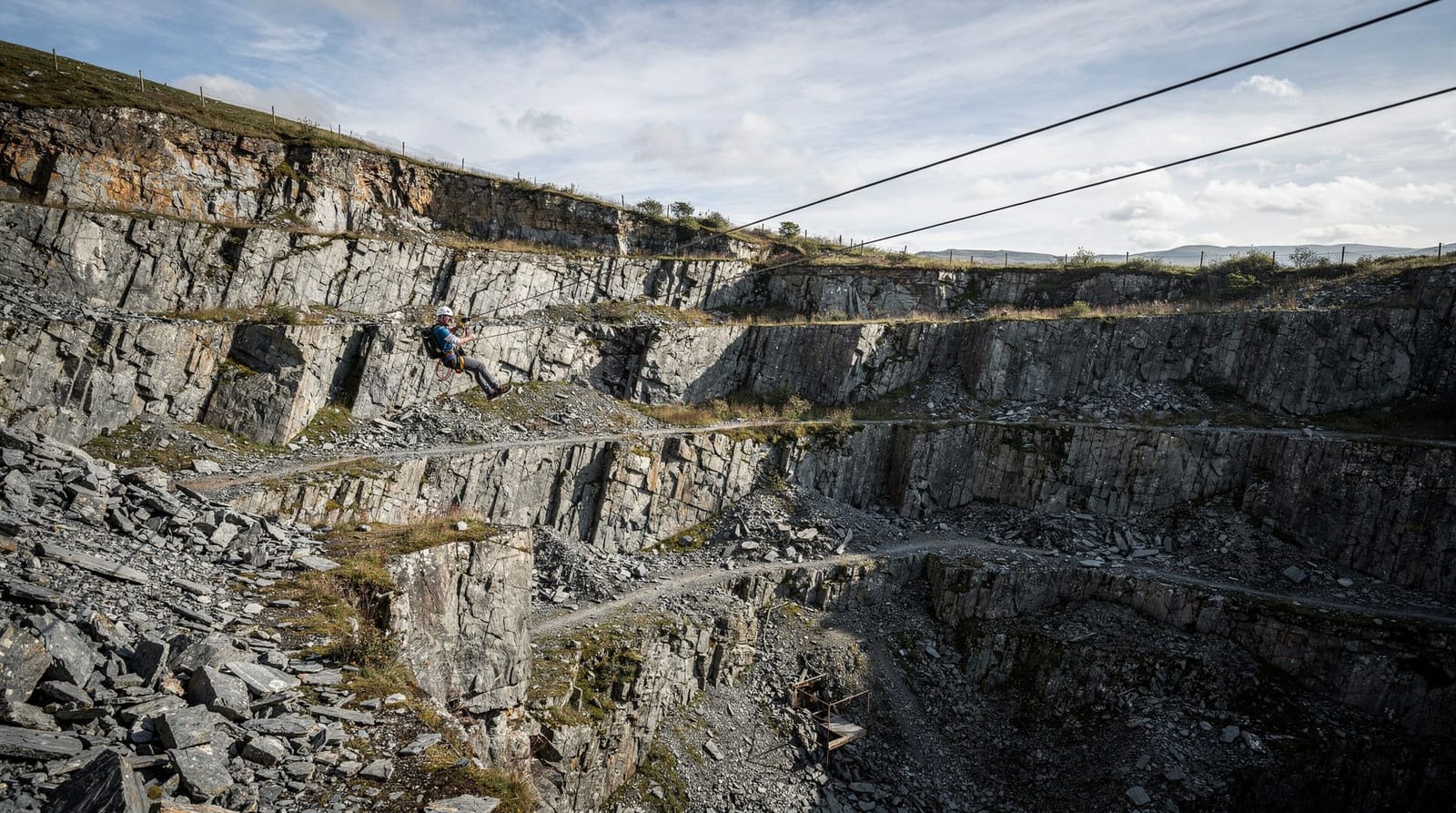
Much of North Wales’s modern adventure tourism industry exists because of what came before it: 19th-century slate quarrying left behind vast man-made caverns, flooded quarry faces, and abandoned tunnel networks across Snowdonia, and rather than filling them in or fencing them off, operators over the past two decades have repurposed them into some of Britain’s most distinctive outdoor attractions.
That history explains why activities here feel different from adventure centres elsewhere in the UK — you’re not zip-lining across a purpose-built course, you’re crossing an actual disused slate quarry; you’re not bouncing on trampolines in a warehouse, you’re doing it inside a mountain that was hollowed out by hand over a century of industrial labour.
A rough guide to what things cost
Budgeting for a North Wales adventure trip is easier once you have a sense of the price spread across activities. At the affordable end, a kayak rental at Llanberis or a caving session at Betws-y-Coed typically runs £25-40 per person. Mid-range activities — guided Snowdon hikes, canoe tours beneath Pontcysyllte, Bounce Below at Llechwedd — sit roughly in the £30-50 range.
At the top end, Velocity 2 at Penrhyn Quarry runs closer to £90-95 per person, reflecting its unique scale and reputation. A family of four sampling two or three activities across a multi-day trip should realistically budget several hundred pounds beyond accommodation, transport, and food, though plenty of the region’s best experiences — walking to waterfalls, exploring Great Orme on foot, admiring Pontcysyllte from the towpath — cost nothing at all.
Zip lines and underground adventures
Zip World runs the region’s best-known sites: Velocity 2 at Penrhyn Quarry near Bethesda, one of the fastest zip lines in the world at speeds up to 100mph, and Bounce Below at Llechwedd in Blaenau Ffestiniog, an underground trampoline course strung through former slate caverns. A third site, Fforest near Betws-y-Coed, offers a gentler alpine coaster and treetop courses better suited to families. Prices and physical demands vary hugely between the three — see the full guide for a proper comparison before booking.
For a genuinely different kind of underground experience, the underground caving adventure in Snowdonia near Betws-y-Coed takes small groups into disused mine workings rather than a commercial show cave, requiring a bit more physical commitment (crawling, scrambling, and genuinely tight spaces) in exchange for a more authentic sense of exploring real historic mine tunnels.
The activity centres of Snowdonia are scattered across valleys with poor bus links, and a group with kit to carry needs a vehicle that waits: a private tour of North Wales in a Mercedes is the version built around that constraint.
Matching activities to the people you’re travelling with
Families with younger children generally get the most out of Bounce Below, the Fforest Coaster, and gentle waterfall walks around Betws-y-Coed, all of which offer genuine adventure-park appeal without the age and weight restrictions that rule out Velocity 2 or a full Snowdon summit hike for anyone under about ten.
Groups of friends or couples looking for a genuine adrenaline rush should prioritise Velocity 2 and a guided Snowdon sunrise hike, both memorable enough to anchor an entire trip around. Older visitors or those with limited mobility can still access a surprising amount of the region’s outdoor appeal through Great Orme’s tramway and cable car, gentle canal-side walks near Pontcysyllte, and the region’s more accessible waterfall viewpoints, none of which demand serious physical fitness.
Hiking Snowdon and beyond
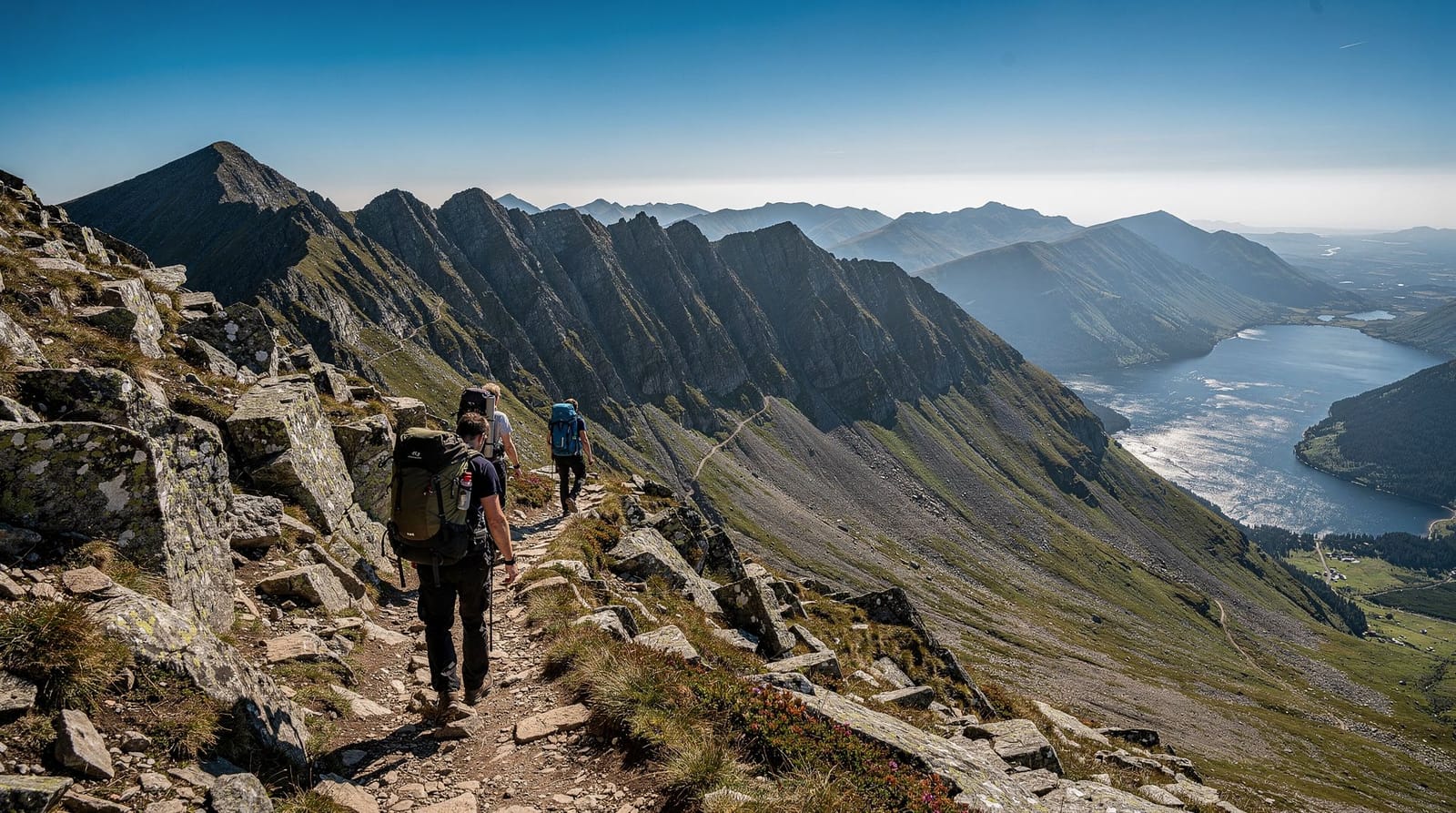
The obvious centrepiece hike is Snowdon itself, the highest peak in Wales at 1,085 metres, with six recognised routes ranging from the relatively gentle Llanberis Path to the genuinely demanding Watkin Path. For walkers who’d rather not navigate route choice and mountain weather alone, the Mount Snowdon summit hike from Caernarfon provides a qualified guide, which matters given how often underprepared solo walkers end up needing mountain rescue in poor conditions. Snowdon isn’t the only worthwhile hike in the region, but it’s the one visitors from Chester most often plan their whole day trip around.
Watersports on the region’s lakes and canals
Llanberis, at the foot of Snowdon and the terminus of the Snowdon Mountain Railway, sits on Llyn Padarn, a glacial ribbon lake that’s become a hub for lake-based watersports. The Llyn Padarn kayak rental with equipment lets you explore independently at your own pace, a good option if you want a gentler activity to follow (or precede) a demanding Snowdon hike the same trip.
Further east, the Pontcysyllte Aqueduct kayak or canoe cruise from Trevor, Wrexham puts you on the Llangollen Canal itself, paddling across Thomas Telford’s UNESCO World Heritage cast-iron aqueduct 126 feet above the River Dee — a genuinely different perspective on a structure most visitors only ever see from the towpath. See our dedicated Pontcysyllte Aqueduct guide for the full picture of how to visit, whether on foot, by canal boat, or on the water yourself.
Why so much of this is built on old slate quarries
A recurring theme across the region’s adventure attractions is repurposed industrial infrastructure. Zip World’s sites at Penrhyn Quarry and Llechwedd, the Bounce Below caverns, and even some of the caving experiences around Betws-y-Coed all make use of tunnels, quarry faces, and underground chambers originally excavated for slate extraction during the 19th and early 20th centuries.
This isn’t a coincidence — the same steep, dramatic terrain that made Snowdonia valuable for slate quarrying also makes it visually spectacular for modern adventure tourism, and the vast scale of the abandoned workings (some of Britain’s largest slate quarries operated here) left behind exactly the kind of large-scale, structurally sound void spaces that make attractions like Bounce Below possible in the first place. Understanding this connects the region’s adventure activities to its industrial past in a way that’s worth appreciating rather than treating each attraction as a standalone modern invention.
Coastal and headland activities
Not every adventure activity in the region involves mountains or quarries. Great Orme in Llandudno offers walking, a historic tramway, and Britain’s longest passenger cable car system on a limestone headland overlooking the sea — a gentler, coastal alternative if the physical demands of Snowdon or Zip World aren’t what you’re after that day.
What to pack for an adventure-focused North Wales trip
Regardless of which specific activities you choose, a few essentials cover most of this region’s outdoor pursuits. Waterproof, breathable outer layers matter more here than almost anywhere else in Britain, given Snowdonia’s genuinely high rainfall — pack them even for a forecast that looks dry, since conditions change fast at altitude and along exposed coastal headlands alike. Sturdy, broken-in walking shoes or boots cover hiking, waterfall walks, and most caving or canyoning activities, though watersports operators typically provide any specialist footwear needed.
A dry bag or waterproof phone pouch is worth carrying for kayaking, canoeing, or any activity near water, and a basic first aid kit is sensible for anyone venturing beyond the most accessible, well-trodden routes. Sun protection is easy to forget given the region’s reputation for rain, but clear summer days at altitude or on open water can burn just as effectively as anywhere else.
Waterfalls and gentler walking
For visitors who want scenery and a modest walk rather than a full adventure-sports day, Swallow Falls, Conwy Falls, and Aber Falls around Betws-y-Coed offer short, accessible routes to genuinely impressive waterfalls, most reachable in under an hour of easy walking from a car park.
A sample two-day adventure itinerary
For visitors who want a structured starting point rather than assembling their own itinerary from scratch: day one could combine a morning guided hike up Snowdon via the Pyg or Miners Track from Pen-y-Pass, followed by an afternoon relaxing with a kayak session on Llyn Padarn near Llanberis — physically demanding activity balanced against a gentler one, and both within a short drive of each other.
Day two could shift focus entirely to Betws-y-Coed, starting with the underground caving adventure or a Fforest zip line session in the morning, then an easy afternoon walking to Swallow Falls and Fairy Glen before finishing with dinner in the village itself. This kind of pairing — one demanding activity and one gentler one per day — tends to produce a more enjoyable, sustainable trip than trying to pack multiple high-intensity activities back to back, particularly for visitors not used to regular hillwalking or watersports.
Seasonal planning across activities
Most of the activities in this guide run a reduced or seasonal schedule outside April to October, and it’s worth checking specific opening dates well before a winter visit. Watersports on Llyn Padarn and the Llangollen Canal typically continue into shoulder seasons with appropriate cold-water gear, but caving and underground attractions like Bounce Below are among the few activities that operate close to year-round, since underground temperatures stay fairly constant regardless of surface weather. Snowdon hiking is possible in winter but requires genuine mountaineering experience and equipment rather than summer hillwalking gear, and Zip World’s more exposed outdoor zip lines are the most likely to be affected by high winter winds.
Accessibility across the region’s adventure activities
Accessibility varies enormously by activity. Watersports operators can often accommodate a wider range of physical abilities than they’re given credit for, with adapted kayaks and buoyancy support available at some sites with advance notice. Zip lines, caving, and full mountain hikes generally require independent mobility and a reasonable level of fitness, ruling out participation for visitors with significant mobility restrictions.
Gentler alternatives — the Great Orme’s tramway and cable car, canal towpath walks near Pontcysyllte, and the more accessible waterfall viewpoints around Betws-y-Coed — offer genuine outdoor engagement without the same physical demands, and are worth prioritising for mixed-ability groups rather than assuming everyone needs to attempt the same activity.
Realistic planning: don’t try to do everything in one day
The single most common mistake in planning a North Wales adventure day is underestimating driving times between sites. Penrhyn Quarry, Llanberis, Betws-y-Coed, and Llangollen are all within roughly an hour of each other by car, but “within an hour” across several stops adds up fast, especially on narrow, winding B-roads rather than motorway.
A more realistic approach is to pick one, or at most two, adventure activities per day and build the rest of the day around them rather than trying to cram in a zip line, a hike, and a kayak session before dinner. Our two-day Snowdonia adventure itinerary from Chester lays out a paced schedule that avoids this trap, splitting activities across two days with a base near Betws-y-Coed or Llanberis.
Booking logistics and lead times
Popular activities — Velocity 2, guided Snowdon hikes in summer, weekend Bounce Below slots — benefit from booking at least a few days ahead, and in peak July-August weeks, sometimes a week or more ahead for the most in-demand time slots. Watersports and caving experiences are generally easier to book closer to the date, though weekend availability still tightens up noticeably during school holidays. If your trip dates are fixed and non-negotiable, booking your must-do activities as early as reasonably possible removes the risk of arriving to find your first-choice slot already gone, particularly for anything involving Zip World’s flagship attractions.
Getting there from Chester
Almost everything in this guide is more realistically reached by car than by train from Chester — the A55 expressway gets you to the North Wales coast in under an hour, with onward roads into Snowdonia adding 20-45 minutes depending on the specific destination. A handful of activities, notably those around Llanberis and the coast, can be reached by a combination of train and local bus, but with meaningfully longer journey times. See our Chester to North Wales day-trip guide for the full transport breakdown, and our Chester to Snowdonia guide for a route focused specifically on the mountain interior.
Safety and weather, honestly
Snowdonia’s weather is genuinely changeable, and several of these activities — hiking, kayaking, and the more exposed zip lines — are directly affected by wind, rain, and visibility. Operators will cancel or modify sessions for safety rather than run them regardless, which is the right call even when it’s disappointing on the day. Build a buffer day into your itinerary if a specific activity matters to you, rather than a single make-or-break slot with no flexibility, and always check current safety guidance and age or fitness requirements before booking rather than assuming a listed activity suits every member of your group.
Comparing the three main activity hubs
North Wales’s adventure scene clusters around three loose hubs, and knowing which one suits your trip saves a lot of driving between them.
| Hub | Best for | Signature activities | Realistic time needed |
|---|---|---|---|
| Llanberis / Snowdon | Hiking, lake watersports | Snowdon summit hike, Llyn Padarn kayaking | Full day |
| Betws-y-Coed / Blaenau Ffestiniog | Underground and family activities | Caving, Bounce Below, Fforest coaster, waterfalls | Half to full day |
| Llangollen / Trevor | Canal watersports, gentler pace | Pontcysyllte aqueduct kayak/canoe | Half day |
Penrhyn Quarry, home to Velocity 2, sits closer to Bethesda and the coast, so it’s often paired with a Llanberis or Betws-y-Coed day rather than treated as its own hub.
Group size and booking as a package
Larger groups — extended families, stag or hen parties, work trips — often get better value booking several activities as a loosely coordinated package through one operator’s regional network rather than piecing together bookings site by site, since some operators offer modest discounts for combining a zip line session with Bounce Below on the same day.
It’s worth asking directly when booking rather than assuming the discount is automatic or advertised prominently. For groups over about eight people, contacting the operator ahead by phone or email to confirm they can accommodate you as a single group (rather than splitting across separate time slots) avoids an awkward situation on the day where half your party ends up on a different departure.
Solo travellers and adventure activities in North Wales
Most of the activities covered here work perfectly well solo — kayaking, caving, and Zip World’s attractions all run scheduled group sessions that solo travellers simply join, and a guided Snowdon hike is arguably a better solo option than an unguided attempt, since you get local knowledge and a group to walk with rather than tackling Wales’s highest mountain entirely alone.
The one activity where solo travellers sometimes feel the odd one out is the two-day itinerary structure suggested above, built around pairing a demanding morning with a relaxed afternoon — solo travellers can follow the same structure just as easily, and several operators specifically note that solo bookings are common and welcome, particularly for the caving and watersports sessions.
Common mistakes to avoid
Honest verdict
Frequently asked questions about Adventure activities in North Wales
Do I need to book North Wales adventure activities in advance?
For the popular ones — Velocity 2, guided Snowdon hikes in summer, weekend Bounce Below slots — yes, a few days ahead at minimum, and a week or more ahead in peak July-August. Watersports and caving experiences are usually easier to book closer to the date, though weekend slots still tighten during school holidays.Is North Wales adventure tourism suitable for beginners?
Mostly yes. Kayaking at Llanberis, canoeing beneath Pontcysyllte, Bounce Below and the gentler Fforest courses all suit first-timers with no prior experience, since operators run a safety briefing and provide equipment. A full Snowdon summit hike and Velocity 2's top speeds ask more of beginners physically and mentally, so start with a guided option rather than going solo if you're new to hillwalking.
Top experiences
Bookable activities with verified prices and instant confirmation on GetYourGuide.