Snowdon Mountain Railway guide
From Chester: Full-Day Guided North Wales Sightseeing Tour
What does the Snowdon Mountain Railway cost and when does it run?
A return trip from Llanberis to the summit of Snowdon (Yr Wyddfa) costs roughly £45-£55 for adults depending on the locomotive and season, with the railway operating from mid-March to early November. It closes over winter because ice makes the upper track unsafe, and even in season bad weather can turn trains back before the top.
Why Llanberis is the only place you can ride to the summit
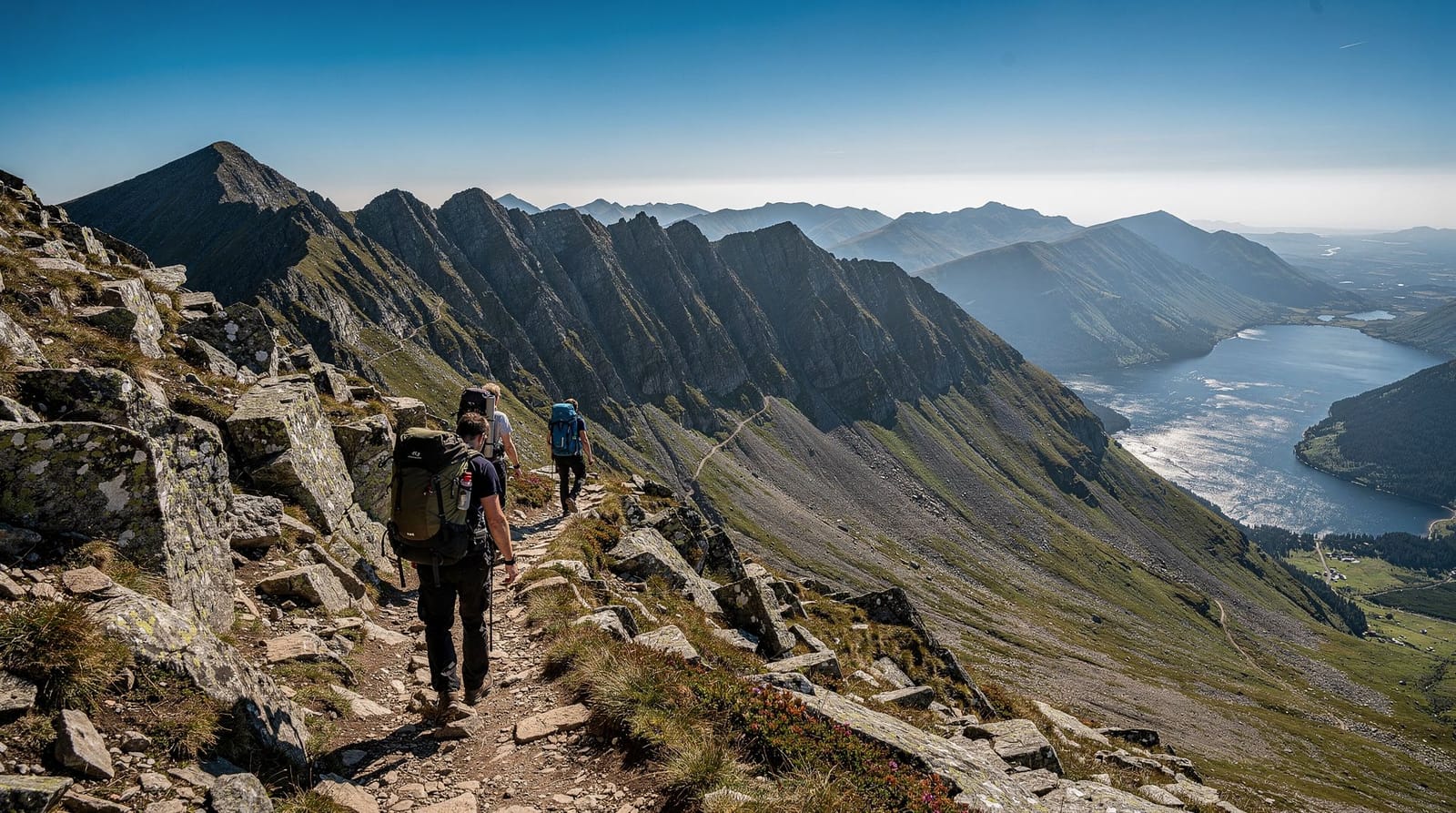
Snowdon, or Yr Wyddfa in Welsh, is the highest mountain in Wales at 1,085 metres, and the Snowdon Mountain Railway is the only public rack-and-pinion railway in Britain. It has run from Llanberis to (almost) the summit since 1896, and it remains the single easiest way to stand on top of Snowdon without walking a step. That matters more than it sounds: the other five routes up the mountain are proper hikes of 7-9 miles round trip over rough, exposed terrain, and none of them are realistic for young children, anyone with limited mobility, or a rushed itinerary from Chester.
The railway starts at Llanberis station, a 45-50 minute drive from Chester via the A55 and A5, or a longer trip by public transport that usually means a train to Bangor and a bus onward — there is no direct rail line into Llanberis itself, which is one of the few gaps in an otherwise good North Wales rail network. Most visitors drive, and the main Victoria Terrace car park in Llanberis fills early on clear summer days, so arriving by 9am is a reasonable target if you have a specific train time booked.
| Where | Llanberis station, ~45-50 min drive from Chester |
| Cost | Around £37-£45 diesel return, £50-£55 steam |
| Time needed | 2.5-3 hours round trip |
| Getting there | Car, guided tour from Chester, or train to Bangor plus bus |
| Best time | Mid-March to early November; book ahead for July-August |
A brief history: built by a private company, opposed by locals
The railway was built by the Snowdon Mountain Tramroad and Hotels Company and opened on Easter Monday 1896, though its very first day of public service ended in disaster: a locomotive derailed on the descent, killing a passenger, and the line was closed for safety improvements before reopening properly the following year.
Rack-and-pinion technology — a toothed rail running between the two normal rails, engaged by a matching gear under the locomotive — was chosen specifically because Snowdon’s gradient (in places over 1 in 5.5) is far too steep for ordinary friction-drive trains. The system was imported from Switzerland, and several of the original steam locomotives, built by the Swiss Locomotive Works in Winterthur, are still in service well over a century later, restored and maintained by the railway’s own engineering team.
Not everyone welcomed the railway when it was proposed. Local opposition at the time worried, not unreasonably, that a railway to the summit would cheapen the mountain and encourage exactly the kind of casual, underprepared visitor that mountain rescue teams still deal with today. That tension between accessibility and wildness has never really gone away, and it’s worth holding in mind: the railway makes the summit reachable, but it does not make the mountain itself any less serious a place, particularly once you step off the train.
Diesel or steam, and what it actually costs
Two types of locomotive work the line: modern diesel railcars, which run most services, and a small number of vintage steam locomotives, some dating to the original 1890s fleet, which operate on selected dates as a premium heritage experience. Fares vary by locomotive and season. As a working guide for 2026: expect roughly £37-£45 return for a standard diesel service and £50-£55 for steam, with single (one-way) tickets available at a lower price if you plan to walk down. Children’s fares are typically around 60% of the adult price, and family tickets can offer a modest saving over buying individually for two adults and two or more children.
Ticket types are worth understanding before you book. A standard return gets you a fixed departure time up and a fixed (or sometimes flexible, subject to availability) time back down, with roughly 25-30 minutes at the summit in between. A single ticket to the summit, intended for walkers who plan to descend on foot via the Llanberis Path, costs less than a return but still requires booking a specific ascent time. There is no ticket for riding down only without an accompanying ascent — the railway is not set up as a one-way shuttle service for hikers who’ve walked up, and asking at the ticket office on the day is unlikely to secure a spot on a fully booked train.
The journey covers about 4.7 miles and climbs nearly 1,000 metres, threading along a shelf cut into the mountainside with views back over Llyn Padarn and, on a clear day, across to Anglesey. It is genuinely dramatic in good weather and genuinely miserable in bad weather, because the open sections offer no real shelter from wind and rain once you’re above the treeline.
Season and the winter closure
The railway typically operates from mid-March through the end of October or first week of November, then closes for winter. This is not a marketing decision — it’s a safety one. Above Clogwyn station, ice and snow on the track make the rack-and-pinion mechanism unreliable, and the exposed upper section becomes genuinely dangerous for both trains and any pedestrians who might be on the mountain. If you’re planning a Snowdonia trip for December through February, cross the railway off your list and look instead at winter hiking on Snowdon, which requires proper mountaineering equipment and experience, or simply admire the mountain from lower ground.
Even within the operating season, weather turnbacks at Clogwyn are common — probably more common than most visitors expect. High wind, low cloud, or ice at altitude can force trains to stop short of the summit and return, sometimes with only a partial refund or none at all depending on how far the train got. This is worth building into your expectations: book for a morning slot if possible, since conditions tend to deteriorate through the day, and don’t schedule the railway as the single make-or-break activity of a North Wales day trip.
What’s at the top
The summit terminus opens onto Hafod Eryri, the visitor centre completed in 2009 to replace the much-maligned 1930s café that Prince Charles once called “the highest slum in Wales.” Hafod Eryri has a café, toilets, and viewing windows, and on a clear day the views extend across Snowdonia, the Llŷn Peninsula, and sometimes as far as the Isle of Man or Ireland. On a cloudy day — which is often — you may see nothing but grey mist, which is simply the reality of Welsh mountain weather and not a reason to cancel; the train ride itself is worth doing regardless.
Space at the summit is limited and shared with hikers who have walked up via the Llanberis Path, Pyg Track, or Miners Track, so it can feel crowded in July and August. Trains typically allow around 25-30 minutes at the top before the return journey, though this varies with the day’s schedule. The actual highest point of the mountain, marked by a modest stone trig point, sits a short walk above and beyond Hafod Eryri itself, and it’s genuinely worth the extra few minutes to reach it and take the obligatory summit photo rather than stopping at the visitor centre terrace.
Doing it as part of a bigger day
Llanberis itself has enough to fill a half day beyond the railway: the National Slate Museum (free entry) sits at the old Dinorwic quarry site and gives real insight into the industry that shaped this entire region, Llyn Padarn offers a lakeside path and kayak rental, and the Electric Mountain visitor centre explains the Dinorwig pumped-storage power station carved into the mountain opposite — an extraordinary feat of engineering hidden almost entirely inside the hillside. If you’re driving rather than relying on rail connections, this makes Llanberis a natural base for a full day rather than a quick in-and-out for the railway alone.
For food, Llanberis has a reasonable spread of cafés and pubs along the High Street geared toward walkers and railway visitors, generally straightforward pub-and-café fare rather than fine dining — sensible given most visitors arrive either before or after a physically demanding day on the mountain. Prices are broadly in line with the rest of North Wales: a pub lunch typically £12-18, a café sandwich and coffee £8-10.
For visitors without a car, joining a organised day tour from Chester solves the access problem in one move. The full-day guided North Wales sightseeing tour from Chester typically routes through Snowdonia and can be combined with independent time in Llanberis if the itinerary allows, though you should confirm with the operator whether the railway ticket itself is included or needs booking separately — most general sightseeing tours do not include the SMR fare, since it is a separate, non-affiliated attraction.
If you’d rather hike up and treat the railway as a one-way descent option (or skip it and hike both ways), the Mount Snowdon summit hike from Caernarfon and the guided Snowdon sunrise hike both give you a qualified guide and transport logistics sorted, which matters on a mountain where underprepared walkers make up a disproportionate share of the annual mountain rescue callouts.
What the ride actually feels like
Photographs of the railway tend to flatten what is, in person, a fairly intense sensory experience. The diesel railcars run at a slow, steady crawl — around 4-5mph on the steepest sections — which sounds unremarkable until you’re pressed against the window watching the valley floor drop away almost vertically to one side, with Llyn Padarn shrinking to a thin silver ribbon below.
The rack mechanism itself produces a distinctive clanking, grinding rhythm that’s audible throughout the climb, different again on the steam trains, where the additional noise and smell of coal smoke adds a genuinely different, more visceral character to the journey. Windows on most carriages open at least partially, and on a still day the temptation to lean out for photographs is strong — resist it on the steeper sections, since the trackside drop is real and the railway’s safety briefings exist for good reason.
The transition partway up is worth watching for: the lower slopes are grassy and sheep-grazed, genuinely pastoral, while above Clogwyn the vegetation thins out fast and the landscape turns to bare rock and scree, weather permitting visibility. It’s a compressed version of the altitude change you’d otherwise only notice on a multi-hour hike, condensed into about 45 minutes of train travel, and it’s part of what makes the railway worth doing even for visitors who could physically manage the walk.
Common mistakes first-time visitors make
The single most common error is treating the railway as a guaranteed summit ticket rather than a weather-dependent one. Visitors who’ve pre-booked months in advance sometimes arrive expecting a fixed, unchangeable experience, and are caught off guard when staff explain a turnback risk on the day. A related mistake is underdressing: because Llanberis itself can be a pleasant 18-20°C in summer, some visitors board in shorts and a t-shirt with no additional layers, only to find the summit considerably colder and windier than expected — pack a proper waterproof and a warm mid-layer even on a forecast that looks generous at valley level.
Another frequent misstep is arriving at the station without a pre-booked ticket and assuming a walk-up fare will be available, particularly on a summer weekend. The ticket office does sell same-day tickets when capacity allows, but on popular dates this capacity is often gone by mid-morning, and visitors who assumed they could simply turn up sometimes end up settling for a later slot than they wanted, or missing the day entirely. Booking online in advance, even a day or two ahead rather than months, removes this risk almost entirely.
Accessibility
The railway is one of the more accessible ways to experience a genuine mountain summit in Britain, and the operator does accommodate wheelchair users on specific services with advance notice — contact the railway directly before booking if this applies to you, since not every carriage or timetable slot can accommodate a wheelchair and staff need to plan the right rolling stock. Hafod Eryri itself was designed with accessibility in mind, with level access from the platform to the main viewing areas, though the final stretch to the actual trig-point summit involves rougher, unsurfaced ground.
Getting there from Chester without a car
There is no direct train to Llanberis. The realistic public transport route is Chester to Bangor by rail (around 1 hour), then the T19 Sherpa’r Wyddfa bus service (seasonal, runs primarily in summer) or a taxi onward to Llanberis, adding another 30-40 minutes. This is workable but slow, and most visitors without a car choose either a guided day tour from Chester or a hire car for the day. If you’re building a full North Wales itinerary, our two-day Snowdonia adventure from Chester lays out a car-based route that includes Llanberis alongside Conwy and the coast.
Nearby alternatives worth knowing about
If the railway is fully booked or closed for the season, several other ways to experience the mountain remain open. The Great Orme Tramway and cable cars in Llandudno offer a comparable (much shorter and lower) rack-and-cable experience on the coast. For a genuine narrow-gauge steam trip through Snowdonia scenery rather than up a mountain, the Ffestiniog Railway and Welsh Highland Railway both run through the heart of the national park and operate on a more predictable, weather-resilient schedule since they don’t climb above 700 metres.
What the return refund and cancellation policy actually covers
Because weather turnbacks are a genuine, fairly common occurrence rather than a rare edge case, it’s worth understanding roughly how compensation works before you book. If a train is turned back partway up due to weather, the railway’s policy at time of writing typically offers a partial refund or a credit toward a future journey rather than a full cash refund, scaled to how far the train got before turning around.
Full cancellations by the railway itself (rather than a partial turnback) are more likely to be refunded in full. Policies can change season to season, so check the current terms directly on the railway’s own website when booking rather than assuming last year’s policy still applies — this is exactly the kind of detail worth confirming before, not after, a disappointing weather day.
A note on sustainability and visitor numbers
The Snowdon Mountain Railway carries a substantial number of passengers each season, and its existence is a genuine part of the ongoing tension between accessibility and preserving the mountain’s wilder character, discussed earlier in this guide. The railway’s operators and the national park authority have worked over recent years on managing visitor impact at the summit itself, including the design of Hafod Eryri to minimise its footprint and blend into the landscape rather than dominate it.
For visitors who want to reduce their own impact further, choosing off-peak months (May, June, September) over the busiest July-August weeks spreads demand more evenly and typically means a calmer, less crowded summit experience regardless of which locomotive you ride.
Practical checklist
Bring layers regardless of the forecast at sea level — the summit is routinely 10-15°C colder than Llanberis and frequently shrouded in cloud even when the valley is sunny. Wear proper shoes; the platform at the top and any walking around Hafod Eryri involves uneven, often wet stone. Cash and card are both accepted at the station café, but queues build fast between train departures, so eat before or after rather than during your slot. Toilets exist at both Llanberis station and the summit, but not on the train itself for the full journey, so plan accordingly, especially with children.
Parking at Llanberis costs a few pounds for the day at the main car parks; arriving well before your booked train time gives you a buffer for the walk from car park to station, which takes 10-15 minutes from the furthest overflow areas on a busy day. A tourist trap worth flagging: some private car parks close to the station charge considerably more than the main council-run options a few minutes further away, so it’s worth a quick check of signage before paying rather than taking the first space offered.
Combine your visit with the other heritage railways of North Wales if you’re touring the region over several days rather than trying to fit everything into one, since the SMR alone with travel time from Chester can easily consume most of a day.
Railway versus hiking: an honest comparison
| Railway | Hiking (Llanberis Path) | |
|---|---|---|
| Physical effort | None | Full day’s mountain walk |
| Time | 2.5-3 hours | 5-7 hours round trip |
| Weather risk | Turnback possible, but sheltered in the carriage | Full exposure to summit conditions |
| Cost | £37-£55 per person | Free beyond parking |
| Best for | Families, limited mobility, tight schedules | Fit walkers wanting the full mountain experience |
If you’re undecided, our Snowdon hiking routes guide covers all six walking paths in the same depth as this railway guide, and many visitors do both across a two-day stay — ride up one day, walk a different route the next.
Extending your day around Llanberis and Snowdonia
Beyond the railway and the immediate Llanberis attractions already covered, the wider area rewards a longer stay. Great Orme in Llandudno offers a gentler tramway-and-cable-car mountain experience on the coast, worth comparing if the SMR is fully booked or closed for the season.
For visitors building a full North Wales itinerary rather than a single-attraction day, our adventure North Wales guide covers Zip World and other activities that pair naturally with a Llanberis base, and the Snowdonia destination guide gives the fuller regional overview. If Conwy or Caernarfon Castle feature in your plans too, our Welsh castles guide helps sequence a multi-day North Wales trip around Chester.
Frequently asked questions about Snowdon Mountain Railway guide
Do I need to book Snowdon Mountain Railway tickets in advance?
Yes, strongly recommended in July and August. Trains sell out days ahead in peak summer, and walk-up tickets at Llanberis station are unreliable on weekends. Book directly through the railway's own website rather than a general tour marketplace, since GetYourGuide does not currently sell direct SMR tickets.Is the Snowdon Mountain Railway worth it if I can just hike up?
They serve different purposes. The railway is the only way to reach the 1,085m summit without walking, useful for anyone with limited mobility, small children, or bad weather forecasts. Hikers on the Llanberis Path walk alongside the same track and can see trains passing, but most choose to walk rather than pay for the ride down too.How long does the round trip take?
Around 2.5 to 3 hours in total — roughly an hour up, up to 30 minutes at the summit visitor centre Hafod Eryri (weather and platform space permitting), and an hour back down. Diesel services are slightly faster than the heritage steam trains.What happens if the weather is bad at the top?
Trains can be turned back at Clogwyn station, about two-thirds of the way up, if wind or visibility make the summit unsafe. This happens fairly often, even in summer. The railway does not always issue full refunds for weather turnbacks, so check the current policy when booking and pack for cold, wet, windy conditions regardless of the forecast in Llanberis itself.Can I combine the railway with a hike down?
Yes, and it is one of the more sensible ways to do Snowdon without committing to a full return walk. Buy a single ticket up, then descend on foot via the Llanberis Path, which shadows the railway line for most of its length and is the gentlest of the six main routes to the summit.Is the Snowdon Mountain Railway suitable for young children?
Yes, it's one of the more manageable ways for young families to reach a genuine mountain summit, since there's no walking involved. Bring layers for the summit's colder, windier conditions, and be prepared for a possible weather turnback, which younger children may find disappointing if the trip has been built up as a guaranteed summit visit.
Top experiences
Bookable activities with verified prices and instant confirmation on GetYourGuide.