Welsh castles guide — the essential fortresses near Chester
From Chester: North Wales and Caernarfon Castle Tour
Duration: 10 hours
Which Welsh castles are UNESCO World Heritage Sites?
Conwy, Caernarfon, Beaumaris and Harlech are jointly inscribed by UNESCO as "Castles and Town Walls of King Edward in Gwynedd" — all four built or substantially developed by Edward I during his conquest of North Wales in the late 13th century, and generally considered together as the finest surviving example of medieval military architecture in Europe.
| Where | North Wales coast, 1-2 hours from Chester |
| Cost | Roughly £8-12 per adult at each Cadw/English Heritage site; Flint free |
| Time needed | 1.5-2 hours per castle; 2 days for all four UNESCO sites |
| Getting there | Direct train to Conwy; car or tour for Caernarfon, Beaumaris, Harlech |
| Best time | Late spring/early summer for weather and lighter crowds |
Why base a castle trip in Chester specifically
Chester’s own layered Roman and medieval history, covered in our Chester history guide, makes it a genuinely fitting base for exploring the wider region’s castles rather than simply a convenient transport hub.
The same Anglo-Welsh frontier dynamics that shaped Chester’s Roman fortress of Deva Victrix and its later Norman earldom directly explain why this particular stretch of border country ended up so densely fortified over the following thousand years — Chester and the North Wales castles are chapters of the same continuous story rather than unrelated attractions that merely happen to sit within a day’s travel of each other. Chester’s rail connections up the North Wales coast, its position on the A55 corridor, and its own substantial hotel and dining infrastructure make it a genuinely practical base too, not just a historically appropriate one.
More castles per square mile than anywhere in Europe
Wales is widely, and credibly, cited as having a higher concentration of castles than any comparable area in Europe — estimates commonly put the total number of Welsh castle sites, from substantial standing ruins to barely visible earthwork mounds, at several hundred.
That density reflects centuries of conflict along the Anglo-Welsh border and, later, a concentrated and extraordinarily well-funded royal building programme under Edward I in the late 13th century, whose surviving fortresses remain some of the finest examples of medieval military architecture anywhere in Europe. For visitors based in Chester, North Wales holds the highest concentration of the region’s most significant sites, all reachable as day trips or short multi-day excursions.
This guide works as an overview and decision-making tool — which castles matter most, how they compare to each other, and how to sequence a visit from Chester — with links to dedicated, in-depth guides on each individual site for anyone planning a specific visit.
The UNESCO four: Conwy, Caernarfon, Beaumaris, Harlech
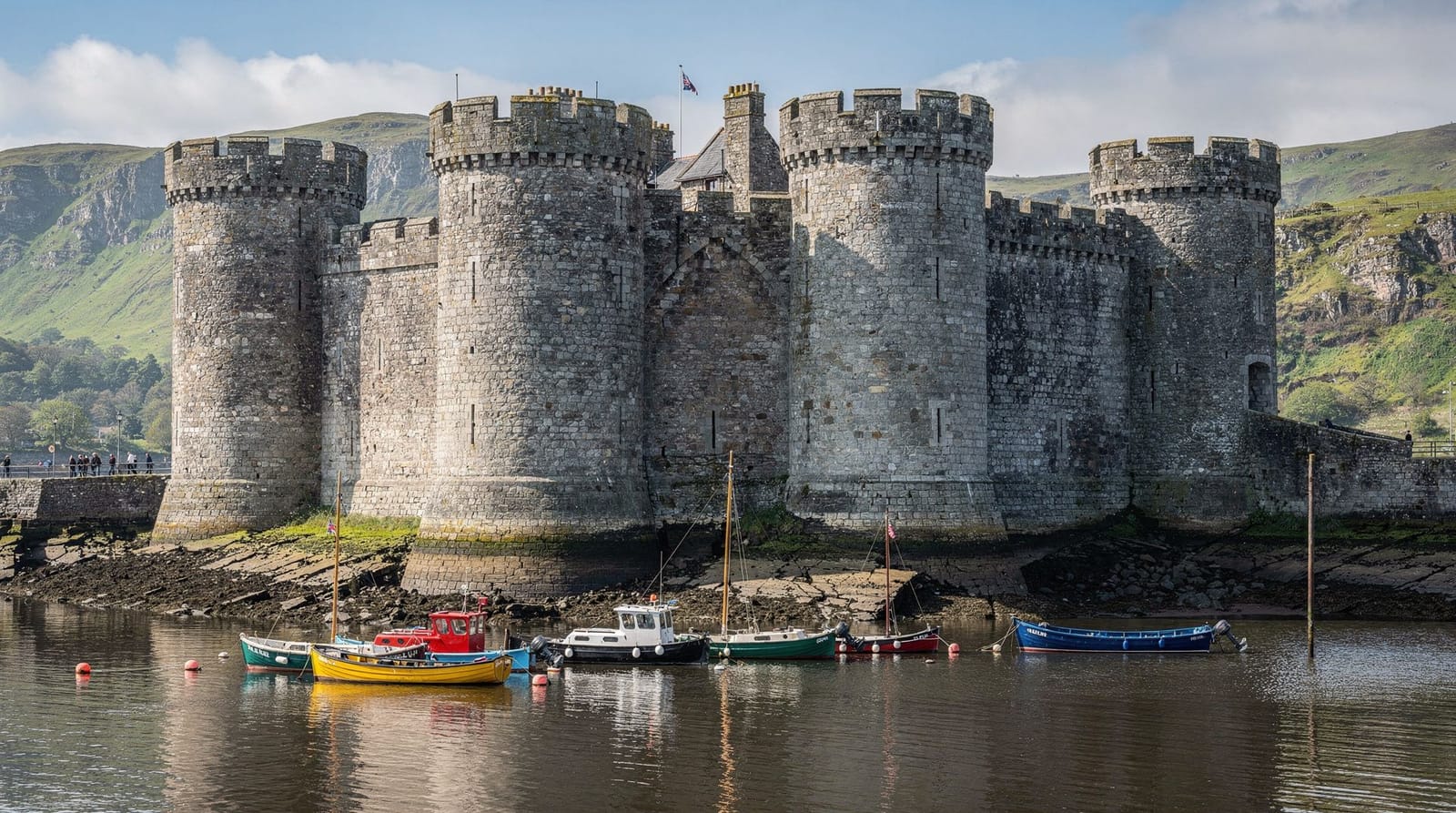
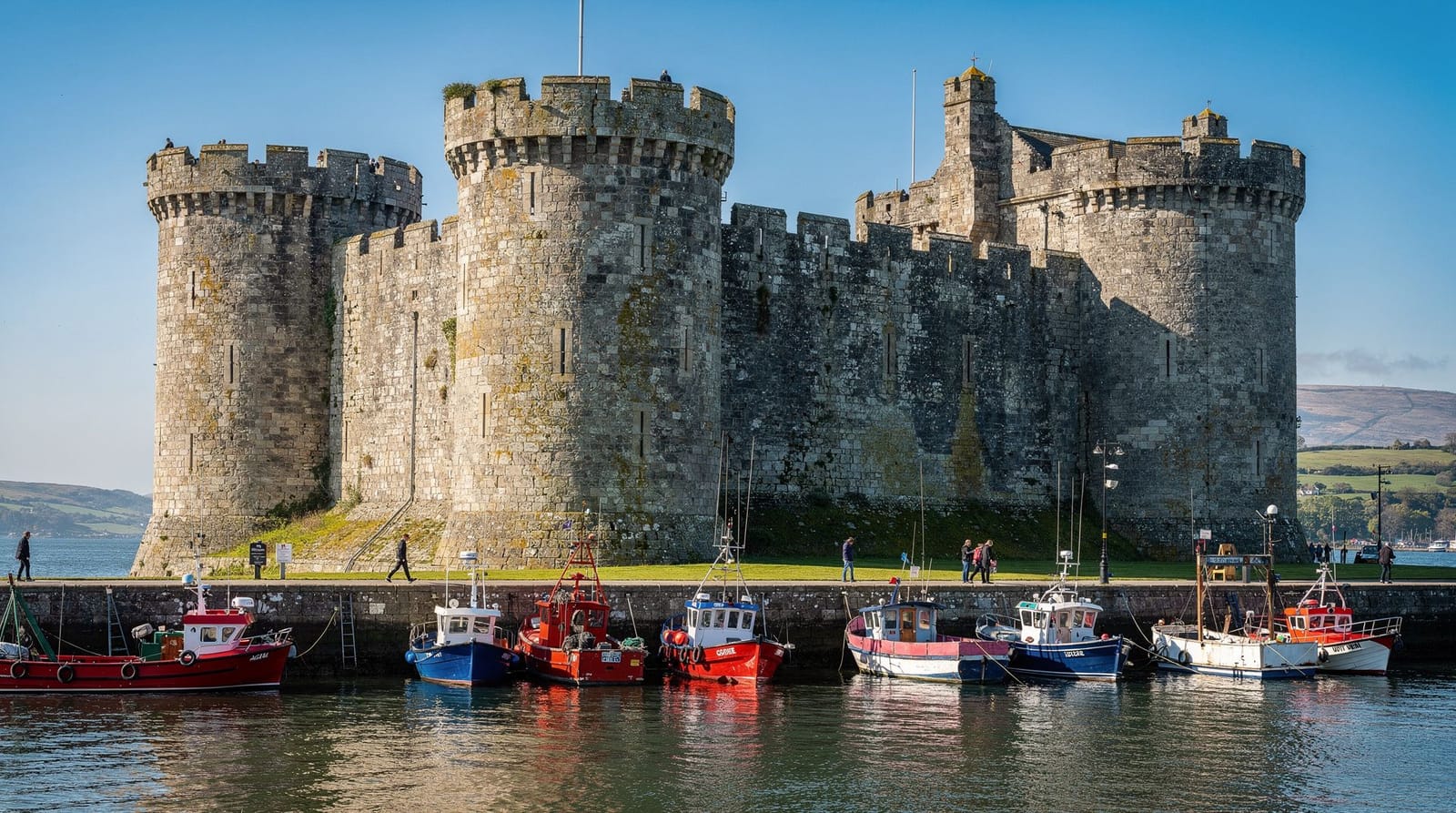
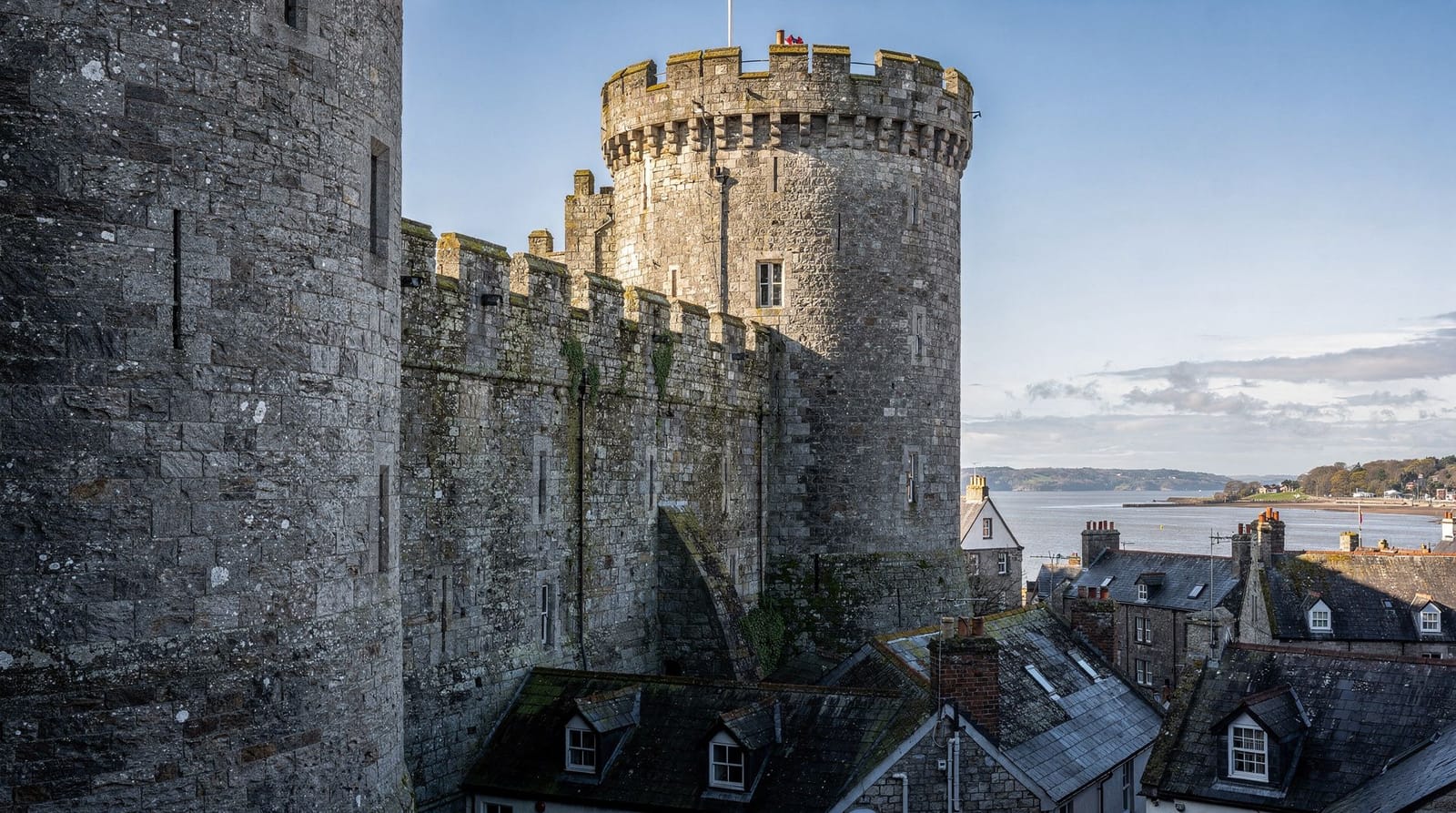
The four castles jointly inscribed by UNESCO as “Castles and Town Walls of King Edward in Gwynedd” represent the clear priority for any serious Welsh castle itinerary. Conwy Castle is the best-preserved of the group, built directly into a complete surviving town wall circuit and reachable from Chester via a direct, roughly hour-long train — the easiest of the four to visit without a car. Caernarfon Castle is the largest and most architecturally elaborate, its polygonal towers deliberately referencing Constantinople’s walls, and it carries the additional historical weight of hosting two royal investitures of the Prince of Wales, in 1911 and 1969.
Beaumaris Castle, on Anglesey, is widely considered the most theoretically perfect concentric castle design in Britain, though it was never fully completed and reads as a flatter, less immediately dramatic site than Conwy or Caernarfon as a result. Harlech Castle offers the most dramatic natural setting of the four, perched on a clifftop with a remarkable engineered stairway once connecting it directly to a sea that has since retreated over half a mile from the site — but it’s also the furthest from Chester and the most demanding to reach by public transport.
Why Edward I built this chain of castles
The full political and military context behind this castle-building programme — Edward I’s conquest of native Welsh rule following the death of Llywelyn ap Gruffudd in 1282, and the systematic ring of fortresses built to secure that conquest permanently — is covered in detail in our Edward I castles guide, which extends the story beyond the four UNESCO sites to include earlier and lesser-known fortresses like Flint, the first castle in Edward’s programme, built in 1277 during an earlier, less complete phase of the conquest.
How castle design evolved across the centuries
Understanding roughly how castle architecture developed over time makes visiting multiple Welsh sites considerably more rewarding, since the differences between them aren’t random but reflect genuine advances in military engineering across several centuries.
The earliest Norman castles built along the Welsh border, from the late 11th century onward, were typically simple motte-and-bailey designs — an earth mound topped with a wooden or later stone keep, surrounded by an enclosed bailey courtyard, quick to build and adequate against the relatively limited siege capabilities of the period. Many of these earliest sites survive today only as grassy earthwork mounds, their original timber structures long gone, scattered across the Welsh Marches in far greater numbers than the substantial stone fortresses most visitors come specifically to see.
By the 12th and early 13th centuries, stone keep-and-bailey castles, and eventually more sophisticated designs like Beeston Castle’s, incorporating early concentric principles picked up from Crusader-era fortifications in the eastern Mediterranean, represented a significant leap in defensive sophistication.
Edward I’s late-13th-century castle-building programme, informed by decades of this accumulated European and Crusader engineering knowledge and executed by James of St George’s highly experienced team, represents the culmination of medieval castle design in Britain — fully realised concentric defence at Beaumaris, integrated town-and-castle fortification at Conwy, and deliberate architectural symbolism layered onto pure military function at Caernarfon.
Understanding this progression turns a multi-castle trip from a repetitive parade of “old stone walls” into a genuinely legible story of advancing military technology and royal ambition across two centuries.
Beyond the UNESCO sites — closer options near Chester
Not every worthwhile castle in the region is one of the four grand UNESCO fortresses. Beeston Castle, just 11 miles from Chester in Cheshire rather than Wales itself, offers a completely different castle experience — a dramatic hilltop site with a fortification history stretching back to the Bronze Age, English rather than Welsh in its medieval castle phase, and reachable without the longer North Wales journey times.
Flint Castle, the very first of Edward’s Welsh fortresses, sits directly on the Chester-North Wales rail line and, while considerably more ruined and less visually dramatic than the UNESCO sites, offers genuine historical significance — including a direct connection to Shakespeare’s Richard II — for a fraction of the visitor numbers and zero admission charge.
How the castles compare — a quick decision guide
If your priority is ease of access from Chester without a car, Conwy is the clear choice, with its direct rail connection and manageable visit length. If scale, symbolism and royal history matter most, Caernarfon is worth the additional travel complexity involved in reaching it. If you’re interested in castle-design theory specifically, Beaumaris’s concentric perfection is genuinely remarkable even though the site itself is less visually dramatic than its sister castles.
If dramatic scenery and a good story about a vanished sea are what you’re after, Harlech delivers best, at the cost of the longest journey from Chester of the four. And if your time or budget is genuinely limited, Beeston Castle gives a worthwhile castle experience closer to Chester than any of the Welsh sites, albeit with a more fragmentary set of ruins.
Planning a multi-castle trip from Chester
Seeing more than one or two Welsh castles properly in a single day is difficult given the distances and, in Caernarfon and Beaumaris’s case, the lack of direct rail connections. The guided day tour from Chester covering North Wales and Caernarfon Castle is a practical single-day option that removes the transport logistics entirely, typically combining Caernarfon with other regional highlights in one guided day. The full-day guided North Wales sightseeing tour from Chester offers a similar all-inclusive structure with a different regional focus depending on the specific itinerary offered.
For visitors based in or near Llandudno rather than Chester itself, the Snowdonia National Park and Three Castles tour from Llandudno covers multiple regional castle sites in a single guided day, a useful option if your North Wales stay is centred on the coast rather than Chester. For a deeper, self-directed exploration of Conwy specifically, a private guided walking tour of Conwy’s medieval walls adds detailed historical context beyond what a shorter multi-stop day tour can typically cover for any single site.
Our Welsh castles 2-day itinerary is the most efficient structured route through Conwy, Caernarfon and Beaumaris across a weekend, sequenced to minimise backtracking across the Menai Strait crossings. The North Wales castles road trip itinerary extends further to include Harlech and other regional sites for visitors with more time and a car, while our Chester and North Wales 3-day itinerary balances castle visits with Snowdonia hiking and other regional attractions for a broader trip rather than a castle-focused one.
Best time of year for a Welsh castle trip
North Wales’s weather is genuinely changeable year-round, and there’s no single guaranteed-dry season, but some general patterns hold. Late spring and early summer (May-June) typically offer the best balance of reasonable weather and manageable crowds, before the peak school-holiday months bring the heaviest visitor numbers, particularly at Conwy and Caernarfon.
High summer (July-August) sees the busiest coach-tour traffic and the longest queues at ticket offices, though also the longest daylight hours for fitting in multiple stops in a single day. Autumn brings good photographic light and thinning crowds, while winter visits, while colder and shorter in daylight, offer genuinely quiet, atmospheric visits to sites that can feel crowded and rushed in August — a trade-off worth considering deliberately rather than defaulting to a summer visit purely by habit.
Combining castles with Snowdonia’s outdoor attractions
Because most of the region’s key castles sit on or near the North Wales coast, a castle-focused day or two combines naturally with Snowdonia’s inland mountain scenery for visitors with more time. Caernarfon in particular sits within easy reach of Snowdonia’s western approaches, and Conwy connects directly to the Conwy Valley line toward Betws-y-Coed and the mountains beyond.
Our Snowdonia destination guide and Snowdon hiking routes guide cover the outdoor side of a combined trip, and the Chester and North Wales 3-day itinerary is specifically structured to balance castle visits with a day of mountain scenery or hiking rather than treating the two as entirely separate trips.
A rough budget guide across the castles
Admission prices across the Cadw and English Heritage sites covered in this guide generally run in a similar band — roughly £8-12 for an adult ticket at each individual site, though Caernarfon’s larger scale typically sits at the higher end and Flint Castle, being unstaffed with no ticket office, is entirely free.
Family tickets and combined castle-and-walls tickets (at Conwy in particular) offer some savings over paying for each element separately. Transport costs vary far more significantly than admission fees — a direct train to Conwy costs a fraction of what a guided day tour or car hire to reach Caernarfon, Beaumaris or Harlech involves, so factor transport logistics into your overall budget planning at least as carefully as admission prices themselves.
Practical differences: Cadw versus English Heritage
The four UNESCO castles, plus Flint Castle and several other Welsh sites, are managed by Cadw, the Welsh Government’s historic environment service, while Beeston Castle in Cheshire falls under English Heritage, a separate organisation with its own membership and admission structure.
If you’re planning to visit several castles across both Wales and England on a longer UK trip, it’s worth knowing that a single membership with either body doesn’t cover the other — Cadw and English Heritage do periodically offer reciprocal discount arrangements for members of certain overseas heritage organisations, so it’s worth checking current terms if you hold a heritage membership from your home country before assuming no discount applies.
What guides won’t tell you (and what to ask instead)
On-site guides and audio tours at the busier castles necessarily give a fairly standardised version of the history, since they’re covering the same script for hundreds of visitors a day. If you want detail beyond the standard narrative, on-site staff and Cadw volunteers are often genuinely well-informed on specific niche questions — construction sequencing, comparisons between sites, or the archaeology of a particular tower — and are usually happy to go deeper than the printed panels if you ask directly rather than assuming the standard tour is the whole story.
Which castles work best for families
Families with limited time or young children are generally better served by Conwy or Beaumaris than the larger, more sprawling Caernarfon or the more remote Harlech.
Conwy’s compact scale and genuinely climbable towers hold children’s attention without overstaying its welcome, while Beaumaris’s flat, level layout is the most physically accessible of the four for pushchairs or less confident walkers, even if its unfinished, lower-lying ruins are less immediately dramatic to look at than its taller sister castles. Caernarfon’s regimental museum and sheer scale can work well for slightly older children or teenagers with more patience for exploring, but its longer, more complex journey from Chester makes it a harder sell for families managing young children on public transport specifically.
Beeston Castle’s woodland trails and dramatic but shorter climb offer a genuinely different, more countryside-oriented family day out closer to Chester, worth considering as an alternative to a full North Wales castle day if young children’s stamina or a tight schedule is a concern.
Tourist traps and honest expectations
Not every Welsh castle justifies extensive travel time, and it’s worth being honest about diminishing returns once you’ve seen two or three of the region’s best sites — the UNESCO castles share enough common design language, given they were mostly overseen by the same architect, James of St George, that a fourth or fifth similar site in a short space of time can start to feel repetitive rather than additive, particularly for visitors without a deep specific interest in medieval military architecture. Pacing a multi-castle trip across two or three days rather than cramming everything into one exhausting day tends to produce a more genuinely memorable experience at each individual site.
Parking and food pricing immediately around the busiest castles (Conwy and Caernarfon especially) run higher than a short walk away; each individual castle guide linked above covers specific local tips for avoiding the most obvious overpriced options near each site.
Photography and the best times of day at each site
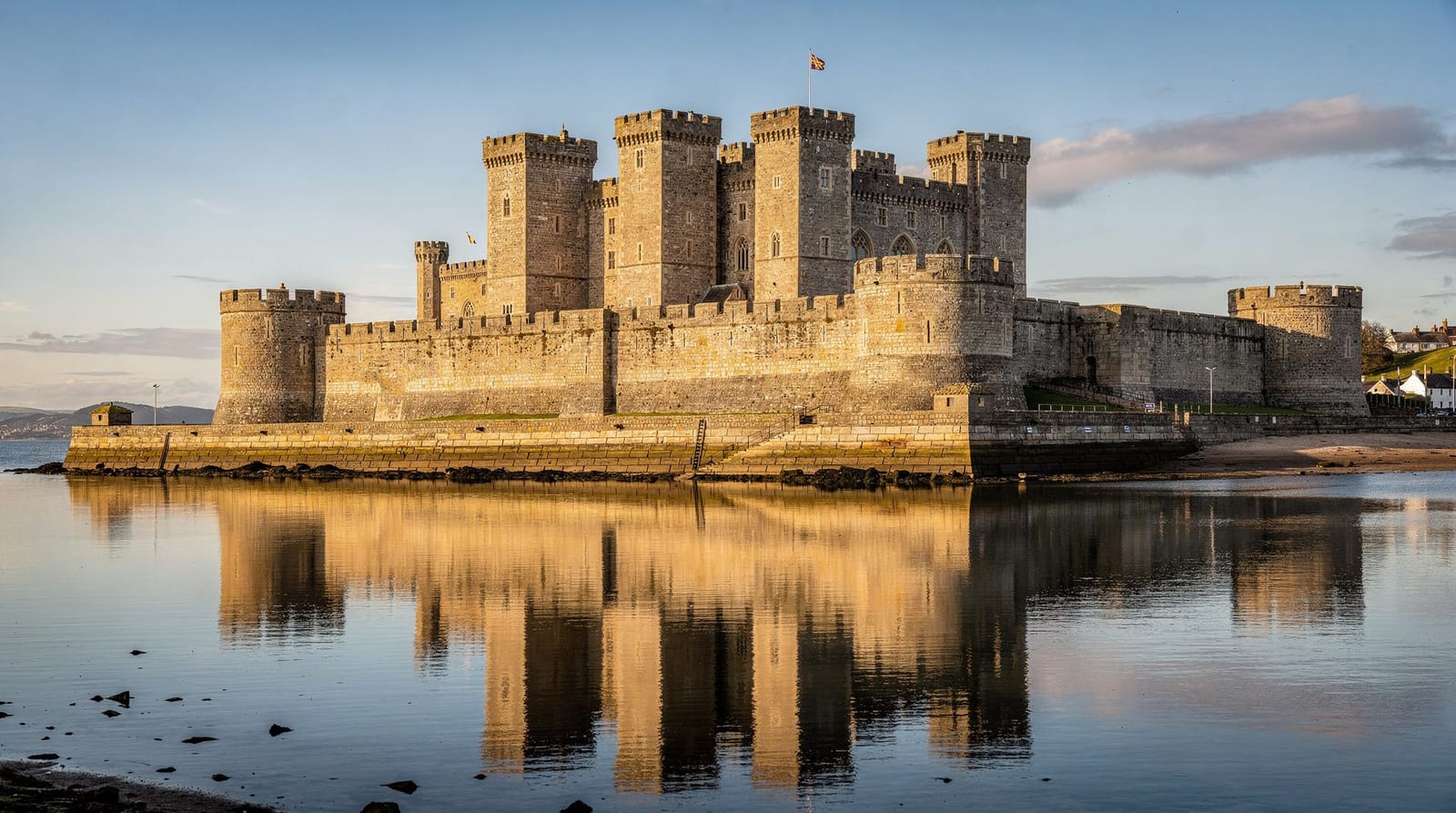
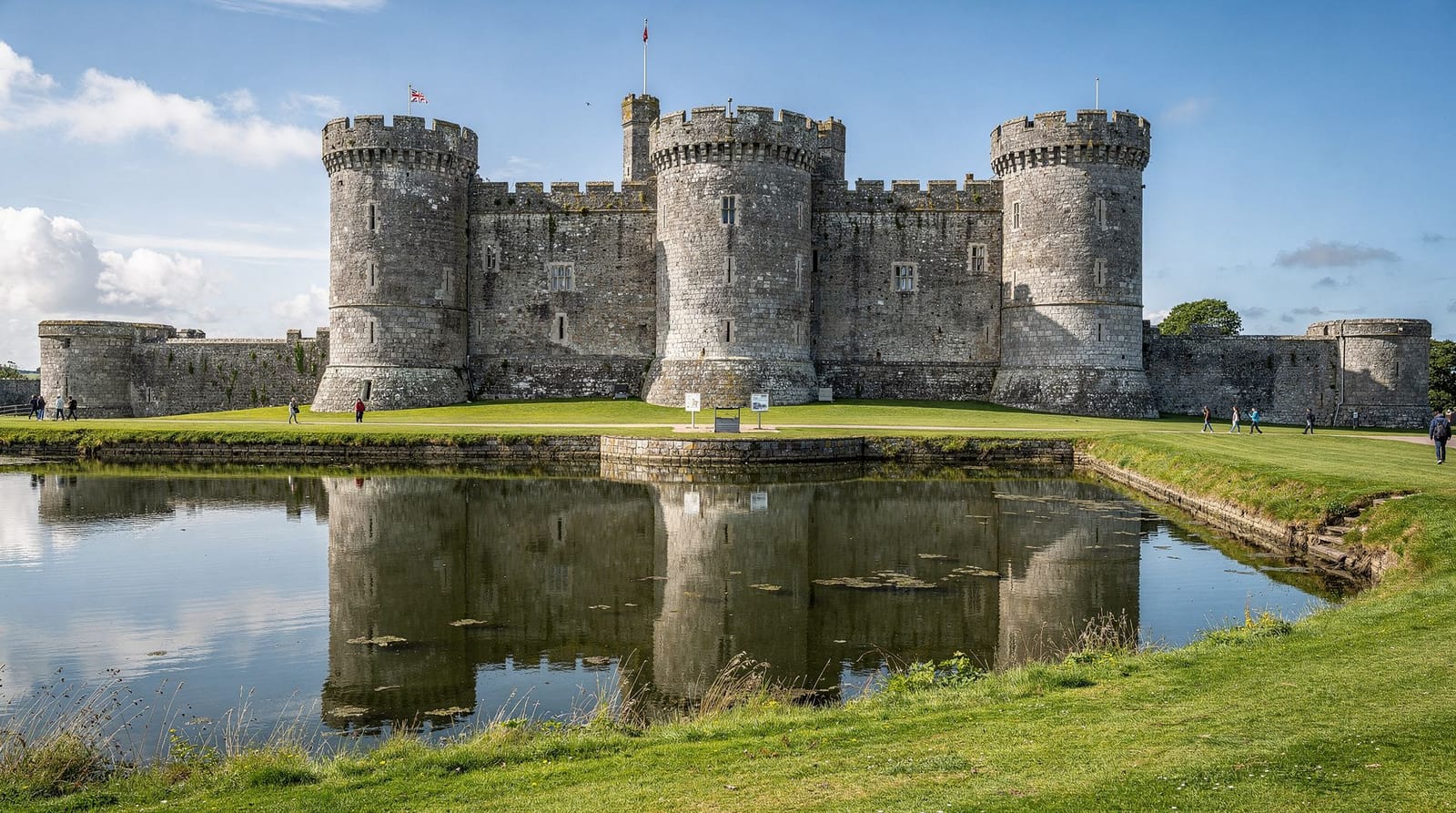
Conwy’s towers and complete wall circuit reward a walk around the exterior at golden hour, when the stone takes on a warm colour that daytime photographs miss entirely, while Caernarfon’s polygonal towers and harbour setting suit a wider shot taken from across the water on the Menai side. Beaumaris, being flatter and less dramatically sited, photographs best from within its own moat and outer ward rather than from a distance, since its concentric design is more visually interesting up close than as a silhouette.
Harlech’s clifftop position makes it one of the most photogenic of the four from almost any angle, particularly with the distant mountains of Snowdonia visible behind it on a clear day — arrive early if a crowd-free shot matters to you, since it’s a popular stop for coach tours by mid-morning.
What each castle actually costs beyond the ticket price
Admission tickets are only part of the real cost of a Welsh castle day. Factor in parking (typically £3-6 for a few hours at the busier sites), a guidebook or audio guide if you want more depth than the on-site panels provide, and food, which runs noticeably higher immediately beside the castle gates than a short walk into the surrounding town. A family of four visiting Conwy for a half day, including castle tickets, parking, and a modest lunch, should budget somewhere in the region of £60-80 total — considerably less than a similar day built around a guided tour, but with the trade-off of arranging your own transport and not having a guide’s context along the way.
A note on Welsh identity and the castles’ complicated legacy
It’s worth acknowledging directly, rather than glossing over, that these castles — however architecturally magnificent — were built as instruments of conquest, designed to permanently suppress Welsh political independence and, in several cases, sited deliberately on locations of prior significance to Welsh royal and religious identity.
Modern Welsh attitudes toward these sites are genuinely varied: many Welsh people take considerable pride in them as extraordinary feats of medieval engineering and as UNESCO-recognised world heritage, while others view their celebration as glossing over their origin as monuments to English domination, a tension that surfaced most visibly around the contested 1969 investiture ceremony at Caernarfon. Approaching these sites with this fuller context in mind — appreciating the architecture while understanding what it was built to achieve — makes for a more honest and ultimately more interesting visit than treating them purely as picturesque ruins.
Where to go next
For the fullest political and historical context behind why this particular chain of castles exists, read our Edward I castles guide. For individual site details, prices and current visiting information, see our dedicated guides on Conwy, Caernarfon, Beaumaris, Harlech, Beeston and Flint.
And for Chester’s own Roman-era fortification history, which set the pattern this whole region’s later castle-building followed, our Chester history guide and Deva Victrix guide provide the earlier chapters of the same long story.
The UNESCO four, side by side
| Castle | Access from Chester | Best known for | Family suitability |
|---|---|---|---|
| Conwy | Direct train, ~1hr | Best-preserved, complete town walls | Excellent |
| Caernarfon | Train + bus, or car | Scale, royal investitures | Good for older children |
| Beaumaris | Car, or tour | Theoretically perfect concentric design | Excellent, flat layout |
| Harlech | Car, longer drive | Dramatic clifftop setting | Moderate, more remote |
Combining castles with the rest of North Wales
A castle-focused trip rarely needs to stand alone. Our North Wales in a day guide shows how a single castle fits alongside coastal or mountain stops for visitors without a multi-day itinerary, and first time in North Wales covers how castles fit a broader introduction to the region.
If you’re pairing castles with Snowdonia’s outdoor side, our Snowdon hiking routes guide and Welsh Highland Railway guide cover the mountain half of a combined trip, and the North Wales castles road trip itinerary already referenced above remains the most efficient way to sequence several sites without excessive backtracking.
Frequently asked questions about Welsh castles guide
How many castles does Wales actually have?
Estimates vary depending on how ruins and earthwork remains are counted, but Wales is widely cited as having more castles per square mile than anywhere else in Europe, with several hundred sites ranging from substantial standing fortresses to barely visible earthwork mounds. Most visitors focus on a much smaller handful of the best-preserved, most historically significant sites, covered in this guide.Which Welsh castle should you visit if you only have time for one?
Conwy Castle is generally the best single choice for visitors based in Chester, combining excellent preservation, a direct train connection, a complete surrounding town wall circuit and a manageable visit length of around 1.5-2 hours. Caernarfon is the better choice if scale and symbolic history — including the Prince of Wales investitures — matter more to you than ease of access.What's the difference between Cadw and English Heritage castles in this region?
Cadw is the Welsh Government's heritage body, managing the four UNESCO castles (Conwy, Caernarfon, Beaumaris, Harlech) along with Flint Castle and others across Wales. English Heritage, the equivalent body for England, manages Beeston Castle in Cheshire. Both offer similar ticketing structures and membership schemes, but they're separate organisations with separate memberships, worth knowing if you're considering an annual pass for a longer UK trip.Can you visit all four UNESCO Welsh castles in one day from Chester?
Not comfortably. Conwy and Caernarfon can realistically be combined in a single long day with a car or a full-day guided tour, but adding Beaumaris (across the Menai Strait) or Harlech (considerably further south) in the same day makes for a genuinely rushed, low-value experience at each site. A 2-day itinerary is the realistic way to see all four properly.Why did Edward I build so many castles in North Wales specifically?
After decades of intermittent conflict, Edward I's 1282-83 campaign finally ended independent Welsh rule following the death of Llywelyn ap Gruffudd, the last native Prince of Wales. Edward built his chain of castles — Conwy, Caernarfon, Harlech and later Beaumaris, alongside earlier fortresses like Flint and Rhuddlan — to permanently secure his conquest, garrison English forces and project unmistakable royal authority over a region with a long history of resisting outside control.Are the Welsh castles worth visiting if you've already seen English castles like Warwick or Windsor?
Yes, and for a different reason. English castles like Warwick have been heavily remodelled over centuries for comfort and later tourism, while Wales's Edward I castles are far closer to pure, unaltered medieval military architecture, built in a single concentrated burst under direct royal pressure with minimal later domestic conversion. They read as genuine 13th-century fortresses rather than castles adapted into stately homes.Which Welsh castle is easiest to reach without a car?
Conwy, by a direct train from Chester of roughly an hour, followed by a short walk into the castle and town walls. Caernarfon, Beaumaris and Harlech all require a bus or car connection beyond the nearest rail station, making Conwy the clear choice for car-free visitors.Do children enjoy visiting Welsh castles?
Generally yes, particularly Conwy and Beaumaris, whose towers and layouts are climbable and manageable for a shorter attention span. Caernarfon's scale and Harlech's remoteness suit slightly older children or teenagers better than very young ones.
Top experiences
Bookable activities with verified prices and instant confirmation on GetYourGuide.