Getting around Chester
Chester: City Sightseeing Hop-On Hop-Off Bus Tour
Duration: 24-48 hours
What is the best way to get around Chester?
Chester's centre is compact enough to walk end to end in 20 minutes, so walking is the best way to see the Rows, the city walls and the Cathedral. Buses and Park & Ride cover the suburbs and racecourse-day crowds; a car is only useful for reaching North Wales or the Cheshire countryside.
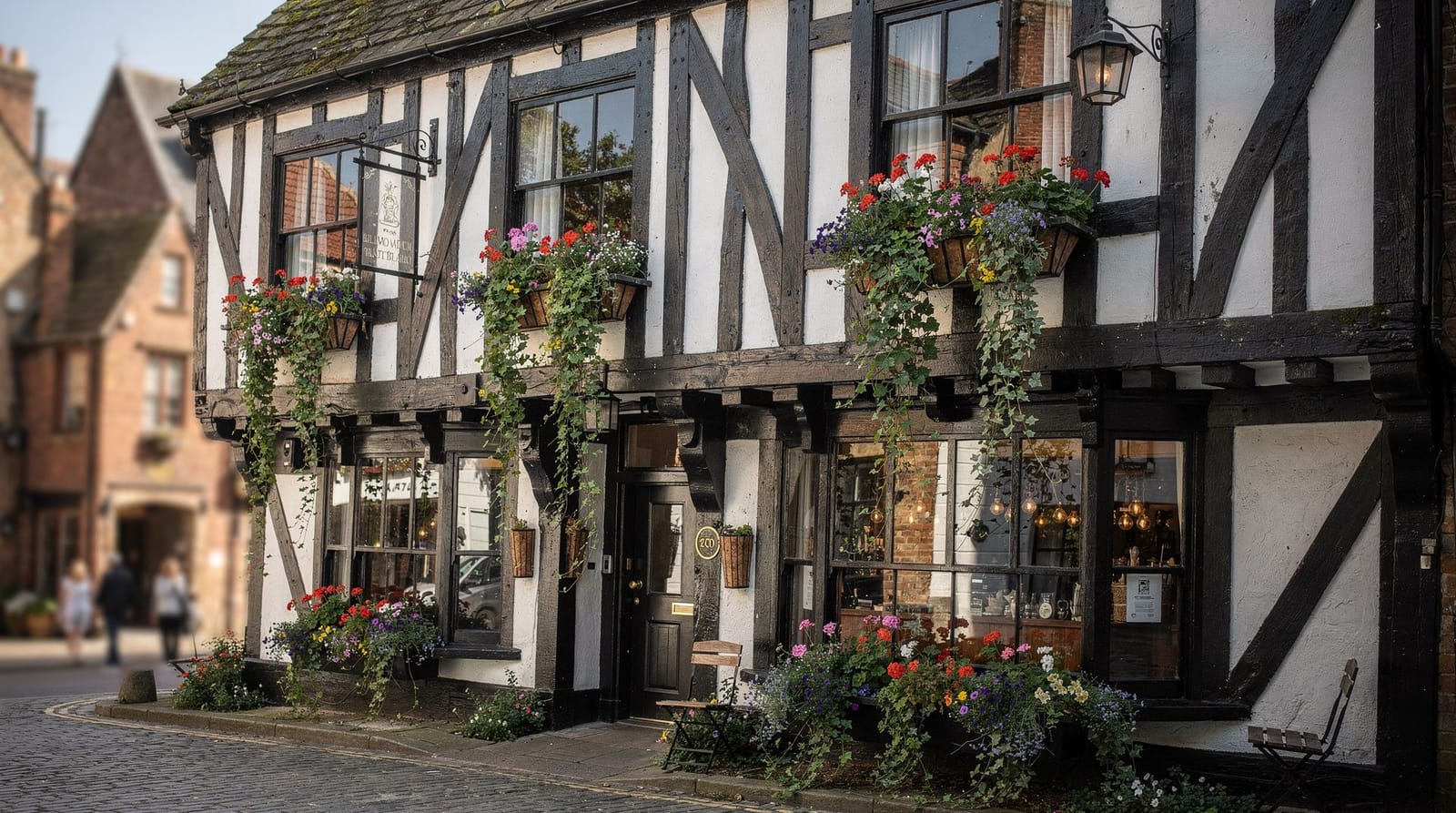
Chester was built for people on foot centuries before it had to deal with cars, and it still shows. The medieval street plan inside the walls means most of what visitors come for — the Rows, the Cathedral, the Cross, the Roman amphitheatre — sits within a 15-minute walk of itself. The practical decisions that actually matter are about the edges: how to get in from the station or the motorway, where to leave a car if you bring one, and how to reach the Welsh coast or Liverpool without wasting half a day on the wrong service.
| Where | Chester city centre, inside and around the walls |
| Cost | Free on foot; Park & Ride and buses a few pounds each way |
| Time needed | Centre is walkable end to end in ~20 minutes |
| Getting there | Station is a 15-20 min walk or short taxi from the centre |
| Best time | Any time; avoid driving in on race days or during the Christmas market |
The walled centre is a walking city
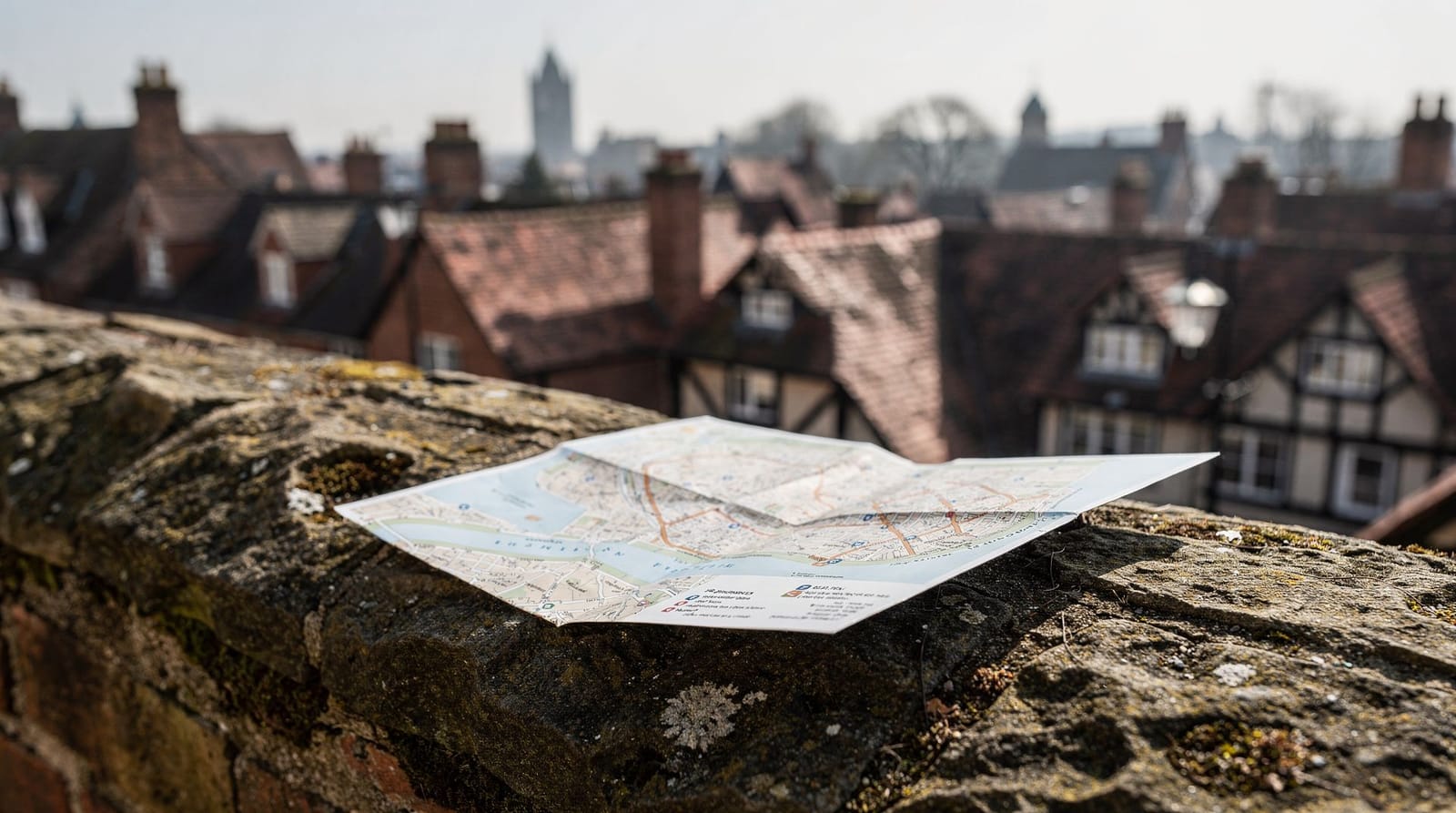
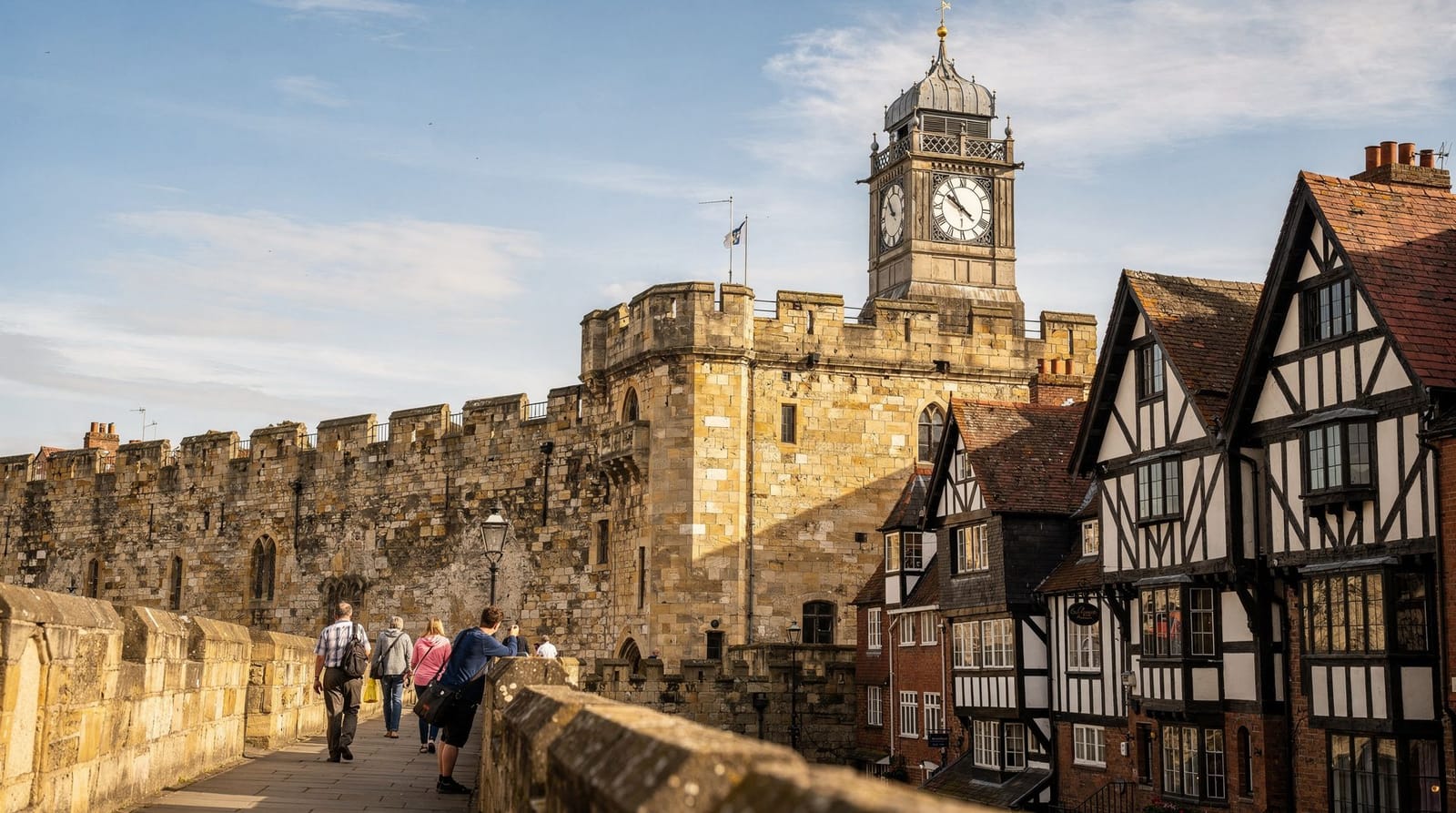
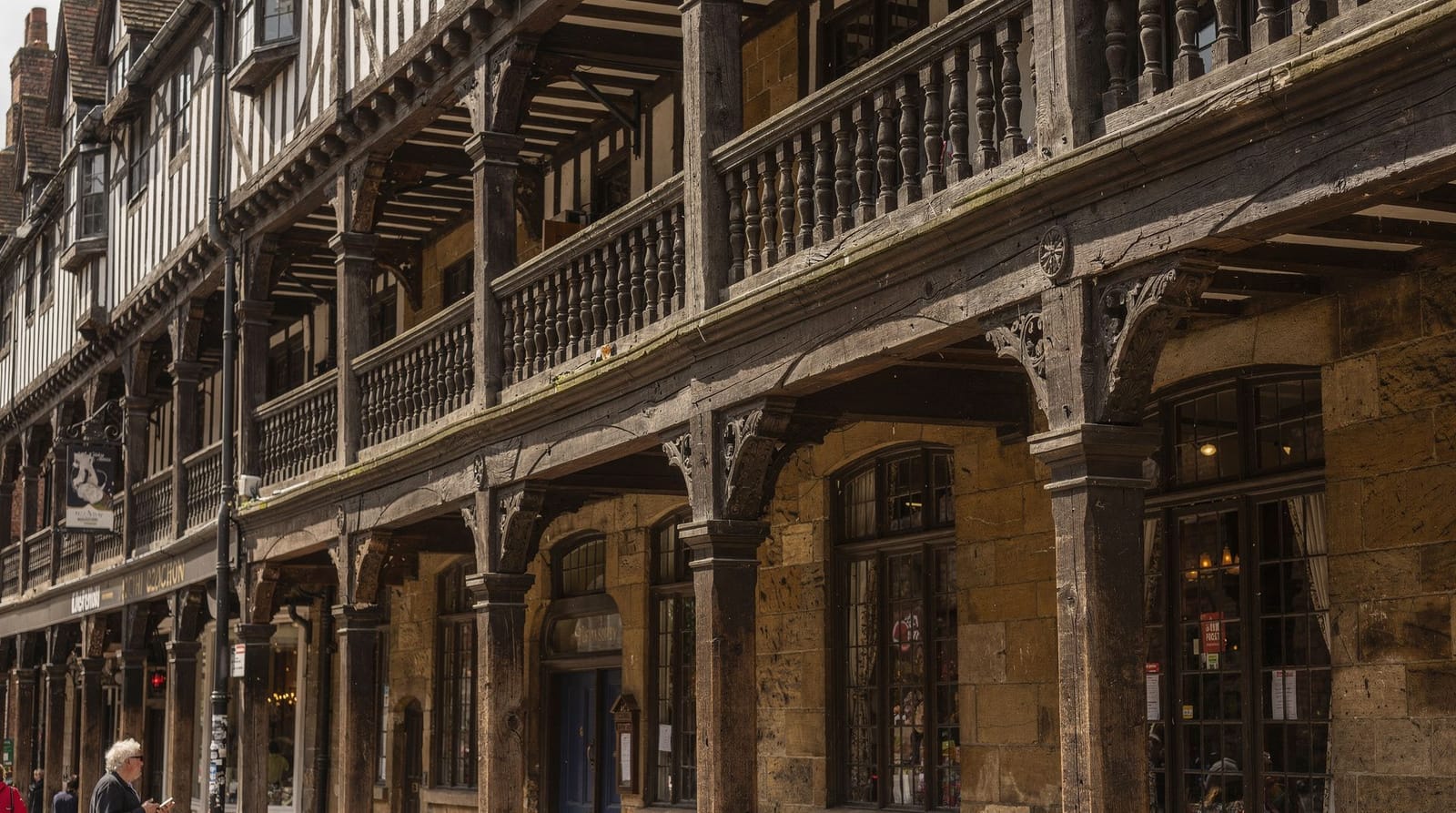
The city walls form a two-mile loop around the historic core, and walking even a section of them is the fastest way to get your bearings. From the Eastgate Clock, it’s about five minutes on foot to the Cross (the centre of the Rows), five more to the Cathedral, and another ten down to the Groves on the River Dee. Nothing central is more than a 20-minute walk from anything else central. For a first orientation, the Chester city walls walk guide covers the full loop with realistic timings, and the Rows explains the two-tier medieval shopping galleries that confuse most first-time visitors trying to navigate by street level alone.
Pavements are generally good, but the Rows themselves have uneven stone steps at each junction, and some sections of the walls have narrow, sloped stretches near Newgate and the amphitheatre. If mobility is a concern, the flattest and most level stretch of wall runs from Eastgate to the Cathedral; the steepest steps are around the Bridgegate and Newgate sections.
Chester railway station: the arrival point for most visitors
Chester station sits about a 15–20 minute walk north-east of the city centre, along City Road and Foregate Street, or a short taxi/bus ride if you’re carrying luggage. It’s a genuinely useful hub, not just an arrival point: direct or one-change services run to Liverpool Lime Street (around 45 minutes), Manchester (about an hour), Llandudno on the North Wales coast (roughly 1 hour 7 minutes), Wrexham (around 30 minutes) and Crewe (about 20 minutes, useful for London connections). If you’re planning day trips rather than driving, read Chester trains and day trips before you book anything — it breaks down which lines actually make sense for a day out and which involve a change that eats into your time.
Taxis rank outside the station forecourt and at Town Hall Square in the city centre; both are licensed hackney carriage ranks, and fares from the station into the centre are short (under £10 in normal conditions, more during Chester Races or the Christmas market when demand spikes). Ride-hailing apps operate in Chester but coverage and wait times are less consistent than in Liverpool or Manchester.
Buses: Park & Ride, city routes and day-trip coaches
Chester’s Park & Ride is council-run (Cheshire West and Chester) from three sites on the edge of the city — Wrexham Road to the south, Sealand Road to the north-west and Boughton Heath to the east — with frequent buses into the centre, usually every 10–15 minutes on weekdays. It’s the single best transport decision for anyone driving in, especially on event days. Full details, including which site suits which direction of arrival, are in Park & Ride in Chester.
Local city bus routes cover the suburbs, the racecourse and Chester Zoo, useful if you’re staying outside the immediate centre or visiting the zoo without a car — see Chester Zoo guide for the specific route. If you’re travelling further afield by road rather than rail, coach and organised day-tour pickups (including North Wales day trips) typically depart from the city centre or main hotels; cross-check pickup points against your specific ticket.
Driving and parking in the centre
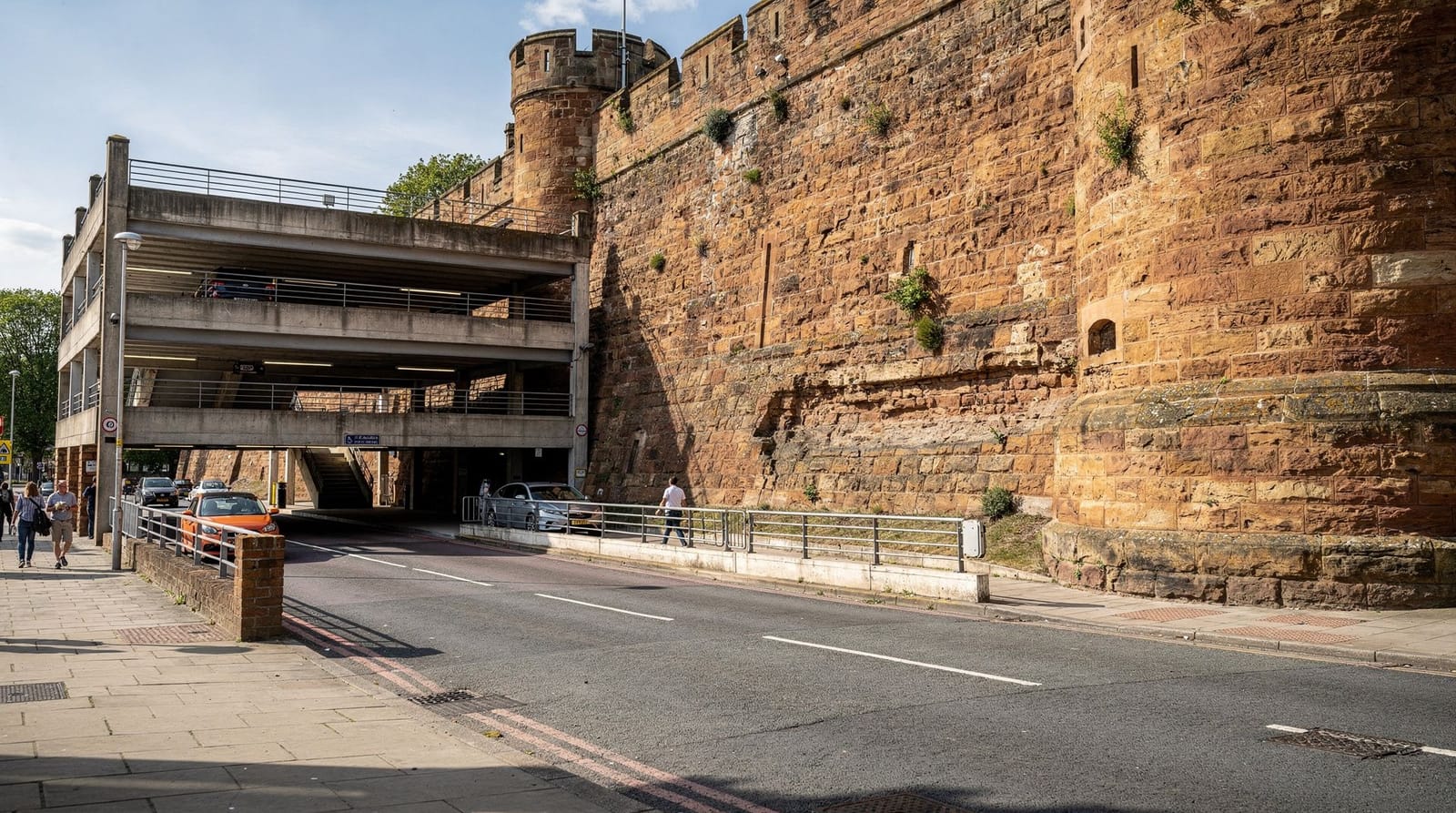
Driving into Chester works, but it’s rarely the cheapest or fastest option for the centre itself. Multi-storey car parks like Grosvenor Shopping Centre are convenient but priced for shoppers, not all-day visitors; the surface car park at Little Roodee, just south of the walls near the racecourse, is usually cheaper if you don’t mind a 10-minute walk in. The full breakdown of which car park suits which visit — and which ones to avoid on race days — is in Parking in Chester.
Where a car earns its keep is beyond the city: reaching Snowdonia’s interior, Zip World, Portmeirion or the Cheshire countryside (Tatton Park, Beeston Castle) is genuinely easier with your own transport than by rail and bus combinations. Inside Chester itself, a car is closer to a liability than an asset — you’ll pay for parking and gain nothing over walking.
Cycling and the canal towpath
The Shropshire Union Canal towpath cuts through the edge of Chester and connects out towards the Cheshire countryside, offering a flat, traffic-free route for cyclists comfortable navigating without dedicated bike lanes through the centre. It’s a pleasant way to reach Ellesmere Port or explore beyond the walls, though most visitors on a short city break won’t need a bike — walking covers the centre more efficiently once you factor in finding parking for a bicycle among pedestrian-heavy Rows.
Seeing the city from the water
The River Dee runs along the southern edge of the walls at the Groves, and short sightseeing cruises are a genuinely different way to see Chester rather than just a novelty — you get water-level views of the Old Dee Bridge, the weir and the racecourse that you don’t get from the streets. It’s worth an hour if you’re not in a rush; details of timing and departure points are in River Dee cruises.
Combining a hop-on hop-off tour with walking
For visitors short on time — a single afternoon, or arriving by train with a few hours before an onward connection — an open-top hop-on hop-off bus circuit hits the main landmarks (the Cathedral, the Rows, the Groves, the racecourse) in about 45 minutes if you stay aboard, or lets you dip on and off at your own pace with a day ticket. It’s a reasonable option for anyone with mobility limitations who still wants to cover the full circuit rather than just the flattest wall sections.
Independent walkers who want structure without a bus are better served by a themed walking tour: guided routes through the historic core cover the same ground with more storytelling and none of the traffic-light waits a bus makes. Book the Chester hop-on hop-off bus if flexibility matters more than a fixed guided route, or see the Chester city sightseeing tour review for what a guided version adds over the self-paced bus ticket. For visitors who’d rather walk with a storyteller after dark, Chester ghost tours cover much of the same central ground with a different theme entirely.
Getting beyond Chester without a car
Chester’s real transport advantage isn’t the city itself — it’s how well-connected it is to everywhere else. Liverpool, Manchester, the North Wales coast and Snowdonia’s fringes are all reachable by train or organised day tour without ever needing to rent a car, which is unusual for a UK base of this size. If day trips are the priority for your visit, start with Day trips from Chester for the overview, then narrow down using Best day trips by train if you want to stay car-free, or Chester to North Wales if a hire car or organised tour makes more sense for reaching Snowdonia’s interior.
Wheelchair users and pushchairs
Chester is more accessible than its medieval bones might suggest, but it takes some route-planning. The Rows themselves are the main obstacle — the upper galleries are reached by stone steps at every junction, with no lifts, so wheelchair users and pushchairs generally stay at street level, which still gives access to most shopfronts, just not the covered upper walkway. The city walls have a few step-free sections (Eastgate towards the Cathedral is the most manageable) but also genuine stiles and narrow, uneven stretches elsewhere on the loop that aren’t practical for wheels.
Chester Cathedral, the Grosvenor Museum and most modern retail units on Foregate Street and Eastgate Street are step-free at the entrance. If accessibility is the deciding factor for how you get around, the hop-on hop-off bus is worth prioritising over a self-guided walking loop, since it covers the full circuit including sections of wall and riverside that would otherwise require detours.
Combining getting-around logistics with a day-trip plan
Because Chester functions as a hub for day trips as much as a destination in its own right, a lot of “getting around” questions are really about the handoff between the city and the station. If your plan includes a day trip to Liverpool, Manchester, Snowdonia or the North Wales coast, work backwards from your train time: allow the full 15–20 minutes to walk to the station (more with luggage or in rain), and if you’re coming from accommodation outside the immediate centre, add the bus or taxi time on top.
Missing an early departure to Llandudno or a North Wales tour pickup because the station walk took longer than expected is one of the more avoidable planning mistakes visitors make, and it’s worth reading Chester trains and day trips alongside your itinerary rather than after you’ve already booked tickets. For a structured first two or three days that accounts for all of this, 1 day in Chester and the wider Chester destination guide lay out realistic sequencing.
Practical summary for first-time visitors
If you’re arriving by train, walk or take a short taxi into the centre and don’t think about a car again until you’re ready to leave Chester for a day trip requiring one. If you’re driving in, use Park & Ride rather than hunting for central parking, especially on a Saturday, during Chester Races meetings in May, June, July and September, or in the run-up to Christmas when the Cathedral grounds market draws heavy footfall.
Inside the walls, everything is closer than it looks on a map — resist the urge to drive between landmarks that are a five-minute walk apart. For a full first visit, Chester for first-timers and Is Chester worth visiting cover the wider planning picture, and Where to stay in Chester explains which neighbourhoods keep you walkable to everything described above versus which put you back on the bus.
Walking times between the landmarks that matter
Because so much advice about Chester assumes local knowledge, it helps to have real distances rather than vague reassurance that “it’s all close.” From the Eastgate Clock: the Cross and the start of the Rows is a two-minute walk; Chester Cathedral is five minutes; the Grosvenor Museum and Roman garden are eight minutes; the Groves riverside is ten minutes; the Roman amphitheatre near Newgate is seven minutes; and the racecourse (the Roodee) is a ten-minute walk skirting the western walls. Chester station, as noted above, is the outlier at 15–20 minutes — the only walk long enough that weather, luggage or tired kids might tip you toward a taxi or the number of bus routes that run from the forecourt into town.
If you’re staying outside the immediate centre — in the Garden Quarter, Hoole, or further out toward the racecourse suburbs — add 10 to 20 minutes each way depending on exact location, and check whether your accommodation is on a bus route before assuming you’ll walk everywhere; Where to stay in Chester breaks down which neighbourhoods keep you inside that walkable core.
Luggage, short stopovers and left-luggage options
A meaningful number of Chester’s visitors aren’t staying overnight — they’re stopping between trains, arriving before a hotel check-in, or squeezing in a half-day before continuing to Liverpool or North Wales. If you’re one of them, the practical move is to drop bags at the station (where facilities exist) or your hotel before setting off on foot, rather than hauling a suitcase over the Rows’ uneven steps and the walls’ occasional narrow, sloped sections. A wheeled case is manageable on the flat stretches (Eastgate to the Cathedral, along the Groves) but genuinely awkward on the steps at Bridgegate and Newgate, and it will slow down anything timed against a return train.
Weather, cobbles and what to actually wear
Chester’s pavements inside the walls are a mix of flagstones, cobbles near the Cathedral and the Rows’ worn stone steps, all of which get slippery in rain — and Cheshire gets a fair amount of it, especially outside the May–September window. Trainers or flat, grippy shoes serve visitors far better than anything with a smooth sole, particularly if a wall walk or a wet Christmas market evening is on the itinerary. None of this requires special gear, just the same common sense that applies to any old European city centre with genuine medieval infrastructure rather than a reconstruction.
Where buses actually save time over walking
Walking wins for anything inside the walls, but a few specific trips are genuinely faster or easier by bus: reaching Chester Zoo from the centre (a 20–30 minute walk versus a direct bus route), getting to accommodation in outer Hoole or the racecourse suburbs with luggage, and moving around on Chester Races days when road closures and crowd management reroute pedestrian access near the Roodee. Park & Ride buses are the other clear case — designed specifically so you never need to walk the last mile from a peripheral car park.
Evening transport and getting back to accommodation
Chester’s centre stays comfortably walkable into the evening, with well-lit main routes around the Rows and Eastgate, though the quieter stretches of the city walls are better avoided after dark in favour of street-level pavements. Taxis remain available from the Town Hall Square rank and via ride-hailing apps into the evening, though coverage thins out later at night compared with a larger city. If you’re staying outside the immediate centre and returning from an evening meal or the theatre, checking the last bus time back to your accommodation before you head out saves an unplanned taxi fare, particularly on weeknights when service frequency drops earlier than on weekends.
Getting around on a wet day
Cheshire’s rain doesn’t stop Chester being walkable, but it changes what’s comfortable. On a genuinely wet day, the hop-on hop-off bus or a taxi between the station and central attractions is a reasonable trade against getting soaked on the Rows’ exposed upper galleries. See our rainy day in Chester guide for indoor alternatives if a stretch of poor weather affects more than a single afternoon, and consider swapping an outdoor wall walk for one of the covered Rows sections instead.
Charging phones and staying connected on the move
Chester’s compact centre means most visitors don’t need extensive navigation apps once they’ve got their bearings from the walls, but a portable charger is still worth carrying if you’re relying on a phone for train times, tickets or photos across a full day. Cafés around the Cross and Eastgate generally welcome a short charging stop if you buy something, a useful fallback if a low battery threatens an evening train connection.
If you’re coordinating transport for a family group
Families juggling pushchairs, tired legs and variable walking pace benefit from planning transport a little more deliberately than solo travellers or couples. Chester’s flatter routes (Eastgate to the Cathedral, along the Groves) suit pushchairs well, while the Rows’ stepped junctions and the walls’ narrower stretches are worth avoiding with very young children in tow. Our family days out in Cheshire guide covers wider transport planning if your trip extends beyond the city centre to Chester Zoo or the Cheshire countryside.
Common mistakes first-time visitors make
The most frequent error is renting a car for a Chester-only visit and then discovering there’s nowhere convenient or cheap to leave it once inside the walls — Park & Ride solves this before you arrive, not after you’re circling the one-way system looking for a space. The second is underestimating the station walk with luggage in bad weather; budget the full 15–20 minutes rather than the 10 minutes a map suggests.
The third is trying to drive between city-centre landmarks that are a five-minute walk apart, which on Chester’s narrow one-way streets often takes longer than walking would have. The fourth, specific to event days, is assuming normal parking and bus frequency will hold during Chester Races meetings or the Christmas market period, when both taxis and Park & Ride buses run busier and slower than usual.
A note on accessibility and timing
Chester gets genuinely crowded on race days at the Roodee, during the Christmas market season, and on summer weekends when day-trippers from Liverpool and Manchester arrive by train. If you’re visiting on one of those dates, build in extra time for the walk from the station — pavements on Foregate Street and City Road can back up — and consider Park & Ride even if you’d normally drive straight into a central car park, since central spaces fill early and the Little Roodee car park is sometimes requisitioned for racecourse parking on meeting days.
None of this requires much advance planning. Chester rewards visitors who arrive without a car and simply start walking from the station or their hotel; the layout does most of the work for you, and the practical decisions — Park & Ride versus city parking, which train line for which day trip — only really matter once you’re heading somewhere outside the walls. For the arrival journey itself, before any of this applies, see getting to Chester for how the routes in from Manchester, Liverpool and further afield compare.
Frequently asked questions about Getting around Chester
Is Chester walkable without a car?
Yes, almost entirely. The historic centre is under a 20-minute walk end to end, and nothing central is more than a 15-minute walk from anything else central. A car is only genuinely useful for reaching North Wales's interior or the wider Cheshire countryside.How do you get from Chester station to the city centre?
It's about a 15-20 minute walk along City Road and Foregate Street, flat and straightforward. Taxis rank directly outside the station forecourt, and local buses also run from the forecourt into town if you're carrying luggage or it's raining.
Top experiences
Bookable activities with verified prices and instant confirmation on GetYourGuide.