Chester's most photogenic spots, and how to actually get the shot
Quick answer: the Eastgate Clock, the timber-framed Rows on Bridge Street and Watergate Street, the cathedral cloisters, and the view over the Roodee racecourse from the city walls are Chester’s most reliably photogenic spots. Early morning, before 9am, avoids both crowds and the flat midday light that the narrow historic streets suffer from.
| Where | Eastgate, the Rows, the city walls, the Groves |
| Cost | free (a guided tour or river cruise is optional) |
| Best time | before 9am on weekdays, or the last hour of daylight |
| Time needed | 2-3 hours for the core central spots |
| Avoid | weekend late mornings, the busiest 30 minutes around Eastgate |
The Eastgate Clock
Often described as the second most photographed clock in England after Big Ben, the ornate wrought-iron clock straddling Eastgate Street was built in 1899 to mark Queen Victoria’s diamond jubilee, two years late. It sits directly above one of the busiest pedestrian crossings in the city, which is exactly the problem for photography — getting a clean shot without dozens of people crossing beneath it requires either an early morning visit or real patience. Before 9am on a weekday is genuinely the best window; by mid-morning on a summer Saturday, a clear shot is close to impossible without a long wait.
The Rows
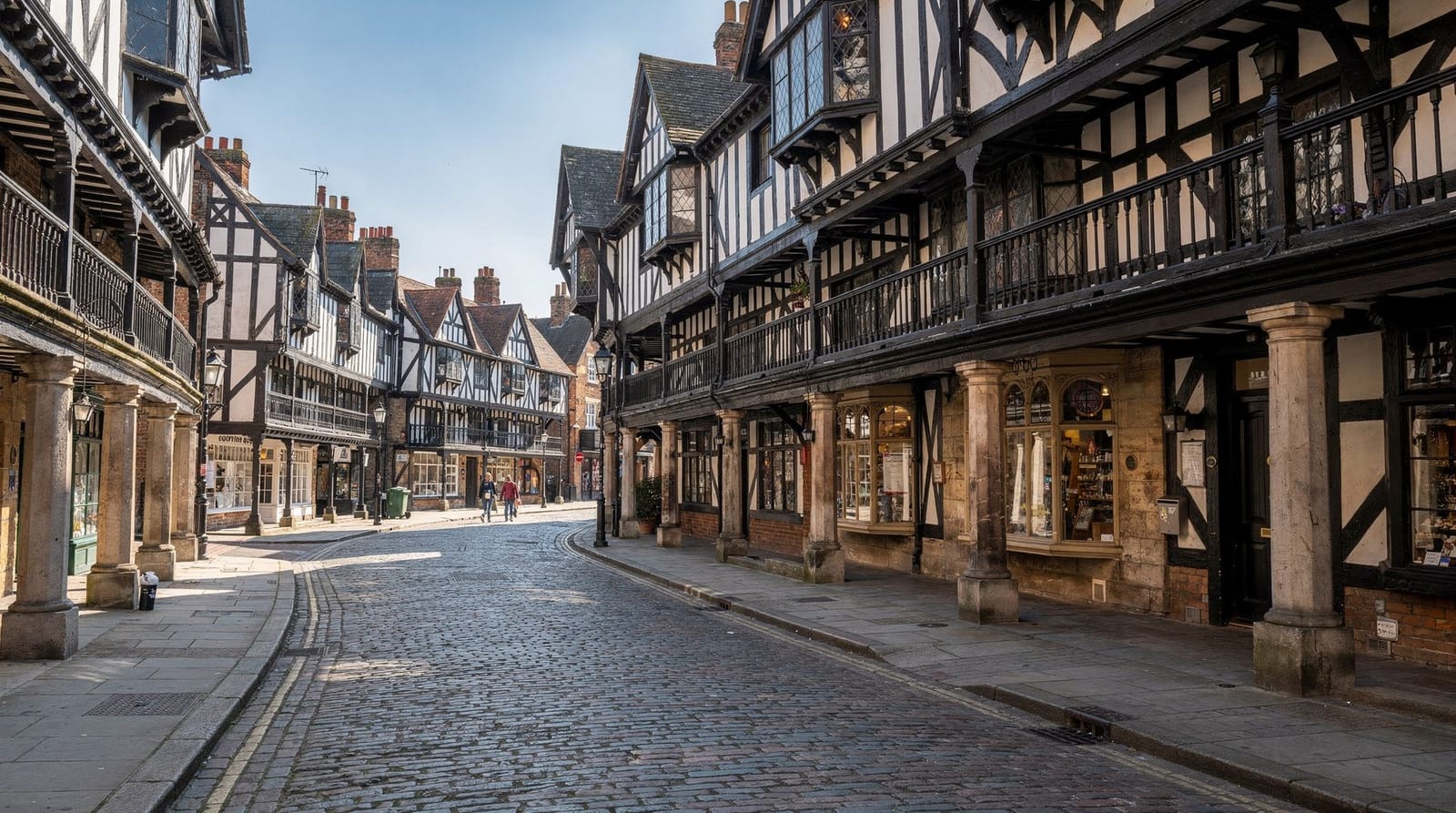
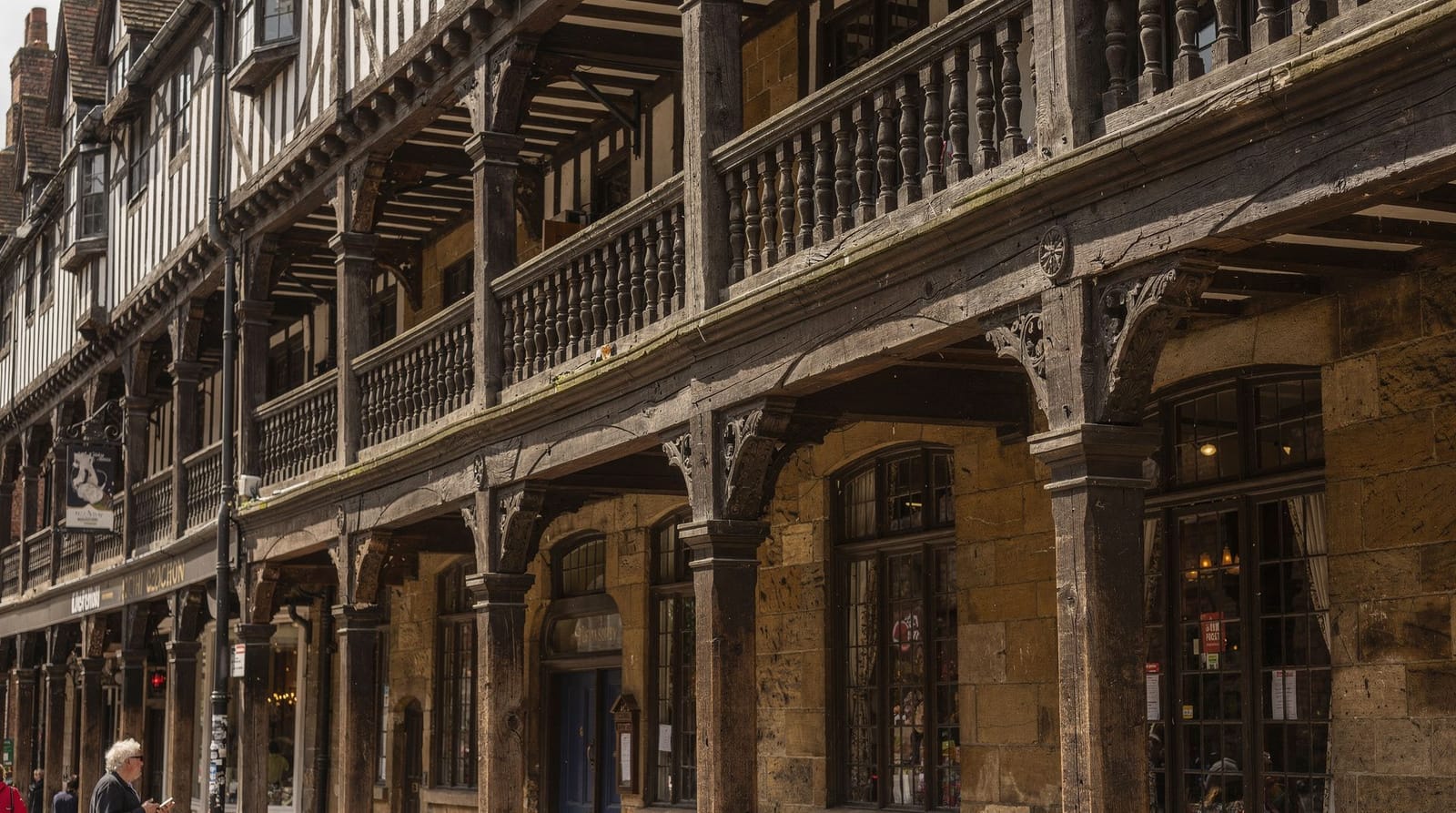
The elevated, covered medieval galleries running along Bridge Street, Eastgate Street and Watergate Street are Chester’s most architecturally distinctive feature, and photograph best from street level looking up at the black-and-white timber framing, or from within the upper gallery looking along its length. Watergate Street tends to be quieter than Bridge Street and often gives a cleaner, less crowded frame. Overcast, even light actually suits the Rows better than harsh direct sun, which creates heavy shadow under the covered sections — one of the few spots in Chester where a grey day isn’t a photography setback.
The city walls and the Roodee
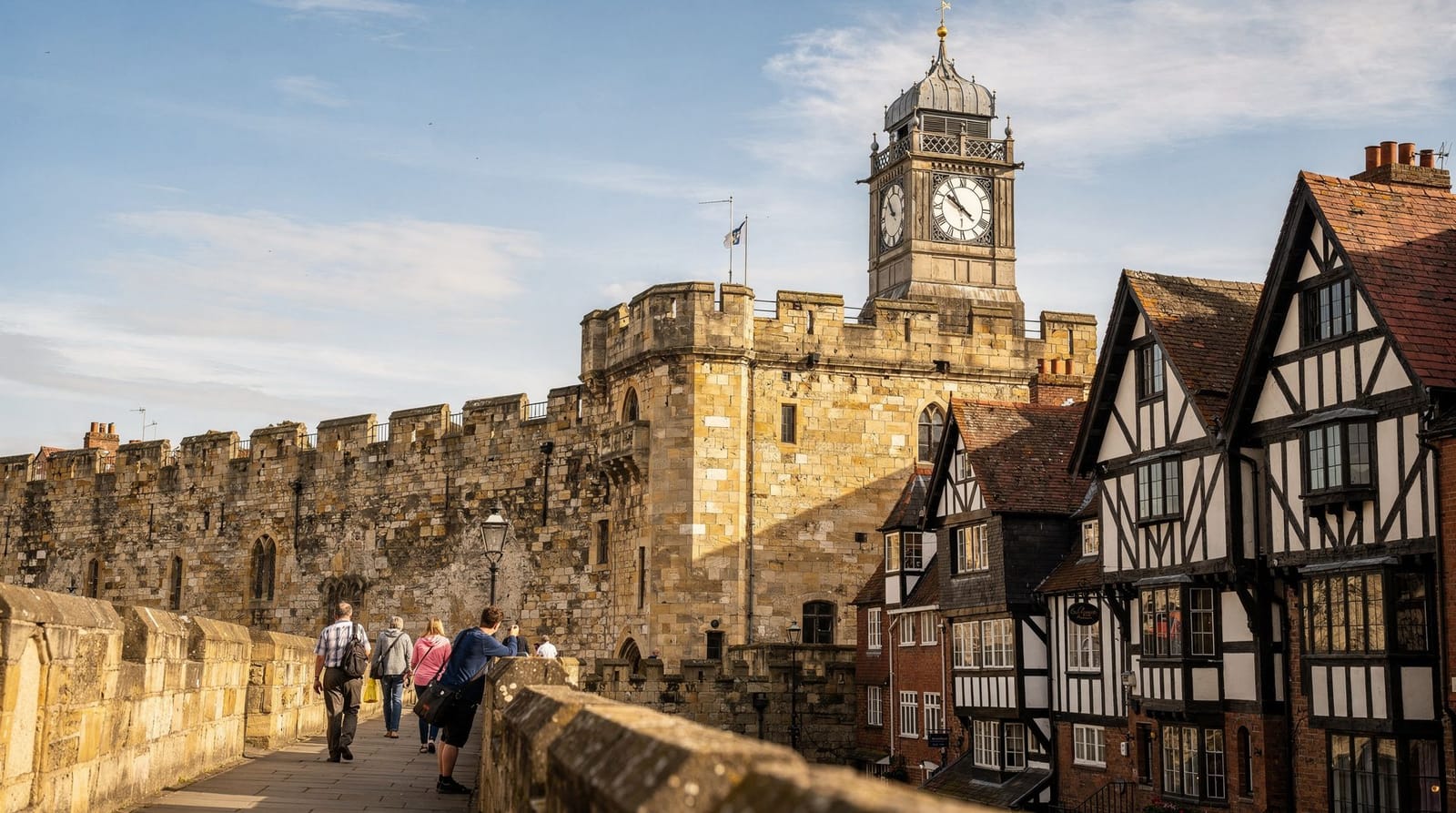
Walking the city walls near the Northgate gives a genuinely good elevated view down over the Roodee, Chester’s racecourse (one of the oldest in England, still in active use, notably for Chester Races each May), with the River Dee and the Welsh hills visible beyond on a clear day. This stretch of the walls is quieter than the sections nearer the cathedral, and the wider, more open view rewards later-afternoon light better than the tight, shadowed streets in the centre.
The Heart of Chester walking tour covers most of these spots in one route with a guide who can point out the details easy to miss on a self-guided walk, including several of the smaller architectural quirks along the Rows that don’t show up on a map.
The River Dee and the Old Dee Bridge
The riverside promenade known as the Groves, on the south bank of the Dee, gives a classic view back across the water towards the city, especially good in the late-afternoon golden hour when the light comes in low across the river. The Old Dee Bridge itself, one of the oldest bridges in Britain still in use, is worth photographing from the Groves side looking back, rather than standing on the bridge itself, which doesn’t give much sense of its scale.
A half-hour city cruise on the River Dee gives a genuinely different angle on the city — several of the best shots of Chester’s riverside buildings and the bridge are only really available from the water, not from either bank.
Chester Cathedral’s cloisters
Less obvious than the exterior, the cathedral’s cloisters are a genuinely atmospheric, quieter spot with a small garden at their centre, and the covered walkway gives good even light regardless of the weather outside. Most visitors head straight for the nave and miss the cloisters entirely, which makes them one of the least crowded photogenic spots in the whole city centre.
The Bridge of Sighs and Chester Town Hall
The small Bridge of Sighs, near the cathedral, connects to the old city gaol and has a genuine (if slightly overstated) claim to atmosphere, particularly in low light. Chester Town Hall, a Gothic Revival building on Northgate Street facing the cathedral, is an underused subject — most visitors photograph the cathedral itself and turn away before noticing the Town Hall opposite, which is a striking building in its own right, especially with the clock visible in the same frame.
Seasonal spots worth knowing about
Chester’s Christmas market, running from late November through December, transforms the area around the Town Hall and cathedral into a genuinely photogenic seasonal scene with market stalls and lighting, though it also brings the year’s biggest crowds — an early weekday visit is the only realistic way to get uncluttered shots. Grosvenor Park, a short walk from the centre, is a reliable spot for autumn colour and a quieter, greener contrast to the historic stone-and-timber streets if you want variety in a single day’s photos.
Lesser-known spots worth the detour
Beyond the obvious central locations, a few quieter spots reward the extra few minutes’ walk. The stretch of city wall near the amphitheatre, looking back towards the cathedral tower, gives a less common angle than the more-photographed Northgate section. St John’s Church, just outside the walls near the amphitheatre, is a genuinely atmospheric ruined-and-restored building with far fewer visitors than the cathedral, and its riverside setting near the Groves adds a good frame. The Chester Backs — the narrow lanes and passages that connect the Rows to the streets below — are easy to walk past without noticing, but give an interesting, less polished view of the medieval city’s actual structure rather than its most photographed facades.
Best time of year for Chester photography
Spring, particularly April and May, brings good light and blossom around Grosvenor Park and the Groves without the summer’s peak crowds. Autumn gives strong colour in the same green spaces and a softer, warmer light along the river in late afternoon. Winter, especially during the Christmas market period, transforms the city centre atmospherically but comes with the year’s heaviest footfall — worth visiting for the scene itself, less so if uncluttered shots are the priority. Summer offers the longest daylight window for golden-hour shots but also the most competition for space at every popular spot on this list.
A note on drones and night photography
Drone use around Chester’s historic centre is restricted in practice by the density of buildings, people and the cathedral’s presence, and formal permission would be needed for anything beyond casual personal use in open spaces like Grosvenor Park — check current UK drone regulations and any local restrictions before assuming it’s straightforward. For night photography, the Eastgate Clock and the cathedral both floodlit after dark are worth the visit, and the reduced foot traffic on the main streets after around 10pm makes evening genuinely one of the easier times to get a clean, uncluttered shot of the clock specifically.
Gear that actually helps in Chester’s narrow streets
A wide-angle lens or a phone’s wide/ultra-wide setting earns its keep in Chester more than in most cities, given how narrow the Rows and several central streets are — a standard field of view often can’t capture the full height of the timber-framed buildings from a comfortable standing distance. A small, unobtrusive camera or a phone is also more practical than a larger setup for the covered Rows sections, where space is tight and foot traffic doesn’t pause for tripods. If low-light interior shots of the cathedral matter to you, check current photography policy at the entrance, since some UK cathedrals restrict flash or tripod use to protect the building and other visitors’ experience.
Combining photography with the rest of your visit
None of this needs to come at the expense of actually experiencing Chester rather than just photographing it — the same wall walk, cathedral visit and riverside stroll that make good photo subjects are also simply the best way to see the city properly. Building photography stops into a normal sightseeing route, rather than treating it as a separate errand, tends to produce both better photos and a more relaxed visit.
Respecting the spots you’re photographing
A quick note worth including: Chester Cathedral and several of the historic buildings on this list are active places of worship or working buildings, not photo backdrops built for visitors. Being mindful of services, quiet requests from staff, and other visitors trying to actually experience the space rather than just pass through it for a photo goes a long way toward keeping these places pleasant for everyone, including the next visitor after you.
Timing, in one paragraph
If there’s one piece of advice that matters more than any specific location, it’s timing over location: Chester’s narrow streets and the constant footfall through the Rows mean almost every spot in this list looks meaningfully better before 9am or in the last hour of daylight than it does at midday. Weekday mornings beat weekend mornings by a wide margin, and the Christmas market season is worth visiting for the scene but planning around for the crowds specifically.
The best spots, ranked by how quiet they are
| Spot | Crowds | Best light |
|---|---|---|
| Cathedral cloisters | lowest | even light, any time |
| Water Tower / walls near amphitheatre | very low | late afternoon |
| The Groves / Old Dee Bridge | low-moderate | late-afternoon golden hour |
| Watergate Street (Rows) | moderate | overcast, any time |
| Eastgate Clock | highest | before 9am only |
Building a photography morning into a wider visit
The quietest window overlaps almost exactly with the best time to start any Chester sightseeing day, which makes combining the two straightforward. Walking the city walls from Eastgate before 9am covers several of the spots on this list in one loop, and finishing at Chester Cathedral for the cloisters means you’re inside before the nave gets busy with tour groups. If your visit is only a day, our 1-day Chester itinerary already builds in an early start that suits photography without needing a separate dawn trip.
Frequently asked questions about Chester
What is the best time of day to photograph Chester?
Before 9am, especially on a weekday, avoids both crowds and the flat midday light the narrow historic streets suffer from. The last hour of daylight is the second-best window, particularly along the river.
Is the Eastgate Clock hard to photograph?
Yes, at busy times — it sits above one of the city’s busiest pedestrian crossings. A clean shot without people crossing beneath it realistically needs an early morning visit or genuine patience.
Related planning
For the practical walking route connecting most of these spots, see our city walls walk guide, and for more on the architecture itself, The Rows goes into the history behind Chester’s most photographed feature. Our main Chester destination guide has the full practical overview, and if your visit lands in winter, Chester’s Christmas market guide has specific timing advice for that seasonal rush. For a full day built around seeing the city properly, not just photographing it, our 1-day Chester itinerary covers the same spots as part of a complete plan.