Is Chester worth visiting in 2026?
Short answer: yes, for most travellers — but not for the reasons the postcards sell. Chester earns its place on a UK itinerary because it packs a walkable Roman-and-medieval city centre, a working cathedral, and genuinely useful train links into a base you can cover on foot in a day and a half. It doesn’t earn it as a bucket-list “wow” destination on the level of Edinburgh or Bath — go in expecting a solid, honest city break rather than a headline attraction, and you won’t be disappointed.
| Time needed | Half a day to a day and a half for the city itself |
| Cost | Around £60-90 per person a day, excluding accommodation |
| Best for | History-minded travellers, families, day-trip hub seekers |
| Skip if | You want one headline “wow” city and nothing else on the itinerary |
| Best season | May-September for the fullest calendar; winter for the Christmas market |
What Chester actually has going for it
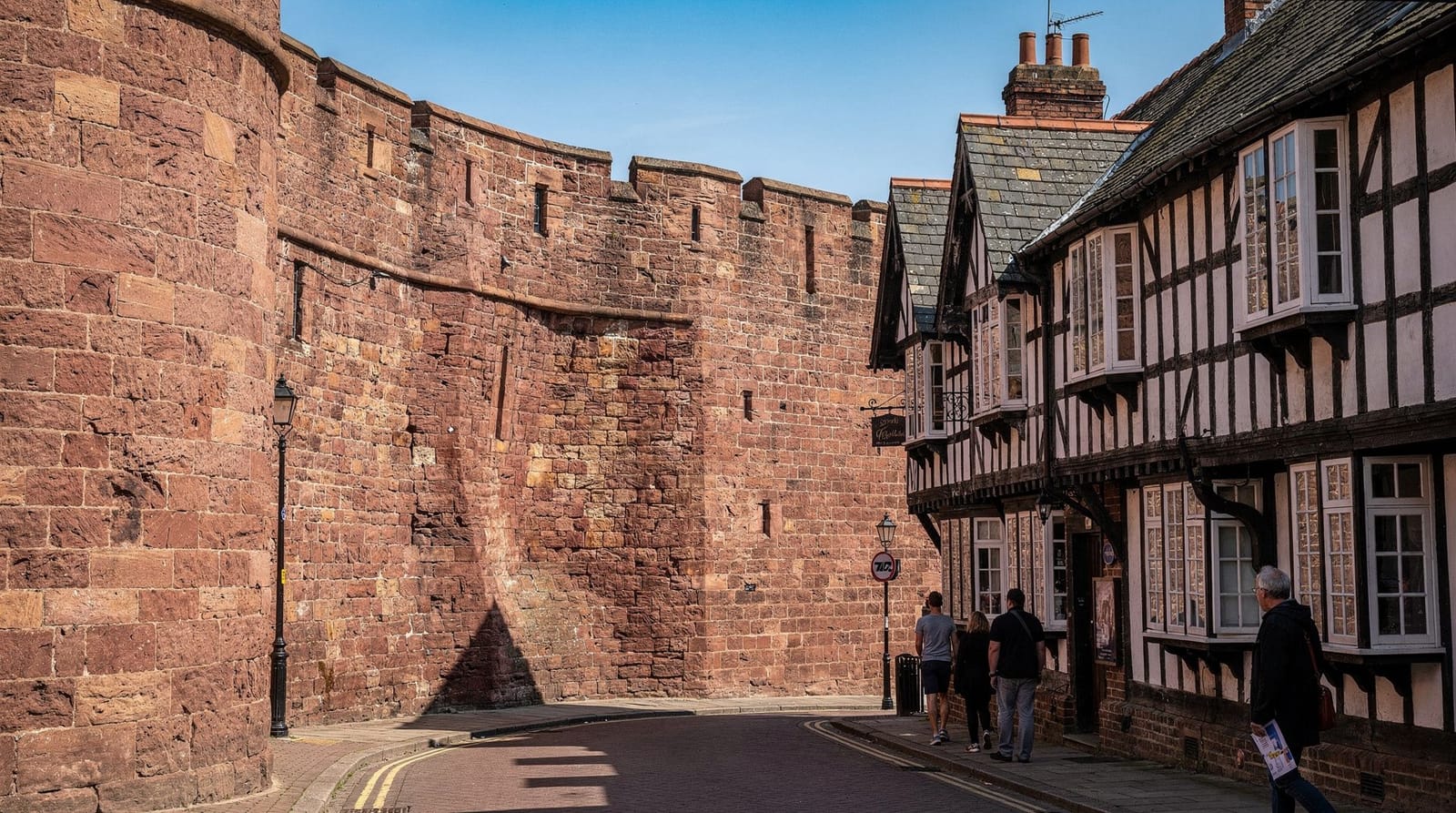
Start with the thing every visitor notices in the first ten minutes: the city walls form a complete circuit, roughly two miles around, built on Roman foundations and extended through the medieval period. Few English cities can offer a walkable perimeter like this, and it works as both a orientation tool and an attraction in its own right — you can walk the whole loop in under two hours and end up back where you started, having seen the cathedral, the racecourse, the river and the shopping streets from above.
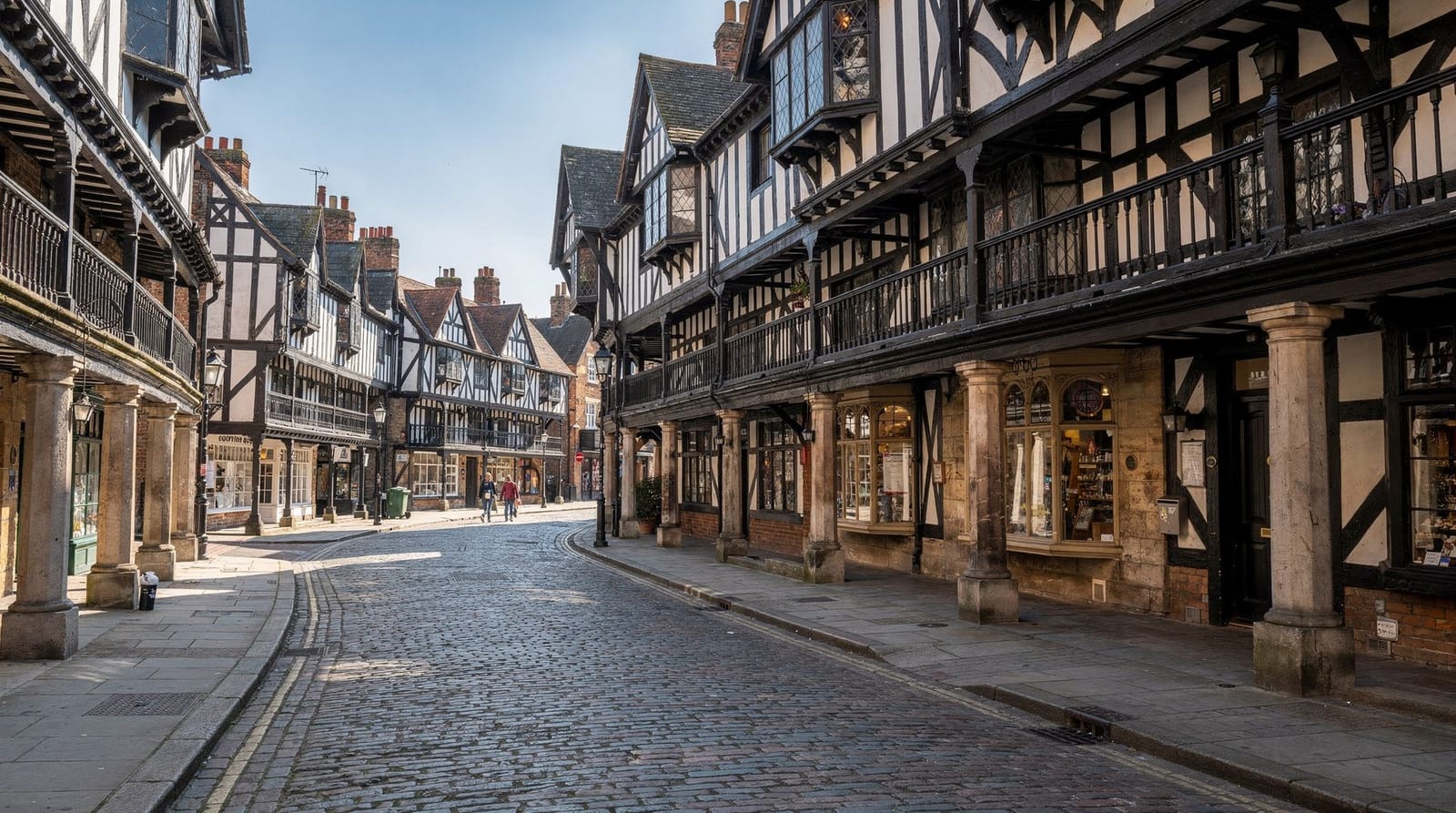
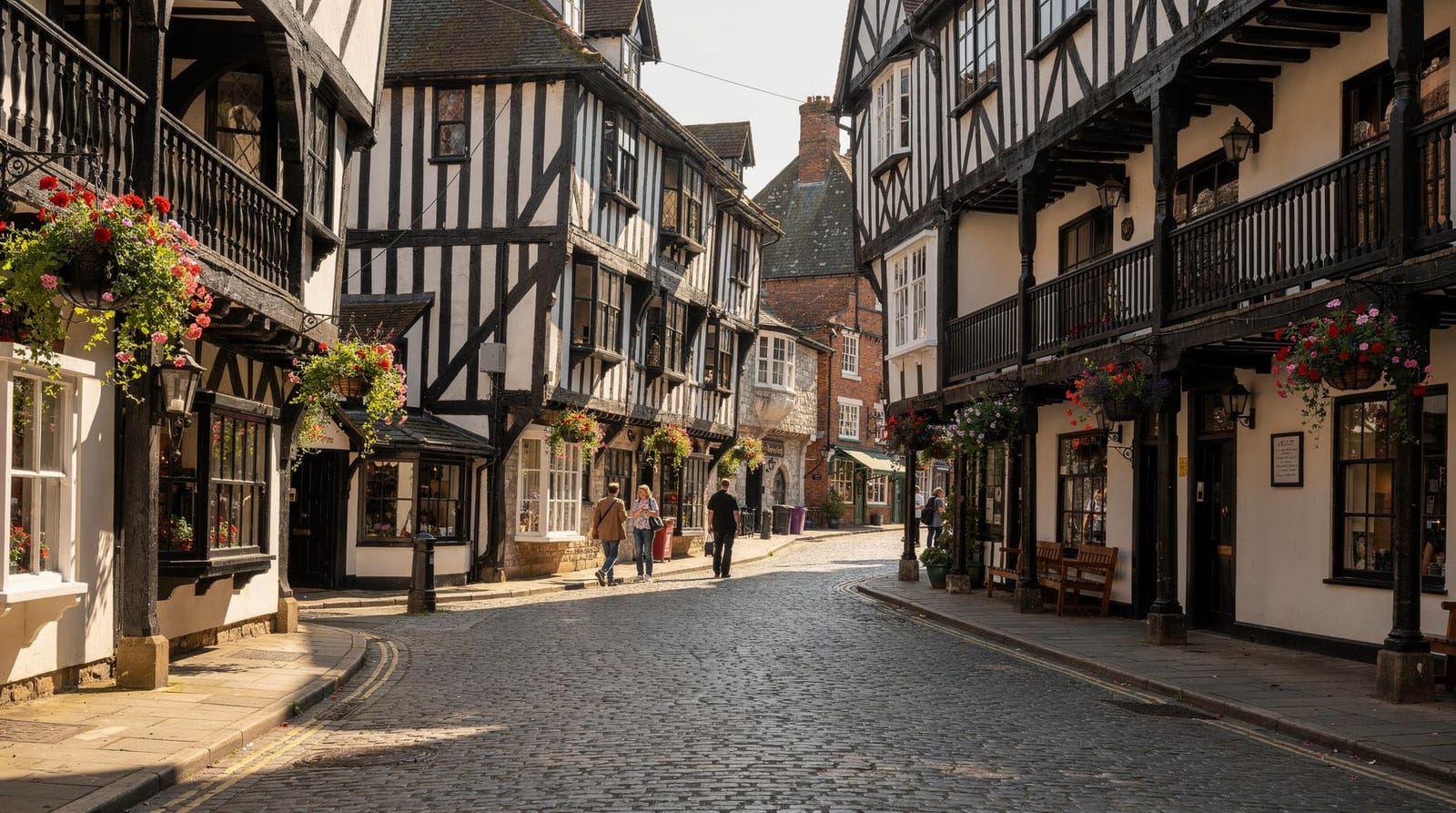
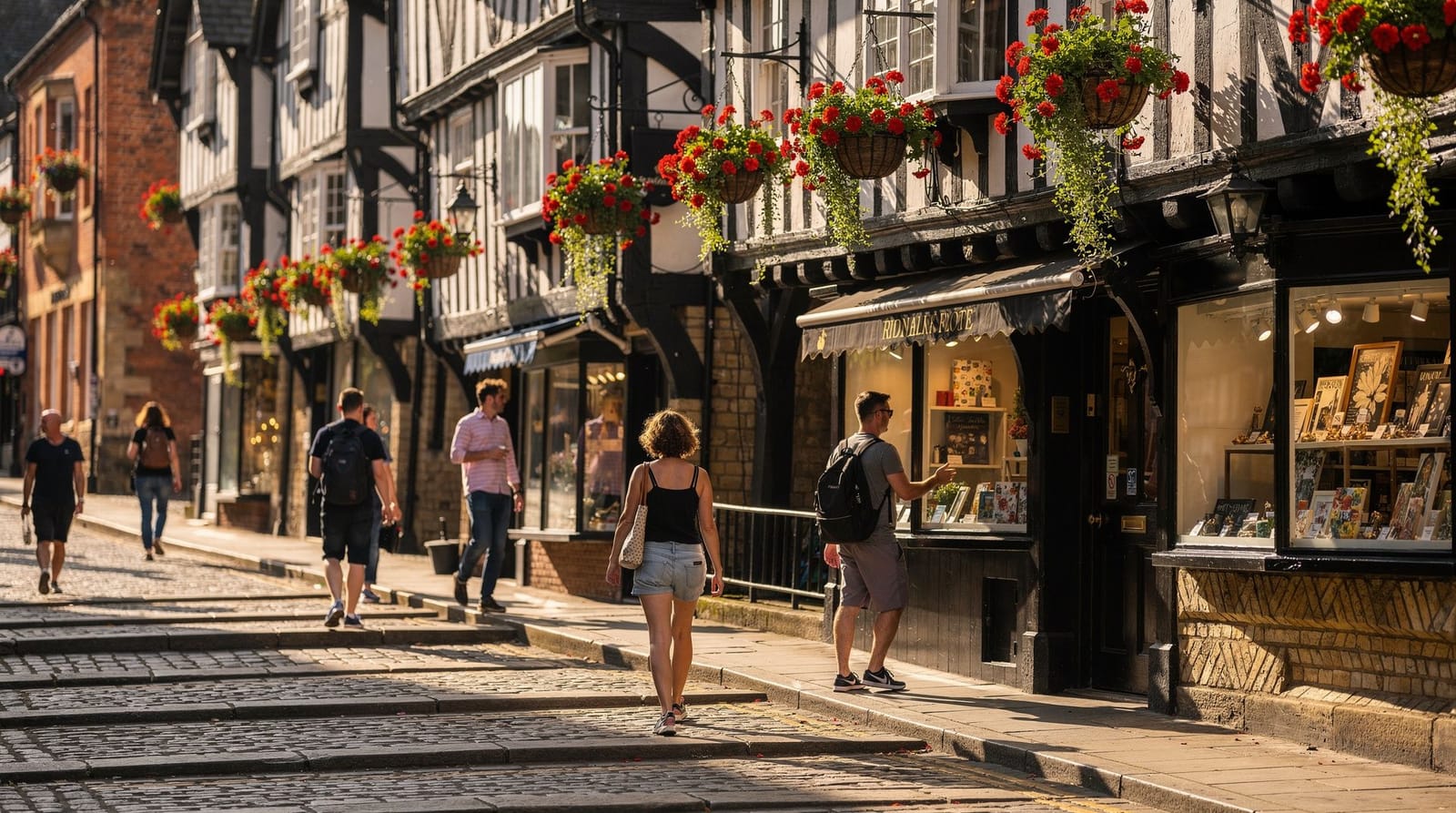
Then there’s the Rows, the covered two-level shopping galleries on Eastgate, Bridge Street, and Watergate Street. They’re unusual enough — nothing quite like them survives elsewhere in Britain — that even visitors who aren’t especially interested in architecture tend to stop and take photos. The black-and-white timber-framed shopfronts above them are mostly Victorian recreations of a medieval original, which is worth knowing before you assume everything you’re looking at is 700 years old. Some of it is; a lot of it is a very good 19th-century impression.
Add a genuinely useful rail hub — Chester connects directly or with one change to Liverpool, Manchester, Llandudno and the North Wales coast — and you get a city that works as well as a base for day trips as it does as a destination itself. That’s really the strongest case for visiting: not Chester alone, but Chester-as-launchpad for Snowdonia, the Beatles sites, and the Welsh castles, all reachable without a car.
Where the “worth it” case gets weaker
Be honest about the ceiling here. Chester is a good half-day to a day and a half of sightseeing, not a week-long destination. If you’re coming from outside the UK specifically for Chester and nowhere else, you’ll likely feel the visit is over faster than expected — this is a city that rewards a stopover, not a dedicated week. The guided walking tours that cover the walls, the Rows and the cathedral in around two hours are popular for exactly this reason: locals and operators both know the core sights don’t need much more time than that.
The other honest caveat: central Chester on a summer Saturday is busy, and parking in the centre is expensive and limited — one of the city’s genuine tourist traps is drivers circling for a space near the Rows instead of using a Park & Ride site on the edge of town. If driving, plan for that before you arrive rather than after.
Who should visit, and who can skip it
Chester works well for: history-minded travellers who want Roman remains without a full day in a museum, families weighing it up against Chester Zoo as a day out, and anyone building a Liverpool-Manchester-North Wales loop who needs a comfortable, central overnight base. It works less well as a solo headline destination for travellers with only one UK city stop to spare — for that specific brief, York or Edinburgh will likely satisfy more people, and it’s worth reading the direct comparison in our Chester vs York guide before booking either.
What a realistic budget looks like
Part of “worth it” is cost, and Chester is genuinely mid-range as English cities go — not cheap, not London-expensive. A pub lunch runs £15-25, a sit-down dinner with a drink closer to £30-45 per person at the better restaurants just off the main tourist streets. Museum and cathedral entries are mostly £10-20 individually, though the Grosvenor Museum and the Roman amphitheatre are free, which keeps a full day of sightseeing more affordable than the hotel bill might suggest.
Mid-range hotel rooms inside or near the walls run roughly £90-150 a night outside peak periods, climbing noticeably around the Christmas market and the May race meeting. Add £15-25 for a guided walking tour if you want the history explained properly rather than pieced together from wall plaques, and a day in Chester — sightseeing, food, and one paid activity — comfortably fits a £60-90 per person budget excluding accommodation.
How the season changes the “worth it” answer
Chester in May to September is Chester at its best: long daylight for the walls walk, the Dee at its most pleasant for a river cruise, and the fullest calendar of things layered on top — the May race festival, outdoor terrace seating at pubs along the Groves, and Grosvenor Park’s open-air theatre season. This is when the “worth visiting” case is strongest and least qualified.
Winter changes the calculation, but not necessarily for the worse. The Christmas market in the cathedral grounds is a genuine draw from mid-November into late December, and a colder, quieter Chester outside that specific window has its own appeal if you don’t mind grey skies and shorter days — just don’t expect North Wales day trips to run at full summer capacity, since several seasonal attractions, including the Snowdon Mountain Railway, scale back or close entirely from around November to March. If your trip depends heavily on a North Wales add-on, summer is the safer bet; if the city itself is the draw, winter works fine.
The comparison that actually matters: Chester as part of a bigger trip
The strongest version of the “is it worth it” question isn’t really about Chester in isolation — it’s about what else is within reach. Compare it honestly against staying instead in Liverpool or Manchester for the same North West England trip: our Chester vs Liverpool as a base breakdown weighs up exactly this, since either city works as a hub, but they suit different priorities. Chester wins on walkability and a calmer pace; Liverpool and Manchester win on nightlife and a bigger-city feel. Neither answer is wrong — it depends what kind of trip you’re building.
What surprises first-time visitors most
The two things that come up repeatedly from first-time visitors are how walkable the entire historic core is — most people underestimate how much of Chester’s appeal you can genuinely cover on foot in a single day — and how much better a launchpad it is than expected, once they realise Liverpool, Manchester, Snowdonia and the North Wales coast are all within about an hour. Fewer visitors expect the racecourse right by the city walls, or that the city is a genuinely working city with its own resident population and everyday shops rather than a museum-piece tourist town.
Comparing Chester against a full weekend elsewhere
If you’re weighing Chester against spending the same two or three days somewhere bigger — Liverpool, Manchester, or a longer stay in York — the honest trade-off is depth versus breadth. Chester gives you a tighter, calmer, more walkable day and a half plus easy day trips; a bigger city gives you more to do without leaving town but a busier, more expensive base. Neither is the wrong call, but if your ideal trip involves waking up in one place and having several genuinely different day-trip options a short train ride away, Chester’s geography does more of that work than most comparable UK cities its size.
The verdict
If you’re already planning a trip through the North West of England or North Wales, build Chester in — it’s an efficient, well-connected, genuinely pleasant city that rarely disappoints on its own modest terms. If Chester is the only thing on your UK itinerary, weigh it against the wider region: a river cruise along the Dee with a short city cruise plus a walk of the walls covers the essentials in an afternoon, which tells you a lot about how much city there really is to see.
For the fuller planning breakdown — accommodation areas, what to skip, and a detailed pros-and-cons list — see our companion guide on whether Chester is worth visiting. If you’ve already decided yes, jump straight to a 48 hours in Chester itinerary or the 2-day Chester itinerary for a structured plan, and check where to stay in Chester before booking.
Frequently asked questions about visiting Chester in 2026
Is one day enough for Chester?
For most visitors, yes. A single day covers the city walls walk, the Rows, the cathedral, and a meal, with time left for a museum or a short river cruise. Two days lets you add a day trip to North Wales or Liverpool without rushing.
Is Chester touristy?
The centre gets busy, especially on weekends and during the summer and Christmas market seasons, but it doesn’t feel manufactured for tourists the way some heritage towns do — it’s a working city with a genuine shopping and dining scene alongside the sightseeing.
Is Chester better than York?
They’re different trips. York has a larger, denser old town and the Minster; Chester has the complete wall circuit and better onward transport links to North Wales and Liverpool. Neither is objectively “better” — it depends on what else is on your itinerary.
Is Chester worth visiting if I’ve already been to York or Edinburgh?
Yes, for a different reason than either — Chester’s appeal isn’t competing directly with those cities’ historic cores, it’s the combination of a compact walkable centre with genuinely useful onward rail links to Liverpool, Manchester and North Wales. If you’ve done the bigger heritage cities and want an efficient base for a wider regional trip, Chester fills that role well.
How much does a day in Chester cost?
Budget roughly £15-25 for a pub lunch, free for the walls walk itself, and £10-20 for most single-site museum or cathedral entries. A half-day guided walking tour typically runs £15-25 per person.