Grosvenor Museum, Chester — the finest Roman tombstone collection in Britain
Chester: Deva Roman Experience
Is the Grosvenor Museum in Chester free?
Yes, general admission is free, funded by Cheshire West and Chester Council and run in partnership with the Grosvenor family estate. It's open standard museum hours, typically Monday to Saturday with shorter Sunday hours, and closed on major public holidays — check the current schedule before visiting since hours are reviewed periodically.
Why a provincial museum holds a nationally important Roman collection
The Grosvenor Museum on Grosvenor Street, a few minutes’ walk from the city walls and Chester Cathedral, houses what’s generally recognised as the largest and most significant collection of Roman military tombstones found anywhere in Britain.
That’s a substantial claim for a city museum in a mid-sized English town, and it makes sense once you know Chester’s Roman history: Deva Victrix was one of only three permanent legionary fortresses in the entire Roman province of Britannia, alongside York and Caerleon, garrisoned continuously for roughly three centuries by thousands of soldiers whose families, veterans and support communities all needed burial grounds outside the fortress walls.
| Where | Grosvenor Street, Chester — five minutes’ walk from the Rows and city walls |
| Cost | Free general admission |
| Time needed | 45 min-1 hour for the Roman galleries; up to 2 hours for the full museum |
| Getting there | Walkable from the city centre; no dedicated car park |
| Best time | Weekday afternoons or weekends, outside school-trip hours |
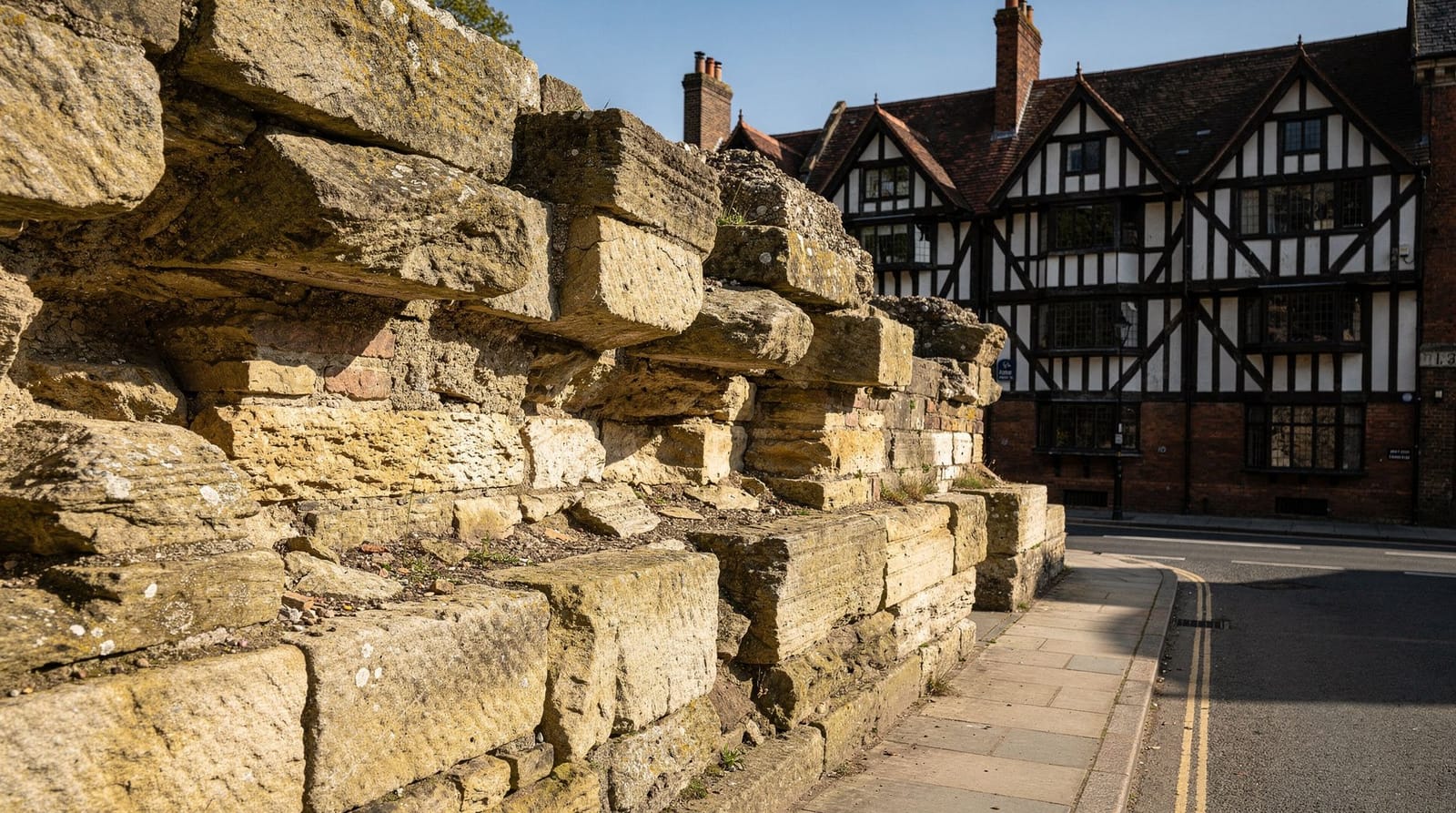
Most of the tombstones in the collection were recovered not from careful archaeological excavation of a Roman cemetery, but by accident — reused as building material in later defensive works, particularly a stretch of the city walls’ foundations strengthened during the medieval period, when masons apparently valued dressed, ready-cut Roman stone over quarrying fresh material and had no particular concern for what was carved on it. That reuse, ironically, is why so many tombstones survive in unusually good condition: buried and protected within later wall foundations for over a thousand years, rather than left exposed to weathering in an open cemetery.
What’s actually in the collection
The tombstones themselves record soldiers from the legions and auxiliary units stationed at Chester over its Roman history, many with carved reliefs showing the soldier in uniform, sometimes on horseback, alongside inscriptions giving name, unit, age at death and years of service — genuinely personal, specific records rather than generic monuments, which is part of what makes the collection historically valuable beyond its size. Several inscriptions name specific individuals and units that appear nowhere else in the archaeological record, making the Grosvenor’s collection a primary source for historians studying the Roman army in Britain, not just a display of old stones.
Beyond the tombstones, the museum’s Roman galleries cover daily life in and around Deva Victrix — military equipment, coins, pottery and domestic objects recovered from excavations across Chester over more than a century, including material from the Roman amphitheatre excavations. The museum also holds a strong collection covering Chester’s post-Roman history through to the present, including decorative and fine art galleries and a Georgian townhouse (20 Castle Street) preserved as part of the museum complex, giving a sense of domestic life in Chester across several later centuries — useful if your interest extends beyond the Roman period specifically.
A brief history of the museum itself
The Grosvenor Museum opened in 1886, funded substantially by the Grosvenor family — the Dukes of Westminster, whose estate has owned large parts of Chester and the surrounding area for centuries and whose name is attached to numerous local landmarks, including the Grosvenor Hotel and Grosvenor Park. It was established specifically to house the growing quantity of Roman-era finds being uncovered across Chester as the Victorian city expanded and building work regularly disturbed archaeological remains — a pattern that continued well into the 20th century and, to a lesser extent, still occurs today whenever development work in the city centre requires archaeological assessment beforehand.
The museum’s collection has grown steadily since through excavation, donation and, in the case of several tombstones, straightforward rediscovery of objects that had been noted decades earlier but not properly catalogued or displayed until the museum provided a dedicated home for them. It’s run today by Cheshire West and Chester Council in partnership with the Grosvenor Estate, reflecting the same public-private arrangement that established it in the first place.
The Georgian townhouse at 20 Castle Street
Attached to the main museum building, 20 Castle Street is a preserved Georgian townhouse furnished and presented to show domestic life in Chester across several periods, from its 18th-century construction through Victorian and Edwardian occupation.
It’s a smaller, quieter part of the museum complex that many visitors focused purely on the Roman galleries skip entirely, but it’s worth at least a brief look if you have time — the room-by-room presentation gives a tangible sense of how a comfortable Chester merchant or professional family actually lived, which is a useful counterpoint to the more abstract, object-focused presentation of the Roman galleries. Access to the townhouse involves original period staircases and is more limited for visitors with mobility restrictions than the main museum building.
Natural history, fine art and the wider collection
Beyond the Roman galleries and Georgian house, the Grosvenor Museum holds a natural history collection covering Cheshire’s local wildlife and geology, a fine and decorative art collection with paintings and silverware relevant to the region’s history, and temporary exhibition space that hosts rotating displays throughout the year — sometimes tied to Roman archaeology elsewhere in Britain, sometimes covering entirely different subjects. These galleries are a genuine bonus rather than a reason to visit on their own, best treated as an extension of a visit primarily focused on the Roman collection if time allows, rather than a separate trip.
How the collection compares to other Roman museums in Britain
Chester’s Grosvenor Museum is often mentioned alongside the Yorkshire Museum in York (which holds finds from Eboracum, the other northern legionary fortress) and the Corinium Museum in Cirencester (a major Roman civilian town, though not a legionary base) as one of the essential stops for anyone seriously interested in Roman Britain.
The Grosvenor’s specific strength is its tombstone collection — the sheer number and quality of military memorial inscriptions recovered from a single site is not matched at either of those other museums, both of which have stronger holdings in mosaics and civilian domestic material respectively. If you’re building a wider trip around Roman Britain and have already visited York or Cirencester, Chester’s collection offers a genuinely different angle — military and garrison life specifically, rather than the civilian and administrative focus those other collections lean toward.
Getting the most from a visit
The Roman galleries are the clear priority if your time is limited, and a focused visit covering just those rooms takes perhaps 45 minutes to an hour, longer if you read every inscription panel closely. The tombstones reward slow looking rather than a quick walkthrough — the carved reliefs vary enormously in quality and detail, and the accompanying translations and context panels explain individual stories (a cavalryman’s family commissioning a specific memorial, a centurion’s unusually long service record) that are easy to miss on a fast pass through the room.
Because admission is free, there’s no pressure to “get your money’s worth” by seeing everything in one visit — it’s entirely reasonable to do the Roman galleries on one trip to Chester and come back for the decorative arts and Georgian house on a later visit, if you’re spending multiple days in the city.
How the museum ties Chester’s Roman sites together
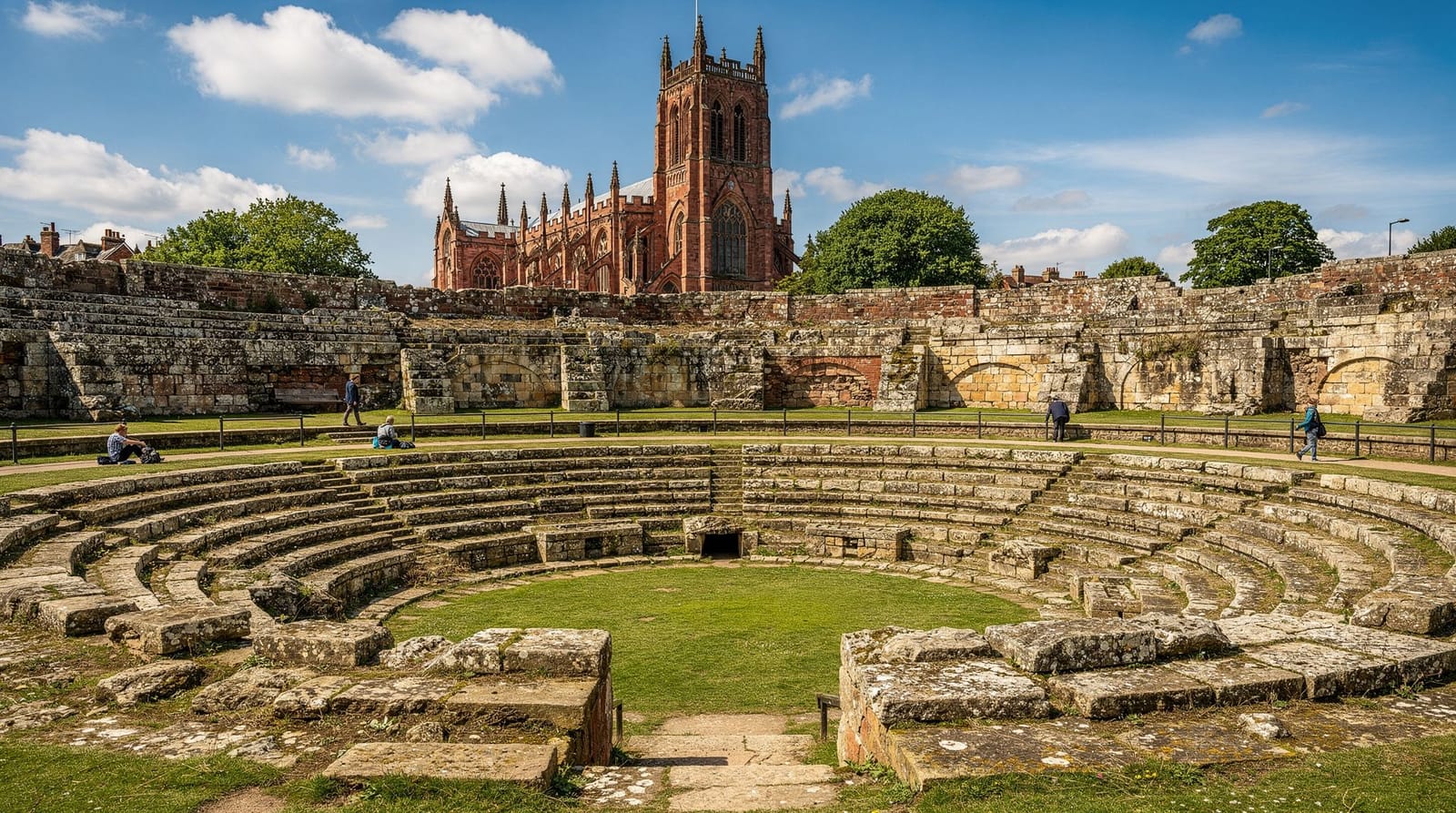
The Grosvenor Museum works best not as a standalone destination but as the piece that makes sense of everything else — the city walls, the amphitheatre and the fortress site itself are all physical remains with limited on-site interpretation, while the museum holds the objects, inscriptions and reconstructions that explain what those remains actually meant to the people who used them. Visiting the amphitheatre or walking a stretch of Roman-adjacent wall without also seeing the Grosvenor’s collection means seeing the “where” without much of the “who” and “why.”
For a different kind of Roman-era experience — reconstructed rather than excavated — the Deva Roman Experience nearby uses life-size costumed figures and a walk-through reconstructed fortress street to bring the same period to life in a more immersive, less academic format than the museum’s traditional gallery display. The two complement each other well: the Deva Experience for atmosphere and orientation, the Grosvenor Museum for the actual archaeological evidence behind it.
What surprises first-time visitors
Visitors expecting a small, purely local-interest municipal museum are often surprised by the depth and national significance of what’s actually on display here — the tombstone gallery in particular has a scholarly weight that punches well above what the museum’s modest size and free admission might suggest.
Conversely, visitors who’ve read about Chester’s Roman importance beforehand and expect something on the scale of the British Museum’s Roman galleries in London should recalibrate expectations the other way — this is a focused, regionally specific collection rather than a comprehensive survey of the Roman empire, and its value lies precisely in that specificity: everything here relates directly to this one fortress and its garrison, rather than being a general Roman Britain overview assembled from many sites.
Another common surprise is how much of the collection’s context — who these soldiers were, what their lives looked like, why so many memorials survive from one relatively small legionary base — only becomes clear through the accompanying panels and translations rather than the objects alone. Budgeting time to actually read rather than just look is the difference between a forgettable ten-minute walkthrough and a genuinely memorable hour with the collection.
Combining with a wider Roman Chester walk
A logical order for a half-day of Roman Chester runs: start at Deva Victrix’s story (either at the Deva Roman Experience or simply reading up beforehand), walk a stretch of the city walls to see the scale of the fortress defences, detour to the Roman amphitheatre, then finish at the Grosvenor Museum to see the objects and inscriptions that fill in the human detail the standing remains can’t.
The Heart of Chester walking tour covers several of these sites with a guide, though it doesn’t include museum entry — plan the Grosvenor Museum as a separate, self-guided stop either before or after.
Avoiding school groups and choosing your time
Like most free civic museums, the Grosvenor is a regular destination for school trips during term time, and weekday mornings can see the Roman galleries filled with organised groups, which affects how easily you can linger over individual tombstones and read the accompanying panels at your own pace. Weekday afternoons, once school groups typically depart, and weekends generally offer a quieter, more contemplative visit, though weekends bring more families and casual visitors instead. Outside UK school holidays, midweek visits are consistently the calmest option if you want extended time with the tombstone collection without competing for space around the display cases.
The museum shop and taking finds further
The museum shop stocks a genuinely well-curated range of books on Roman Chester and Roman Britain more broadly, alongside replica items and gifts tied to the collection, and is worth a look even if you’re not planning to buy — the book selection in particular is more specialist and useful than typical tourist-attraction gift shops, reflecting the museum’s role as a genuine research resource as well as a public attraction.
Serious researchers and enthusiasts can also arrange access to the museum’s wider archive and reserve collections, which hold considerably more material than is on public display at any one time, through advance appointment with museum staff — worth knowing if a particular inscription or object you’ve read about elsewhere isn’t currently on the main gallery floor.
A note on other Chester museums
The Grosvenor Museum isn’t the only museum in Chester, though it’s by far the most significant for Roman-era history specifically. Chester Castle’s small military museum, covering local regimental history, sits on the opposite side of the old town, and various smaller heritage attractions — the Deva Roman Experience among them — round out the city’s museum offering. For most visitors with limited time, the Grosvenor Museum should take clear priority over these smaller alternatives given its unmatched depth on the single subject — Roman Chester — that draws most heritage-focused visitors to the city in the first place.
Getting there and practical details
The museum sits on Grosvenor Street, a five-minute walk south from the Rows and the city centre, close to the Roman amphitheatre and Chester Cathedral, making it easy to combine with either on foot without needing transport between stops. There’s no dedicated museum car park; use the city centre car parks or the Park & Ride service covered in our parking guide, since the whole historic core, including the museum, sits within an easy walking radius of the centre.
The museum has step-free access to its main ground-floor galleries, including the Roman collection, though the attached Georgian townhouse has more limited accessibility given its original period layout and staircases — check with the museum directly if this affects your visit. There’s a small museum shop and café on-site for a break between galleries, useful given how much reading the Roman displays reward if you’re taking them slowly.
Research value beyond a casual visit
The Grosvenor Museum’s significance extends well beyond its role as a tourist stop — it functions as a genuine research institution for Romano-British archaeology, with its tombstone collection cited regularly in academic scholarship on the Roman army, provincial administration and epigraphy (the study of inscriptions).
Several of its inscriptions provide unique evidence for specific units, individuals or administrative practices that appear nowhere else in the surviving Roman record from Britain, meaning the museum’s holdings have shaped scholarly understanding of the Roman military well beyond what a casual visitor exploring the gallery for an hour would necessarily realise. This academic weight is part of why the collection draws specialist visitors — university researchers, students and enthusiasts — alongside the general tourist audience the museum’s free admission and central location naturally attract.
For visitors who want to go beyond the gallery displays, the museum periodically publishes and sells its own research guides and catalogues covering the tombstone collection in more scholarly depth than the on-site panels allow, available through the museum shop or by enquiry with curatorial staff — worth asking about if a specific inscription or period catches your interest during a visit.
Visiting with children
The Roman galleries can be a harder sell for young children than the more immersive, costumed Deva Roman Experience nearby, since much of the museum’s value lies in reading detailed inscription panels rather than hands-on interaction.
That said, the museum does run activity trails and family-oriented materials at busier periods, particularly school holidays, designed to make the tombstone collection and wider galleries more engaging for younger visitors, and the sheer size and slightly eerie carved-stone quality of the tombstones does genuinely catch children’s attention even without reading a word of the accompanying text. For a family day combining both approaches, doing the Deva Roman Experience first for atmosphere and orientation, then the museum for the real objects afterward, tends to work better than the reverse order.
Fitting the museum into your itinerary
Our one-day Chester itinerary allows time for a focused visit to the Roman galleries alongside the walls walk and Rows, while the two-day itinerary gives enough room for the fuller museum, including the decorative arts galleries and Georgian house, without displacing the rest of the day’s plans.
For the complete chronological story that the museum’s collection illustrates, our Chester history guide walks through Roman Deva Victrix, the medieval city and beyond in one connected narrative, and the Chester destination guide covers the museum alongside everything else the city offers beyond its Roman core.
What it costs, and why free doesn’t mean no budget planning
General admission is free, funded by Cheshire West and Chester Council in partnership with the Grosvenor Estate, which makes the museum an easy addition to any Chester day regardless of overall trip budget. That said, a realistic visit still has costs worth planning for: a small donation box near the entrance supports ongoing conservation work and is worth contributing to if you can, the museum shop’s specialist book selection can add £10-25 if a particular title catches your interest, and the on-site café runs at typical museum café prices for tea, coffee and light snacks.
If you’re combining the museum with the Deva Roman Experience or Heart of Chester walking tour, factor those ticket costs in separately, since neither includes museum entry.
How the free-admission model compares to paid Roman sites nearby
Chester’s Roman heritage sites follow a mixed pricing model that’s worth understanding before planning a day around them: the Grosvenor Museum and the Roman Gardens are free, the amphitheatre’s open-air remains are also free to view, while the city walls walk costs nothing beyond your own time, but the Deva Roman Experience is a separate ticketed attraction.
This means a full day of Roman Chester can be built almost entirely free if you’re happy with the walls, amphitheatre and museum alone, with the option to add a single paid, more immersive stop if budget allows. For visitors comparing Chester’s approach with other UK heritage cities, this free-museum model is relatively generous — many equivalent civic collections elsewhere in Britain now charge for special exhibitions even where general admission remains free.
Visiting as part of a longer Cheshire heritage trip
Visitors extending their stay beyond Chester itself sometimes combine a Grosvenor Museum visit with Cheshire’s wider Roman and medieval heritage, though the museum’s collection is specifically tied to Deva Victrix and doesn’t directly cover sites elsewhere in the county. If your Chester stay includes family activities beyond the Roman core, see our Chester with kids guide for how the museum fits alongside Chester Zoo and other family-friendly options, and our rainy day activities guide for indoor alternatives on a wet day, since the museum’s indoor galleries make it a reliable wet-weather choice regardless of season.
Practicalities worth knowing before you go
Visitors regularly ask whether photography is permitted (generally yes for personal, non-flash photography in the main galleries, though check current signage as policies can vary by temporary exhibition), whether there’s a cloakroom (small bag storage is typically available at the entrance desk), and whether the museum is suitable for a quick 20-minute stop (it can be done briefly, but the tombstone gallery specifically rewards more time than a fast walkthrough allows, so treat a very short visit as a taster rather than the full experience).
Frequently asked questions about Grosvenor Museum
How long does a visit to the Grosvenor Museum take?
A focused visit to the Roman galleries alone takes 45 minutes to an hour. Budget closer to two hours if you also want to see the Georgian townhouse at 20 Castle Street and the decorative art and natural history collections.Do you need to book ahead for the Grosvenor Museum?
No, general admission is free and doesn't require advance booking for individual visitors or small groups. School and large group visits should contact the museum in advance, and it's worth checking current opening hours before travelling since these are reviewed periodically.
Top experiences
Bookable activities with verified prices and instant confirmation on GetYourGuide.