Self-guided Chester walk — a free, stop-by-stop route around the city
Chester: Haunted Self-Guided Audio Walking Tour
Can you see Chester's main sights on a free self-guided walk?
Yes. A loop of the city walls combined with a walk through the Rows, past Chester Cathedral and the Roman Amphitheatre covers nearly everything a paid guided tour does, in around 2.5-3 hours at an easy pace, entirely on foot and free beyond any attraction entry fees.
Chester doesn’t require a guide to make sense
Unlike cities where the layout is confusing without local knowledge, Chester is legible on its own: the walls form a complete, walkable rectangle around the historic core, the four Rows streets meet at a central crossroads called the Cross, and nearly every major landmark sits within a 10-minute walk of that intersection. This guide lays out a free, self-directed route that covers the same ground as most paid Chester walking tours, with approximate timings so you can plan a morning or afternoon around it.
| Where | Starts at Eastgate Clock, loops the historic core and river |
| Cost | Free, beyond any attraction entry fees along the way |
| Time needed | 2.5-3 hours full route, under 90 minutes compressed |
| Getting there | Eastgate Clock is a short walk from Chester railway station |
| Best time | Weekday mornings before 10am for the quietest Rows and Cathedral |
Chester’s legibility isn’t an accident — the Roman fortress of Deva was laid out on a grid within the same rectangular perimeter the walls still trace today, and the city’s medieval and later development largely respected that original footprint rather than sprawling outward in the tangled, organic way many English market towns did. That’s the underlying reason a first-time visitor with no local knowledge can navigate Chester confidently within an hour of arriving, using nothing more than the walls as a constant point of reference.
Why self-guiding works so well here
Three factors make Chester unusually well suited to independent exploration compared to most historic UK cities. First, the compact size: the entire walled circuit is roughly 3.2km, meaning even a visitor who gets briefly lost is rarely more than a few minutes from a recognisable landmark.
Second, the signage: Chester’s council maintains a genuinely good standard of information boards and directional signage throughout the historic core, a level of wayfinding infrastructure that isn’t universal even among England’s most-visited heritage cities. Third, the single obvious spine: unlike a city with multiple competing districts, Chester’s Rows and walls together form one continuous, walkable story that doesn’t require choosing between several separate itineraries.
The route, stop by stop
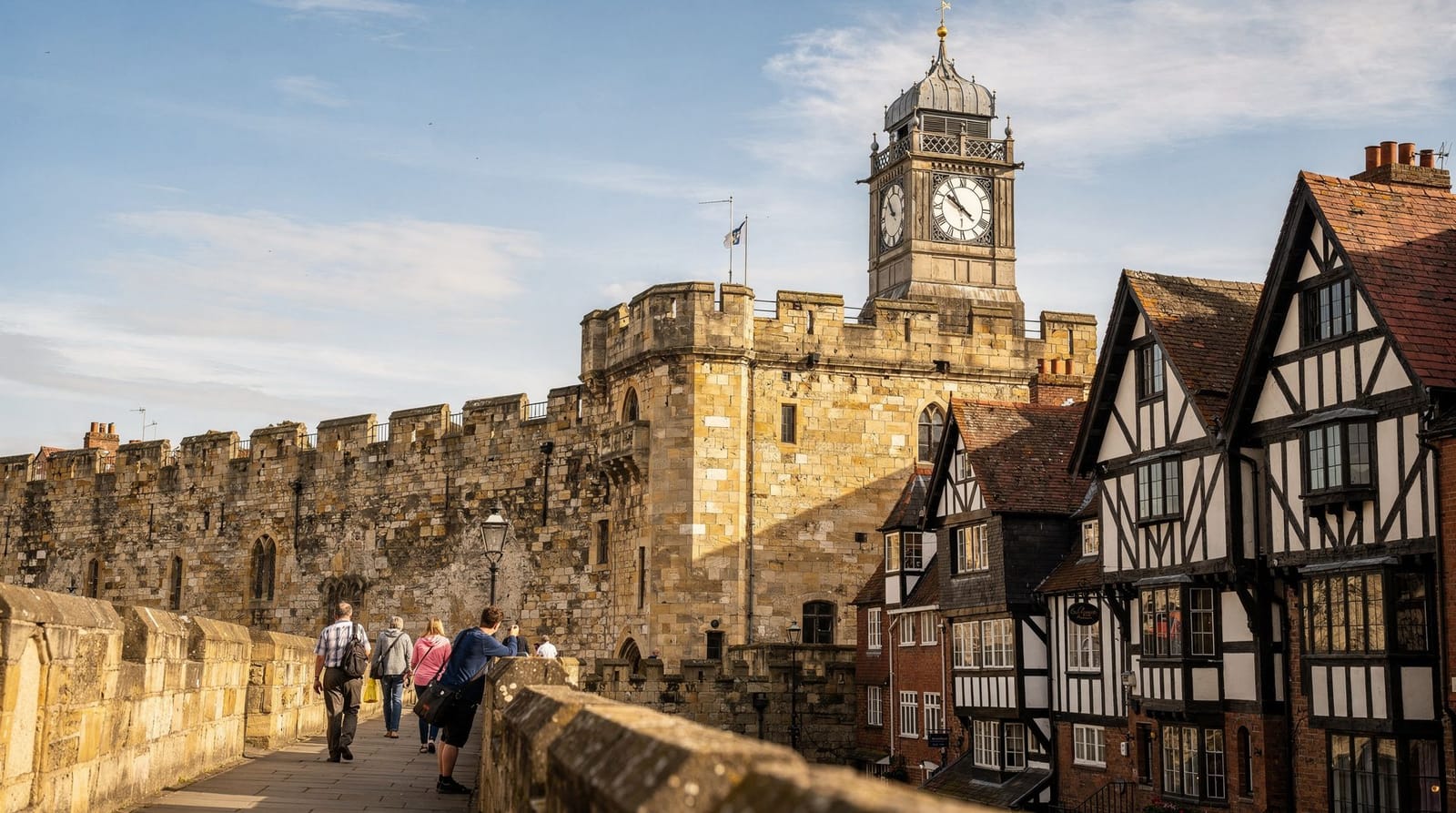
1. Eastgate Clock (start here) — A short walk from Chester railway station, this ornate clock was built in 1899 to mark Queen Victoria’s diamond jubilee and is reputed to be the second most-photographed clock in England after Big Ben. It sits directly on the city walls.
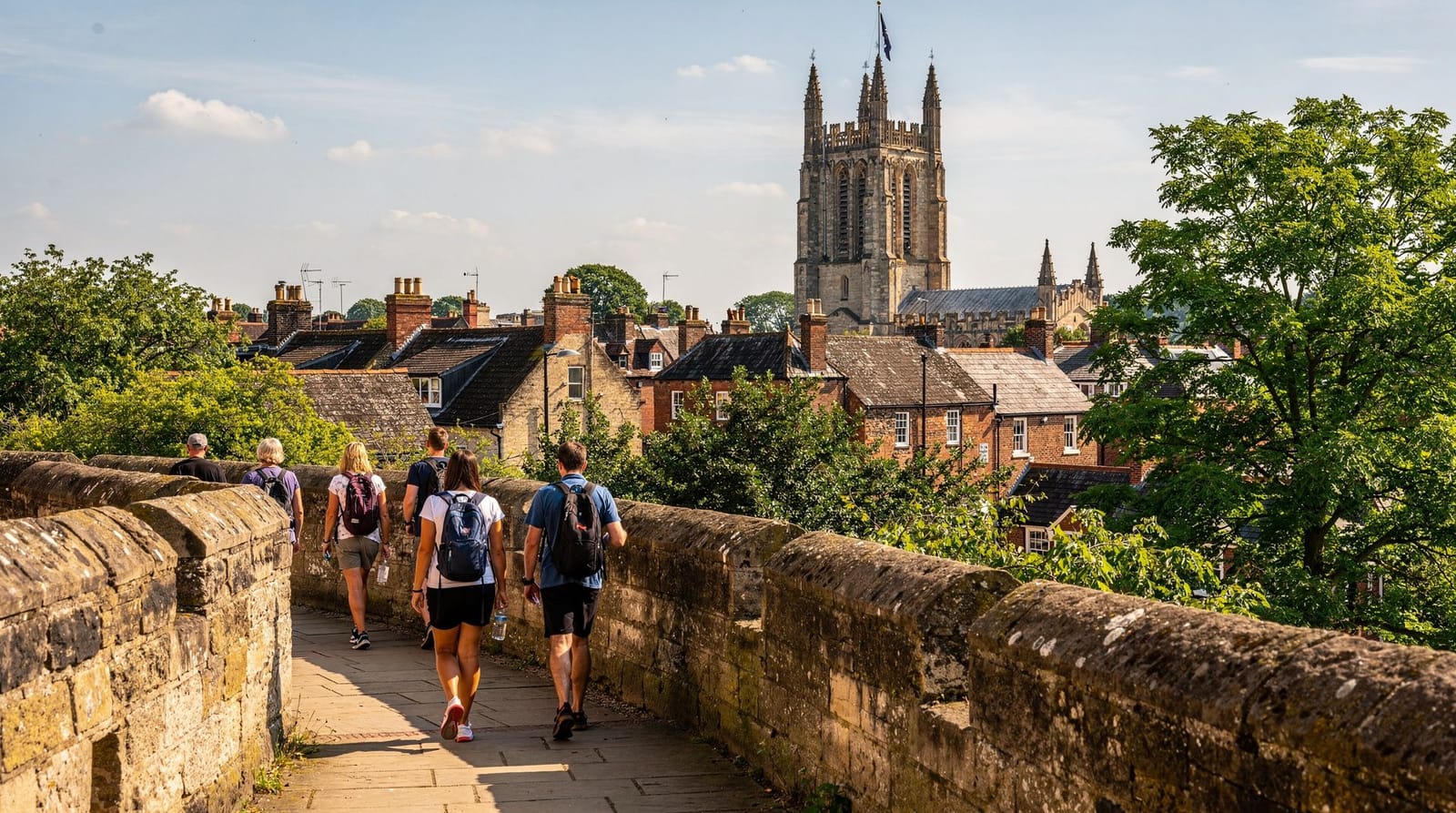
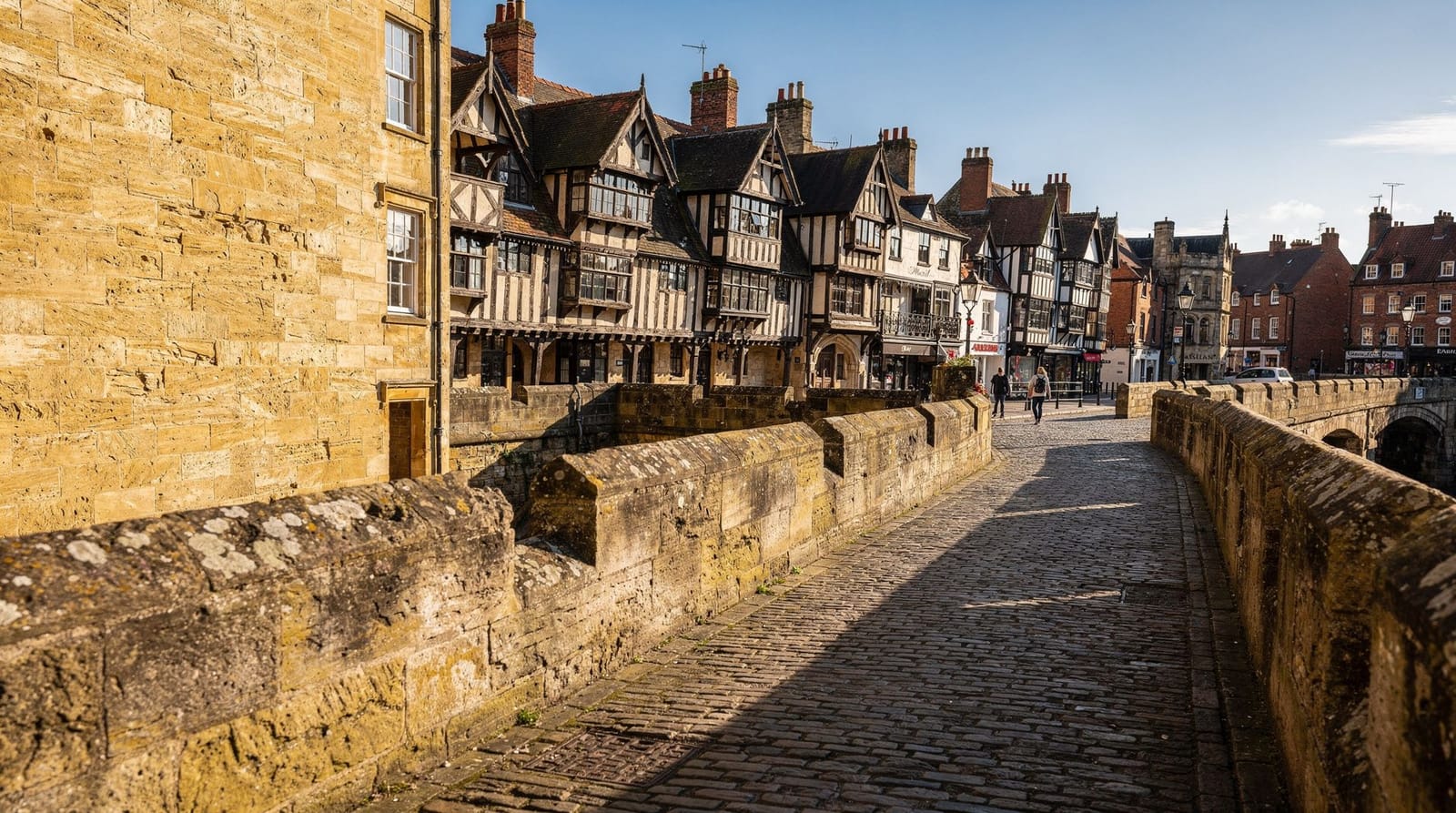
2. City walls, clockwise toward the Cathedral (15-20 minutes) — Join the walls at Eastgate and walk toward Chester Cathedral, glimpsing the close and grounds from above before descending back to street level. This short stretch already shows the mix of masonry that makes the walls interesting up close — Roman-era foundation stones at the base in places, with medieval and later rebuilding visible above. The full city walls walk covers the entire 3.2km loop if you want to continue further before doubling back.
3. Chester Cathedral (30-45 minutes, free to enter the main body) — A working cathedral with roots as a Benedictine abbey founded in 1093, with a mix of Norman, Gothic and Victorian-restored architecture. The cloisters, arranged around a quiet central garden, are among the most atmospheric parts of the complex and easy to miss if you only glance at the main nave. Full details, including paid access to the tower, are in our Chester Cathedral guide.
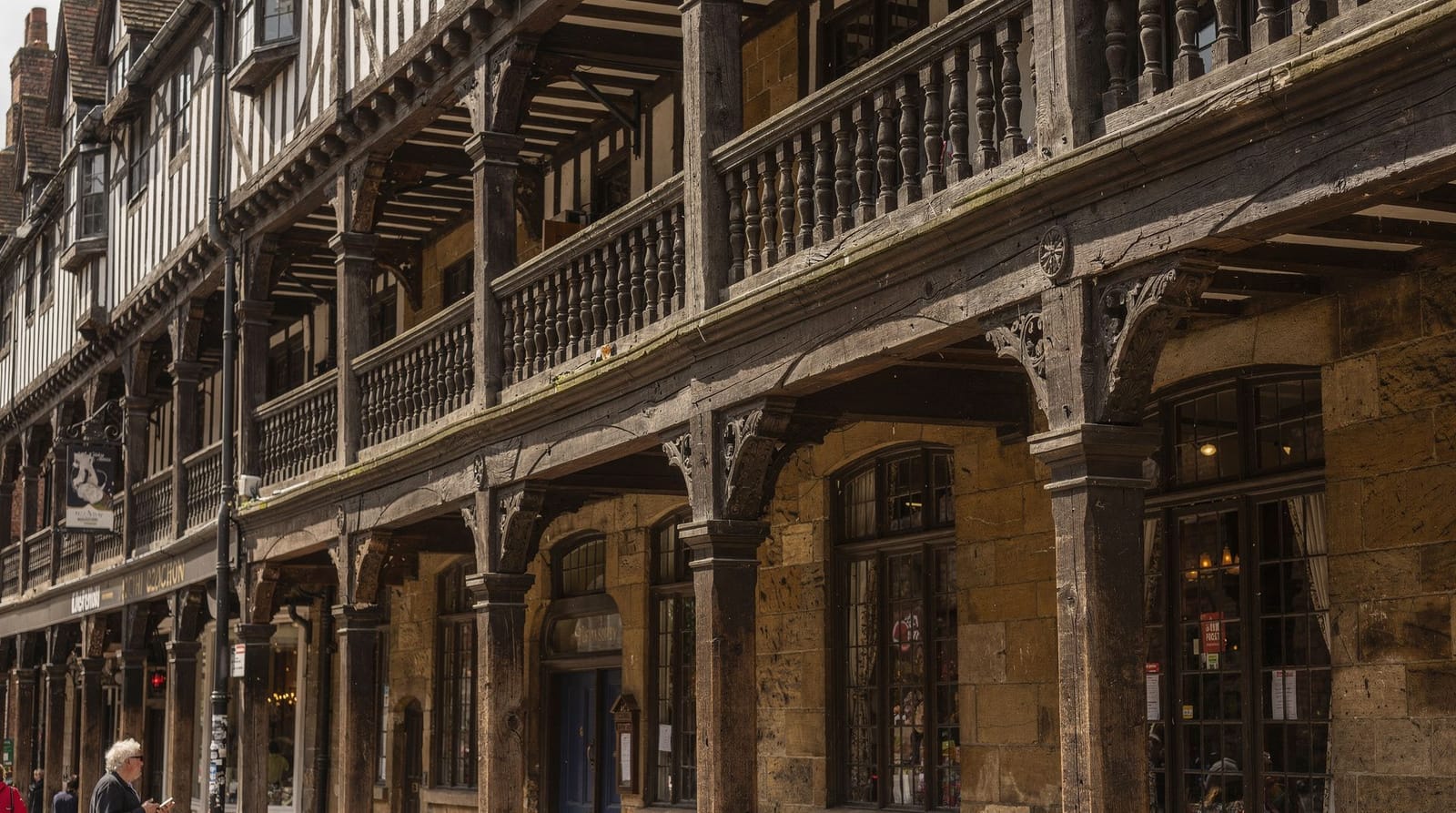
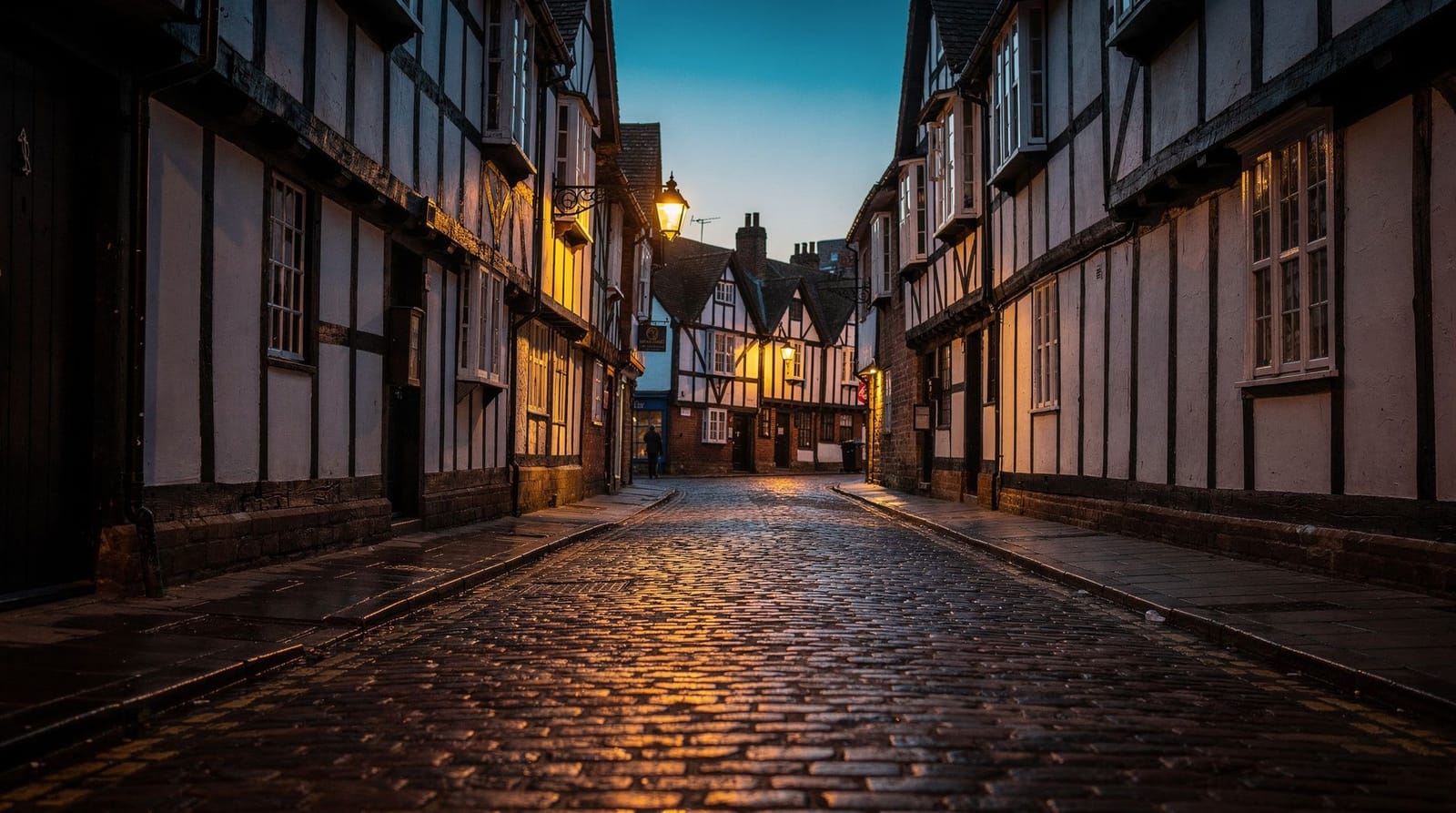
4. The Rows, via Northgate and Eastgate Streets (30-45 minutes) — Chester’s signature architectural feature: covered, two-tier shopping galleries dating from medieval times, with shops at both street level and a raised walkway level up a half-flight of stairs. Walk all four Rows streets (Eastgate, Bridge, Watergate and Northgate) if you have time, since each has a slightly different character and mix of independent versus chain retail. Our Rows of Chester guide explains the building regulations behind the unusual layout and points out which sections are genuinely medieval.
5. The Cross and Chester Town Hall (10 minutes) — The meeting point of the four main Rows streets, and the starting point for most guided walking and ghost tours, should you want to return after dark.
6. Roman Amphitheatre and Grosvenor Park (30-45 minutes) — A short walk south-east brings you to the excavated remains of Britain’s largest known Roman amphitheatre, free to view, followed by Grosvenor Park’s Victorian gardens. The Grosvenor Museum nearby holds many of the artefacts recovered from the site if you want more depth.
7. The Groves, River Dee (20-30 minutes) — Continue down to the riverside promenade for a look at Chester Suspension Bridge and, if you have time and inclination, a River Dee cruise to see the same stretch from the water. This stretch has the walk’s best café options for a proper sit-down break, with several kiosks and small restaurants directly facing the river.
8. Back to the centre via Grosvenor Bridge or Castle Street — Loop back past Chester Castle’s remaining buildings to complete the circuit.
The route at a glance
| Stop | Time to allow | Highlight |
|---|---|---|
| Eastgate Clock | Start | Second most-photographed clock in England |
| City walls to Cathedral | 15-20 min | Roman-era foundation stones visible at the base |
| Chester Cathedral | 30-45 min | Norman cloisters and a quiet central garden |
| The Rows | 30-45 min | Two-tier medieval shopping galleries |
| The Cross | 10 min | Meeting point of all four Rows streets |
| Amphitheatre & Grosvenor Park | 30-45 min | Britain’s largest known Roman amphitheatre |
| The Groves, River Dee | 20-30 min | Riverside promenade and best café stretch |
Extending the walk if you have more time
If the core route above leaves you with an extra hour or two, several natural extensions are worth adding. Continuing the city walls loop past The Groves and around to the western and northern stretches completes the full 3.2km circuit rather than the partial loop described above, taking in sections most first-time visitors miss entirely, including views over the Roodee (Chester’s racecourse, one of the oldest in England, dating to the 16th century) from the walls above. A short detour into Chester Market on Hunter Street, near the Town Hall, adds a more local, less polished shopping experience than the Rows themselves, worth a look if you have half an hour spare between the Cathedral and the Amphitheatre stops.
For visitors interested in Chester’s Roman history specifically, the Grosvenor Museum (mentioned briefly above at stop 6) rewards a proper hour rather than a quick glance — its Roman gallery includes tombstones and inscriptions recovered from the city and surrounding area, giving physical substance to the Deva history referenced throughout the walk.
Timings and shortcuts
The full route above takes 2.5-3 hours at an unhurried pace with stops for photos, reading information boards, and a coffee break. If you’re short on time, the essential compressed version is stops 1, 3, 4 and 6 — Eastgate Clock, the Cathedral, the Rows and the Amphitheatre — which covers the historic core in under 90 minutes without the full wall loop or the riverside detour.
A useful middle-ground option, if you have around two hours rather than the full three, is to skip the riverside detour to The Groves (stop 7) and finish directly from the Amphitheatre back to the centre via Castle Street, saving 20-30 minutes while still covering every landmark most visitors consider essential.
What a guide would add at each stop
Comparing this route against what a paid guided tour covers is useful for deciding whether to upgrade on a future visit. At the Eastgate Clock, a guide typically explains its construction context (the 1897 diamond jubilee competition that led to its 1899 completion) in more detail than a simple information board manages. At the Cathedral, a guide can point out which specific stonework survives from the 1093 Benedictine foundation versus later Gothic and Victorian phases — a distinction that’s genuinely hard to make out unassisted even with a good guidebook.
In the Rows, a guide’s explanation of the medieval undercroft and building regulations that produced the two-tier layout is the single piece of context most self-guided walkers miss entirely, since it isn’t obvious from looking at the architecture alone. At the Amphitheatre, a guide can contextualise the visible excavated remains against the structure’s original full scale, since only around half of the amphitheatre has been excavated and the rest still lies beneath surrounding buildings.
The paid audio-tour alternative
Chester: Haunted Self-Guided Audio Walking TourIf you’d rather have narrated commentary without committing to a fixed-time guided tour, this smartphone-based audio walk covers many of the same central landmarks with a dark-history angle, letting you move at your own pace while still getting a guide’s storytelling. It’s a reasonable middle ground between the fully free route above and a live guided tour.
Chester: The Heart of Chester Walking TourIf, after trying the self-guided route, you decide you’d like a live guide’s context on a return visit, the Heart of Chester Walking Tour covers similar ground with a knowledgeable narrator rather than a recording.
Is self-guided the right choice for you
Self-guiding suits visitors on a budget, anyone who prefers to linger at their own pace (stopping for shopping in the Rows or an extra coffee without holding up a group), and repeat visitors who’ve already had the guided introduction. It’s a weaker fit if you specifically want in-depth Roman or medieval history explained as you go — an information board can tell you what a building is, but not always why it was built that way, which is where a live guide earns their fee. Our Chester walking tours guide compares the paid options directly if you want that context.
Families and accessibility
The Cathedral, the Rows’ street level, Grosvenor Park and The Groves are all comfortably buggy- and pushchair-friendly, making a partial version of this route (skipping the full wall loop with its staircases) a reasonable choice for families with young children or anyone with mobility considerations. The Rows’ upper walkway level, reached by short staircases at regular intervals, is where the route stops being fully step-free — visitors who need to stay at street level can still see and shop in the ground-floor Rows units without using the stairs, just missing the upper-level shops and the elevated vantage point they offer.
The city walls themselves have the most uneven, historic underfoot conditions of any section in this route, plus several staircases at gate crossings (Eastgate, Northgate, Watergate, Newgate). Families with children old enough to manage stairs and uneven stone generally find the full loop manageable at a relaxed pace; younger children or anyone using a wheelchair should plan around the street-level alternative instead.
Budgeting the walk
This walk costs nothing beyond whatever you choose to spend along the way — a coffee in the Rows, lunch at one of Chester’s restaurants, optional paid entry to the Cathedral tower or the Grosvenor Museum. For a family of four wanting the full experience including a modest lunch and the Cathedral tower climb, budget somewhere in the region of £40-60 total, considerably less than the equivalent cost of a paid guided tour for the same group size, with the trade-off being the narrative depth a live guide provides.
Doing the walk with a phone versus a printed map
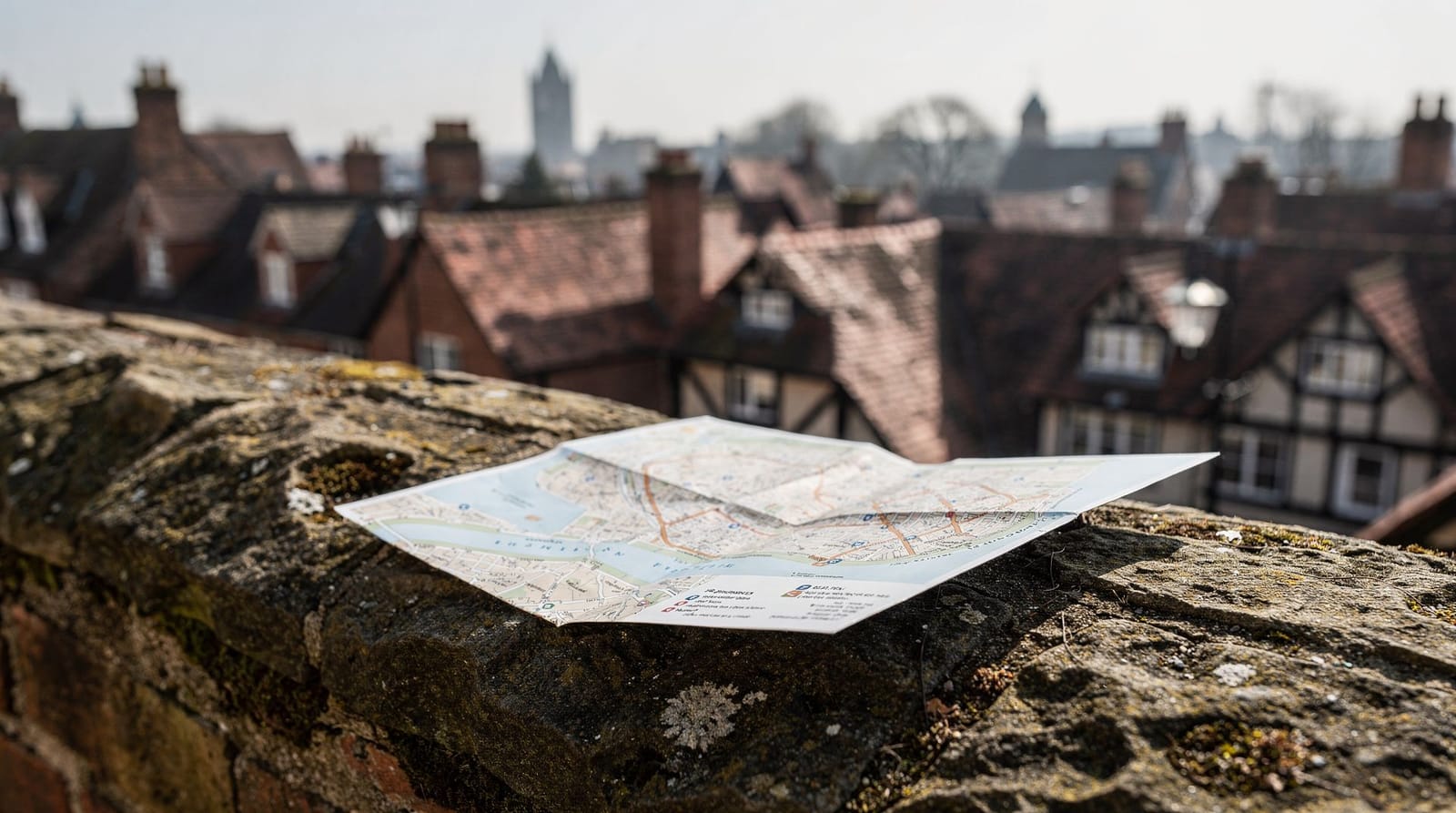
Most visitors now navigate this route entirely on a phone maps app, which works well within Chester’s compact walled centre, but it’s worth having a backup. Signal inside some of the Rows’ narrow, enclosed sections and the Cathedral’s thick-walled interior can be patchy, and a phone screen in bright summer sunlight is genuinely hard to read outdoors. A simple printed map, or a screenshot saved offline before you set out, removes this risk entirely and costs nothing extra to prepare the night before.
Common mistakes to avoid
The most frequent mistake is underestimating how much time the Rows themselves take if you actually stop to browse shops rather than just walking through — budget extra time here specifically if shopping is part of your plan, since the stated 30-45 minutes assumes a walking pace with brief stops rather than proper browsing. A second common mistake is attempting the full route in wet weather without appropriate footwear — the city walls’ historic stonework gets genuinely slippery in rain, and this is the one section of the walk where solid, gripped shoes make a meaningful safety difference rather than just a comfort one.
Practical tips
- Wear comfortable, flat shoes — the city walls have uneven medieval stonework and several staircases at gate crossings.
- Bring a printed or downloaded offline map section, since some narrow streets in the historic core have patchy phone signal.
- Visit Chester Cathedral’s main body in the morning if you want it quieter — tour groups tend to arrive from mid-morning onward.
- Combine the walk with lunch in the Rows partway through, rather than trying to do the whole loop without a break.
- If you’re doing this as part of a longer stay, our 1-day Chester itinerary builds this walk into a full day alongside a museum visit and dinner recommendations, and the 2-day Chester itinerary spreads it more comfortably across two mornings.
- Start early (before 10am) if you want the Rows and Cathedral at their quietest, particularly in summer and around the Christmas market period.
- Carry a small amount of cash alongside a card, since a handful of smaller independent stalls and cafés along the route still prefer it for low-value purchases.
- If you tire partway round, Chester’s compact layout means you’re never more than a few minutes from a bus stop or taxi rank back to your accommodation or the railway station.
When to go
Chester’s self-guided walk works year-round, but May to September gives the longest daylight for a leisurely pace and the driest conditions underfoot on the walls. If you’re walking in winter, the shorter daylight hours mean starting earlier in the day to comfortably finish the full route before dusk, since the walls themselves are unlit after dark.
Late November and December bring Chester’s Christmas market to the area around the Town Hall, directly on this route’s path through the Rows and the Cross — a pleasant seasonal addition, though it brings considerably more foot traffic through the historic core, and browsing the market stalls will extend your walking time beyond the estimates above if you stop to look properly. Early mornings, before 10am, are consistently the quietest time to do this walk at any time of year, with the Rows and Cathedral both noticeably less crowded than from mid-morning onward.
A self-guided walk of Chester costs nothing beyond any attraction entry fees you choose along the way (the Cathedral tower, for instance), and it covers essentially the same ground as a paid guided tour. The trade-off is narrative depth for cost and flexibility — a fair trade for many visitors, and one this guide’s timings should help you plan around confidently.
If you do this walk once and find yourself wanting more depth on a specific thread — the Roman history, the ghost stories, the architecture of the Rows — that’s exactly the signal to book one of the paid options covered in our Chester walking tours guide on a return visit, rather than assuming self-guiding is always the better choice for everyone. For most first-time visitors on a single trip, though, this free route delivers the essential Chester experience without asking anything beyond your own time and a pair of comfortable shoes.
Combining the walk with lunch or a pub stop
Because the route passes directly through the Rows and close to the Cross, it naturally lends itself to breaking for lunch partway through rather than pushing straight to the end. Stopping after the Cathedral and before the Rows works well timing-wise, landing you in the historic core’s densest concentration of cafés and restaurants right around a natural midday point. If a proper sit-down pub lunch appeals more than a café sandwich, several of Chester’s best pubs sit a short detour from stops 4 and 5 on the route above, easily worked in without adding meaningful distance to the overall loop.
How this compares to Chester’s other free options
If you want a shorter free outing rather than the full loop, Chester’s best views picks out individual vantage points along this same route worth prioritising if time is tight, and Chester on a budget covers how to combine this walk with free or low-cost eating and other activities.
For a wet-weather version, rainy day Chester reshuffles the stops toward the covered Rows and indoor Cathedral. And if you’re still deciding whether Chester deserves a full day at all, is Chester worth visiting in 2026 makes the case directly, while Chester’s best Instagram spots flags the specific photo stops along this exact loop.
Frequently asked questions about Self-guided Chester walk
How long is the self-guided Chester walking route?
The full route in this guide, including the city walls loop, the Rows and a stop at the Cathedral and Amphitheatre, covers roughly 5-6km and takes 2.5-3 hours at an unhurried pace with photo stops. You can shorten it by skipping the full wall loop and sticking to the historic core.Do I need a map or app for the self-guided walk?
The route is simple enough to follow with a basic city map or phone maps app, since Chester's walled centre is compact and well signposted. If you'd prefer narrated commentary at each stop, the Chester haunted self-guided audio tour offers a paid, app-based alternative with recorded storytelling.Where should I start a self-guided walk of Chester?
Start at the Eastgate Clock, a short walk from Chester railway station and the most recognisable landmark in the city centre. It sits directly on the city walls, making it a natural point to join the wall walk in either direction.Is the self-guided Chester walk suitable for children and buggies?
Most of the route is flat and buggy-friendly, but the city walls include several staircases at gate crossings and some narrow, uneven medieval stretches, so a full buggy-friendly version should stick to street level in the Rows and Cathedral quarter rather than the full wall loop.What do you miss by doing Chester self-guided instead of a paid tour?
You miss a live guide's context — why the Rows have two shopping levels, which buildings are genuinely medieval versus Victorian reconstructions, and detailed Roman and Civil War history. The physical route and landmarks themselves are identical; a guided tour adds narrative depth, not different stops.Can I do the self-guided Chester walk in the rain?
Yes — the Rows themselves are covered, offering genuine shelter, and the Cathedral is fully indoors, so a wet-weather version of the route leans more heavily on those two stops. The exposed city walls sections are the part most affected by rain, both for comfort and because the historic stonework gets slippery underfoot.Is the self-guided walk different on a weekend versus a weekday?
The route itself doesn't change, but weekday mornings are noticeably quieter throughout, particularly in the Rows and Cathedral. Weekends, especially in summer and around the Christmas market, bring heavier foot traffic on the same stops, which can extend your timings if you're stopping to browse shops.
Top experiences
Bookable activities with verified prices and instant confirmation on GetYourGuide.